


CAMRA Sheffield & District
Sheffield & District branch of CAMRA

 A couple of minutes walk away was the Caught & Bowled micropub with five cask beers available. This was the first micropub of the day and was in the long narrow style with the bar on the right and seating along the left wall. My selection was Hawkshead Gold.
Across the road to the same bus stop at which I had alighted and another Rainbow One took me the three stops to the Hilltop area. The first pub here was the Greasley Castle which is the largest traditional pub in this particular area. From the three cask beers available I chose a half of Ashover Poets Tipple. Nearby was the Tap & Growler (CAMRA Good Beer Guide 2020 entry). A small micropub but serving a very pleasant Anarchy Brewery Skin Deep which was in the ‘very cloudy orange juice coloured style’. Around the corner to another micro – the Pick & Davy. A complimentary homemade chilli sausage roll accompanied the Grasshopper Devil’s Horse Irish stout.
A couple of minutes walk away was the Caught & Bowled micropub with five cask beers available. This was the first micropub of the day and was in the long narrow style with the bar on the right and seating along the left wall. My selection was Hawkshead Gold.
Across the road to the same bus stop at which I had alighted and another Rainbow One took me the three stops to the Hilltop area. The first pub here was the Greasley Castle which is the largest traditional pub in this particular area. From the three cask beers available I chose a half of Ashover Poets Tipple. Nearby was the Tap & Growler (CAMRA Good Beer Guide 2020 entry). A small micropub but serving a very pleasant Anarchy Brewery Skin Deep which was in the ‘very cloudy orange juice coloured style’. Around the corner to another micro – the Pick & Davy. A complimentary homemade chilli sausage roll accompanied the Grasshopper Devil’s Horse Irish stout.
 Two further bus stops along Nottingham Road deposited me in Eastwood. First call here and nearest to the bus stop was the Gamekeepers. This was a slightly larger micropub and I had halves of Pentrich Blank Maps stout and Blue Monkey Primate best bitter. Nearby was the Mellor’s Mews, just set back off the main road with some outdoor seating at the front. This had a more modern almost wine bar feel to it although the six hand pumps were dispensing four cask beers and two ciders. I had Oakham JHB. The Lady Chatterley was the only Wetherspoons pub visited today and two Dukeries beers were sampled – Santa’s Beer’d and S’no Wonder.
The last pub visited in Eastwood was the Dog & Parrot. Although there were several of the former in attendance I didn’t encounter the parrot. This was larger than the other micropubs I had visited today and had a larger range of drinks. From the cask selection I had a very enjoyable Muirhouses Tick Tock Boom and Cotswold Spring Godiva. It was then a very short walk back to the bus stop and a Rainbow One back to Victoria Bus Station.
I had a little wander around before getting a Red Arrow to Derby and found the Rose of England. A street corner local offering a pleasant Home Ales Apollo Orange to finish off with. I didn’t go for a drink in Derby on the way back but instead called in the Sheffield Tap (GBG 2020) for a half of Brew York Maris The Otter and then to the Old Queens Head (GBG 2020) for halves of Thwaites Good Elf and Little Critters Incubator Series New England Pale.
Some of the pubs visited today have restricted opening hours especially early in the week so it is advisable to check these before visiting. There are still quite a number of pubs in this area to visit but these will have to wait for another day. As a footnote I would like to thank both Richard Norris and The Didler for providing the inspiration for this Grand Day Out.
Andy Morton
Two further bus stops along Nottingham Road deposited me in Eastwood. First call here and nearest to the bus stop was the Gamekeepers. This was a slightly larger micropub and I had halves of Pentrich Blank Maps stout and Blue Monkey Primate best bitter. Nearby was the Mellor’s Mews, just set back off the main road with some outdoor seating at the front. This had a more modern almost wine bar feel to it although the six hand pumps were dispensing four cask beers and two ciders. I had Oakham JHB. The Lady Chatterley was the only Wetherspoons pub visited today and two Dukeries beers were sampled – Santa’s Beer’d and S’no Wonder.
The last pub visited in Eastwood was the Dog & Parrot. Although there were several of the former in attendance I didn’t encounter the parrot. This was larger than the other micropubs I had visited today and had a larger range of drinks. From the cask selection I had a very enjoyable Muirhouses Tick Tock Boom and Cotswold Spring Godiva. It was then a very short walk back to the bus stop and a Rainbow One back to Victoria Bus Station.
I had a little wander around before getting a Red Arrow to Derby and found the Rose of England. A street corner local offering a pleasant Home Ales Apollo Orange to finish off with. I didn’t go for a drink in Derby on the way back but instead called in the Sheffield Tap (GBG 2020) for a half of Brew York Maris The Otter and then to the Old Queens Head (GBG 2020) for halves of Thwaites Good Elf and Little Critters Incubator Series New England Pale.
Some of the pubs visited today have restricted opening hours especially early in the week so it is advisable to check these before visiting. There are still quite a number of pubs in this area to visit but these will have to wait for another day. As a footnote I would like to thank both Richard Norris and The Didler for providing the inspiration for this Grand Day Out.
Andy Morton  How wrong I was. The first place we came across was Mazut Beer Shop. It’s an unassuming place from the outside but step in and you find a beer lover’s paradise, with half a dozen taps pouring local beers, as well as a wall of shelves full of bottles and cans from all over the world, from Sweden to South Africa. One of the best local craft breweries is Kabinet, and we both opted for one of theirs. Interestingly, both were collaborations with some very big names: I went for the Vista Milk Stout (5.8%), a joint effort with Mikkeller, while Poppy sampled the De Molen collab Perfectly Imperfect (8.0%), an intriguing dark ale brewed with dark chocolate and roasted sesame seeds.
Our hopes raised, we set off around the city in search of more excellent beer. We weren’t disappointed; Beer Store, Brick Bar, Tehnolog’s, Škripa and Toster (the latter also serving wonderful Serbian-style hamburgers) all offered interesting local creations from breweries such as Dogma, Salto Pivo, Crow and 3Bir. While we were in Škripa, the barmaid informed us it was the last day of a free music and beer festival at Petrovaradin Fortress on the other side of the river.
Now, the fortress itself is stunning enough, but add in a beer festival and you really have a winning combination. There were stalls from breweries of all descriptions, from the bigger names we’d tried in town to tiny local nano-breweries like Libeeri, RazBeerBriga and Premier Beer. It was a wonderful way to round off a great start to our Serbian adventure.
How wrong I was. The first place we came across was Mazut Beer Shop. It’s an unassuming place from the outside but step in and you find a beer lover’s paradise, with half a dozen taps pouring local beers, as well as a wall of shelves full of bottles and cans from all over the world, from Sweden to South Africa. One of the best local craft breweries is Kabinet, and we both opted for one of theirs. Interestingly, both were collaborations with some very big names: I went for the Vista Milk Stout (5.8%), a joint effort with Mikkeller, while Poppy sampled the De Molen collab Perfectly Imperfect (8.0%), an intriguing dark ale brewed with dark chocolate and roasted sesame seeds.
Our hopes raised, we set off around the city in search of more excellent beer. We weren’t disappointed; Beer Store, Brick Bar, Tehnolog’s, Škripa and Toster (the latter also serving wonderful Serbian-style hamburgers) all offered interesting local creations from breweries such as Dogma, Salto Pivo, Crow and 3Bir. While we were in Škripa, the barmaid informed us it was the last day of a free music and beer festival at Petrovaradin Fortress on the other side of the river.
Now, the fortress itself is stunning enough, but add in a beer festival and you really have a winning combination. There were stalls from breweries of all descriptions, from the bigger names we’d tried in town to tiny local nano-breweries like Libeeri, RazBeerBriga and Premier Beer. It was a wonderful way to round off a great start to our Serbian adventure.
 Soon enough, it was time to leave Novi Sad and head to the capital city, Belgrade. Eventually we figured out how to use Serbian bus stations (they have a bizarre system where you have to pay not only for a bus ticket, but for a separate token to enter the platform too) and got on our way. Belgrade is a fascinating city where old meets new; the ancient citadel on one side of the river in stark contrast to the seemingly endless tower blocks of New Belgrade on the other.
It’s also a city with plenty of choice for the discerning beer drinker. There are craft bars and taprooms dotted all around the city, but we went for a different approach and decided to explore Belgrade’s bottle shops. Right in the city centre, we found 300 Čuda. Part bottle shop, part comic book shop, it offered a good range of beers from Serbia and beyond (whether the comics were much cop, I couldn’t say). We picked up a bottle of Dogma Plutonium (7.5%), a zingy orange milkshake Double IPA. The bar upstairs, Samo Pivo, was also pretty impressive, its horseshoe-shaped bar lined with dozens of taps.
Meanwhile, in Vračar district we found Pivodrom, a tiny shop with a surprisingly varied selection of beers, where we sampled 3Bir Shake (5.0%), a tasty milk stout. Nestled down a nearby alleyway was Pivski Zabavnik, a growler-fill shop which also sold beer by the glass to drink on their small outdoor terrace.
By far the best bottle shops, however, were to be found in the urban sprawl of New Belgrade. Thrifty as ever, we decided to walk the 4 km journey to Pivopija, located in the imaginatively named Blok 21 district. Luckily, it was well worth the hike. We found a couple of beers from breweries we hadn’t seen before, Dilemma Hefeweizen (5.9%) and Crna Ovca Black Sheep (6.5%) dark IPA – no relation to the Masham version! Beerville, situated at the bottom of a block of flats over in Blok 67, was great too, a modern place with yet more new breweries for us to try. This time, Academia’s Dirigent Porter (6.5%) was the takeaway of choice.
Soon enough, it was time to leave Novi Sad and head to the capital city, Belgrade. Eventually we figured out how to use Serbian bus stations (they have a bizarre system where you have to pay not only for a bus ticket, but for a separate token to enter the platform too) and got on our way. Belgrade is a fascinating city where old meets new; the ancient citadel on one side of the river in stark contrast to the seemingly endless tower blocks of New Belgrade on the other.
It’s also a city with plenty of choice for the discerning beer drinker. There are craft bars and taprooms dotted all around the city, but we went for a different approach and decided to explore Belgrade’s bottle shops. Right in the city centre, we found 300 Čuda. Part bottle shop, part comic book shop, it offered a good range of beers from Serbia and beyond (whether the comics were much cop, I couldn’t say). We picked up a bottle of Dogma Plutonium (7.5%), a zingy orange milkshake Double IPA. The bar upstairs, Samo Pivo, was also pretty impressive, its horseshoe-shaped bar lined with dozens of taps.
Meanwhile, in Vračar district we found Pivodrom, a tiny shop with a surprisingly varied selection of beers, where we sampled 3Bir Shake (5.0%), a tasty milk stout. Nestled down a nearby alleyway was Pivski Zabavnik, a growler-fill shop which also sold beer by the glass to drink on their small outdoor terrace.
By far the best bottle shops, however, were to be found in the urban sprawl of New Belgrade. Thrifty as ever, we decided to walk the 4 km journey to Pivopija, located in the imaginatively named Blok 21 district. Luckily, it was well worth the hike. We found a couple of beers from breweries we hadn’t seen before, Dilemma Hefeweizen (5.9%) and Crna Ovca Black Sheep (6.5%) dark IPA – no relation to the Masham version! Beerville, situated at the bottom of a block of flats over in Blok 67, was great too, a modern place with yet more new breweries for us to try. This time, Academia’s Dirigent Porter (6.5%) was the takeaway of choice.
 The last stop of our Serbian sojourn was Subotica, a small town in the north of the country with one of the few bus routes back to Hungary. It may be home to the third-largest synagogue in Europe (and possibly the continent’s fanciest branch of McDonald’s), but sadly there was precious little on the beer front. We made do with enjoying our purchases from Belgrade as our brief visit to the Balkans came to an end. We’ll certainly be heading back to this part of the world in the future!
As I mentioned earlier, there’s still a couple more countries to write about, starting next month with Romania. Or as always, you’re welcome to head to our website, hoppingaround.co.uk if you can’t wait until then.
Dominic Nelson
The last stop of our Serbian sojourn was Subotica, a small town in the north of the country with one of the few bus routes back to Hungary. It may be home to the third-largest synagogue in Europe (and possibly the continent’s fanciest branch of McDonald’s), but sadly there was precious little on the beer front. We made do with enjoying our purchases from Belgrade as our brief visit to the Balkans came to an end. We’ll certainly be heading back to this part of the world in the future!
As I mentioned earlier, there’s still a couple more countries to write about, starting next month with Romania. Or as always, you’re welcome to head to our website, hoppingaround.co.uk if you can’t wait until then.
Dominic Nelson 

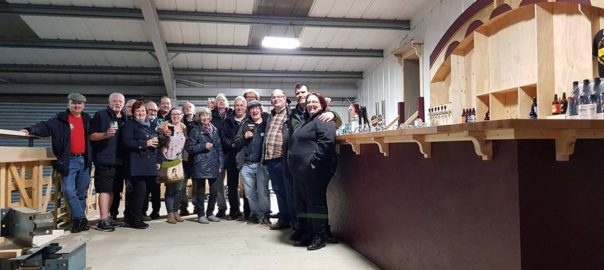
 As well as having a bit of a nosy and seeing their 20BBL brew kit and 4 fermenting vessels used by head brewer Mick Warburton, we were able to test drive the still under construction tap room upstairs, which they expect to have completed around Easter time with the intention of having monthly brewery tap events through the summer with a full bar open to the public. Things have been expanding there since the brewery first opened in 2012!
Thanks to team Chantry for the hospitality, we enjoyed three excellent cask beers on the evening – Hop Thief, Hoppy Road and Rebel Chocolate Stout.
Following the brewery visit, we had a walk the short distance up to the Little Haven micro bar where a choice of three more Chantry beers were available along with a great welcome! Our festival organiser Paul also attempted to demonstrate his guitar playing ability but thankfully that moment was short lived…
The final call of the day saw us get off the Sheffield bound tram at Rotherham Central station and walk up to the Three Cranes Inn on Rotherham High Street with a choice of 4 cask ales on the bar and a range of flavoured ciders.
Unfortunately time ran away and we didn’t have time to visit the two Chantry pubs in Rotherham town centre – the Cutlers Arms and New York Tavern, however they are easy enough to get back to and Chantry also now have a Sheffield pub in Handsworth.
The tram train dropped us back at Sheffield Cathedral and some of us found that very convenient to drop in the Church House to catch the end of the live band’s set there!
As well as having a bit of a nosy and seeing their 20BBL brew kit and 4 fermenting vessels used by head brewer Mick Warburton, we were able to test drive the still under construction tap room upstairs, which they expect to have completed around Easter time with the intention of having monthly brewery tap events through the summer with a full bar open to the public. Things have been expanding there since the brewery first opened in 2012!
Thanks to team Chantry for the hospitality, we enjoyed three excellent cask beers on the evening – Hop Thief, Hoppy Road and Rebel Chocolate Stout.
Following the brewery visit, we had a walk the short distance up to the Little Haven micro bar where a choice of three more Chantry beers were available along with a great welcome! Our festival organiser Paul also attempted to demonstrate his guitar playing ability but thankfully that moment was short lived…
The final call of the day saw us get off the Sheffield bound tram at Rotherham Central station and walk up to the Three Cranes Inn on Rotherham High Street with a choice of 4 cask ales on the bar and a range of flavoured ciders.
Unfortunately time ran away and we didn’t have time to visit the two Chantry pubs in Rotherham town centre – the Cutlers Arms and New York Tavern, however they are easy enough to get back to and Chantry also now have a Sheffield pub in Handsworth.
The tram train dropped us back at Sheffield Cathedral and some of us found that very convenient to drop in the Church House to catch the end of the live band’s set there! On Saturday 9th.November, 39 of the many volunteers at SCBF45 had a day out. This year we went to Harrogate.
 An initial hour long stop at the recently opened Roosters Brewery and Taproom was followed by a few hours in Harrogate. Roosters were founded in 1993 and quickly developed a reputation for brewing ground-breaking, hop-forward pale ales that showcased (then) new hops from the USA. Earlier this year, they relocated to Hornbeam Park in Harrogate. Their taproom is open Wednesday – Sunday and is well-worth a visit.

 We then moved into Harrogate and small groups visited many of the venues on our pre-prepared list – plus a few extras. For example, the ‘Disappearing Chin’ micropub. A good day was had by all – personal highlights include Cold Bath Brewery Tap, the Harrogate Tap and Major Toms. Key beers included Silent Assassin (Roosters), Harbour Little Rock IPA (Little Ale House) and Nightjar Zolo (Major Toms Social).
We hope to see you on the SCBF46 day out!