
CAMRA Sheffield & District
Sheffield & District branch of CAMRA

 The first Micro pub we visited was Embargo bar which is situated on the front overlooking Morecambe Bay and the Lake district. Embargo bar was opened just before Easter 2019 and is run by Jamie Fawcett. Originally a cocktail bar Jamie and his business partner decided to give the place a lick of paint and use the skills they learnt in the industry to do something that they always wanted to do.
On our visit there was 4 cask beers on which were Old Mill south paw golden, a golden ale at 3.6%, Butcombe stumps golden 3.6% another light slightly happy beer, Castle rock Black gold, a dark mild ale quite sweet at 3.8% and a beer that’s only available at Embargo called NJ wonder Edens Northern wonder ale a good 4.4% session bitter. Our choice of the day was the castle rock. Along with 4 casks Embargo has 7 keg beers with the ever popular Tiny rebel marshmallow porter being our favourite on the keg side.
Our next day was a trip to the nearby village of Bare which is roughly 2 miles from Morecambe to The Little Bare micropub. This is a family affair run by Val, Nick,Julie and Ruth McCann. They decided to have a crack at their own micropub after visiting The Curfew in Hexham and decided that Bare had a real community feel to it and this was a perfect place to open one. Originally a wine shop it took them 9 months to get it up and going.
On our visit there was 5 real ales along with a real cider, these were Barngates goodhews dry stout (a camra North west winner 2011), two beers from Roosters, Gridiron a red American amber beer 4.9% and Twentyfour seven an I.P.A that was very happy, Corless kuiper a pale American style ale at 4% and a local beer from Farm yard ales called morello cherry a slightly sour style beer at 4.4%. The Barngates and The roosters gridiron being the joint favourite’s that day. We also thought we would try the real cider, watergull orchard 6.9% which was definitely a nightcap.
Whilst chatting with the owner’s I mentioned that they inspired the guys from the Ashton Tap house in Ashton under Lyne to open, they said they will pay them a visit one day. Let’s hope the guys from The Ashton Tap inspire likewise individuals to open their own micropub in the future.
The first Micro pub we visited was Embargo bar which is situated on the front overlooking Morecambe Bay and the Lake district. Embargo bar was opened just before Easter 2019 and is run by Jamie Fawcett. Originally a cocktail bar Jamie and his business partner decided to give the place a lick of paint and use the skills they learnt in the industry to do something that they always wanted to do.
On our visit there was 4 cask beers on which were Old Mill south paw golden, a golden ale at 3.6%, Butcombe stumps golden 3.6% another light slightly happy beer, Castle rock Black gold, a dark mild ale quite sweet at 3.8% and a beer that’s only available at Embargo called NJ wonder Edens Northern wonder ale a good 4.4% session bitter. Our choice of the day was the castle rock. Along with 4 casks Embargo has 7 keg beers with the ever popular Tiny rebel marshmallow porter being our favourite on the keg side.
Our next day was a trip to the nearby village of Bare which is roughly 2 miles from Morecambe to The Little Bare micropub. This is a family affair run by Val, Nick,Julie and Ruth McCann. They decided to have a crack at their own micropub after visiting The Curfew in Hexham and decided that Bare had a real community feel to it and this was a perfect place to open one. Originally a wine shop it took them 9 months to get it up and going.
On our visit there was 5 real ales along with a real cider, these were Barngates goodhews dry stout (a camra North west winner 2011), two beers from Roosters, Gridiron a red American amber beer 4.9% and Twentyfour seven an I.P.A that was very happy, Corless kuiper a pale American style ale at 4% and a local beer from Farm yard ales called morello cherry a slightly sour style beer at 4.4%. The Barngates and The roosters gridiron being the joint favourite’s that day. We also thought we would try the real cider, watergull orchard 6.9% which was definitely a nightcap.
Whilst chatting with the owner’s I mentioned that they inspired the guys from the Ashton Tap house in Ashton under Lyne to open, they said they will pay them a visit one day. Let’s hope the guys from The Ashton Tap inspire likewise individuals to open their own micropub in the future. 


 On the ground, high quality beer, not necessarily cask-conditioned is embraced. This is illustrated by the high level of discussion attracted by a number of (usually, but not always) small breweries who are doing ‘something different,’ even if this does not always involve ‘cask.’ Examples include Dundee-based 71 Brewing and Sheffield-based Abbeydale, Lost Industry and St.Mars of the Desert (SMOD). In addition, a number of highly regarded breweries have recently returned to cask: for example, Brewdog and Cloudwater. The latter continue to cite quality concerns and will only allow their cask to go to specific outlets. Locally these include both the Rutland and Shakespeare’s.
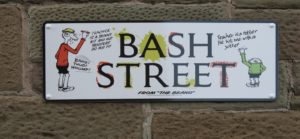 Organised trips to breweries were arranged for those that planned ahead and book, however of course in between the beers you could opt to have a look around the non-boozy attractions of Dundee including the new V&A gallery and the various little nods to the fact the publishers of the classic Beano and Dandy comics is based in the City!
Abigail Newton, known for steering the organisation’s Volunteer Committee, was elected CAMRA’s vice-chairman. She will be joining new national chairman Nik Antona in steering the direction of the campaign, with Jackie Parker and Ian Packham officially stepping down as chairman and vice-chairman, respectively, at the close of Conference.
In her address to members, Jackie reflected on CAMRA’s achievements under her tenure as chairman over the past year, including appointing a new chief executive and deputy chief executive, producing an equality and diversity policy and developing CAMRA’s Information, Education and Training programme. She also paid tribute to the Games and Collectables Committee, which has donated more than £1.3 million since 1991.
Jackie told members: “Let’s not forget that the name of our organisation is CAMRA: the Campaign for Real Ale, and let’s continue to do just that – campaign for pubs, real ale, cider and perry. It’s what we do best!”
Joining the national executive are four new members: Gary Timmins, Catherine Tonry, Hubert Gieschen and Jonathan Kemp. Nick Boley and Ian Garner were re-elected for a second term.
This was also the first CAMRA Members’ Weekend for Chief Executive Tom Stainer since beginning his new role in January 2019. Giving his first Campaigns Report, Tom looked towards the future of the organisation, saying: “Just as the beer landscape has changed, so has CAMRA, and so must it continue. Nowhere is this better reflected than in our campaigning.”
“We should not be afraid of welcoming bold new thinking and new ideas. Your ideas are welcomed and they are encouraged. If you think CAMRA needs to change, it will only change with people like you involved.”
 Members also debated a number of motions over the weekend, on topics including campaigning against large pub-owning companies converting pubs from tenanted to managed, campaigning for the introduction of Minimum Unit Pricing for England, and reducing the amount of single-use plastics used within CAMRA – all of which were carried.
 Fort Lapin, over a mile from the Belfort, is normally only open to the public on Saturdays. On my early-morning visit, I was given a personal guided tour by the brewer and co-owner, Kristoff Vandenbussche. A range of high-quality bottle conditioned beers are available, all bottled on-site. There is also a small cosy on-site sampling room. Hoplapin, a 6% hibiscus-infused hoppy blonde, proved an excellent way to start the day.
By contrast, Bourgogne des Flandres Brewery, opened in 2016, part of the long-established Timmermans (Martins) empire, is very tourist-orientated. There is both a large shop and café, lots of staff, upmarket food options (for example, Black Tiger Scampi at €16.60) and a large range of beer, the latter including a tasting tray of 12 cl of six different beers at €14. Adjacent to a canal and close to the Belfort, the brewery tour includes technological assistance and many links to historical references. Their main brew is the base for the 5% Bourgogne des Flandres red ale. This base is later blended with a Timmermans lambic. They also brew experimental beers, some of which were available in both the café and at Bruges Beer Festival: at the latter, one Primeur was Nikita, a 9.5% imperial porter.
Fort Lapin, over a mile from the Belfort, is normally only open to the public on Saturdays. On my early-morning visit, I was given a personal guided tour by the brewer and co-owner, Kristoff Vandenbussche. A range of high-quality bottle conditioned beers are available, all bottled on-site. There is also a small cosy on-site sampling room. Hoplapin, a 6% hibiscus-infused hoppy blonde, proved an excellent way to start the day.
By contrast, Bourgogne des Flandres Brewery, opened in 2016, part of the long-established Timmermans (Martins) empire, is very tourist-orientated. There is both a large shop and café, lots of staff, upmarket food options (for example, Black Tiger Scampi at €16.60) and a large range of beer, the latter including a tasting tray of 12 cl of six different beers at €14. Adjacent to a canal and close to the Belfort, the brewery tour includes technological assistance and many links to historical references. Their main brew is the base for the 5% Bourgogne des Flandres red ale. This base is later blended with a Timmermans lambic. They also brew experimental beers, some of which were available in both the café and at Bruges Beer Festival: at the latter, one Primeur was Nikita, a 9.5% imperial porter.
 The 2019 festival utilised three adjacent venues: two large marquees (in the Burg and the Markt) and part of the Belfort building. Opening from 12:00 until 22:00 on the Saturday and 11:00 until 20:00 on the Sunday, over 70 brewery bars provided well over 500 beers. These ranged from the well-known to more than 70 which were described as either ‘niew’ or ‘primeur’. Among many others, Dominator’s Potion II, a 12% whisky-barrelled stout from D’Oude Maalderij was appreciated. The rumour for 2020 is that the festival will be moving across town to t’Zand.
On the Sunday, the sun came out, so we made use of the train to Ostend and then the coast tram, the kussttram. The 67 km route runs from Knokke in the north to De Panne, on the border with France. A day ticket (€7) took us to Middelkerke, De Haan, Blankenberge and the new Jus de Mer Brewery. Recommendations include: Herman (Blankenberge), Zeeduif (De Haan) and Iceberg (Middelkerke). The latter had both Val-Dieu Tripel (9.0%) and background music which included an excellent Flemish cover of ‘Ride a White Swan’ (remember T.Rex).
The 2019 festival utilised three adjacent venues: two large marquees (in the Burg and the Markt) and part of the Belfort building. Opening from 12:00 until 22:00 on the Saturday and 11:00 until 20:00 on the Sunday, over 70 brewery bars provided well over 500 beers. These ranged from the well-known to more than 70 which were described as either ‘niew’ or ‘primeur’. Among many others, Dominator’s Potion II, a 12% whisky-barrelled stout from D’Oude Maalderij was appreciated. The rumour for 2020 is that the festival will be moving across town to t’Zand.
On the Sunday, the sun came out, so we made use of the train to Ostend and then the coast tram, the kussttram. The 67 km route runs from Knokke in the north to De Panne, on the border with France. A day ticket (€7) took us to Middelkerke, De Haan, Blankenberge and the new Jus de Mer Brewery. Recommendations include: Herman (Blankenberge), Zeeduif (De Haan) and Iceberg (Middelkerke). The latter had both Val-Dieu Tripel (9.0%) and background music which included an excellent Flemish cover of ‘Ride a White Swan’ (remember T.Rex).
 We also visited several bars in Bruges, including, an old favourite, t’Brugs Beertje. Here, a new house beer, Hazy Daisy (8.0%) brewed by Belgian micro, Siphon was available. This is named after Daisy Claeys, the long-time owner, who retired at the end of 2016. It was created in 2018 to celebrate the 35th anniversary of this internationally-known institution.
Other Bruges bars visited included De Garre (10.5% house tripel from Van Steenberge), Rose Red (lots of red roses and possibly the best lambic selection in the city, also De Dolle Dulle Teve Tripel at 10.0%) and Zandloper, the first bar off the train: Sint-Bernardus Abt12 (10.5%).
We also visited several bars in Bruges, including, an old favourite, t’Brugs Beertje. Here, a new house beer, Hazy Daisy (8.0%) brewed by Belgian micro, Siphon was available. This is named after Daisy Claeys, the long-time owner, who retired at the end of 2016. It was created in 2018 to celebrate the 35th anniversary of this internationally-known institution.
Other Bruges bars visited included De Garre (10.5% house tripel from Van Steenberge), Rose Red (lots of red roses and possibly the best lambic selection in the city, also De Dolle Dulle Teve Tripel at 10.0%) and Zandloper, the first bar off the train: Sint-Bernardus Abt12 (10.5%).
 In short, Belgium never disappoints – just don’t forget the essential reference material!
Dave Pickersgill
Pollard, C. and McGinn, S. (3rd edition, 2013) Around Bruges in 80 Beers. Cogan & Mater
Strange, J. and Webb, T. (8th edition, 2018) CAMRA’s Good Beer Guide Belgium. CAMRA Books.
In short, Belgium never disappoints – just don’t forget the essential reference material!
Dave Pickersgill
Pollard, C. and McGinn, S. (3rd edition, 2013) Around Bruges in 80 Beers. Cogan & Mater
Strange, J. and Webb, T. (8th edition, 2018) CAMRA’s Good Beer Guide Belgium. CAMRA Books. 


Having spent Christmas at different ends of the country, myself and Dom decided a few nights away before New Year would be the perfect opportunity to visit a city we had both heard great things about, but never properly visited. Although admittedly a little far for a day trip, our pre-booked returns from Crewe to Glasgow were £30, and the hotel not much more so it was a perfectly affordable couple of days away.
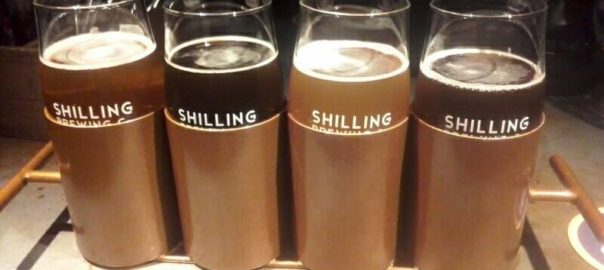
Less than a five minute walk from the station, Shilling Brewing Company provided a warm welcome to a rather nippy Glasgow. The brewpub sits in an imposing building on the corner of West George Street. Alongside an excellent range of guest beers, four of the brewery’s beers were on the pumps, all brewed a couple of meters away. The full series could be purchased in a stylish flight deck and included Brew Tang Clan (5% coffee porter), Unicorn IPA (5.2% IPA) and Glasgow Red (4.4% red ale).

Throughout the evening we also visited a number of pubs and bars down Argyle Street on our walk into the city centre, sampling Magic Rock Dairyfreak (5.2% ice cream porter) in the Taphouse, Drygate Chimera (5.9% India pale lager) and ending in the CAMRA award-winning Bon Accord drinking Black Iris Snake Eyes (3.8% pale) and a couple of single malts. A highlight of the evening was being served Leffe on ice in a champagne bucket at a local Indian restaurant.

The following morning spent at the Kelvingrove Art Gallery and Museum listening to the free Organ Concert and learning a little more about Scottish History, before setting off for the West End. The first stop was at BrewDog directly opposite the Museum, where my drink of choice was admittedly something mulled in an attempt to combat the chill.
Lunch was enjoyed at the Kimchi Cult, a tripadvisor recommendation that certainly didn’t disappoint, and after that a five minute walk up Byres Road led us to the Curlers Rest where we enjoyed a pint of 2018’s Champion Beer of Britain, Siren Broken Dream.

Following this we headed to an unassuming little lane which all the locals kept telling us was a must visit on our trip. Ashton Lane had whisky bars, Belgian beer bars an Irish pub and everything in-between. Our first stop was the Innis & Gunn Beer Kitchen where we settled in for a couple of hours, with Dom trying most of their tap beers and a couple of bottles (Blood Red Sky, a 6.8% rum-barrel aged red ale, and Don’s Choice, a 6.2% coconut and rhubarb black IPA, stand out as highlights), and me repeatedly ordering Magic Rock Stiggy Pop (7.3%), a brilliant example of the NEIPA style.

Popping over the road our next stop was Brel, famed for its impressive beer menu incorporating everything from Belgian to Scottish beers, and its beautiful beer garden. Favourites sampled here were the classics including Leffe, St Bernardus, Boon, and a wee Drambuie too! A notice in the beer garden did make me smile noting no hill climbing or head dives – a subtle nod to the 45% angle that the tables were perched upon. By this time we decided to have a break from beer and try some more whiskies in the wonderfully-named Ubiquitous Chip – we were in Scotland after all.
A full Scottish breakfast and surprisingly clear heads rounded off a much-enjoyed weekend in Glasgow, a trip we will definitely be making again.
Poppy