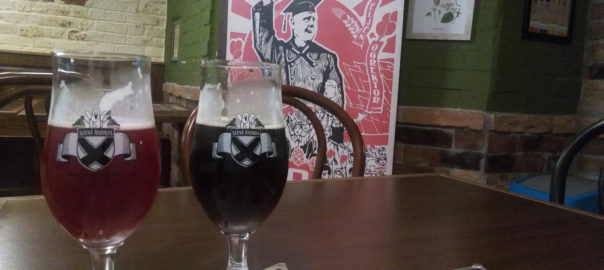
It’s been a while since I’ve written of my beery adventures, then just as I was thinking to pen something Dom & Poppy went on their adventure and wrote about all the places I’d been… however, I think I may have beaten them to this one!
I’d been planning a trip to the Caucasus region for a while, in fact I went as far as booking a trip in 2014… only for Russia to invade/liberate (depending on your viewpoint!) Crimea and eastern Ukraine days later, from which I’d booked to fly – by the time of my planned trip my departure airport Donetsk was literally rubble.
Since then, Wizzair and Ryanair have introduced more cheap routes to the region, and Azerbaijan has massively simplified (and cheapened!) their visa requirements (Armenia and Georgia require no visa). The trip was thrown together at short notice following the collapse of a planned Far East trip due to Coronavirus, but I was able to find cheap flights mere days in advance. I flew from Doncaster to Debrecen for the princely sum of £8.99, then next night from Budapest to Baku for £32 and a week later I flew Kutaisi to Milan for £7.49 (all with Wizzair). Travel between the cities was by train, I booked Baku to Tbilisi online and bought my tickets to and from Yerevan at the respective railways stations as they have no online sales platform. Each leg was approximately £27 in two-berth sleepers.
Landing at Baku around 6am meant I had a wait for beer o’clock, especially as not everywhere even opens at noon, so I did the tourist bit first, wandering along the Caspian ‘sea’ front, then as the funicular didn’t start ‘til later I walked to the top of the hill to look down over the city, before descending to the Old Town and greeting some of the many street cats. I then checked into the hotel and had a nap, having barely slept on the overnight flight, then it was beer time!

First port of call was
Paulaner, a subsidiary of the Bavarian brewer, and with the same beers but brewed on site. The beers were decent but not exciting, and around £3 for a half litre so expensive by local standards. As I had two days I decided to call it a night and tackle the rest the next day, and adjourned to my hotel.

Next day I had a lie in then set about the rest of the beer scene, starting with the
NZS brewery, the largest independent brewery in Azerbaijan, which has an onsite restaurant serving their one beer, a fairly standard lager (the menu advertises an unfiltered version, but it wasn’t available on my visit). I blagged a tour of the brewery, being given a bottle of the beer fresh off the bottling line at the end. I jokingly suggested a collaboration brew next time I’m over, but I’m not sure Azerbaijan is quite ready for what we think of as craft beer! From there, it’s a short 13p bus ride to
Mala Praga, a largish brewpub serving 4 beers – filtered and unfiltered pale lagers, a honey beer and a dark lager. Again the beer was expensive by local standards but average to us. I also had a bowl of merji shorbasi, a local lentil soup, served with a quantity of bread more commonly associated with the feeding of the 5000.

The other brewpub,
Beerbasa, is at the opposite end of town, though easily reached using a metro then a bus, at 26p for the journey. The three beers here, a light, a dark and a red, were all fairly average, and halfway through my second beer the waiter put down an unsolicited bowl of pistachios on the table, which then appeared on the bill for about £6! Fortunately some brief remonstration got them removed from the bill, but it’s something to watch out for.

I had a couple of other leads as coincidentally a mate was going a couple of weeks later and had done far more research than I, my own efforts being limited to the Ratebeer places lists.
The Brewery has closed down and been replaced by a fancy cocktail bar,
Mesopotamia brewpub seems not to exist, at least not where it was purported to be, and
Hops turned out to have nothing but macro beer and football fans shouting at the tv. My last port of call did exist though,
Beer O’clock, and unlike the brewpubs is a proper locals’ pub rather than a tourist trap, both beer and food being less than half the prices I’d paid in the brewpubs. There’s no craft beer as such but independent breweries are served including Stara Praga and Falken.
The train from Baku to Tbilisi is very sociably timed, leaving at 2330 and arriving at around 10am, with the border formalities being 7-9am. I’d opted for ‘Spalny’, two-berth sleeper compartments, and fortunately nobody else was allocated in my compartment. Like Baku, not many bars open at lunchtime, so I did the touristy bit first. Unfortunately a combination of the late opening of bars and early departure of the train to Yerevan meant I only had time to visit three places in a little cluster of bars near Liberty Square, my mate’s research has another couple of bars nearby, and another little cluster in another part of town.

 9MTA
9MTA is a modern craft bar, with 18 taps serving a few Georgian beers plus imports from the likes of Warpigs, Mikkeller and Brewdog. Four of the beers are from their own brewery, I tried the red ale and the IPA, both of which were pretty good, and then a Cherry Tripel from Lost Ridge brewery and a milk stout from Megobrebi. I didn’t try any imports due to time constraints, though unusually in my experience they were cheaper than in the UK. Also unusually for outside the UK, a 150ml measure cost exactly half the price of 300ml, no ‘ticker tax’!

The nearby
Black Dog Bar has six beers from Number 8 Brewing, no small measures are served, so I just had a Zulu Run IPA before moving on. It was a decent IPA although nothing exciting to someone used to the UK beer scene. My last stop, sadly brief as it didn’t open until 1900, was
SMA Bar. 6 Georgian beers on tap, plus usually a Belarussian lager, sadly off on this occasion so I had a raspberry blonde from Underground brewery and an IPA from Lumberjack brewery. I also acquired some takeouts for the train as they have a good bottle selection. I particularly enjoyed the Breccia, a gooseberry and tkemali (a tart berry native to Georgia) sour. I also had a cucumber kolsch from Megobrebi, and from Underground brewery a coconut IPA and a coffee stout with 20 grams of coffee per litre, possibly not the best idea just before bed!
A


combination of the train to Yerevan only running every other day in winter, and cheap flights from there being only twice a week, meant the only way to fit it in was to make a return trip from Tbilisi on consecutive nights. The outward journey is earlier than ideal, leaving at 2020 and arriving just before 7am. The border crossing was relatively painless though you can expect a bit of questioning if you have Azerbaijan stamps in your passport. Again I took a touristy wander, but at least here the bars mostly open at lunchtime, so I was in
Dargett on the dot of 11am. I spend several hours here, during which I tried all 16 beers on offer – fortunately they offer three different flights of four beers each. I started with a barrel aged wild ale, before setting about the flights including everything from lager to IPA to stout along with fruit beers. I then finished up with a Double IPA and a very good Imperial Stout.

From Dargett I headed south to
Dors Craft & Kitchen, another modern craft bar serving 8 of their own beers. Two different flights of 4 are available, I went for the one including a farmhouse ale, a cherry ale, and APA and a DIPA, the latter being a tad weak for style at 6.5% but packing a respectable 80IBU. Again all well brewed and refreshing. 4 x 100ml was about £2.

Next up was
Labeerint, an underground bar with a selection of their own beers. Their Lager and Munich ale are available from self-serve taps at your table, while the bar has others including a Helles, a Weissbier and a Dark Lager along with another lager Kilikia brewery. Finally,
Beer Academy is another ‘brewpub’ though it seems the brewery isn’t actually on site, serving about half a dozen of their own beers, sadly on my visit these included a ginger brew, which the brewer insisted I try.
My final day was in Kutaisi, the city I visited on my one very brief previous visit to the region. The pseudo-brewpub (the beers actually came from the sister pub in Tbilisi) I’d visited then is long gone, but a new pseudo-brewpub has opened since, namely
Bagrati. The waitress spoke no English, but via google translate I established the brewery is not on site but is ‘nearby’. The one beer is a fairly standard lager.
I found English was spoken in almost all the craft bars visited, but otherwise not widely spoken, Russian unsurprisingly being the second language in all three countries. Getting around the cities is easy and cheap, all have metros and frequent buses. Baku uses a ‘Baku card’ which can be loaded with any amount or disposable 4 ride cards (available from machines, which I only saw at the airport and at metro stations), these are the only way to pay for metro and red bus routes, while white bus routes are cash only. Tbilisi has a similar card system for the metro but bought in person from a ticket booth, I didn’t use any buses. Yerevan metro is cash based, again I had no cause to use any buses. Baku metro and bus schedules are loaded into Google Maps meaning it’s easy to plan getting around, I didn’t check in the other cities but the metros run frequently. Wi-Fi is fairly widely available, but to be sure I downloaded all three countries in maps.me for navigation while offline.
www.ratebeer.com/places has most of the visited places listed, and handily has a map feature to assist planning.
Overall a fascinating trip. Yerevan, Dargett in particular, had the best beer, but Tbilisi had the most bars worth a visit. Azerbaijan and Armenia I think can now be filed under ‘been there, done that’, but I will go back to Georgia in the not too distant future.
Dave Unpronounceable 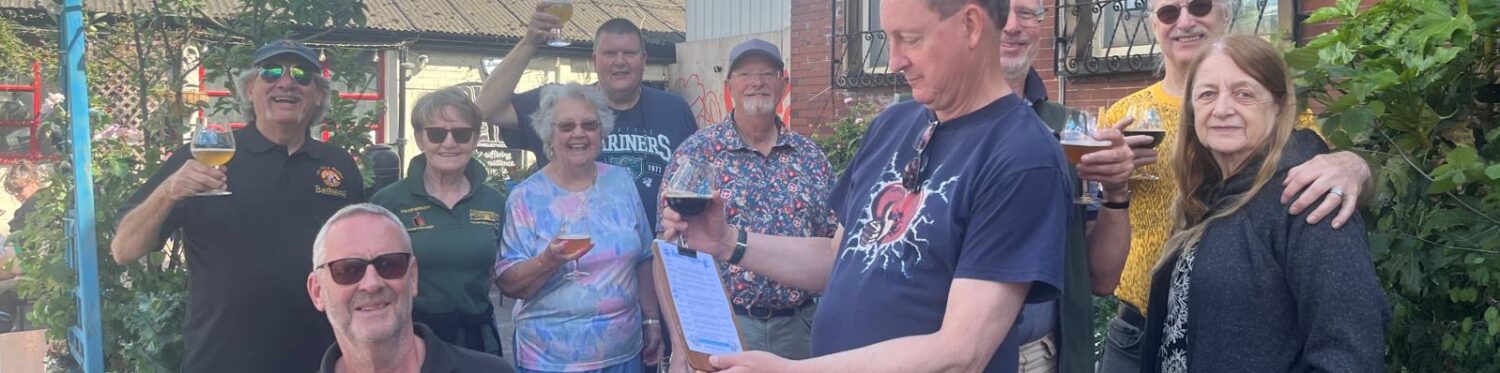




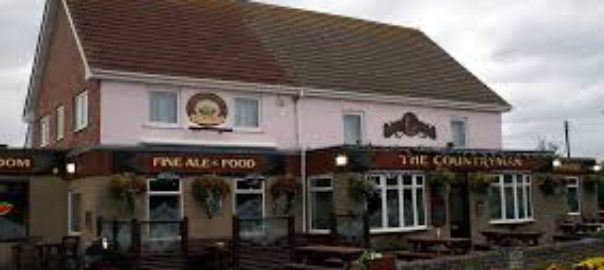
 Scott Colebourne with the half barrel plant The idea for a brewery came in the summer of 2007 after Barry had spotted an advertisement in “The Publican” for a half-barrel plant. He and Scott Colebourne (who was working at the Countryman at the time and became head brewer) decided to experiment with a “hobby” brewery and were easily persuaded by the manufacturer who also supplied a simple recipe and brewing kit. Fortunately, the pub had previously stocked beers from the Fugelestou Brewery (Louth) and Phil Ellis provided free and friendly advice to the Countryman team. The first principle Barry and Scott agreed upon was to keep things simple. Honey, coriander and hedgerow weeds were definitely off the menu! Ace Ale (a mid-brown session bitter at 3.8%) duly emerged and was eventually accompanied by a light-coloured summer IPA (Leila’s Lazy Days at 3.6%) and a dark ruby autumn/winter beer (Lincolnshire Life at 4.2%).
 Success bred success and Barry purchased a 2.5 barrel plant from Poacher’s Brewery in Lincoln which had downsized production. A stable on the Countryman site had become vacant and this was converted and the plant installed between December 2008 and March 2009. By summer 2010, brewing was sufficiently advanced to have all three beers permanently on.
At present, Leila Cottage has to use informal arrangements (the backs and boots of cars!) to supply beer festivals and the odd pub. Although there’s no official delivery system, casks can be collected and Fugelstou, Oldershaw’s and Small Beer at Lincoln have assisted at one time or another. Advance notice will allow you to see the brewery and there is a large car park as well as facilities on site for caravans and camper-vans. So, if you are holidaying in the area or just passing through, both the “Countryman” and Leila Cottage Brewery should be on be a must visit if your in this area.
From Skegness Platform A take the Number 1 bus which takes 20 minutes and is every half hour. Alight at St Paul church and The countryman is a minute walk away.
Philip Brown
Success bred success and Barry purchased a 2.5 barrel plant from Poacher’s Brewery in Lincoln which had downsized production. A stable on the Countryman site had become vacant and this was converted and the plant installed between December 2008 and March 2009. By summer 2010, brewing was sufficiently advanced to have all three beers permanently on.
At present, Leila Cottage has to use informal arrangements (the backs and boots of cars!) to supply beer festivals and the odd pub. Although there’s no official delivery system, casks can be collected and Fugelstou, Oldershaw’s and Small Beer at Lincoln have assisted at one time or another. Advance notice will allow you to see the brewery and there is a large car park as well as facilities on site for caravans and camper-vans. So, if you are holidaying in the area or just passing through, both the “Countryman” and Leila Cottage Brewery should be on be a must visit if your in this area.
From Skegness Platform A take the Number 1 bus which takes 20 minutes and is every half hour. Alight at St Paul church and The countryman is a minute walk away.
Philip Brown 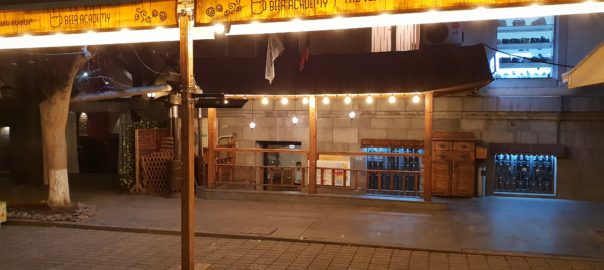


 A couple of minutes walk away was the
  Two further bus stops along Nottingham Road deposited me in Eastwood. First call here and nearest to the bus stop was the
 How wrong I was. The first place we came across was Mazut Beer Shop. It’s an unassuming place from the outside but step in and you find a beer lover’s paradise, with half a dozen taps pouring local beers, as well as a wall of shelves full of bottles and cans from all over the world, from Sweden to South Africa. One of the best local craft breweries is Kabinet, and we both opted for one of theirs. Interestingly, both were collaborations with some very big names: I went for the Vista Milk Stout (5.8%), a joint effort with Mikkeller, while Poppy sampled the De Molen collab Perfectly Imperfect (8.0%), an intriguing dark ale brewed with dark chocolate and roasted sesame seeds.
Our hopes raised, we set off around the city in search of more excellent beer. We weren’t disappointed; Beer Store, Brick Bar, Tehnolog’s, Škripa and Toster (the latter also serving wonderful Serbian-style hamburgers) all offered interesting local creations from breweries such as Dogma, Salto Pivo, Crow and 3Bir. While we were in Škripa, the barmaid informed us it was the last day of a free music and beer festival at Petrovaradin Fortress on the other side of the river.
Now, the fortress itself is stunning enough, but add in a beer festival and you really have a winning combination. There were stalls from breweries of all descriptions, from the bigger names we’d tried in town to tiny local nano-breweries like Libeeri, RazBeerBriga and Premier Beer. It was a wonderful way to round off a great start to our Serbian adventure.
How wrong I was. The first place we came across was Mazut Beer Shop. It’s an unassuming place from the outside but step in and you find a beer lover’s paradise, with half a dozen taps pouring local beers, as well as a wall of shelves full of bottles and cans from all over the world, from Sweden to South Africa. One of the best local craft breweries is Kabinet, and we both opted for one of theirs. Interestingly, both were collaborations with some very big names: I went for the Vista Milk Stout (5.8%), a joint effort with Mikkeller, while Poppy sampled the De Molen collab Perfectly Imperfect (8.0%), an intriguing dark ale brewed with dark chocolate and roasted sesame seeds.
Our hopes raised, we set off around the city in search of more excellent beer. We weren’t disappointed; Beer Store, Brick Bar, Tehnolog’s, Škripa and Toster (the latter also serving wonderful Serbian-style hamburgers) all offered interesting local creations from breweries such as Dogma, Salto Pivo, Crow and 3Bir. While we were in Škripa, the barmaid informed us it was the last day of a free music and beer festival at Petrovaradin Fortress on the other side of the river.
Now, the fortress itself is stunning enough, but add in a beer festival and you really have a winning combination. There were stalls from breweries of all descriptions, from the bigger names we’d tried in town to tiny local nano-breweries like Libeeri, RazBeerBriga and Premier Beer. It was a wonderful way to round off a great start to our Serbian adventure.
 Soon enough, it was time to leave Novi Sad and head to the capital city, Belgrade. Eventually we figured out how to use Serbian bus stations (they have a bizarre system where you have to pay not only for a bus ticket, but for a separate token to enter the platform too) and got on our way. Belgrade is a fascinating city where old meets new; the ancient citadel on one side of the river in stark contrast to the seemingly endless tower blocks of New Belgrade on the other.
It’s also a city with plenty of choice for the discerning beer drinker. There are craft bars and taprooms dotted all around the city, but we went for a different approach and decided to explore Belgrade’s bottle shops. Right in the city centre, we found 300 Čuda. Part bottle shop, part comic book shop, it offered a good range of beers from Serbia and beyond (whether the comics were much cop, I couldn’t say). We picked up a bottle of Dogma Plutonium (7.5%), a zingy orange milkshake Double IPA. The bar upstairs, Samo Pivo, was also pretty impressive, its horseshoe-shaped bar lined with dozens of taps.
Meanwhile, in Vračar district we found Pivodrom, a tiny shop with a surprisingly varied selection of beers, where we sampled 3Bir Shake (5.0%), a tasty milk stout. Nestled down a nearby alleyway was Pivski Zabavnik, a growler-fill shop which also sold beer by the glass to drink on their small outdoor terrace.
By far the best bottle shops, however, were to be found in the urban sprawl of New Belgrade. Thrifty as ever, we decided to walk the 4 km journey to Pivopija, located in the imaginatively named Blok 21 district. Luckily, it was well worth the hike. We found a couple of beers from breweries we hadn’t seen before, Dilemma Hefeweizen (5.9%) and Crna Ovca Black Sheep (6.5%) dark IPA – no relation to the Masham version! Beerville, situated at the bottom of a block of flats over in Blok 67, was great too, a modern place with yet more new breweries for us to try. This time, Academia’s Dirigent Porter (6.5%) was the takeaway of choice.
Soon enough, it was time to leave Novi Sad and head to the capital city, Belgrade. Eventually we figured out how to use Serbian bus stations (they have a bizarre system where you have to pay not only for a bus ticket, but for a separate token to enter the platform too) and got on our way. Belgrade is a fascinating city where old meets new; the ancient citadel on one side of the river in stark contrast to the seemingly endless tower blocks of New Belgrade on the other.
It’s also a city with plenty of choice for the discerning beer drinker. There are craft bars and taprooms dotted all around the city, but we went for a different approach and decided to explore Belgrade’s bottle shops. Right in the city centre, we found 300 Čuda. Part bottle shop, part comic book shop, it offered a good range of beers from Serbia and beyond (whether the comics were much cop, I couldn’t say). We picked up a bottle of Dogma Plutonium (7.5%), a zingy orange milkshake Double IPA. The bar upstairs, Samo Pivo, was also pretty impressive, its horseshoe-shaped bar lined with dozens of taps.
Meanwhile, in Vračar district we found Pivodrom, a tiny shop with a surprisingly varied selection of beers, where we sampled 3Bir Shake (5.0%), a tasty milk stout. Nestled down a nearby alleyway was Pivski Zabavnik, a growler-fill shop which also sold beer by the glass to drink on their small outdoor terrace.
By far the best bottle shops, however, were to be found in the urban sprawl of New Belgrade. Thrifty as ever, we decided to walk the 4 km journey to Pivopija, located in the imaginatively named Blok 21 district. Luckily, it was well worth the hike. We found a couple of beers from breweries we hadn’t seen before, Dilemma Hefeweizen (5.9%) and Crna Ovca Black Sheep (6.5%) dark IPA – no relation to the Masham version! Beerville, situated at the bottom of a block of flats over in Blok 67, was great too, a modern place with yet more new breweries for us to try. This time, Academia’s Dirigent Porter (6.5%) was the takeaway of choice.
 The last stop of our Serbian sojourn was Subotica, a small town in the north of the country with one of the few bus routes back to Hungary. It may be home to the third-largest synagogue in Europe (and possibly the continent’s fanciest branch of McDonald’s), but sadly there was precious little on the beer front. We made do with enjoying our purchases from Belgrade as our brief visit to the Balkans came to an end. We’ll certainly be heading back to this part of the world in the future!
As I mentioned earlier, there’s still a couple more countries to write about, starting next month with Romania. Or as always, you’re welcome to head to our website,
The last stop of our Serbian sojourn was Subotica, a small town in the north of the country with one of the few bus routes back to Hungary. It may be home to the third-largest synagogue in Europe (and possibly the continent’s fanciest branch of McDonald’s), but sadly there was precious little on the beer front. We made do with enjoying our purchases from Belgrade as our brief visit to the Balkans came to an end. We’ll certainly be heading back to this part of the world in the future!
As I mentioned earlier, there’s still a couple more countries to write about, starting next month with Romania. Or as always, you’re welcome to head to our website, 


 As well as having a bit of a nosy and seeing their 20BBL brew kit and 4 fermenting vessels used by head brewer Mick Warburton, we were able to test drive the still under construction tap room upstairs, which they expect to have completed around Easter time with the intention of having monthly brewery tap events through the summer with a full bar open to the public. Things have been expanding there since the brewery first opened in 2012!
Thanks to team Chantry for the hospitality, we enjoyed three excellent cask beers on the evening – Hop Thief, Hoppy Road and Rebel Chocolate Stout.
Following the brewery visit, we had a walk the short distance up to the Little Haven micro bar where a choice of three more Chantry beers were available along with a great welcome! Our festival organiser Paul also attempted to demonstrate his guitar playing ability but thankfully that moment was short lived…
The final call of the day saw us get off the Sheffield bound tram at Rotherham Central station and walk up to the Three Cranes Inn on Rotherham High Street with a choice of 4 cask ales on the bar and a range of flavoured ciders.
Unfortunately time ran away and we didn’t have time to visit the two Chantry pubs in Rotherham town centre – the Cutlers Arms and New York Tavern, however they are easy enough to get back to and Chantry also now have a Sheffield pub in Handsworth.
The tram train dropped us back at Sheffield Cathedral and some of us found that very convenient to drop in the Church House to catch the end of the live band’s set there!
As well as having a bit of a nosy and seeing their 20BBL brew kit and 4 fermenting vessels used by head brewer Mick Warburton, we were able to test drive the still under construction tap room upstairs, which they expect to have completed around Easter time with the intention of having monthly brewery tap events through the summer with a full bar open to the public. Things have been expanding there since the brewery first opened in 2012!
Thanks to team Chantry for the hospitality, we enjoyed three excellent cask beers on the evening – Hop Thief, Hoppy Road and Rebel Chocolate Stout.
Following the brewery visit, we had a walk the short distance up to the Little Haven micro bar where a choice of three more Chantry beers were available along with a great welcome! Our festival organiser Paul also attempted to demonstrate his guitar playing ability but thankfully that moment was short lived…
The final call of the day saw us get off the Sheffield bound tram at Rotherham Central station and walk up to the Three Cranes Inn on Rotherham High Street with a choice of 4 cask ales on the bar and a range of flavoured ciders.
Unfortunately time ran away and we didn’t have time to visit the two Chantry pubs in Rotherham town centre – the Cutlers Arms and New York Tavern, however they are easy enough to get back to and Chantry also now have a Sheffield pub in Handsworth.
The tram train dropped us back at Sheffield Cathedral and some of us found that very convenient to drop in the Church House to catch the end of the live band’s set there! 
 An initial hour long stop at the recently opened Roosters Brewery and Taproom was followed by a few hours in Harrogate. Roosters were founded in 1993 and quickly developed a reputation for brewing ground-breaking, hop-forward pale ales that showcased (then) new hops from the USA. Earlier this year, they relocated to Hornbeam Park in Harrogate. Their taproom is open Wednesday – Sunday and is well-worth a visit.
 We then moved into Harrogate and small groups visited many of the venues on our pre-prepared list – plus a few extras. For example, the ‘Disappearing Chin’ micropub. A good day was had by all – personal highlights include Cold Bath Brewery Tap, the Harrogate Tap and Major Toms. Key beers included Silent Assassin (Roosters), Harbour Little Rock IPA (Little Ale House) and Nightjar Zolo (Major Toms Social).