

Burn the Kirsch, the cherrywood-smoked rauchbier collab with Lost Industry and Boutilliers, is now doing the rounds in cask, keg and bottle. Four versions were produced, each named after a church burnt down by Norway’s ‘Satanic Terrorists’, pioneers of the black metal scene. Skjold (5.7%) is a straight pale rauchbier, but much fruitier and less phenolic than beechwood or peat smoked examples. Fantoft (6.2%) had a shedload of sour cherries added, and has turned a vivid red as a result. Asane (6.66%) had sour cherries and honey added, is a similar colour to Fantoft but with a sweeter taste. Holmenkollen (6.66%) will be out in the summer, it’s essentially Fantoft aged in a red wine barrel with yet more cherries. There’s also a one-off cask of Storetveit, which is Fantoft with chillies (no smoke without fire!).

The latest brew is a collaboration with the new Crow Inn; Kate, Chris and Adam came up to brew Corvus Corone, a 7.2% dry-hopped sour brut IPA. This was Steel City’s first use of the enzyme Glucoamylase, safe to say it worked as the Final Gravity was 1.000! The result is a sour, dry IPA rather reminiscent of grapefruit juice. A one-off keg of a black version will be available at the launch of the pub, and some of the base beer is now in a Bordeaux wine barrel with grapes.

The launch for the final Stout Wars trilogy has been confirmed for Star Wars day, May the Fourth be with you. The venue has not been announced yet but should be known by time of publication. The main trilogy will be available on cask while the sour spin-off Solo will be on keg, along with a couple of very exclusive bottles. One of the bottled versions is Eisbock Planet of Hoth, Steel City & Lost Industry’s first venture into the world of Eisbock (freeze concentrated beer), 5 litres of the sherry-barrel aged stout were condensed down to 2.2 litres, so only six bottles will ever exist. Could this be the strongest ever beer brewed in Sheffield?
Dave Unpronounceable
 SMOD is a small 1,000 litre brewery and licensed taproom based in Attercliffe (90 Stevenson Road, S9 3XG). Google us for updated opening hours. We’re a bit off the beaten track for sure, but will have up to eight of our own kegs on at any point. This spring we’ll be expanding our hours so stay tuned for that.
 Our beers are just now finding themselves in the local market as well. You can find more info on what’s available on our website,
  In March we released a hazy double IPA, Attercliffe Industrial, at 6.6% with Rakau and Citra hops and received delivery of our first oak foeder.
Cheers and see you soon.
Dann Paquette & Martha Holley-Paquette
In March we released a hazy double IPA, Attercliffe Industrial, at 6.6% with Rakau and Citra hops and received delivery of our first oak foeder.
Cheers and see you soon.
Dann Paquette & Martha Holley-Paquette 
 The Fantôme beers on keg downstairs were tasty enough, but I was here for the bottle tasting, which promised a journey through the brewery’s extensive repertoire of beers, including some rare vintages and a few brews which had never been released to the public.
Our hosts for the evening were brewer Mike James and renowned beer sommelier Roberto Ross. Mike is from Derbyshire and formerly brewed at Buxton Brewery back in the days when they were starting to become popular, and more recently has been running the cuckoo brewery, Landlocked. The pair have been involved with Fantôme for a couple of years, and Mike’s official title at the brewery is “master of magic”!
We kicked off with Blanche (4.5%), not in fact a saison at all but a classic Belgian witbier (think Hoegaarden). This was a great example of the style with hints of coriander and orange peel. Next up came Saison d’Érezée Hiver – labelled at 8%, but as with many Fantôme beers it actually went into the bottle at around 7.5%. As these beers are bottle-conditioned they continue to ferment, so the strength you drink it at can vary depending on how long the beer has been aged. Hiver is, of course, the French word for winter and this beer was packed with warming winter spices which complimented the “funky” saison flavours beautifully.
The Fantôme beers on keg downstairs were tasty enough, but I was here for the bottle tasting, which promised a journey through the brewery’s extensive repertoire of beers, including some rare vintages and a few brews which had never been released to the public.
Our hosts for the evening were brewer Mike James and renowned beer sommelier Roberto Ross. Mike is from Derbyshire and formerly brewed at Buxton Brewery back in the days when they were starting to become popular, and more recently has been running the cuckoo brewery, Landlocked. The pair have been involved with Fantôme for a couple of years, and Mike’s official title at the brewery is “master of magic”!
We kicked off with Blanche (4.5%), not in fact a saison at all but a classic Belgian witbier (think Hoegaarden). This was a great example of the style with hints of coriander and orange peel. Next up came Saison d’Érezée Hiver – labelled at 8%, but as with many Fantôme beers it actually went into the bottle at around 7.5%. As these beers are bottle-conditioned they continue to ferment, so the strength you drink it at can vary depending on how long the beer has been aged. Hiver is, of course, the French word for winter and this beer was packed with warming winter spices which complimented the “funky” saison flavours beautifully.
 We were then treated to a few of the brewery’s core range, including Saison (the secret ingredient is magic), Chocolat (made with real Belgian chocolate) and Fantôme de Noël (full of Christmas spices), before some of the rarer and more interesting beers started to make an entrance. In true Belgian style, the dregs were poured into each taster too – the yeast is where all the flavour is!
The bottle of Magic Ghost looked unassuming enough, but on pouring the beer was vivid green in colour; Mike explained that this was due to the addition of green tea and spinach extract during the brewing process. The theme of tea continued with Gunpowder Mild, a collaboration brew with Landlocked. This beer (one of the last to be brewed on Fantôme’s original kit before its recent replacement) was a unique mixture of a saison with a Victorian mild, with various types of gunpowder tea used in place of hops to provide aroma and bitterness.
One of my highlights of the night was Fantôme in Flowers – another collaboration effort, this time with Berlin-based Australian brewers Parasite Produktions. As the name promised, this was a more delicate beer, laced with lavender and beautifully refreshing. Next up came a couple of never-to-be-released experimental saisons – truly a once-in-a-lifetime experience.
We were then treated to a few of the brewery’s core range, including Saison (the secret ingredient is magic), Chocolat (made with real Belgian chocolate) and Fantôme de Noël (full of Christmas spices), before some of the rarer and more interesting beers started to make an entrance. In true Belgian style, the dregs were poured into each taster too – the yeast is where all the flavour is!
The bottle of Magic Ghost looked unassuming enough, but on pouring the beer was vivid green in colour; Mike explained that this was due to the addition of green tea and spinach extract during the brewing process. The theme of tea continued with Gunpowder Mild, a collaboration brew with Landlocked. This beer (one of the last to be brewed on Fantôme’s original kit before its recent replacement) was a unique mixture of a saison with a Victorian mild, with various types of gunpowder tea used in place of hops to provide aroma and bitterness.
One of my highlights of the night was Fantôme in Flowers – another collaboration effort, this time with Berlin-based Australian brewers Parasite Produktions. As the name promised, this was a more delicate beer, laced with lavender and beautifully refreshing. Next up came a couple of never-to-be-released experimental saisons – truly a once-in-a-lifetime experience.
 Our final beer of the night was one from the archives. Dating from 2007, not even Mike and Roberto knew what to expect from this bottle of Sante-11. When bottled, this had apparently been a fairly standard saison with typical adjuncts such as coriander, oregano and black pepper. However, it turned out that 12 years had certainly had an effect – when poured, the beer had taken on an almost cheesy aroma and had huge chunks of yeast suspended in it. Luckily it tasted better than it smelled (and looked), a complex spiciness with maybe just a hint of sourness starting to creep in.
All in all, we had a fantastic evening and at £15 per person it was an absolute bargain. If you’re into Belgian beers and come across Fantôme beers, I’d definitely recommend giving them a try!
Dominic Nelson
Our final beer of the night was one from the archives. Dating from 2007, not even Mike and Roberto knew what to expect from this bottle of Sante-11. When bottled, this had apparently been a fairly standard saison with typical adjuncts such as coriander, oregano and black pepper. However, it turned out that 12 years had certainly had an effect – when poured, the beer had taken on an almost cheesy aroma and had huge chunks of yeast suspended in it. Luckily it tasted better than it smelled (and looked), a complex spiciness with maybe just a hint of sourness starting to creep in.
All in all, we had a fantastic evening and at £15 per person it was an absolute bargain. If you’re into Belgian beers and come across Fantôme beers, I’d definitely recommend giving them a try!
Dominic Nelson 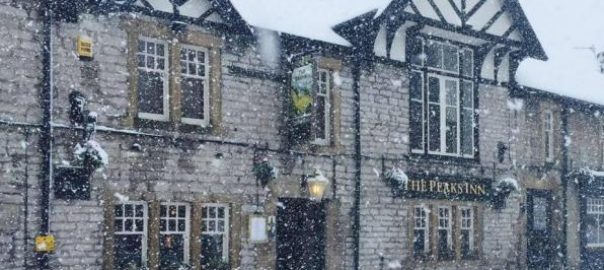
 With 14 draught products – including cask and craft ales, lagers and ciders – The Peak Hotel was commended for having a “pint to suit every palate” and for its rotating choice of beers from local breweries such as Bradfield and Abbeydale. The pub also scored highly for its cellar management, staff training on beer – carried out by Edward Theakson of Theakston Brewery – and for helping customers choose their ideal pint by offering a ‘try before you buy’ policy and displaying the colours of its craft and cask ales.
The judges put the award down to the dedication of licensee Rick Ellison who transformed the tired, unloved pub when he took it over five years ago, investing in a £200,000 revamp to upgrade and refurbish The Peak Hotel in a quirky style, which has won it a reputation as Castleton’s most eccentric pub.
With 14 draught products – including cask and craft ales, lagers and ciders – The Peak Hotel was commended for having a “pint to suit every palate” and for its rotating choice of beers from local breweries such as Bradfield and Abbeydale. The pub also scored highly for its cellar management, staff training on beer – carried out by Edward Theakson of Theakston Brewery – and for helping customers choose their ideal pint by offering a ‘try before you buy’ policy and displaying the colours of its craft and cask ales.
The judges put the award down to the dedication of licensee Rick Ellison who transformed the tired, unloved pub when he took it over five years ago, investing in a £200,000 revamp to upgrade and refurbish The Peak Hotel in a quirky style, which has won it a reputation as Castleton’s most eccentric pub.
 Ellison, who grew up in the Peak District, also runs the Old Hall Hotel at Hope and is a champion of great beer and cider in the surrounding area, founding the Hope Valley Beer & Cider festival four years ago. He received the prestigious award for The Peak Hotel at a gala ceremony at The Belfry resort in Sutton Coldfield from comedian Ed Byrne.
The win is a double celebration for Rick who will be marking the 300th anniversary of the Old Hall Hotel gaining its license next month.
Rick said: “We take great pride in the quality of our beer and cider and invest a lot of time in looking after them. It’s a fantastic acknowledgment and a real honour to have won. It wouldn’t have been possible without our brilliant team of staff.”
Ellison, who grew up in the Peak District, also runs the Old Hall Hotel at Hope and is a champion of great beer and cider in the surrounding area, founding the Hope Valley Beer & Cider festival four years ago. He received the prestigious award for The Peak Hotel at a gala ceremony at The Belfry resort in Sutton Coldfield from comedian Ed Byrne.
The win is a double celebration for Rick who will be marking the 300th anniversary of the Old Hall Hotel gaining its license next month.
Rick said: “We take great pride in the quality of our beer and cider and invest a lot of time in looking after them. It’s a fantastic acknowledgment and a real honour to have won. It wouldn’t have been possible without our brilliant team of staff.”


 The festival begins with a preview night featuring the full beer range on Thursday from 6pm to 10pm with free entry to everyone – just pay a deposit on the glass (you can return the glass for a refund or keep it as a souvenir).
Friday the festival opens at midday and again the daytime session is all about the beer and cider with free entry available to all until 5pm, in the evening entry is £3 (free for CAMRA and Pioneer Club members) and live music will feature. Bars close at 11pm.
On Saturday the festival again opens from midday until 11pm and entry is £3 (free for CAMRA and Pioneer Club members) with a variety of entertainment planned.
Throughout the festival the Pioneer Club’s own bar will also be open as part of the festival serving a full range of beers, wines, spirits and soft drinks. Snacks will also be available from the bar in addition to food served by street food traders outside.
The Pioneer Club can be found on Stonelow Road, about 5 minutes walk from Dronfield railway station. There is also a bus stop right outside the venue served by Stagecoach bus 44 (Sheffield-Woodseats-Coal Aston-Dronfield-Chesterfield) and TM Travel bus 14/15 (Dronfield Civic Centre-Coal Aston-Apperknowle-Marsh Lane/Chesterfield). The main local taxi companies are Network and City, both have smartphone apps for ordering cabs.
CAMRA VOLUNTEERS
As with all CAMRA beer & cider festivals, ours is entirely organised, managed and staffed by enthusiastic volunteers to share our love of good beer and cider and raise funds to support the campaign (if you aren’t a member check out
The festival begins with a preview night featuring the full beer range on Thursday from 6pm to 10pm with free entry to everyone – just pay a deposit on the glass (you can return the glass for a refund or keep it as a souvenir).
Friday the festival opens at midday and again the daytime session is all about the beer and cider with free entry available to all until 5pm, in the evening entry is £3 (free for CAMRA and Pioneer Club members) and live music will feature. Bars close at 11pm.
On Saturday the festival again opens from midday until 11pm and entry is £3 (free for CAMRA and Pioneer Club members) with a variety of entertainment planned.
Throughout the festival the Pioneer Club’s own bar will also be open as part of the festival serving a full range of beers, wines, spirits and soft drinks. Snacks will also be available from the bar in addition to food served by street food traders outside.
The Pioneer Club can be found on Stonelow Road, about 5 minutes walk from Dronfield railway station. There is also a bus stop right outside the venue served by Stagecoach bus 44 (Sheffield-Woodseats-Coal Aston-Dronfield-Chesterfield) and TM Travel bus 14/15 (Dronfield Civic Centre-Coal Aston-Apperknowle-Marsh Lane/Chesterfield). The main local taxi companies are Network and City, both have smartphone apps for ordering cabs.
CAMRA VOLUNTEERS
As with all CAMRA beer & cider festivals, ours is entirely organised, managed and staffed by enthusiastic volunteers to share our love of good beer and cider and raise funds to support the campaign (if you aren’t a member check out 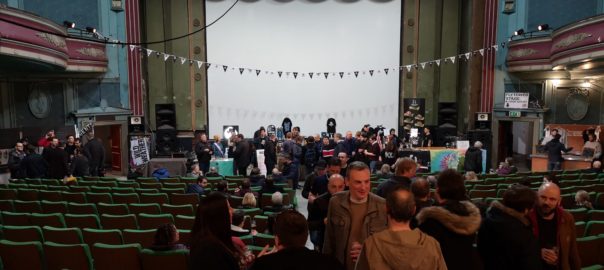
 It was organised once again this year by Jules Gray, co-owner of Hop Hideout and director of Sheffield Beer Week. As I write this, we are right in the midst of Sheffield Beer Week, an excellent event for all Sheffield beer lovers packed full of tap takeovers, beer festivals and much more. For this year’s event there were several ‘first pours’ including a few special kegs which were the only ones in existence!


 Fort Lapin, over a mile from the Belfort, is normally only open to the public on Saturdays. On my early-morning visit, I was given a personal guided tour by the brewer and co-owner, Kristoff Vandenbussche. A range of high-quality bottle conditioned beers are available, all bottled on-site. There is also a small cosy on-site sampling room. Hoplapin, a 6% hibiscus-infused hoppy blonde, proved an excellent way to start the day.
By contrast, Bourgogne des Flandres Brewery, opened in 2016, part of the long-established Timmermans (Martins) empire, is very tourist-orientated. There is both a large shop and café, lots of staff, upmarket food options (for example, Black Tiger Scampi at €16.60) and a large range of beer, the latter including a tasting tray of 12 cl of six different beers at €14. Adjacent to a canal and close to the Belfort, the brewery tour includes technological assistance and many links to historical references. Their main brew is the base for the 5% Bourgogne des Flandres red ale. This base is later blended with a Timmermans lambic. They also brew experimental beers, some of which were available in both the café and at Bruges Beer Festival: at the latter, one Primeur was Nikita, a 9.5% imperial porter.
Fort Lapin, over a mile from the Belfort, is normally only open to the public on Saturdays. On my early-morning visit, I was given a personal guided tour by the brewer and co-owner, Kristoff Vandenbussche. A range of high-quality bottle conditioned beers are available, all bottled on-site. There is also a small cosy on-site sampling room. Hoplapin, a 6% hibiscus-infused hoppy blonde, proved an excellent way to start the day.
By contrast, Bourgogne des Flandres Brewery, opened in 2016, part of the long-established Timmermans (Martins) empire, is very tourist-orientated. There is both a large shop and café, lots of staff, upmarket food options (for example, Black Tiger Scampi at €16.60) and a large range of beer, the latter including a tasting tray of 12 cl of six different beers at €14. Adjacent to a canal and close to the Belfort, the brewery tour includes technological assistance and many links to historical references. Their main brew is the base for the 5% Bourgogne des Flandres red ale. This base is later blended with a Timmermans lambic. They also brew experimental beers, some of which were available in both the café and at Bruges Beer Festival: at the latter, one Primeur was Nikita, a 9.5% imperial porter.
 The 2019 festival utilised three adjacent venues: two large marquees (in the Burg and the Markt) and part of the Belfort building. Opening from 12:00 until 22:00 on the Saturday and 11:00 until 20:00 on the Sunday, over 70 brewery bars provided well over 500 beers. These ranged from the well-known to more than 70 which were described as either ‘niew’ or ‘primeur’. Among many others, Dominator’s Potion II, a 12% whisky-barrelled stout from D’Oude Maalderij was appreciated. The rumour for 2020 is that the festival will be moving across town to t’Zand.
On the Sunday, the sun came out, so we made use of the train to Ostend and then the coast tram, the kussttram. The 67 km route runs from Knokke in the north to De Panne, on the border with France. A day ticket (€7) took us to Middelkerke, De Haan, Blankenberge and the new Jus de Mer Brewery. Recommendations include: Herman (Blankenberge), Zeeduif (De Haan) and Iceberg (Middelkerke). The latter had both Val-Dieu Tripel (9.0%) and background music which included an excellent Flemish cover of ‘Ride a White Swan’ (remember T.Rex).
The 2019 festival utilised three adjacent venues: two large marquees (in the Burg and the Markt) and part of the Belfort building. Opening from 12:00 until 22:00 on the Saturday and 11:00 until 20:00 on the Sunday, over 70 brewery bars provided well over 500 beers. These ranged from the well-known to more than 70 which were described as either ‘niew’ or ‘primeur’. Among many others, Dominator’s Potion II, a 12% whisky-barrelled stout from D’Oude Maalderij was appreciated. The rumour for 2020 is that the festival will be moving across town to t’Zand.
On the Sunday, the sun came out, so we made use of the train to Ostend and then the coast tram, the kussttram. The 67 km route runs from Knokke in the north to De Panne, on the border with France. A day ticket (€7) took us to Middelkerke, De Haan, Blankenberge and the new Jus de Mer Brewery. Recommendations include: Herman (Blankenberge), Zeeduif (De Haan) and Iceberg (Middelkerke). The latter had both Val-Dieu Tripel (9.0%) and background music which included an excellent Flemish cover of ‘Ride a White Swan’ (remember T.Rex).
 We also visited several bars in Bruges, including, an old favourite, t’Brugs Beertje. Here, a new house beer, Hazy Daisy (8.0%) brewed by Belgian micro, Siphon was available. This is named after Daisy Claeys, the long-time owner, who retired at the end of 2016. It was created in 2018 to celebrate the 35th anniversary of this internationally-known institution.
Other Bruges bars visited included De Garre (10.5% house tripel from Van Steenberge), Rose Red (lots of red roses and possibly the best lambic selection in the city, also De Dolle Dulle Teve Tripel at 10.0%) and Zandloper, the first bar off the train: Sint-Bernardus Abt12 (10.5%).
We also visited several bars in Bruges, including, an old favourite, t’Brugs Beertje. Here, a new house beer, Hazy Daisy (8.0%) brewed by Belgian micro, Siphon was available. This is named after Daisy Claeys, the long-time owner, who retired at the end of 2016. It was created in 2018 to celebrate the 35th anniversary of this internationally-known institution.
Other Bruges bars visited included De Garre (10.5% house tripel from Van Steenberge), Rose Red (lots of red roses and possibly the best lambic selection in the city, also De Dolle Dulle Teve Tripel at 10.0%) and Zandloper, the first bar off the train: Sint-Bernardus Abt12 (10.5%).
 In short, Belgium never disappoints – just don’t forget the essential reference material!
Dave Pickersgill
Pollard, C. and McGinn, S. (3rd edition, 2013) Around Bruges in 80 Beers. Cogan & Mater
Strange, J. and Webb, T. (8th edition, 2018) CAMRA’s Good Beer Guide Belgium. CAMRA Books.
In short, Belgium never disappoints – just don’t forget the essential reference material!
Dave Pickersgill
Pollard, C. and McGinn, S. (3rd edition, 2013) Around Bruges in 80 Beers. Cogan & Mater
Strange, J. and Webb, T. (8th edition, 2018) CAMRA’s Good Beer Guide Belgium. CAMRA Books. 


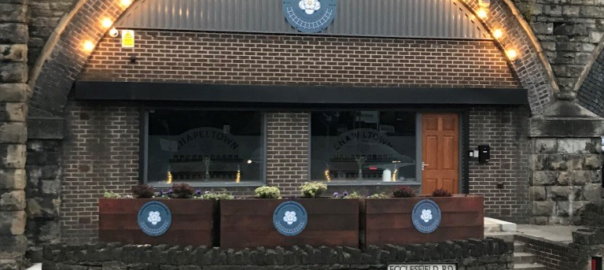
 Both Darrell and Richard successfully passed their own personal licences and plans were then submitted for A4 status at the Arch, which was dutifully granted by Sheffield City Council with a handful of conditions. The final hurdle was the premises licence; there was plenty of paperwork to be done here, but again this was granted by SCC in early August 2018 following the nerve-wracking 28-day window for any opposition. The notification from the council triggered that six-week renovation, and friends and family mucked in to meet all of the deadlines and milestones.
Following a detailed recruitment process, the doors were open for the first time on Monday 24 September for a friends and family night, followed by a VIP night on the Tuesday for local Chapeltown businesses. The Monday “soft launch” was intentional to iron out any teething problems prior to our first weekend, however, we did not appreciate just how overwhelmingly well the new venture would be received.
Both Darrell and Richard successfully passed their own personal licences and plans were then submitted for A4 status at the Arch, which was dutifully granted by Sheffield City Council with a handful of conditions. The final hurdle was the premises licence; there was plenty of paperwork to be done here, but again this was granted by SCC in early August 2018 following the nerve-wracking 28-day window for any opposition. The notification from the council triggered that six-week renovation, and friends and family mucked in to meet all of the deadlines and milestones.
Following a detailed recruitment process, the doors were open for the first time on Monday 24 September for a friends and family night, followed by a VIP night on the Tuesday for local Chapeltown businesses. The Monday “soft launch” was intentional to iron out any teething problems prior to our first weekend, however, we did not appreciate just how overwhelmingly well the new venture would be received.
 Fast forward six months and many lessons have been learned. We now have CAMRA discount night on Mondays, have had themed quizzes on Tuesdays (80’s and 90’s nights going down particularly well), live entertainment on Wednesdays and Sunday afternoons as well as free YAPAS (pork pie and sausage rolls) on Friday and Saturday lunchtimes.
We strive to procure all of our stock from the Yorkshire area, ales, cans, a rotating keg line, gins even bar snacks to keep the local economy thriving. For more information on what’s happening at The Chap Tap, check out our Facebook and Instagram pages which is regularly updated. We have a great transport network in Chapeltown, trains are just a 10-minute ride from the town centre, we hope to see you soon at The Chap Tap!
Darrell Johnson
Fast forward six months and many lessons have been learned. We now have CAMRA discount night on Mondays, have had themed quizzes on Tuesdays (80’s and 90’s nights going down particularly well), live entertainment on Wednesdays and Sunday afternoons as well as free YAPAS (pork pie and sausage rolls) on Friday and Saturday lunchtimes.
We strive to procure all of our stock from the Yorkshire area, ales, cans, a rotating keg line, gins even bar snacks to keep the local economy thriving. For more information on what’s happening at The Chap Tap, check out our Facebook and Instagram pages which is regularly updated. We have a great transport network in Chapeltown, trains are just a 10-minute ride from the town centre, we hope to see you soon at The Chap Tap!
Darrell Johnson