Sheffield Beer Week

Original Hop Hideout on Abbeydale Road

In 2013, Jules Gray opened ‘a labour of beery love’: one of the first ‘drink in’ beer shops in the UK, the multiple award-winning Hop Hideout. Originally based in a former Yorkshire Penny Bank on Abbeydale Road, 2019 saw a move to the Kommune food hall in the centre of Sheffield.

Hop Hideout’s taps when they were in the Kommune food hall

Five years later, after the rigours of Covid, brought relocation to the Grade II listed, Leah’s Yard (S1 4HP) when, it reopened after restoration. This early 19th century site was originally built as small workshops for the manufacture of hand tools.

Hop Hideout in Leah’s Yard

Brought up in County Durham, her journey to Sheffield included a bar-job in a local WMC, study at Sheffield Hallam University, time in both Birmingham and Manchester and after several other positions, working in technical support for a multi-national brewing company in Burton on Trent. After seven years, it was time to move on. A seminal conversation with Zak Avery, the founder of Beer Paradise and co-founder of Beer-Ritz (Leeds), led to an interesting question: ‘Why don’t you set up your own beer shop?’ The rest is history.

Jules also runs the annual Sheffield Beer Week (SBW,  https://sheffieldbeerweek.co.uk/). This takes place during the second week in March, coinciding with International Women’s Day (8th). Organised by Jules and her colleague, Claire Tollick, the first incarnation in 2015, saw about ten venues, with events spread over the week: recent years have had over forty venues. SBW and Norwich City of Beer are the only two UK-based city-wide beer events which have been in place for over a decade.

She recalls the first year: ‘SBW was inspired by the early days of my newly launched beer business. I was getting excited by the independent beer sector. I noticed that there were lots of beer weeks in America, and also Norwich City of Ale was happening in the UK. It was joined up with the frustration of hearing a lot of people talk about near-by cities like Manchester or Leeds and not mentioning Sheffield. And living in the city and seeing it, a tangible beer history, culture, brewers … I was getting quite frustrated as to why people were not talking about Sheffield. And I thought wouldn’t it be great to shout more about the beer scene in the city that I had made my home. And I spoke to a friend who really supported the idea and about two months before the date we got the ball rolling.’

‘After the first-year people saw the economic benefits: increased footfall, a heightening awareness and celebrating venues, the breweries, and the culture, but also attracting people from outside the region to visit Sheffield to discover wonderful things that we sometimes take for granted. I just love it. I want people to get that joy and excitement across to other people. On the flip side you do need a bit of a cheerleader to raise awareness and join up the dots of the community. There is a tipping-point. You need more than one, it becomes a trail. You bounce off each other.’

The main aim of this independent beer focused event is to bring additional footfall. The first three years coincided with Sheffield hosting the annual SIBA Conference, this providing a ready source of beer-interested visitors. When the SIBA conference moved to Liverpool, Jules was both humbled, and reassured, by the local demand for SBW to continue. It was something people thought was really valuable.

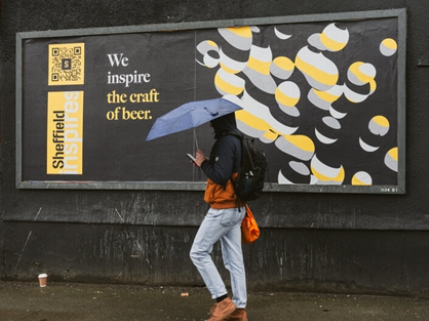
She recalls: ‘At the time it felt like the local council weren’t valuing the culture, community and historic value of the brewing and beer sector, the businesses which were driving visitor footfall. This has definitely changed: momentum has grown. That momentum has led the Sheffield Inspires campaign to include ‘the Craft of Brewing’ as one of their five main strands. It’s been a gradual positive relationship development.’

In 2020, SBW was the last large beer event in the UK before lockdown. Personally, I recall leading a Pub Heritage Walk on Friday 13th March. This was my last ‘big go-out’ for a considerable period … 16th March saw official advice to avoid all non-essential contact, lockdown following on the 23rd. The following year saw a virtual event.

Dave Pickersgill at the last pre-Covid SBW heritage walk

2026 brings the 12th incarnation: a week-long festival (6-15 March) celebrating the region’s brewing landscape. Collaboration is key with Sheffield’s bars, pubs and restaurants joining forces with both local organisations and local, national, and international breweries to host a large variety of events. I led my first SBW pub heritage walk from Fagan’s in 2017: this year, in collaboration with local historian, John Stocks, a talk, and a walk, will concentrate on Little Chicago.

Indie Beer Feast

SBW commences with Indie Beer Feast, a two-day celebration of independent craft beer: brewery bars, street food, low intervention wines, and fine cider.

Until 2020, this took place at Abbeydale Picture House. After a break due to Covid, 2022 saw a move to the 1930s industrial space of Trafalgar Warehouse.

Pete Brown, Author of “Tasting Notes”

As usual, 2026 will see several collaborative brews, all focused on the theme of Sheffield synth city: a tribute to the pioneering electronic music which the city has produced. For example, St.Mars of the Desert are hosting an, as yet, unannounced local band while relatively new breweries Duality and Ticking Clock are working together. Designed by Lewis Ryan, the visual map for the event is taking inspiration from the 1981 Human League album, Dare, while the botanical inspired artwork has been designed by local illustrator, Sanpo. There is also an input from well-known beer writer, Pete Brown, who at an event hosted by Hop Hideout, will be interviewed by music and culture writer Daniel Dylan Wray about matching beer and music.

As Jules put it: ‘‘Sheffield Synth City’ allows us to blend the creativity of our independent breweries with the ground-breaking spirit of our electronic music pioneers. It’s powerful to showcase how innovation thrives across all creative industries in the Steel City.”

Reflecting back on SBW, she comments: ‘it’s an umbrella event‘it’s something customers love, it really chimes with them, it creates a good buzz and excitement. There are lots of positives: learning and knowledge transfer. From both a trade and customer perspective, customers love it.’

‘Sheffield has so many things, the Home of Football, electronic music legacy, beer, and brewing. I think people don’t mention Sheffield, City of Stainless Steel and what drives the brewing industry. We don’t mention the impact we’ve had in the sector. To me, that’s a massive light-bulb revelation.’

The invention of stainless steel is often credited to Sheffield native, Harry Brearley, who in 1913, discovered that adding chromium to molten iron created a rust-resistant alloy. Stainless Steel is extensively used worldwide as a key part of the brewing process, from coppers to fermenting vessels to casks … it is an often un-noticed, but crucial part of the contribution of Sheffield to the worldwide beer industry: Sheffield could be seen as the ‘Home of Modern Beer.’

Beer tourism is a crucial cog in Sheffield; the footfall and financial benefit is a win-win for the local hospitality and brewing industries. Sheffield Beer Week is a crucial part of this jigsaw. We hope you all have an enjoyable time when you visit the best beer city in the world.

Jules Gray in Hop Hideout
Outside Hop Hideout in Leah’s Yard
Merch at Hop Hideout
Little Chicago talk at the Crow Inn

Sheffield Beer Week

The Pump-clip Display 

Is BACK – Shout ‘Hooray!’ 

Feel free to pop in 

To The Harlequin 

On Nursery Street, 

You’re in for a treat. 

Come down, take a peek 

Throughout Sheffield Beer Week. * 

*upstairs at The Harlequin pub. Runs Sat 7 – Sun 16 March. Free entry (donations to Charity). Curated by Richard Hough 

Sounding the Synth Sirens

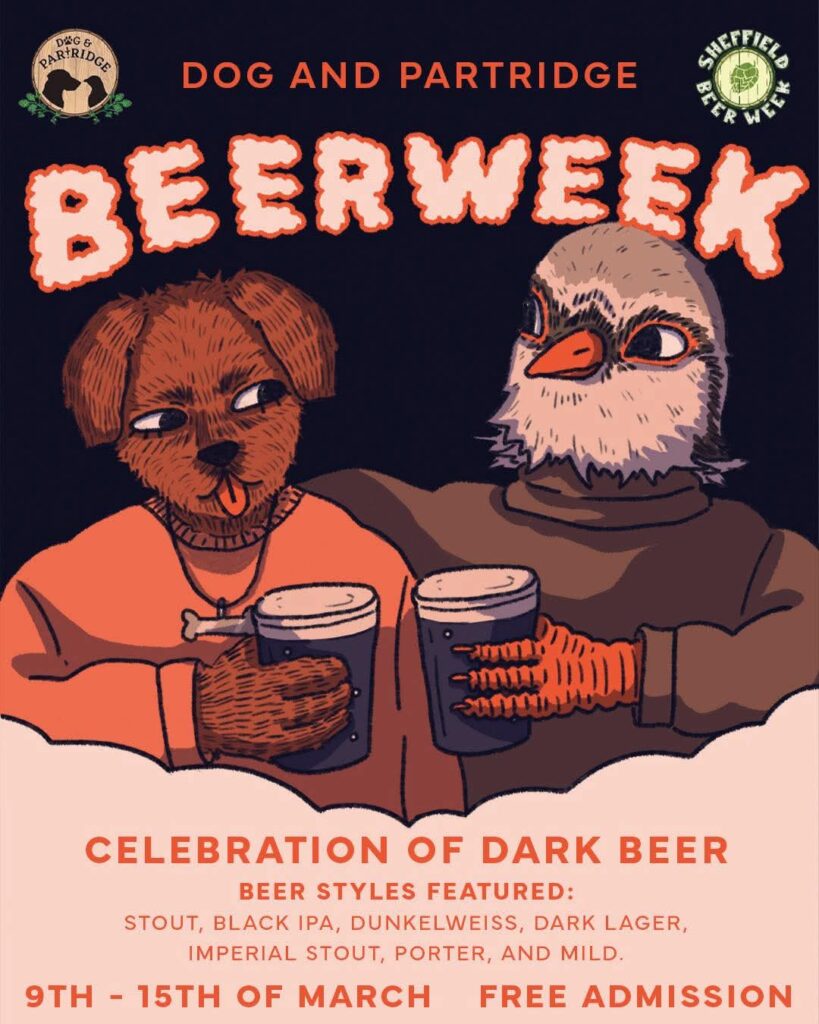
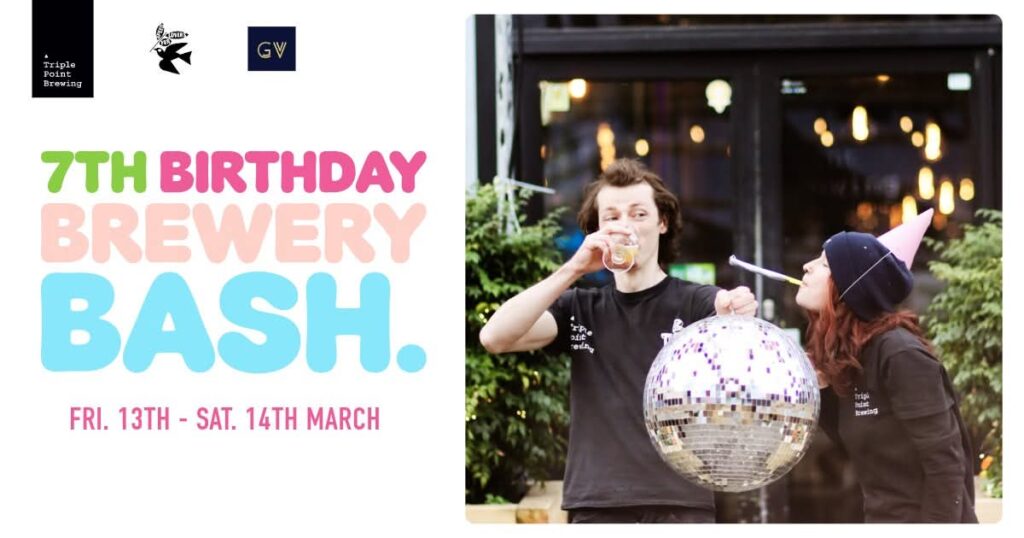
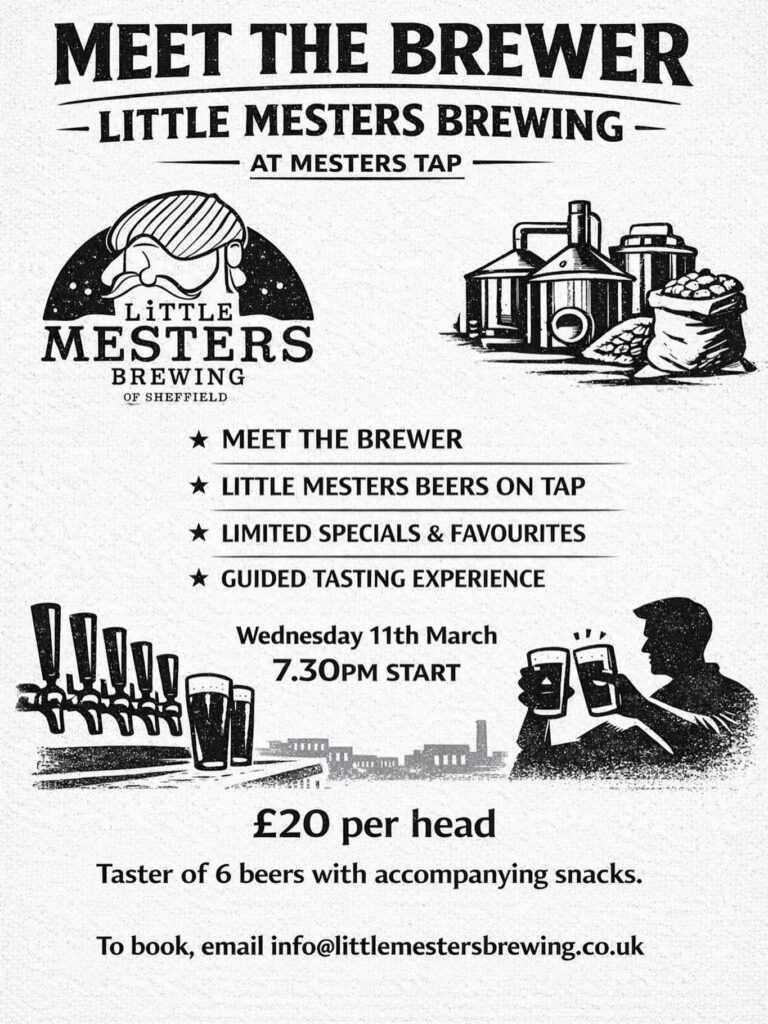
Sheffield’s breweries will be celebrating the city’s sonic and synth musical heritage in 2026 under the banner of ‘Sheffield Synth City’ for Sheffield Beer Week. Running from Monday March 9th to Sunday March 15th, 2026. The week-long celebration of the city’s independent beer scene will pay homage to Sheffield’s legendary electronic music heritage and continuing legacy, home to pioneers of synth-pop, electronic, and bleep-and-bass, including The Human League, Heaven 17, Cabaret Voltaire, Clock DVA, Warp Records and everything in-between. Breweries involved so far include Abbeydale, Tapped Brew Co, Triple Point, Kelham Island, Bradfield, Little Mesters, Emmanuales, Ticking Clock, Thornbridge, Duality, True North, Little Critters and Saint Mars of the Desert. These unique brews will be inspired by classic electronic music genres, iconic Sheffield bands, or even the flavour profiles of their favourite analogue synths. This theme will create an innovative mash-up of two of Sheffield’s celebrated cultural exports—its renowned brewing industry and its influential music scene.

“Sheffield is a city of steel, beer, and synthesisers. ‘Sheffield Synth City’ allows us to blend the creativity of our independent breweries with the ground-breaking spirit of our electronic music pioneers,” says Jules Gray, Founder of Sheffield Beer Week and Hop Hideout. “It’s powerful to showcase how innovation thrives across all creative industries in the Steel City.”

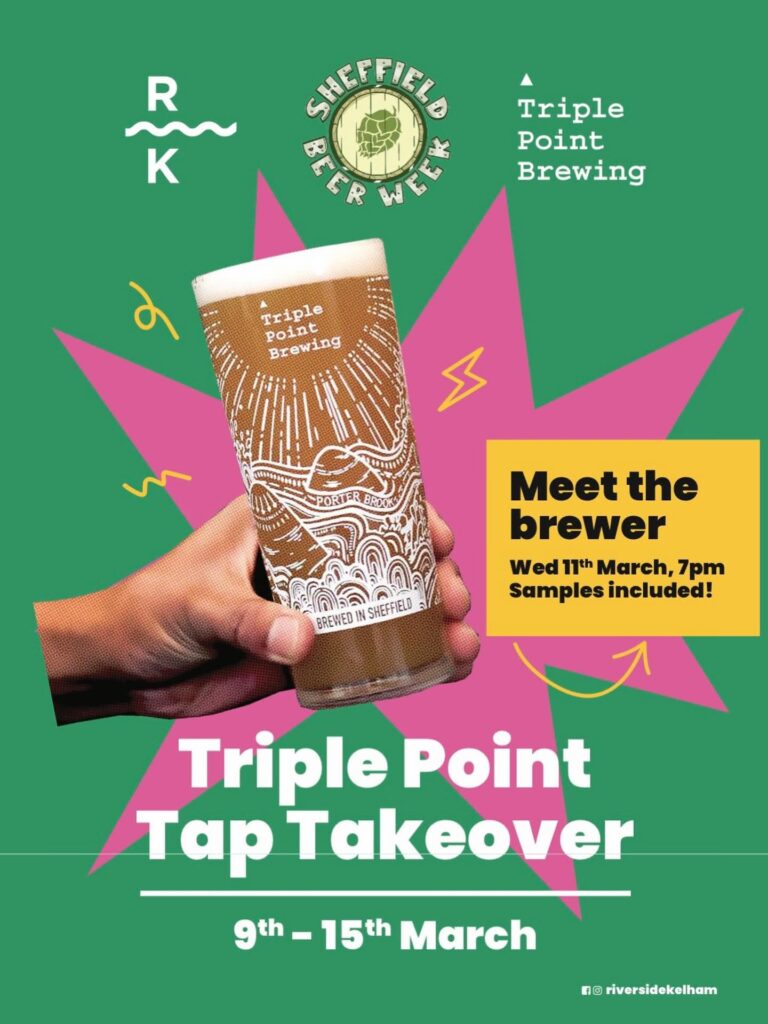
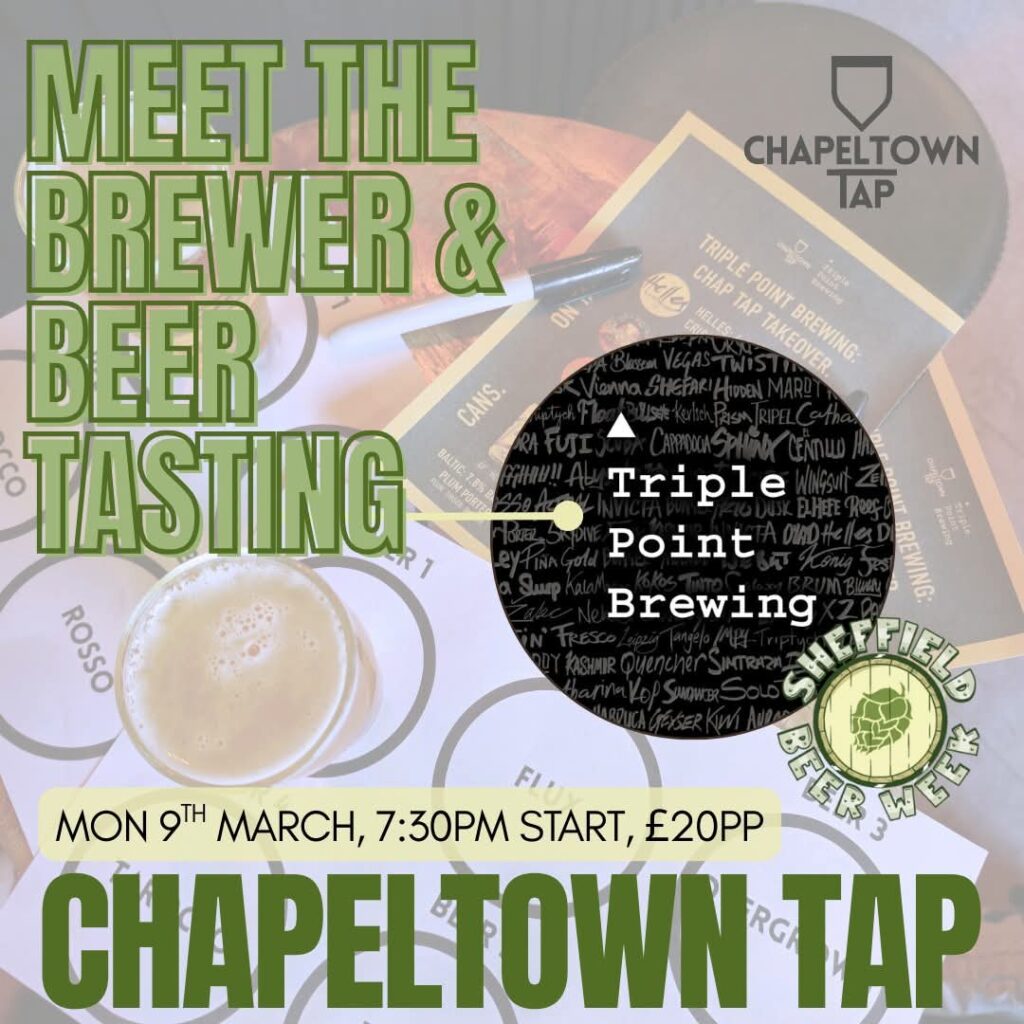
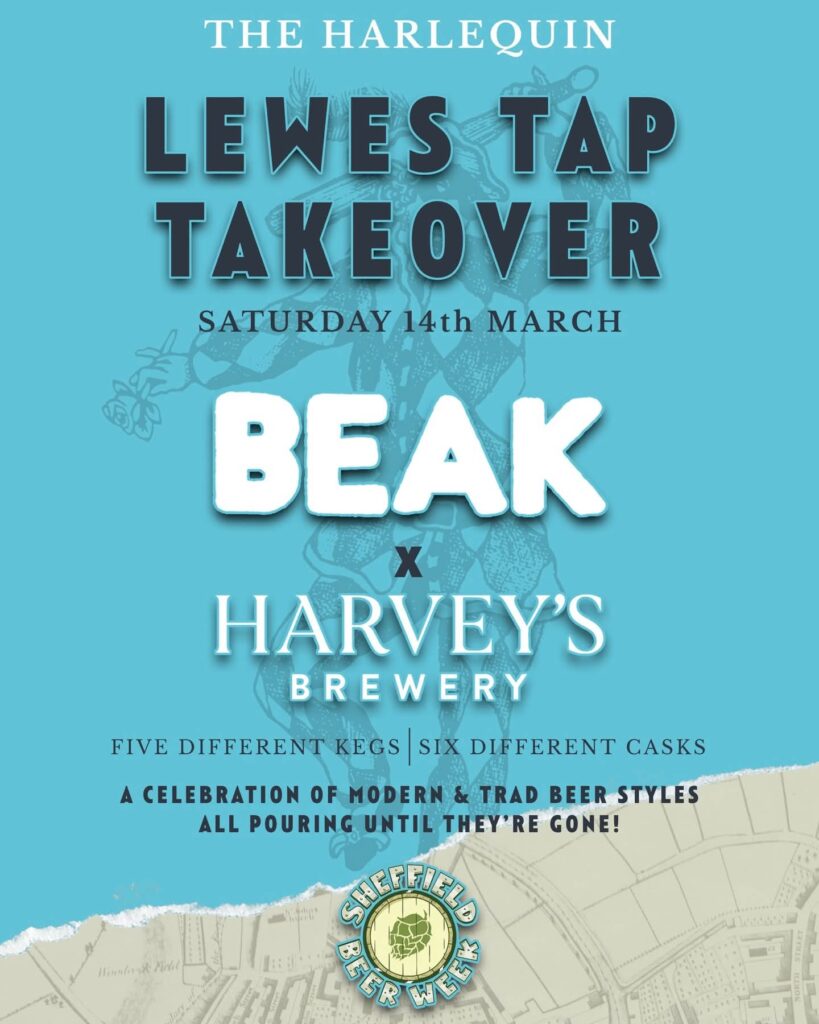
During the rest of the week expect ‘Sheffield Synth City’ beer collaborations pouring around the city, tap takeovers from local to global independent breweries, meet the brewers, brewery tours, beer walking tours, beer and food pairings, beer and music pairings and more. This multi-venue event will be celebrated throughout Sheffield’s hospitality venues – from brewery taprooms, pubs, micropubs, bars and beer shops.

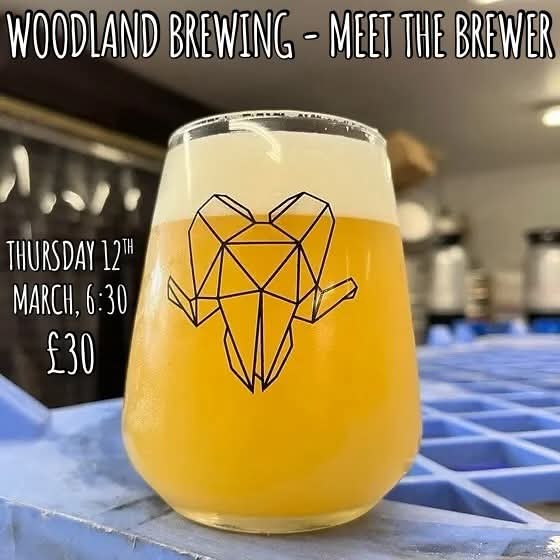
South Yorkshire artist Lewis Ryan is working on a visual map project alongside. Sheffield’s Abbeydale Brewery celebrate a big milestone reaching 30 years of brewing in 2026! Then International Women’s Collaboration Brew Day (@IWCBD /unitebrew.org) on International Women’s Day – 8th March falls in the week once again, so look out for additional events, including a Thornbridge beer launch at their venues such as Hallamshire House, The Stag’s Head and The Greystones pubs. Local historian Dave Pickersgill, editor of CAMRA’s ‘Sheffield’s Real Heritage Pubs’ will hold his much-loved beer and history walks. While Strange Britain’s Adrian Finney will host his popular haunted pub walking tour. Tartarus Beers will be helping The Wonky Labrador with their 3rdbirthday merrymaking. Woodland Brewing will be hosting a meet the brewer at The Bear. While beer broadcaster Pete Brown will be interviewed by music and culture writer Daniel Dylan Wray focusing on his latest groove of beer and music pairing at Hop Hideout beer shop.

Plus a number of international Belgian breweries will be popping up around the city such as Brewery Vanhonsebrouck (Kasteel beers) at The Crow and Timmermans at Hop Hideout. Ceramic studio Earth Paper Fibre will be hosting a beer tankard making workshop in Leah’s Yard. There are plenty more events to be announced, this is just a musical snippet. Check the Sheffield Beer Week website to discover venues and event listings throughout February, as they begin to be advertised.

On the weekend of 6 to 7thMarch, to kick-off the week, Sheffield’s craft beer festival, Indie Beer Feast launches. A celebration of great independent craft beer with brewery bars, street food, rum, fine wines, and cider. The beer festival champions and supports The Everyone Welcome initiative. British Guild of Beer Writers’ members and leading UK award-winning beer writers Pete Brown, Rachel Auty (Women on Tap) and Adrian Tierney-Jones will be heading up to host pop-up tastings and to judge the Indie Beer Feast ‘Beer of the Festival’. Alongside further pop-up tastings from breweries pouring at the festival and Sheffield, via Brazil, based journalist and broadcaster Livia Barreira of ‘Living in Sheffield’. This year’s botanical inspired artwork has been designed by Sheffield based illustrator Sanpo. Breweries pouring and announced so far include Sheffield’s Abbeydale, Derbyshire’s Thornbridge and Ashover Brew Co, Manchester’s Cloudwater and Courier Brewing, Nottinghamshire’s Liquid Light and Ticking Clock, Somerset’s Yonder, Liverpool’s Neptune, Leeds’ Tartarus, Reading’s Siren, and Birmingham’s Attic. Alongside additional bars from Hop Hideout beer shop and specialist rum aficionado RumKeg876.

Get ready to tune in and follow the beat:
Stay up-to-date with all announcements by following @SheffBeerWeek on social media (Facebook / Instagram) and checking the official website.

Head to http://sheffieldbeerweek.co.uk

Sheffield Childrens’ Hospital

Sheffield Childrens’ Hospital snowflakes

Thanks again to all who made donations to Sheffield Children’s Hospital Charity at SCBF49. Over the last few weeks, many of you will have noticed references to Sheffield CAMRA on their snowflakes.

Illustrated are: Sheffield City Hall, the Childrens’ Hospital, the Ryegate Centre and our Chair, Paul Manning and grandson, Marcus, with Theo the charity bear at the Becton snowflake unveiling.

Beyond Craft

An event at the Portland Works in early October saw the formal launch of a new report by Prof. Phil Withington and Dr. Nicholas Groat (University of Sheffield) which explores the place of ‘craft’ alcohol in the city’s past, present, and future. The research was funded by the Arts and Humanities Research Council.

Sheffield was chosen as previous reports have established the city as the ‘UK capital of beer.’ A high density of independent breweries is mirrored by a large proportion of independent pubs, bars, and specialist off-licences.

An immediate key finding: one which was not expected at the project inception is that the word ‘craft’ has been devalued. It is now a problematic term, one which has been taken by the multi-nationals.

‘Independent’ is more appropriate. This captures a commitment to small-scale, autonomous artisanship, passion, skill & community (see for example, the SIBA ‘Indie Beer’ campaign). ‘Independent’ is part of the Sheffield heritage.

Since 2021, Sheffield and District CAMRA publications have defined ‘craft beer’ as ‘a meaningless phrase, often used in marketing or an enigma: ‘undefinable and misunderstood.’’ It seems that the University researchers agree with this definition.

The study also shows how the independent sector’s geography reflects Sheffield’s long history as a ‘city of neighbourhoods’ and how the values and working practices of the sector can contribute to a sustainable and vibrant future. The ‘Independent’ sector forms a significant proportion of sites dedicated to producing, retailing & consuming alcohol. The survey found that 42% of their sample (464) were independent. Sheffield has a high percentage of such ownership, a direct reflection of the city’s unique history of distinct, interconnected neighbourhoods.

Other findings include a local emphasis on drink ‘better’ not ‘more.’ In addition, quality of ingredients, culture of drinking environments and responsible & considerate habits are all important.

The lack of means for the independent sector was to organise was also noted. There is no city-wide forum, a need for liaising with city authorities and a lack of marketing & other strategies to enhance the sector.

Recommendations include:

  • Use ‘independence’ not ‘craft’
  • Form a Sheffield Indy Drinks Hub as the collective voice of the sector
  • Explore how other places with concentrations of independent producers organise and market themselves
  • Promote Sheffield’s local unique heritage
  • Strengthen partnerships with Local Authorities

The full report and a summary is available at: https://sites.google.com/sheffield.ac.uk/place-craft-and-alcohol

Festival Volunteers Social

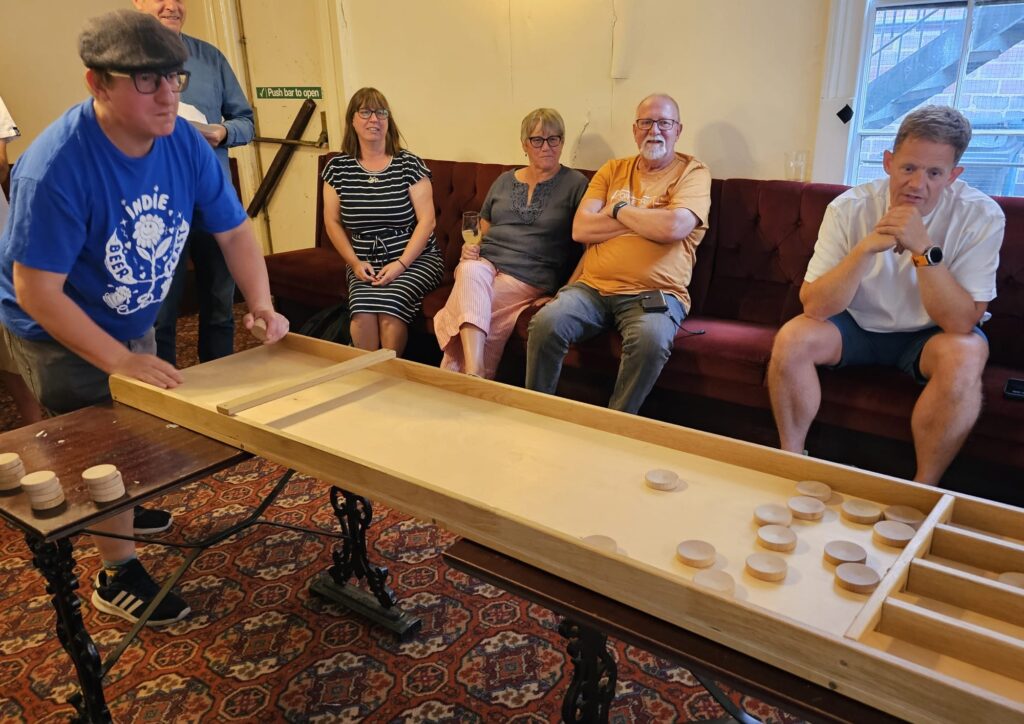
A number of our beer festival volunteers had a get-together recently to try their hand at dutch shuffleboard, or Sjoelen to give it it’s correct name.

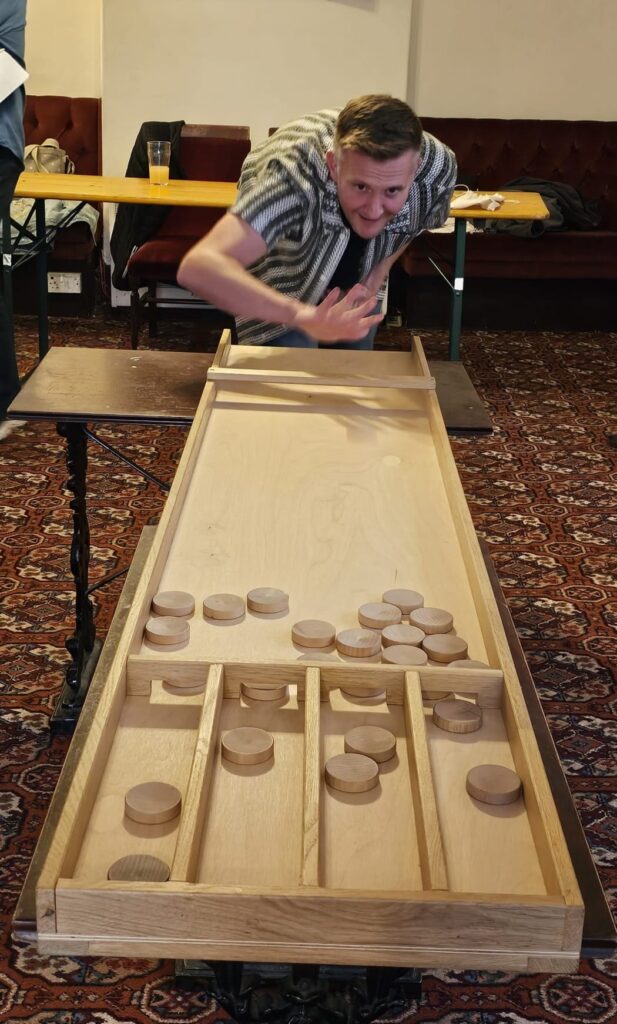
The game involves sliding wooden discs along the board to try and get them into the numbered compartments. Not as easy as you might think as all the failed attempts start to build up!

In the upstairs room at the Harlequin on Nursery Street, over 20 of us tried our hand in a highest score competition and a quickfire play-off version. All over a few of the Harlequin’s excellent beers of course.

The pub also kindly donated £25 worth of vouchers for our two winners.

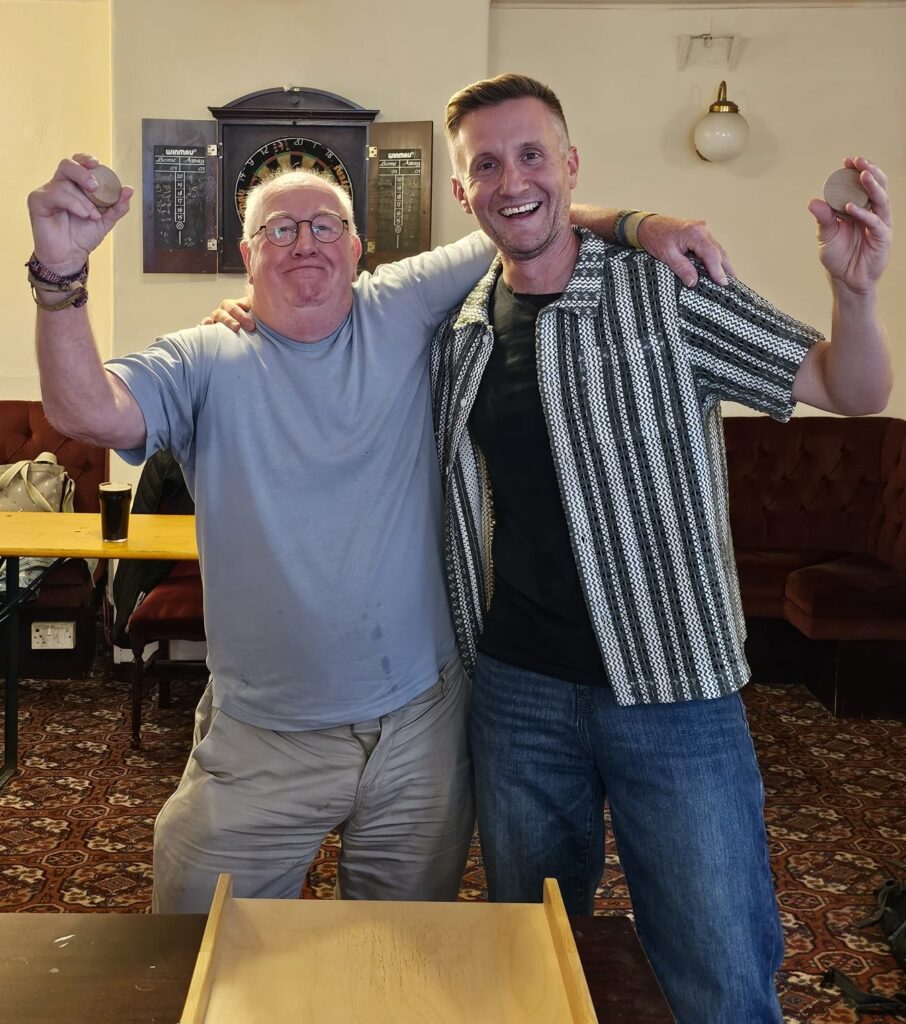
Lee Vallett won the high score competition, and Jamie Smith won the play-off.

It was a great success, and a repeat afternoon is planned for sometime in the spring.

Malc Anderson at the board watched by Ally Smith, Ian & Anne Ashforth and Lee Vallett
Play-off finalists Jamie Smith & Jess Cawley
Jamie in the process of winning the final

CAMRA reacts to government pub closure figures: “Tip of the Iceberg”

Official Government figures have revealed that more than 200 pubs have closed across the UK in the first half of 2025, with closures accelerating amid mounting tax burdens and cost pressures on the sector.

CAMRA’s own figures, which show 137 pubs lost in the first six months of the year, and 149 already gone in total this year, are broadly in line with the Government’s, underlining the scale of the crisis facing the industry.

CAMRA Chairman Ash Corbett-Collins said:

“These latest figures are yet more proof that pubs are being pushed to the brink by unfair and unsustainable tax burdens. We warned earlier this year that rising Employer National Insurance Contributions, alongside a cut in business rates relief, would hit pubs hard, and sadly we are now seeing those warnings borne out in closures on a devastating scale. Every pub that shuts its doors is a blow to jobs, communities and our cultural heritage.”

“What makes this even more devastating is that so many of them are not just shutting their doors temporarily but being demolished or converted to other uses. CAMRA has consistently called for stronger planning protections to stop our locals being wiped out overnight. Pubs are more than just businesses; they are community lifelines. Without action in the Autumn Budget, figures like this will be just the tip of the iceberg.”

What makes a good head

The tendency to foam and the stability of the head of a beer is often seen as an indicator of successful fermentation. A very detailed research paper on the stability of such foam has recently been published by the American Institute of Physics in their Journal, ‘Physics of Fluids.’ The authors compared the stability of the head produced by six beers: four Belgian: Bosteels Tripel Karmeliet (8.4%), Westmalle Triple (9.5%), Westmalle Dubble (7%) and Westmalle Extra (4.8%) and two Swiss Lagers: Chopfab (4.7%) and Feldschlösschen (4.8%).

The conclusion is that Triple fermented beers have the most stable foams, while the froth rim created by single fermentation beers, including lagers, are more likely to collapse.

Like any other foam, a beer-head is made of small air bubbles, separated by thin films of liquid. Under the pull of gravity and the pressure exerted by surrounding bubbles, over time, the bubbles burst and the foam collapses. The rate at which this occurs depends on the form of a barley-derived protein: Liquid Transfer Protein 1 (LTP1).

In single fermentation beers, LPT1 proteins have a globular form and arrange themselves densely as small, spherical particles on the surface of the bubbles. “It’s not a very stable foam,” said Prof Jan Vermant, a chemical engineer at ETH Zurich, who led the study.

During the second fermentation, the proteins become slightly unravelled and form a net-like structure that acts as a stretchy elastic skin on the surface of bubbles. This makes the liquid more viscous and the bubbles more stable.

During the third fermentation, the LPT1 proteins become broken down into fragments. These protein fragments stabilise foams in many everyday applications such as detergents. Some of the triple fermented beers had foams that were stable for 15 minutes.

As Vermont says: “We now know the mechanism exactly and are able to help the brewery improve the foam of their beers.”

Abstract:

A recent academic study indicates that Triple fermented beers have the most stable foams, while the froth rim created by single fermentation beers, including lagers, are more likely to collapse.

Photos: Westmalle, taken by Dave Pickersgill

Link:

https://pubs.aip.org/aip/pof/article/37/8/082139/3360405/The-hidden-subtlety-of-beer-foam-stability-A The hidden subtlety of beer foam stability: A blueprint for advanced foam formulations | Physics of Fluids | AIP Publishing

Beer Matters celebrates

Fifty years ago, in the summer of 1974, a new publication, ‘Parish Pump’ joined the printed material which jostled for space in our local pubs and clubs. This was the first edition of the new Sheffield and District CAMRA magazine: a few sides of A4 stapled together – very different from to-days professionally produced 32-page, full colour ‘Beer Matters.’ 

The intervening fifty years tell a tale of major changes in the Sheffield beer/pub scene, of large breweries closing, and, later, small breweries taking their place … of Sheffield becoming the cask beer capital of the world. Over fifty years, almost 600 editions of our free magazine have included month-by-month reporting of these many changes.

Parish Pump No.2 (6 September 1975) mentions that; ‘at least 25 of the 61 pubs in central Sheffield sell real ale although one’s choice is limited to our local Big Three.’ At that time, Sheffield had four large and long-established breweries; Stones Cannon Brewery (established: 1865), Wards Sheaf (1896), Whitbread Exchange (1851) and the often-forgotten Hope Brewery on Claywheels Lane (1939).

Fifty years later, none of these remain. However, the city now has 17 breweries. The oldest is Abbeydale, now an Employee Owned Trust, who celebrate their 30th anniversary next year. In 1975, when Abbeydale commenced, no-one would have predicted that, fifty years later, the 2025 Sheffield Beer Census would count almost 400 cask beers available on a single day: mostly on handpump.

From edition 33, September 1978, the format became A5 and the name changed to ‘Beer Matters.’ As stated at the time: ‘This month your local newsletter has a new name and format. The former is an attempt to get rid of the ecclesiastical connotations of the old name “Parish Pump”: the latter is in order to make the publication more convenient to handle and easier to read. We hope that you agree that an improvement has been made in both these respects.’

Over the years quality has improved: from four typed and stapled A4 sheets to a stapled A5 booklet to glossy publications and today’s excellent full-colour publication. The 1980s booklets required a ‘Beer Matters stapling social’ to put together the four A4 sheets (16 pages) in the correct order. I recall attending these monthly meetings in the Sheaf View (Bramall Lane). Here, lots of paper was delivered from the printer and large staplers were put to good effect. Since then, the branch has aimed to produce eleven issues annually: monthly with a winter double issue. Issue 500 was in September 2019. There has also been the occasional hiatus: for example, Covid saw a gap from April 2020 until our return in September 2021.

Local CAMRA meetings were the original information conduit to the editor. Today, in addition to the various meetings, internet resources are extensively utilised. Over the years, ‘Beer Matters’ has included innumerable stories. For example:

11: 1976: includes the news that ‘a beer exhibition venue has been found’ : this was the second Sheffield Beer Festival – next year will see the 50th.

190: November 1991: ’21 Not Out,’ CAMRA was 21 years old

281: August 1999: ‘Wards laid to Rest,’ the closure of Wards Brewery

399: July 2010: the first colour cover

500: September 2019: includes several retrospective contributions

520: February 2023: Tom and Barbara retire after over 37 years at Fagan’s

Beer Matters has had hundreds of contributors and many editors. Their roll of honour is listed. In addition to these editors, thanks also need to be given to Robin Lunnon for linking the magazine to our website and bringing design forward into the digital era. 

Thanks to all who have contributed over the last fifty years: let’s all drink to the next fifty!

Editors of the Sheffield & District CAMRA magazine:


Parish Pump:

1 – 14: Colin Walker, Tony Scholes

15- 27: John Kidd, Geoff Jenkins

28 – 32: Geoff Jenkins, David Grey

Beer Matters:

33 – 40: Geoff Jenkins, David Grey

41 – 54: David Grey, Terry Fellows

55: Terry Fellows, Norman Spalding

56: Terry Fellows

57 – 59: Terry Fellows, Mike & Joanne Taylor

60: Terry Fellows

61 – 64: Terry Fellows, Carole Ware

65 – 79: Carole Ware

80 – 112: Iain Colquhoun

113 – 148: Adrian Staton

149 -175: Lis Colquhoun (Lis Hensman from 155) 

176 – 220: Mike Hensman

221 – 237: Adrian Staton

238 – 265: David Staves

266 – 276: Richard Hough & Kathryn Page

277 – 282: David Staves

283 – 284: Linda Hutton

285 – 292: Ieuan Willis

293 – 295: Tim Stillman

296 – 330: Paul Goddard

331 – 474: Andy Cullen

475 – 495: Dom.Nelson

496 – to date: Andy Cullen