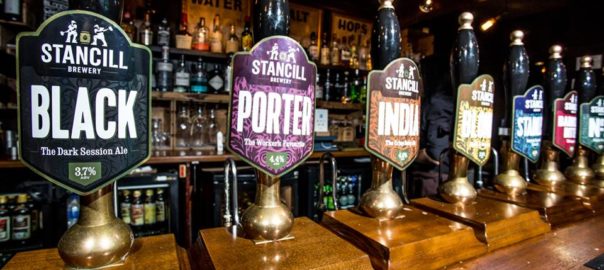
Stancill Brewery

In addition to a successful and award winning range of core beers which includes Barnsley Bitter, No.7 and Porter to name but a few, the brewing team at Stancill has announced plans to produce not one, but two special brews each month throughout 2017. The brewery plans to launch a series of new experimental brews, exploring different brewing techniques and beer styles which have not been previously available in Sheffield. This month, Stancill will release its American Nut Brown which offers a fresh perspective on the traditional pint – combining the full flavours of a traditional best bitter, with a strong hoppy aftertaste developed through the use of Chinook hops, commonly associated with IPAs. Head brewer Dean Pleasant believes the new beer will provide a completely different taste to all other Stancill beers, as he is planning to use a brand new yeast strain to create the beer. Dean said: “I’ve always believed that as well as producing our popular choice of beers, it’s important to experiment, innovate and develop – it’s the lifeblood of the brewing industry and by devoting additional time to the creation of new specials, we’re hoping to explore some old and long-forgotten beer types whilst adding our own interpretation to the recipes.” Each month will see the release of a brand new special alongside an as of yet un-named blonde ale, which also explores different characteristics of the popular beer variety. Previous Stancill specials have included 2016 world cup themed ales Zidane Zidane and Four Lions, summer themed special American Beauty and the much loved Christmas tipples Blizzard, Red Velvet and its unusual green beer Mistletoe. American Nut Brown will be making its way to pubs throughout Sheffield and further afield throughout January and will be available at the brewery’s pubs The Norfolk Arms in Grenoside and The Horse & Jockey in Wadsley. CAMRA members can benefit from a 20% discount in both pubs, making a pint of any Stancill tipple just £2.
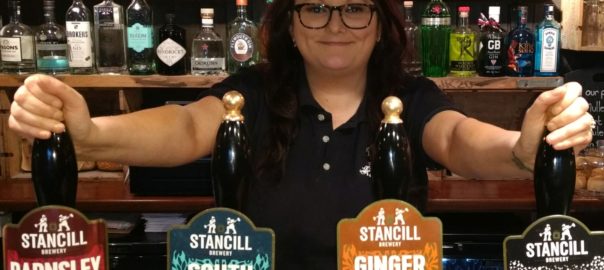
Stancill Brewery – staff news

It takes determination, grit, passion and something special to work in the pub industry, and the newest addition to the Stancill Brewery team has just that… and much more. Earlier this month, the brewery welcomed Katy Streets who joins as the brewery’s new Business Development Manager. She will work within the brewery’s newly established pubs division, overseeing future growth of the business as well as overseeing the growth and development of The Horse and Jockey in Wadsley and The Norfolk Arms in Grenoside, both of which opened last year. Katy will be working closely with managers Ashleigh McMain and Tracy Brown, as well as 16 members of staff across both pubs to enhance Stancill’s pub offering and real ale experience for beer connoisseurs across Sheffield. Katy is no stranger to the pub industry. She joins following a five year stint at the True North Brew Co where she was responsible for managing The Old House pub on Devonshire Street. Before joining True North, Katy spent time working in London and New York, working alongside Dave Wickett at Kelham Island Brewery, where she found herself running his New York bar and even found herself learning the craft of brewing, both in Sheffield and New York’s Brooklyn Brewery. Katy will work closely with Stancill Brewery founders Thomas Gill and Adam Hague to ensure the breweries pubs are the place to be every day of the week. Katy said: “Stancill Brewery is a company which is built on a passion for producing good beer and I’m looking forward to the challenge of working with the company’s pub managers to help enhance and compliment their current offering as well as helping to support the company’s exciting future plans. “My experiences in New York, London and more recently Sheffield have taught me so much about the pub industry, both behind the bar and behind the scenes. It’s clear the re-launches of The Norfolk Arms and The Horse & Jockey last year by Stancill have rekindled community spirit and the love of true, real ales and I’m sincerely looking forward to working alongside such a great team at Stancill Brewery.” Tom Gill, managing director of Stancill Brewery said: “Last year was a very exciting one for Stancill, the opening of our two pubs was very well received by Sheffield’s beer lovers, but we’re keen not to rest on our laurels. Katy brings with her a wealth of knowledge and experience which will be invaluable to the future of our pubs division. On behalf of both Adam and I, I’d like to wish Katy every success in her new role.”

Stancill Brewery – Home Brew Competition

Stancill Brewery is launching a search to find Sheffield’s best home brewer, with a unique opportunity to see their home brew transformed into a pint which can be enjoyed by beer lovers across the steel city. The new competition which will be launched at the beginning of February will give the winner the opportunity to work alongside head brewer Dean Pleasant to produce their beer inside the brewery. Once brewed, the winners beer will be available on the pumps at the Norfolk Arms, Grenoside and the Horse & Jockey, Wadsley. At the time of going to press final details of the competition are being confirmed, but more information will be available soon. For more information, visit: https://www.facebook.com/StancillBrewery/

Steel City Brewing

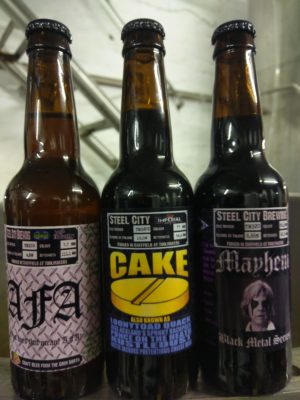
steelcitybottlesSteel City attended the European Parliament All Party Beer Group’s pre-xmas bash with their AFA pale and Mayhem stout. The beers went down well, and the latter raised both eyebrows and chuckles depending on political allegiance! A particularly interesting reaction was observed from a Tory MEP… Both beers are available (at time of writing!) from Hop Hideout and Beer Central. Due to forthcoming changes at host brewery Toolmakers, Steel City’s tenure there is ending. The swansong brew was a home collaboration with Lost Industry, in for a penny in for a pound, those mad bastards Jimmy and Nathan convinced Dave to go big or go home, so Steel City wil be signing off with an Imperial Pale Stout. steelcityglass2Master of Puppets will hopefully approach or hit double figure ABV, with all the mouthfeel and roasty flavour of an imperial stout, but pale. The brew involves grains selected to provide stout flavours without colour (so the opposite of Black IPA!), supplemented by coffee, cacao nibs and vanilla, along with Bramling Cross and Sorachi hops. It will be available in cask at the Shakespeare, and keg at Sentinel during Sheffield Beer Week. The Shakespeare will also have a special version Pastor of Muppets, with some sort of adjunct (possibly including wafers, red wine and the tears of choristers). The mini kit was also pressed into use – normally the mini kit uses first runnings to make a stronger beer, but this time once the main brew was in the copper the runnings were still at 1050… So it seemed a waste to not use them! For the simple reason that it seemed a good idea at the time, the brew is a stollen pale stout, Drink It Like It’s Stollen, yes made with real stollen. Also available during the Beer Week will be the return collab, no details as yet but expect sour… Negotiations are ongoing regarding a new home, in the meantime there should be plenty of ‘away’ collabs in the UK and abroad!  

Beer Festival raises £2,000 for Sheffield Children’s Hospital

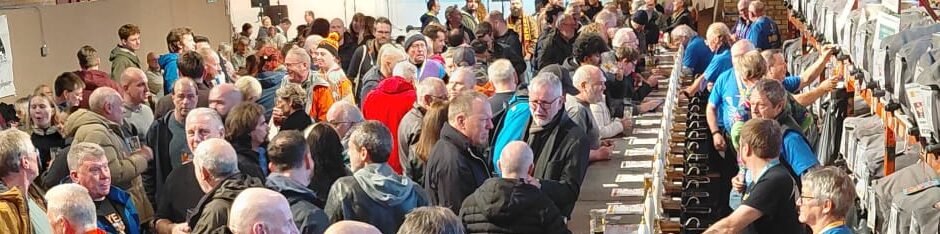
Visitors to the recent Sheffield Beer Festival proved just as generous as they were thirsty, as a combination of cash collections, donations of unused beer tickets, and a contribution from Sheffield branch of the Campaign for Real Ale (CAMRA) saw this year’s charity total reach £2,000. Press Officer Paul Crofts said “It’s a fantastic sum to raise for such a good charity. It was far more than we anticipated, and shows how much local people think of the Sheffield Children’s Hospital” The 4-day festival took place at Kelham Island Museum in October, and featured over 300 different beers and ciders, as well as live music and an array of street food vendors. Community Fundraiser for The Children’s Hospital Charity, Cheryl Davidson said, “We want to say a massive thank you to everyone who donated at Sheffield Beer Festival. To raise so much at the event really will make a difference to all of our patients and their families at Sheffield Children’s Hospital

Welbeck Abbey Brewery

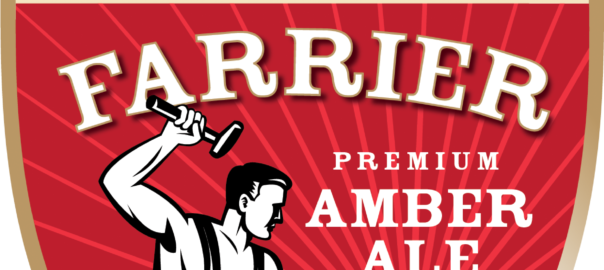
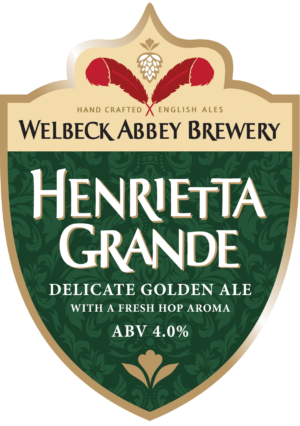
Happy 2017 everyone! Okay, so we may be a bit late on that one, but we’ve been busy working hard these past few months to bring you some exciting new developments. With the New Year comes an exciting new collaboration with Lincoln Green Brewing Company. We have teamed up to see whether two beers brewed to the exact same recipe, using identical ingredients from the same batches can taste the same when brewed in two different locations. The end result will be the aptly named Gemini, a 4.3% American hopped pale ale. We are very excited about this collaboration and look forward to hearing the feedback from those who get a chance to try it. henrietta-grandeThis month will also see the return of some old favourites, including the rich and fruity Farrier, a premium amber bitter with blends of sweet caramel which boasts an impressive 5.5% ABV and last but not least the lovely Henrietta Grande, a stronger, hoppier version of our award-winning Henrietta. This 4.0% Golden Ale is packed full of wonderful hop character from German, British and American hops. Finally, we are also happy to announce that we will once again be hosting guided brewery tours this summer! We have 6 tours running from April to September, and tickets are already selling fast. For details on how to book please see our ad on
Sheffield Beer House micropub celebrates second birthday

The Sheffield Beer House on Ecclesall Road was the City’s first full time micropub and was popular from the word go, offering real ale and other quality drinks, friendly service and a proper pub environment on a compact scale. In December the Beer House celebrated its second birthday with a low key celebration evening with both owners present and offering a complimentary pint of Hopjacker Beer House Pale to all customers when they arrived. They are clearly getting it right and we wish the Beer House ongoing success!

A new threat to real ale – or a storm in a Schooner?

Cloudwater Brewery of Manchester has recently announced that they are to no longer brew cask ale, following a number of other fashionable ‘craft’ brewers that have either discontinued or scaled back cask production. Cloudwater’s business model going forward will be 60% bottles/cans and 40% keg. In 2016 their production split was 23% cask, 39% keg and 38% bottles. The reasons they give for no longer brewing cask is that real ale drinkers demand cheap beer – even when it is brewed with large quantities of quality, expensive ingredients; issues with both publicans and consumers not understanding what is good or bad beer causing demands for refunds on perfectly good beer – for example Cloudwater beers are sometimes served hazy as they are unfined (therefore vegan) plus more labour is involved racking cask beer, collecting empty casks and cleaning them for reuse – bottles, cans and keykegs are all one way containers. The statement from Cloudwater has led to calls from the usual online beer commentators for CAMRA to change attitudes and educate drinkers. They say it should be about promoting beer quality not members discounts or pubs with cheap ale. These same commentators are also forecasting that all the other brewers doing anything interesting are likely to follow suit and leave the cask market to simply be a load of boring, cheap brown swill. Beer writer Pete Brown has waded in to the debate in his Morning Advertiser column, criticising the pub trade for there being too many pubs serving badly kept beer and having staff not properly trained in the art of cask conditioned beer, with him suggesting he avoids drinking real ale in pubs unless he knows they have a good reputation for cask beer. Of course it is worth noting that breweries such as Cloudwater have limited brewing capacity and have made a success of producing one off beers that are well hyped and attract good prices for bottles plus of course bottles and cans are good for direct sales, which are more profitable. They are also doing well with export sales which one way containers such as bottles, cans and keykegs are good for. You cannot blame them for making decisions that are the best for their business – but it doesn’t mean the same decisions are necessarily right for other breweries around Britain. Tiny Rebel Brewery has recently also published a blog looking ahead with their plans for 2017 which sees them producing a lot more interesting and experimental beers – with cask being part of the plan. They say cask works best for certain styles of beer with the cask conditioning adding a certain something to the flavour. They are also opening a new bigger brewhouse. Here in Sheffield we have a long list of breweries based in the City with all but one producing cask beer. Some of them also sell beer in other formats (bottle and/or keg) but generally the cask beer is their biggest output. However not all brewers are aiming at the same market. Some produce simple but well crafted session beers that are good for pubs to have as an affordable house beer. Others produce premium beers that may be hop forward or contain interesting ingredients; some breweries do a combination of the two. Such diversity is necessary to stay in business otherwise the competition would be immense – it is also good for the drinking public too of course. Not all small breweries wish to go down the road of bottling – if you don’t have your own bottling plant – which is an expensive investment – the choices are hand bottling which is slow, tedious and labour intensive or contracting out which can see excessive wastage of beer as well as expense. Kegging also has its issues. The observations of the better pubs in the Sheffield area that have a large range of beers and quality cellarmanship by knowledgeable management and staff generally sees a beer range that includes a couple of cheaper house beers – usually a pale/blonde and a brown bitter along with more interesting (and expensive) changing guests, all of which sell well. It seems the death of real ale is being somewhat exaggerated….  

District Pub of the Season Autumn 2016

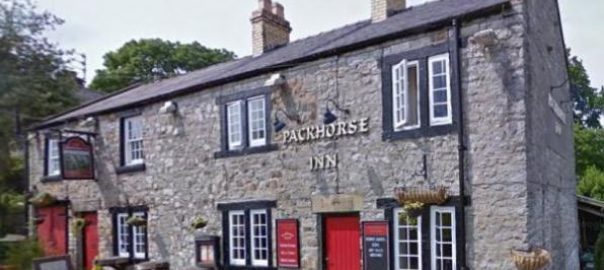
Our members have been voting through the autumn for our latest District Pub of the Season and we are pleased to announce the winner as the Packhorse at Little Longstone. This award is for pubs in the Derbyshire part of our branch area and is designed to raise the profile with real ale drinkers of those pubs that are beyond the city limits, often in rural areas such as the Peak District. The Packhorse is a cosy village pub with small rooms, a roaring fire in winter, a beer garden for the summer months, friendly staff, good fresh food and of course well kept ales, usually from Thornbridge Brewery. We’re running a minibus trip on Saturday 25th February and will be calling in the Pack Horse to present their winners certificate and enjoy a beer, this will be combined with a visit to Thornbridge Brewery in Bakewell for a tour where there will be a bar open selling beer and pies! If you want to join us on the minibus, please book your seat via our social secretaries, it costs just £5 per person for the travel for members.

CAMRA revitalisation project news

he leadership of one of Europe’s most successful consumer organisations is considering refocusing its future purpose after being presented with a wide-ranging review into its aims and activities – but is clear campaigning for real ale, pubs, clubs, cider and perry will remain core. The volunteers heading up the Campaign for Real Ale were presented with a report and proposals by the Revitalisation Project at a meeting in early December. The Revitalisation Project has proposed that the Campaign remains committed to its core aims of promoting real ale, real cider, perry and campaigning for pubs and clubs – but has suggested CAMRA needs to widen its vision and mission to reflect changing consumer needs and developments in the drinks industry. In summary the Revitalisation Project has recommended that:
  • Campaigning for real ale, cider and perry and protecting community pubs and clubs will remain core to CAMRA activities.
  • CAMRA widens its mission and purpose to reflect changing consumer needs and developments that have taken place across the sector since CAMRA’s foundation in 1971. The Revitalisation Project found that there is much CAMRA does well, so its proposals principally relate to opportunities for the organisation to remain relevant and effective in the future.
  • CAMRA broadens its focus to play a “leading role in informing and representing all those with an interest in good beer of any type”.
  • CAMRA promotes the “virtues of well-produced, well-kept cask-conditioned beers as the pinnacle of the brewer’s craft” while also promoting greater awareness and understanding to help drinkers judge for themselves what “quality” beer is.
  • Celebrating and protecting well-run community pubs and clubs should also remain core to CAMRA’s purpose, but the Campaign should do more to improve the range and quality of beer, cider and perry in “communal drinking” venues across the on-trade.
  • In response to the attacks on responsible drinkers by health campaigners, the organisation plays a leading role in speaking on behalf of all UK beer, cider and perry drinkers, and pub and club-goers.
The Revitalisation Project was officially launched in April 2016, to carry out a review of CAMRA’s purpose and activities and to ensure it was positioned to reflect changes in the pub and brewing industry. The Revitalisation Project considered the views of tens of thousands of CAMRA members who responded to three surveys and the opinions of thousands who attended consultation meetings across the country. Its findings also take into account feedback from numerous industry stakeholders including politicians, brewers, cider producers, publicans and journalists. The Revitalisation Project has now agreed a series of proposals which it presented to CAMRA’s National Executive – the most senior elected volunteers in the organisation – at a meeting in early December. The National Executive will now take ownership of the report and will be responsible for deciding whether, how and when, to implement the Revitalisation Project’s proposals. CAMRA members will continue to be fully involved in the process and will be invited to discuss the Revitalisation Project proposals at the CAMRA Members’ Weekend and AGM to be held in Bournemouth in April 2017. A final decision on adopting the proposals will be taken at the Members’ Weekend and AGM in Coventry 2018. Michael Hardman MBE, one of CAMRA’s founders and Chairman of the Revitalisation Project said: “Our proposals were agreed after eight months of hard work and include strengthening some of CAMRA’s best campaigns and practices as well as confirming our 45-year-long commitment to real ale and our long-standing support for pubs and clubs. 

“We have recommended that we should explore some kinds of beer that have previously been outside our scope, but this is hardly a controversial proposal since our latest survey of members showed that there was a clear majority in favour of doing so.

“We now look forward to the National Executive accepting our proposals, depending on the results of an impact study they will be carrying out, and then to our 185,000 members voting on the proposals.”

Colin Valentine, Chairman of the Campaign for Real Ale, said: “I’d like to thank Michael and the Revitalisation Project for the work they have put in over the summer to survey tens of thousands of CAMRA members and meet thousands in person to ask them what they think. “The Revitalisation Project has helped us to understand what our members want for the organisation in the future and the direction they believe we should take to respond to the changes in the pub and beer world. “My fellow National Directors and I will now take the time to fully understand the Revitalisation Project report and the proposals which have been made to us. It’s now our job to decide what we will recommend to our members and seek their approval to changes, if appropriate, to our purpose and strategies and the activities we carry out to achieve them. “While the work of the Revitalisation Project is now finished, this is really only the start of the process for the National Executive and CAMRA members. We need to make sure that members continue to be at the heart of the decisions we take and we will ensure they get a full opportunity to discuss the proposals at our Conference in April and then have the final vote on any changes to CAMRA’s purpose at the Members’ Weekend and AGM in 2018.” As well as presenting its proposals to the National Executive, the Revitalisation Project published the findings of the third and final survey into the views of CAMRA members. The survey findings are available at: https://revitalisation.camra.org.uk/blog/revitalisation-project-survey-three-results A full copy of the Revitalisation Project Proposal document is available here: https://revitalisation.camra.org.uk/blog/revitalisation-project-report-published