Exit 33

Special one off versions of Exit 33 Imperial Stout are making an appearance on the bar at The Harlequin including interpretations infused with toasted coconut, morita chipoltles, vanilla, and lactose (milk sugar). Project filmmakers came to film a days brewing at the brewery a few weeks ago.  This short film follows the beer from grain to glass culminating in pints being pulled at their brewery tap. This should be ready to view at the food festival tent and on their website shortly. In the spirit of development, the brewers will be making a trip to the Oregon Brewers festival in Portland Oregon in July. Brewery founder Pete Roberts said “The inspiration for many of our beers came from visiting Oregon several years ago and I’ve been itching to get back to this amazing event. There are some amazing brewers there, 53 in Portland alone! During our visit we will be doing a collaboration brew with Lucky Lab Brew Co who themselves brew cask ale from time to time. It’s a chance to learn something new from them and pass on our knowledge of brewing cask beer”

Pass it on… Brew school at Welbeck Abbey!

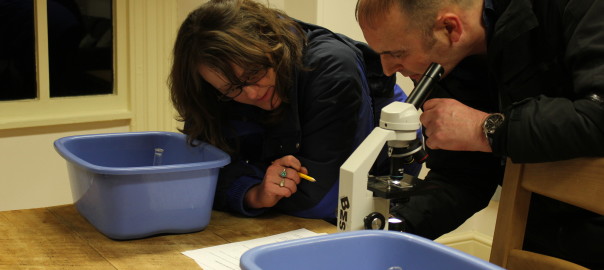
From mother to daughter, father to son, teacher to pupil; passing on knowledge and the joy of learning and is one of the many unique aspects of being human. There are many age-old crafts and skills which are rarely taught to our children now, be that baking, cheesemaking, pottery or woodwork skills. Here at Welbeck, there is community focussed around rekindling the passion for these crafts and passing on the skills and knowledge from Masters to the younger generation. Brewing, like baking, is one of these ancient crafts enjoying a well deserved renaissance. Although we are a commercial brewery making up to 18,000 pints a week, we also work closely with local schools and charities to teach a little about brewing. During Sheffield Science week, we worked with Sheffield Hallam University and Doncaster CAMRA to host 21 adults of all ages from Sheffield and the surrounding area to explore the science behind beer and brewing. We looked at the way in which brewers need to extract fermentable sugars from malted barley and then made our own hydrometers for testing the sugar content in a mystery solution of beer. We also explored what exactly makes hops smell the way they do, and malt taste the way it does. The University-grade microscopes came out too, giving all the budding scientists a look at live yeast taken from the brewery not an hour beforehand. A question and answer session followed the brewery tour and practical experiments, and we were pleased to be able to answer questions on not only the practical and scientific elements of brewing, but also the complexities of setting up a business and dealing with the logistical side of delivering. Not only have we hosted a number of adults on a science-focused evening, we also hosted 36 year 11 top set science students studying for their GCSEs. The students from Beaumont Leys were brought to the brewery by three teachers to learn about enzyme activity, fermentation and process engineering. Whilst I’m sure the teacher who thought up the plan may have had an ulterior motive, actually the science of brewing turns out to be bang on Y11 curriculum! There is often a very romantic image surrounding brewing, quite probably similar to that of an artisan baker or pottery. The reality, however, is that running a brewery requires not only passion and enthusiasm for the craft, but a vast breadth and depth of scientific knowledge dosed with a hearty helping of hard graft and business sense. That said, we all love working in the brewery and sharing that passion. Needing to bring in science, hard work, and decent business accumen makes learning and working in this artisan industry exciting, varied and ultimately a joy. Claire Monk

Welbeck Abbey

A number of Spring specials have been brewed and started to appear in pubs during May: Slovak Paradise 4.5% Pilsner-style. This pilsner-like blonde is brewed with lager malt and Dana hops from Slovakia for a dry finish. St. Simon 4.0% English Pale Ale. Making a reappearance this year after great success in the last two. This is a classic English pale ale which makes the most of home-grown malted barley and hops, giving a delightfully balanced pint. Kaiser 4.1% Lager style pale. Crisp, dry, biscuity lager malt flavours are perfectly balanced with sweet, honey like floral hops from Germany.

Inn Brief

The Springvale Tavern has just had a fourth beer pump put in, which was kindly provided by Bradfield to serve Farmers Blonde as a house beer.  The pub has also now passed both parts of Cask Marque and launched a new menu. The Rutland Arms in Holmesfield have demolished their outdoor pizza oven, which saw very little use, in order to extend the outdoor seating area so drinkers can enjoy the summer sunshine (fingers crossed!). The Old Pump House in Barlow has reopened under new management and is serving real ale from Marstons. The Great Gatsby on Division Street, Sheffield City Centre, has reopened following refurbishment. Two real ales continue to be available on the bar. Meanwhile the upstairs room has been converted into a table service cocktail bar. Wetherspoons have announced the name and opening date of their new pub in the Oasis Food Court at Meadowhall shopping centre. It will be known as the Steel Foundry and the opening date is planned as 14th July. The Brothers Arms is taking part in Tramlines Festival this year and putting on a beer festival with around 60 ales, there will be a music stage in the beer garden from Friday 24th to Sunday 26th July and on the Saturday this will be extended into the Millenium Park where a second stage will be located and the road inbetween is to be closed for the day! This event is being run in conjunction with Heeley Development Trust under the banner of ‘This is Heeley’. See their Facebook event page for more details. The Yorkshire Bridge Inn near Bamford held a beer festival over the weekend of 15th-17th May. The breweries featured included Stancill, Chantry, Thornbridge, Amber Ales, Wild Beer Co, Pennine, Bradfield, Kelham Island, Peak Ales and Wylam. Keep an eye on their Twitter feed for details of their next festival. The Swan Inn at Ridgeway is another pub in our area that held a beer festival recently on Saturday 16th May, this featured 15 real ales and ran alongside the village’s farmers & craft market. A number of special events are coming up at the Devonshire Cat in Sheffield Centre including a beer school, Stouts & Porters night and a Cider Festival – see their advert for more details.

Steel City Beer Festival Volunteer stories – the Cellar manager

BEER FESTIVALS – THE CELLAR TEAM TASKS chris_0045 30092010004 Ever thought of working at a CAMRA beer festival and looking after lots of  casks  of beer ?  I started helping at the Sheffield festival about 15 years ago, initially on the bar, but now on the cellar. My aim is that every pint served reaches the drinker in prime condition, cellar cool and  does justice to the skill of the brewer.  I wouldn’t want a warm,  flat , cloudy or contaminated pint if I went in a pub and I don’t expect festival goers to accept that either. Here’s a guide to what’s involved in being part of the cellar team. The title is a bit of a misnomer, as unlike your local real ale pub, there is no physical cellar to keep the beer in.  We start and end in an empty hall.  Everything is assembled  from scratch,  a daunting task, but with plenty of volunteers it becomes straightforward . BUILD A STILLAGE The beer needs the maximum time to settle, so the earliest  task is to build a “cellar.  The stillage is heavy duty steel  racking , usually seen in warehouses. It just locks together like a giant Lego set, with plywood shelves to take the heavy weight of the beer.  Once this is built, the 9 gallon casks  of  beer are lifted onto it, and held in place, tilted slightly forward , with wooden chocks for   support There is also a separate row of casks, on end on the floor in front of the stillage.  These  will be under the bar ,which is also being erected from fold flat kits . This is a major milestone as the beer should not need to be moved  again, and the yeast sediment can begin  to settle leaving the beer clear.  However, the beer is now quickly getting to room temperature , making  the yeast more active and the beer could  be served too warm . STAY COOL Years ago we used mutton cloth sleeves  on the barrels, sprayed with water. As the water evaporated this cooled the casks, but wasn’t really up to the task. These days the casks are cooled by a bespoke cooling system from CAMRA HQ. It’s just like a home central heating system in reverse ,  with chilled water instead of hot water. Large refrigeration units chill water to just above freezing and it is  pumped through insulated plastic pipes to a metal coil which straddles each cask. The pipework is all simple push fit, but a leak can quickly spill gallons of water so it all has to be carefully tested for leaks .  An insulated jacket drapes over each cask  to “keep the cold in”. The cooling also extends to the floor based casks beneath the bar  . Great first day over, all beer racked on the stillage and keeping cool. CLEANLINESS Like handling any food product, cleanliness is paramount, and beer can quickly be ruined by contamination from other yeasts,  mould or fungal infections. It can make it hazy or turn it into vinegar in a short space of time.  The bungs of all casks are sterilised.   Cleaning this way reduces the risk of infection from anything picked up in transit or on site.  All taps, beer engines,  plastic beer lines and other equipment that comes into contact with the beer   have  to be cleaned and sterilised too..  Buckets of line cleaner have to be pulled into the beer engines and left to do its work , then thoroughly flushed  through with water.  The same has to be done at the end of the festival as stale beer left hidden in a beer engine or tap quickly becomes  a source of infection next time it is used.  Cleaning all these beer engines is a tedious but essential task, but at least it limbers the arm muscles up for pulling pints ! The line cleaner is hazardous to our skin, so gloves  and other safety wear are essential for those handling it.  All the newly sterile equipment is  rinsed  thoroughly and kept in  buckets of clean water until needed.  A load of chores, yes , but far better than the risk contaminated ale , and having to pour  thousands of pounds  of down  the drain, leaving  drinkers thirsty. OPEN SESAME!!!!! Our cool beer is happily resting,  and the casks can be vented.  Our beer is a living product and the yeast is still causing a secondary fermentation in the cask, which builds up carbon dioxide . This sits in the small air void above the beer and builds up  pressure in the cask. A hollow tapered metal spike(the venting tool)  is hammered into the centre dimple  of the shive (bung) The excess gas in the barrel is vented out by the tool into  a small tube and away. If the cask has a lot of “condition” (gas) inside it hisses violently and frothy beer can also be sprayed out. If the cask has been left to get warm, this can be a Vesuvius spectacular.  I’ve never been able to vent all the casks without at least one drenching.  Once the eruption has died down a tapered wooden peg (spile) is loosely put back in the vent hole . Next the plastic taps, each with tapered  shaft , are hammered into the keystone on the front. It has to be done firmly and quickly, and with the tap turned off, otherwise you get  a face of beer. Too timid and the bung will leak, too hard and you’ll knock the cask off its chocks.  As a novice you will undoubtedly get it wrong in every conceivable way,   but the quick learners avoid getting a repeat soaking.  So now , as long as it settles ,the beer is potentially ready to serve. Different beers  have different settling times, usually 1-3 days and in many ways you can only make a guess based on previous handling of that beer. QUALITY CONTROL – IS IT FIT TO DRINK? Spiles are removed  and a sample of beer  tasted.   Held to the light, is it crystal clear, hazy or are there great dollops of yeast floating in it?  Next taste it – is it  clear of any vinegary sourness , musty or woody taste which denote infection or contamination? You may have no idea what flavours the brewer intended for that particular brew, but put simply does it taste OK . If its not your style of beer, let others in the cellar team taste it .  When there are a couple of hundred beers to inspect  this has to be a shared task as  even a small sip from each cask renders you unfit for further tasting- or much else- after a while.  Working to  a master list , record the results  for serve , waiting or condemn the beer from each cask. Amazingly, when it comes to tasting you discover that you have suddenly become very popular with everyone on site…… WE’RE OPEN All these tasks have to be done before the beer goes on sale. Everybody the first day  wants to sample the beer and expects everything to be available.  Tickers in particular want to sample each beer, and have sometimes pleaded with me to let them sample a beer that is simply not ready yet.  (Strangely  I’ve never seen anyone plead with a pub landlord to sell a beer that he says isn’t ready yet), however I can understand that people may have travelled miles to  a festival to experience a particular brew.  So sometimes you have to bend to their wishes  , give them a secret sample , but keep the beer off open sale until it comes good.   Generally though if its not right , don’t serve it – the brewer would be disappointed his wares weren’t at their best  and drinkers will mostly be underwhelmed .  As opening hour approaches,  spiles are removed, taps on ale extractors turned on, and some beer drawn through the hand pumps so the first customer servings are fresh. The ones that aren’t on sale have to be clearly marked for bar staff, who will be busy and may not notice that the spile is still in and that’s why only a dribble of beer comes out. Anyway at this stage stand back and watch people happily drinking beer for  a while- well ten minutes at least, then the problems will start to flood in KEEPING ALL THE BALLS IN THE AIR Cleaning uses copious buckets of clean water, and there is dirty water and beer ullage to get rid of with  minimum spillage. Water taps and drains are rarely as close as you want so you will often have a lengthy trek.   Drip trays have to emptied and spilt beer from the taps mopped up. Bar staff will  be under pressure to serve crowds quickly and accidents can happen, so there is constant  mopping up to do. As the beer is sold from each cask, the rear chock has to be moved carefully to stoop the cask  so clear beer runs out the tap. Ale extractors have to be pushed further in the cask as they are meant to take the bright beer from the top .  At the end of each session the spiles have to be put back, as leaving the casks always open to the air causes the beer to go stale as the contents drop. Spectacular or acclaimed beers can run out in less than an hour, so any reserve casks must be prepared for changeover. Beer lines must  be cleaned with water for each new cask, any equipment from used casks must  be cleaned before re-use , and frequent checks have to be made for leaks  from the cooling or cask bungs/faulty taps. Beer unready at the outset has to be rechecked  before it can go on sale. As the festival progresses stooped casks will be down to the dregs, and as fewer beers are  on sale, this causes a bit of a domino effect on the remaining beers.  Hopefully at the close all beer is sold.  Anyway things never happen smoothly- casks at different ends of the stillage need changing at the same time. The mallet you had in your hand a moment ago has gone walkabout ( all tools have a life of their own once it is busy , believe me). Oh quick someone’s knocked a cask over…….. As the festival winds down, you switch from set up and beer dispense to thoughts of take down. Empty casks can be removed, redundant beer engines and taps cleaned, and even the cooling equipment can be truncated in situ and packed away.  At final close any unsold beer can be supped, for in the morning the rest  has to go down the drain. Cork bungs and spiles are  whacked in casks  and then stacked for the dray to collect. All the equipment has to be cleaned and  packed away and refrigerating units emptied . Lastly the stillage is taken down . As you take a last glance at the empty hall you started in ,you are left with a memory  that the cellar team built a temporary shrine to the joys of real ale and  that everyone who came enjoyed the marvels  of the beer they so lovingly nurtured. It all passed in a busy blur, you may remember some of the glitches , however a record amount of beer was sold, and no-one complained of a duff pint . Then something up on a window ledge catches your eye. So that’s where I left that damn mallet!!!!! Now, fancy joining me? Cheers! Chris Pearce

Dronfield Arms

The Dronfield Arms has just received planning permission to install a small brewery in the former restaurant area downstairs at the pub.  Initially they will be investing in a 4 brew barrel kit, aiming to brew a small core range with a larger array of more innovative takes on traditional styles as specials, to sell, not just at the pub itself, but also throughout the local area.  They aim to be up and running in the Autumn but have lined up some trial brews at a number of breweries in the meantime, so watch this space! Landlord, and soon to be head brewer Edd Entwistle has been running pubs in Sheffield for the past 6 years before making the move out to the Dronfield Arms and is keen to instil some of his passion and experience into the venture.

Brief report from the National CAMRA Members Weekend & AGM

A few of us from Sheffield & District branch spent the weekend in Nottingham for the national CAMRA Members Weekend. As well as enjoying some good beer and wonderful pubs and bars with CAMRA members from across the UK, we also attended the AGM conference. A good proportion of this is spent debating and voting on motions, which is how the campaign’s policy and direction is formed. There were very few motions this year that split the membership or caused excitement, however a few things did come out of it: – a new point of sale labelling scheme is to be developed to help drinkers recognise beer that is real ale but not served from a handpump (for example bottle conditioned beers and naturally carbonated key keg beers) – Branches will be offered more assistance in campaigning against local authorities imposing late night levies – CAMRA will continue to recognise cider as ‘real’ with added flavourings such as fruits, herbs and vegetables as long as they are natural, fresh additives and the cider is still 90% fermented fresh apple juice. The success of the cider motion did however dismay a lot of the more passionate cider campaigners so this position may well change again next year!

The Half Pint Marathon

A collaboration between Thornbridge Brewery and Forum Cafe Bars LTD will have you reaching for your (half) pint glass this spring.

The ‘Half Pint Marathon’ is a month long celebration of some of Sheffield’s best independent beer venues, dreamt up by the people behind the two companies.

Following on from the newly rebranded Yorkshire Half in April, the Half Pint Marathon will give people the chance to explore the city, support their local independent venues and do something good for charity. The Half Pint Marathon incorporates thirteen of Sheffield’s favourite pubs – The Greystones, The Bath Hotel, The Hallamshire House, The Stags Head, The Forum, The Old House, The York, The Broadfield, Shakespeare’s, The Brothers Arms, The University Arms, Kelham Island Tavern and The Rutland Arms.
Each of the venues will be serving a specially created collaboration Thornbridge and FCBL beer Stitch – a light, hoppy, 4% session ale! STITCH half pint marathon FCBL Managing Director, Kane Yeardley says “The Half Pint Marathon will be a great opportunity for Sheffield to get out there and support their local, independent pubs and some great causes in one go!” And Thornbridge bosses say “This is a fantastic chance to make a tasty new beer, work with some great Sheffield pubs and make some money for good causes. We’re very excited for the month of May!” Participants will have the month of May to visit all thirteen sites armed with their ‘Half Pint Marathon’ card. Once they have enjoyed a beer in each venue they will have the opportunity to submit their card into the prize draw to win fantastic prizes from across Sheffield, including brewery tours, tasting sessions, beer, and much, much more. The Half Pint Marathon aims to raise £13,000 for some of Sheffield’s best loved charities – St Luke’s, Roundabout, The Childrens Hospital and Bluebell Wood. Money will be raised through the sale of the beer and events in each of the participating venues. Regular updates are available at on Facebook at Half-Pint-Marathon and we’ll be encouraging people to get involved by using #halfpintsheff across social media.

Steel City Brewing

Steel City haven’t been back in the brewhouse since Troika, which should be doing the rounds now, but have been busy with collaborations. The Hopcraft collab is an Insult to History, being a white porter, and is named Midnight in Antarctica as it’s light when it should be dark! Next up was a three-way collab at Imperial brewery in Mexborough with Great Heck… or rather two three-way-collabs, as once again parti-gyling was used to create dark and pale versions. The Four Stooges is the pale versions, with hops including Magnum, Dana, Chinook and Citra. Incubus, named after a demon, is the dark side. Finally, the Shakespeare has a special and possibly incendiary cask of Molten Steel, a pin of Troika with added Scotch Bonnet and Naga chillies. Hopefully the chillies will give a lemony and peppery flavour as well as several thousand scovilles!

Pubs offering CAMRA members discounts

This month we feature all the pubs in the Dronfield sub-branch area that offer a discount on beer if you produce your current, valid CAMRA membership card before placing your order. Next month we will feature Sheffield pubs – please let us know if you know of any and don’t forget members can download a National Pub Discount Scheme poster from the members website for the pub to use to promote the fact. The Beer Stop, Dronfield – 20p per pint The Coach & Horses, Dronfield – 20p per pint The Travellers Rest, Apperknowle – 20p per pint The Miners Arms, Hundall  – 30p per pint The Jolly Farmer, Dronfield Woodhouse – 15p per pint The Talbot, Dronfield Woodhouse – Discount available Please support the pubs by going to check them out, drinking the beer and taking advantage of their offer of a discount! Some terms & conditions or restrictions may apply, please check directly with the pubs.