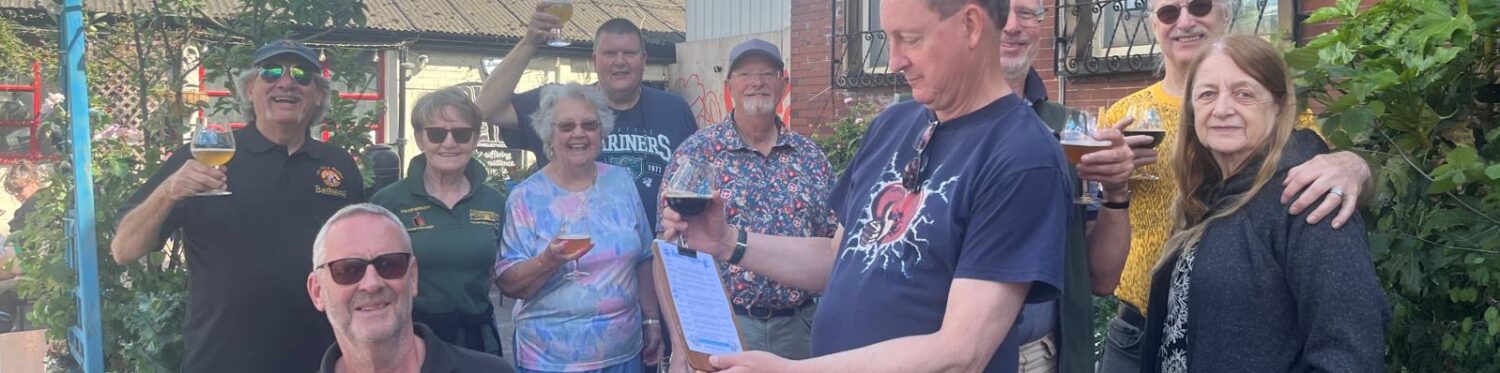


On Tuesday 15 September, Paul Ainsworth (Barnsley CAMRA) and Dave Pickersgill (Sheffield & District CAMRA) had a short meeting with Miriam Cates, the recently-elected MP for Penistone and Stocksbridge.
The discussion included several areas: the effect of lockdown on pubs and breweries (both local and nationwide), the pubs code, business rates, community pubs and international trade.
Pubs and bars were closed from late March until, at the earliest, 4 July. Many pubs have struggled to reopen, having invested their dwindling reserves to do so safely and securely in line with Covid-safe guidance. We believe that support is required as they struggle to reestablish.
Last month, the British Beer and Pub Association said more than a third of pubs failed to break even in July, and a quarter of pubs and bars were uncertain their businesses would still be viable by 2021.
Sales at pub, restaurant and bar chains halved in July compared with last summer. Trade in bars was down almost two-thirds (63%) and pubs saw a 45% slump in the first month that businesses were able to reopen.
The furlough wage support scheme has allowed many pubs to retain their staff. In lockdown areas and in struggling areas, many pubs and bars will be forced to close unless the government agrees to extend the furlough, which is due to be withdrawn. Miriam believes that this furlough scheme ‘was one of the best in the world.’ However, she is also in favour of the scheme ending as it is not financially sustainable beyond October, especially given that debt is now at 100% of GDP. Other support schemes are available but the priority must now shift to creating new jobs She also mentioned the ‘possibility that pubs won’t be able to operate at full capacity for a year.’ Miriam did, though, agree that ‘pubs are vital to local communities’.
Alcohol was excluded from the government’s six month VAT cut from 20% to 5% designed to stimulate the hospitality industry. More than 60% of the UK’s 47,000 pubs are “wet-led”, meaning they make more money from alcohol than food. This puts them at an immediate disadvantage. Miriam defended this difference.on the grounds that lines have to be drawn somewhere and often difficult decisions made.
Pubs are also facing huge rent bills with nearly all of the major pub companies (the exception being Admiral Taverns) opting to defer their demands, or offer a discounted rate, instead of cancelling payments as business has dried up during the pandemic. This is likely to lead to opportunistic planning applications, as pubs continue to close. Miriam mentioned the impact of ‘Big chains not willing to have a conversation about rent.’
There are currently 153 community owned pubs in UK. None has gone bust. Miriam was very interested in how this figure could be increased. It was agreed that we would provide suitable written background material. She ‘wants a return of small independent retailers.’
The Pubs Code was introduced in 2016. Since then Publicans have expressed bitter complaints about the financial impact of the “beer tie” – the arrangement that governs the relationship between large pub companies that own thousands of pub premises and the tenants who run the business. We believe that an urgent review of the not-working Pubs Code is required. Miriam committed herself to writing to the Small Firms Minister, Paul Scully, on this point.
CAMRA will be asking for extension to the business rates holiday which runs out in March 2021. We also want to see business rates system for pubs to be reformed with a low business rates multiplier for hospitality business generally.
Miriam stated that Business rates in general need looking at compared to other European countries. She ‘completely supports the need for business rates reform’ saying they could be based on takings not the size of property. She is also concerned regarding possible holes in Local Authority finances given that rates revenue goes directly into their coffers.
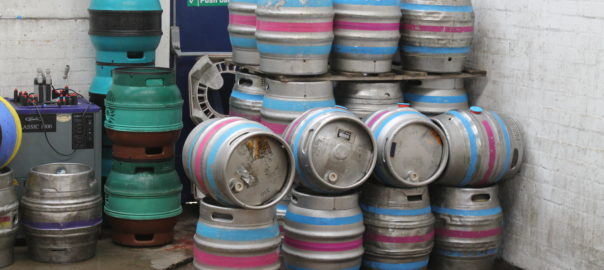
During lockdown, breweries saw a much reduced outlet for cask beer. There was much ullage, and many staff were furloughed. Some breweries increased their direct sales while others had no income as they had no packaging facilities. Some took the opportunity to deep clean, rebrand and/or review. For example, Penistone-based Brewery Whitefaced (named after local sheep: the Whitefaced Woodland) have put in a planning application for a new bar and location for their nano brewery in central Penistone. Miriam promised her support for this development. (The other brewery in the constituency is Korrupt Brew Co (also Penistone)).
We also discussed the effect on breweries of current trade talks. Many UK Breweries, including both Korrupt and Whitefaced, make extensive use of aromatic hops from Central Europe, New Zealand, and USA. We have major concerns regarding supply after the end of this year – both continuity and cost – it is likely to be more difficult to import (more/new paperwork).
Miriam stated that it is vital that ‘vital that we get a free trade agreement.’ We should ‘put everything into negotiating that deal.’
All breweries need support as they reestablish.
Paul Ainsworth & Dave Pickersgill


 The Plough was rebuilt in 1929 and is an important example of an inter war public house which, according to Historic England, are ‘rare and overlooked buildings’. National planning policy recognises the importance of protecting historic assets and their ‘setting’. This was confirmed in the decision of the local authority to refuse the application from Sainsbury’s.
The recent planning history of a site is also a relevant consideration in planning decisions. In 2017, the local authority rejected Sainsbury’s application for change of use based on the Plough’s listing as an ACV and it accepted that there were no alternative community facilities within a reasonable distance. In 2018, following the sale of the Plough, the local authority re-listed the pub as an ACV. As there have been no material changes in the reasons why the Plough was listed as an ACV, this should remain an overriding consideration in any decision.
There are
The Plough was rebuilt in 1929 and is an important example of an inter war public house which, according to Historic England, are ‘rare and overlooked buildings’. National planning policy recognises the importance of protecting historic assets and their ‘setting’. This was confirmed in the decision of the local authority to refuse the application from Sainsbury’s.
The recent planning history of a site is also a relevant consideration in planning decisions. In 2017, the local authority rejected Sainsbury’s application for change of use based on the Plough’s listing as an ACV and it accepted that there were no alternative community facilities within a reasonable distance. In 2018, following the sale of the Plough, the local authority re-listed the pub as an ACV. As there have been no material changes in the reasons why the Plough was listed as an ACV, this should remain an overriding consideration in any decision.
There are 


 In 1903, “Re-built, Re-furbished and up-to-date.“ By 2014, run-down and failing: purchased by new owners, a sensitive refurbishment and Regional Inventory listing followed.
The latest chapter in the renovation is now in hand, planning permission for locally-needed hotel accommodation: nine en suite B&B rooms on the first floor. Historical elements such as the dumbwaiter and fireplaces will be kept and restored as sympathetically as possible.
The planning application also mentions praise from CAMRA for the sympathetic restoration of the ground floor public house. We anticipate that this positive ethos will be continued as the owners develop the first floor. See the entry on the
In 1903, “Re-built, Re-furbished and up-to-date.“ By 2014, run-down and failing: purchased by new owners, a sensitive refurbishment and Regional Inventory listing followed.
The latest chapter in the renovation is now in hand, planning permission for locally-needed hotel accommodation: nine en suite B&B rooms on the first floor. Historical elements such as the dumbwaiter and fireplaces will be kept and restored as sympathetically as possible.
The planning application also mentions praise from CAMRA for the sympathetic restoration of the ground floor public house. We anticipate that this positive ethos will be continued as the owners develop the first floor. See the entry on the 


 August 1936, Sheffield saw one of few local referendums regarding licenced premises. Tenants on each of the nine largest of the new council housing estates which were replacing inner-city slums were asked by Sheffield City Council (SCC) if they were ‘in favour of licensed premises being provided on the estates.’
Turnout was low. There seemed to be a view on the smaller estates that as licensed premises were relatively close, there was no point in voting. Of the 34,204 electorate, only 7,275 voted (21.3%). Woodthorpe had a 61% turnout, the next highest was 26% (Arbourthorne) with five estates having a turnout of less than 20%. In favour were Arbourthorne, Manor, Shiregreen, Woodthorpe and Wybourn with High Wincobank, Longley and Norwood, Stubbin and Brushes and Wisewood voting against.
In 1938, SCC approved the granting of leases to six brewery companies for the building of public houses on municipal estates: Arbourthorne, Manor, Parson Cross, Shiregreen, Woodthorpe and Wybourn, each on 99-year leases. Parson Cross was not involved in the 1936 ballot.
The total building cost was given as £55,000. The six Sheffield breweries concerned were: Carter, Milner and Bird Ltd., Duncan Gilmour and Co.Ltd., William Stones Ltd., Tennant Bros. Ltd., Truswells Brewery Co.Ltd. and S.H.Ward and Co.Ltd. Construction, the responsibility of the brewery companies, commenced later in the year.
August 1936, Sheffield saw one of few local referendums regarding licenced premises. Tenants on each of the nine largest of the new council housing estates which were replacing inner-city slums were asked by Sheffield City Council (SCC) if they were ‘in favour of licensed premises being provided on the estates.’
Turnout was low. There seemed to be a view on the smaller estates that as licensed premises were relatively close, there was no point in voting. Of the 34,204 electorate, only 7,275 voted (21.3%). Woodthorpe had a 61% turnout, the next highest was 26% (Arbourthorne) with five estates having a turnout of less than 20%. In favour were Arbourthorne, Manor, Shiregreen, Woodthorpe and Wybourn with High Wincobank, Longley and Norwood, Stubbin and Brushes and Wisewood voting against.
In 1938, SCC approved the granting of leases to six brewery companies for the building of public houses on municipal estates: Arbourthorne, Manor, Parson Cross, Shiregreen, Woodthorpe and Wybourn, each on 99-year leases. Parson Cross was not involved in the 1936 ballot.
The total building cost was given as £55,000. The six Sheffield breweries concerned were: Carter, Milner and Bird Ltd., Duncan Gilmour and Co.Ltd., William Stones Ltd., Tennant Bros. Ltd., Truswells Brewery Co.Ltd. and S.H.Ward and Co.Ltd. Construction, the responsibility of the brewery companies, commenced later in the year.
 Pubs involved included the Arbourthorne Hotel (closed ~2015), the Manor Hotel (1990), the Parson Cross Hotel (~2016) and the Shiregreen Hotel (2008).
There have been other similar local referendum, over the question of whether buildings which had originally been built as coffee taverns (ie. pubs in all but the sale of alcohol) should become licensed premises. These include the Bridge Inn (Port Sunlight) where a 1903 vote saw over 80% voting for a liquor license and the Skittles Inn (Letchworth).
Thanks to Andrew Davison, Thelma Griffiths, and Jamie Thompson for responding to my earlier request for further information.
Dave Pickersgill
Pubs involved included the Arbourthorne Hotel (closed ~2015), the Manor Hotel (1990), the Parson Cross Hotel (~2016) and the Shiregreen Hotel (2008).
There have been other similar local referendum, over the question of whether buildings which had originally been built as coffee taverns (ie. pubs in all but the sale of alcohol) should become licensed premises. These include the Bridge Inn (Port Sunlight) where a 1903 vote saw over 80% voting for a liquor license and the Skittles Inn (Letchworth).
Thanks to Andrew Davison, Thelma Griffiths, and Jamie Thompson for responding to my earlier request for further information.
Dave Pickersgill 
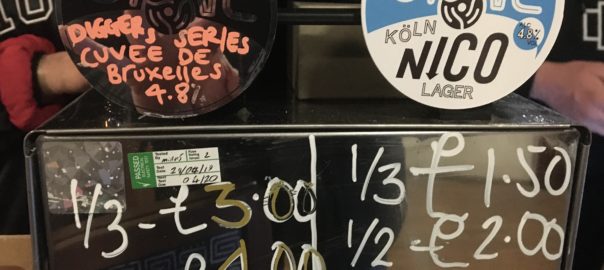

 For example: Torrside (New Mills) provided ‘Valour,’ a 7.7% Imperial Stout based on a 1917 recipe while London brewers, Orbit, provided an excellent Kolsh (4.8%) and a Belgian-style pale, ‘Cuvee de Bruxelles’ (4.8%). Closer to home, Sheffield brewers Lost Industry debuted an 8.7% ‘Wild Honey Braggott’ while St.Mars of the Desert (SMOD) exhibited the latest products from their Attercliffe hideaway. ‘Abbeydale BA 1868’ (11.7%), after three years in a cask, was a memorable, positive experience.
IBF also provided an increasing international selection. FrauGruber Craft from Augsberg, in Germany, made their UK debut bringing a selection of brews new to the UK. ‘An eye for an eye,’ a 10.5% Imperial Stout collaboration with Dutch brewers, De Moersleutel (Alkmaar) was particularly impressive. SMOD recently made the international Ratebeer top ten list of best new breweries, a compilation compiled from over 4.2 million customer and industry reviews.
For example: Torrside (New Mills) provided ‘Valour,’ a 7.7% Imperial Stout based on a 1917 recipe while London brewers, Orbit, provided an excellent Kolsh (4.8%) and a Belgian-style pale, ‘Cuvee de Bruxelles’ (4.8%). Closer to home, Sheffield brewers Lost Industry debuted an 8.7% ‘Wild Honey Braggott’ while St.Mars of the Desert (SMOD) exhibited the latest products from their Attercliffe hideaway. ‘Abbeydale BA 1868’ (11.7%), after three years in a cask, was a memorable, positive experience.
IBF also provided an increasing international selection. FrauGruber Craft from Augsberg, in Germany, made their UK debut bringing a selection of brews new to the UK. ‘An eye for an eye,’ a 10.5% Imperial Stout collaboration with Dutch brewers, De Moersleutel (Alkmaar) was particularly impressive. SMOD recently made the international Ratebeer top ten list of best new breweries, a compilation compiled from over 4.2 million customer and industry reviews.
 One future innovation for IBF could be running a series of (silent) films on the big screen: perhaps beer related material from the last century. Such images would make an excellent contrast to the vibrant C21st.vibe emanating from the ample seating in the stalls. It would also be useful to have more opportunities to purchase take-aways: bottles and cans.
Yet again, IBF proved a positive start for Sheffield Beer Week: lots of innovative variety in an excellent developing venue – see you there next year!
One future innovation for IBF could be running a series of (silent) films on the big screen: perhaps beer related material from the last century. Such images would make an excellent contrast to the vibrant C21st.vibe emanating from the ample seating in the stalls. It would also be useful to have more opportunities to purchase take-aways: bottles and cans.
Yet again, IBF proved a positive start for Sheffield Beer Week: lots of innovative variety in an excellent developing venue – see you there next year!

 As you are probably aware, as a pub, the ACV-rated, Carbrook Hall closed in March 2017 and over two years later reopened as ‘Starbucks Carbrook Hall.’ Just before Christmas, I finally visited. The Jacobean wood panelling in the ‘Old Oak Room’ has been retained and is in good condition. However, the ceiling has received a heavy dose of white paint. On my previous visit, in April 2019 while renovations were taking place, the ceiling was exhibiting the distinctive colourful design which had been in place for years.

