The Big Gun (13-17 Wicker, S3 8HS), a pub with interior features of Special Heritage Interest, closed in September 2023. Recently, several months after building work commenced, a retrospective planning application was submitted to Sheffield City Council (SCC). Work completed includes the creation of a new shop front, the replacement of windows and the fitting of roller shutters.
The closing date for comments was 13th June. We commented, noting that the planning application has several errors and omissions. For example, the submitted ‘existing plans (ground floor)’ do not show (i) the internal wall which is perpendicular to the front external wall in the ‘Commercial Space’ and (ii) the possibly unique Victorian draught screen which is inside, to the right of the corner door. Both these features are on plans of the pub included in the Licensing File (Sheffield Archives) and were in place when the public house was last open to the public. As they are not included on the documents submitted as part of this planning application, we can hope that there is no intention to remove these, and other, heritage features.
The planning application also has no mention of potential ‘change of use.’ Hence, the assumption which has to be made is that the current owners intend to reopen as a public house. However, it seems that this is not the case.
Due to these errors, we have suggested that the application is withdrawn until all errors and omissions are rectified. We await decisions from SCC Planning.
After over 200 years, the Big Gun (13-17 Wicker, S3 8HS) closed in September 2023. Building work has since taken place. This includes the creation of a new shop front and the replacement of windows.
Sheffield City Council Planning are aware that these works have been carried out without appropriate permission. No planning application has been submitted and they are not aware of a proposal for a change of use in the building. Their Planning Enforcement Team is currently investigating.
The Big Gun has an interior of special historic interest and, as such, is listed on the national CAMRA Pub Heritage website: ( https://pubheritage.camra.org.uk/pubs/12118). We hope that the owner has not destroyed the many unique features, especially the Victorian fixed seating and the, possibly unique, draught screen. If this is the case, we expect that SCC will use their full powers to ensure that appropriate remedial action is taken.
A beer house has been on this site since 1796. The present building was built around 1900 by Messrs’ Wheatley and Bates Ltd, a local wine, spirit and cigar merchants. At the time of closure, there were many heritage features. For example, the right hand side of the snug had two bays of Victorian fixed seating with decorative bench ends that resemble a (acanthus) leaf.
It seems that the demolition, on 10 January, took place, in error: Sheffield City Council told Now Then magazine: “Our initial belief was that the top turret on the building had collapsed under its own weight on the morning of 10 January.”
“New information has since come to light which shows the demolition company were instructed in error at 11:53am to continue with demolition. As a result of this order, our understanding is the turrets fell because of the recommenced demolition works.”
In early 2020, Carlsberg and Marston’s announced a joint venture: the Danish corporation taking 60% of the new Carlsberg Marston’s Brewing Company (CMBC) with Marston’s holding 40% and receiving a cash payment of over £270M. At the time, we commented that we had concerns regarding the future of the internationally unique Burton Union System as used in Marston’s Albion Brewery. http://tinyurl.com/498ss642
Almost four years later, these concerns have come to fruition: CMBC have announced plans to retire the historic Union System, a method of brewing using an arrangement of wooden barrels and pipes which recirculates beer and yeast during the fermentation period. This system was developed in Burton-on-Trent, patented in 1838, and used extensively for many years. Brewing scientists regard the system as unparalleled for the production of bright, clean, strong-tasting pale ales.
For example, Draught Bass, the best-selling cask beer in the 1970s was brewed using the Union System. Over the following decades, Bass fell into decline, in both quality and sales. The turning point came in the early 1980s, when Bass decided to rip out the System that had been used to produce its flagship Pale Ale for over 150 years.
Across town, Marston’s established their Union System in 1898 when they relocated from their Horninglow Brewery (built 1834) to their current site, the Albion Brewery on Shobnall Road. Described by Roger Protz as, ‘The Cathedral of Brewing,’ there are ten sets of Burton Unions in a single brew-house, mostly used to produce, Pedigree (4.3% abv), a beer originally introduced in 1952. In recent years, volumes of Pedigree have declined and only four of the sets were in use during 2023. Until earlier in January, the Marston’s website described Pedigree as ‘the only beer to come through the Burton Union System. It gives Pedigree it’s one-of-a-kind taste. No Burton Union. No Pedigree. End of.’
After 125 years of use, including over seventy of Pedigree, Marston’s are now to follow the lead of Bass, leaving, world-wide, only one variation on this unique brewing method. The Firestone Walker Brewing Company (Paso Robles, California, USA) use a modified Burton Union system: forty, 65-gallon, American oak barrels.
This decision will see a unique, and historic, part of Britain’s brewing heritage extinct. Ideally, CMBC would reverse their decision or, at least, make the Union Sets, in situ, available to others. This is unlikely to happen – I’d hope to see them, as, at least, a working museum piece. However, with the recent closure of the National Brewery Museum, this is unlikely. For many years, one of the Bass Union sets was on display in the museum car park.
It seems Carlsberg have no care for the heritage they have acquired in the UK – in addition to this backward step, recent years have seen the closure, or disposal, of several cask breweries: Eagle, Jennings, Ringwood and Wychwood. In their home country, Carlsberg have a reputation as a patron of the arts and a respecter of heritage and tradition. However, not in the UK, where a race to the lowest common destination seems to be the plan.
Carlsberg: probably the worse respecter of brewing tradition in the world.
December brought news that the Market Tavern (Exchange Street, S2 5TR) is to be demolished. While asbestos removal work was in progress, it was discovered that the chimneys were structurally unsound.
The pub opened in 1797, was rebuilt to follow a new street line in 1909 and then completely rebuilt by Sheffield brewery, Thomas Berry & Co. in 1914. Opinion is divided regarding the origin of the then ‘Rotherham House’ name. Either this was due to ownership by Rotherham-based, Bentleys Brewery, or proximity to the start of the Rotherham tram service.
1961 plans illustrate the installation of a Wimpy Bar on the front of the pub (N.W.Oldfield, Architect & Surveyor for Tennant Brothers Limited: see Sheffield Archives: MC/DC/235 ). Introduced to the UK in 1954, Wimpy is a multinational hamburger restaurant chain.
In 1968, the pub became the ‘Old No.12,’ a Berni Inn, one of a chain of British steakhouses, established in 1955. Berni Inns, a forerunner of today’s pub restaurants, provided Tudor-looking false oak beams and white walls. 1982 saw a take-over by Mecca and a change of name to the Garden. In 1995, it was sold to Whitbread and rebranded as Beefeater/Brewers Fayre.
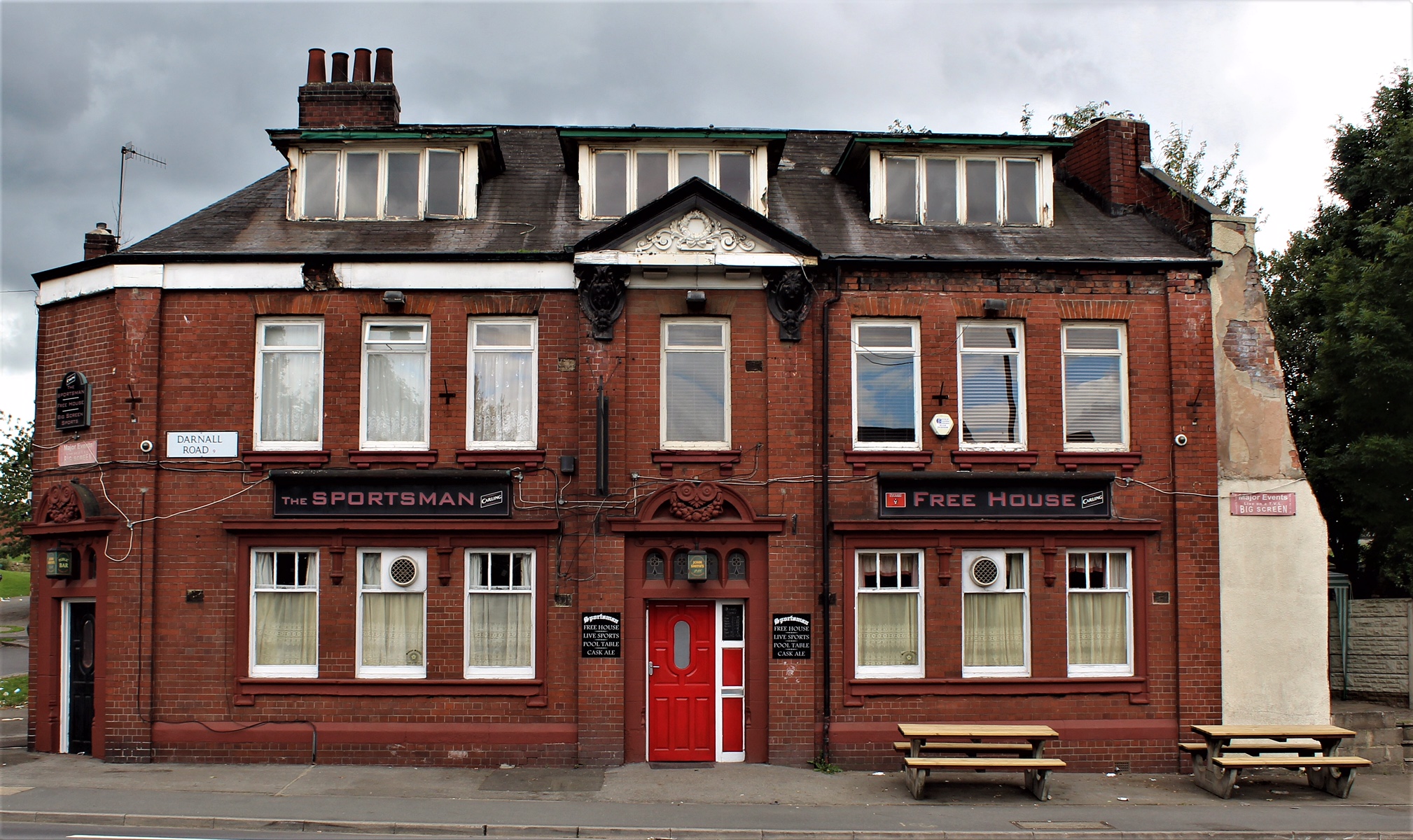
Recent planning applications bring the news that the Sportsman (Darnall Road, S9 5AD) is to become a House of Multiple Occupation for 16 people.
Opening as a beer house in 1859, the Sportsman was an ex-John Smiths, two-roomed pub with a central bar. 1953 plans (Wilburn & Atkinson, Architects, Doncaster for Messrs.Whitworth Son & Nephew Ltd.) show an identical lay-out with three external doors (left, central and right). At the time of closure, there was a mosaic on the floor entrance (often hidden by a mat) and tiling in the right-hand room. The most recent pub sign was based on ex-landlord, Darnall-born featherweight boxer, Billy Calvert (1933- 2016). He twice unsuccessfully fought for the British Title in a seven-year career which commenced in 1958.
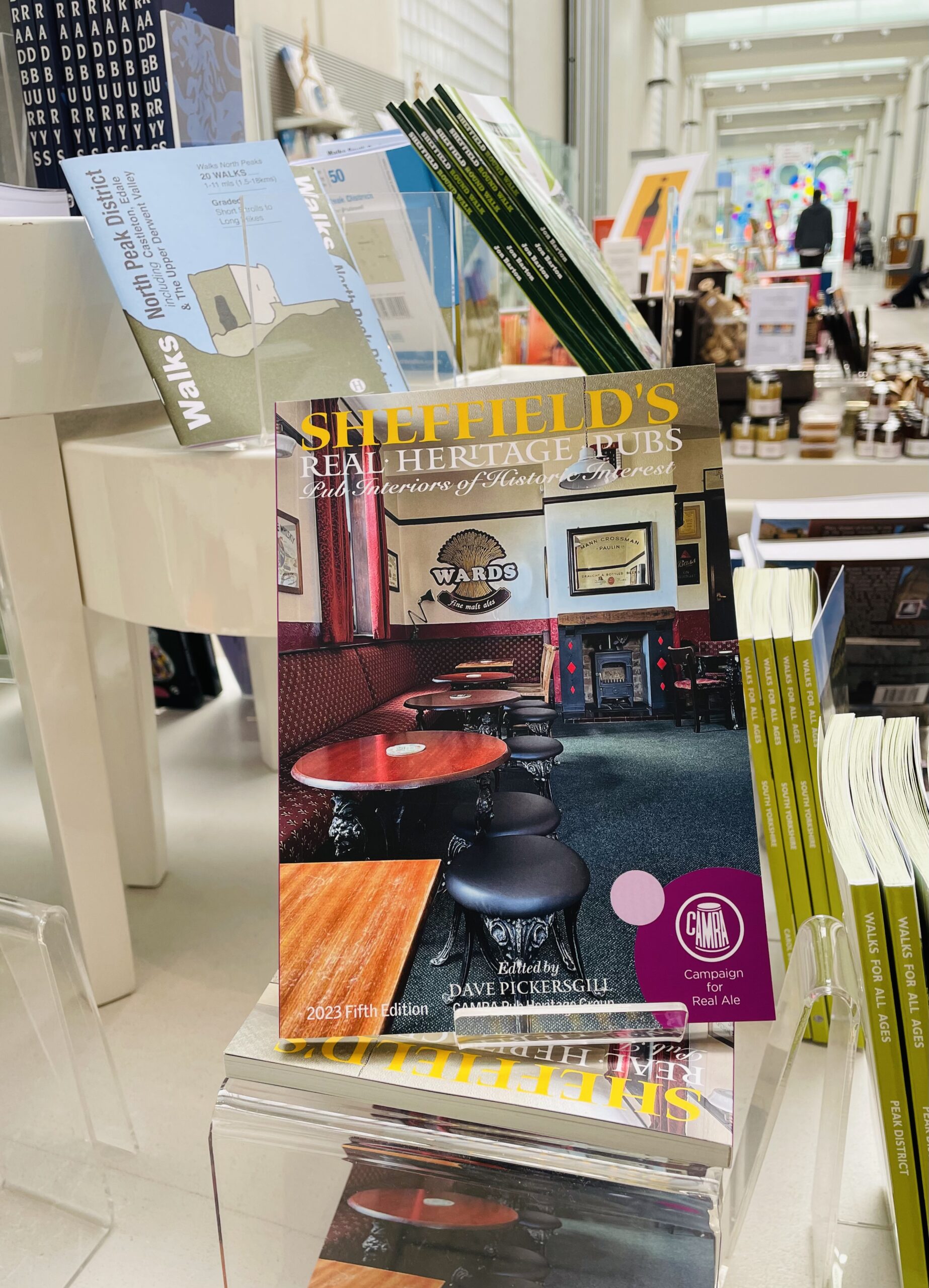
The fifth edition of the Sheffield’s Real Heritage Pubs arrived from the printer just in time for the 2023 CAMRA Member’s Weekend, AGM & Conference (1000 copies, A5, 128 pages, full colour throughout, £8.99 RRP).
Copies are available at several local outlets: Beer Central, Draughtsman (Doncaster railway station), Famous Sheffield Shop, Fat Cat, Kelham Island Books + Music, Kelham Island Museum, Hop Hideout, Makers Store (Meadowhall), Millennium Gallery, Next Chapter Books, Old Shoe, SMOD and Rhyme & Reason.
All copies of the pub heritage walk booklet have been distributed. The plan is to produce (at least) two further booklets in this series: Kelham Island/Neepsend (2024) and Little Chicago (2025). Launch events are planned for the Steel City Beer & Cider Festival.
The Old Queen’s Head is the oldest non-religious building in Sheffield and one of only three medieval timber framed buildings in the city that still remain. The building is widely considered to have initially been a hunting or fishing lodge that was associated with Sheffield Castle, and tree ring dating indicates that it was constructed sometime between 1503 and 1510. The building is likely to have been constructed for the 4th Earl of Shrewsbury, who took an active interest in local affairs and transformed Sheffield Manor Lodge into a vast Tudor country retreat in 1516. The building was originally located on the North West edge of the Sheffield Medieval Deer Park surrounded by ponds, and initially had a much larger L-shaped footprint.
There are tunnel openings within the cellars, and it is rumoured that these connected with Sheffield Castle and Sheffield Manor Lodge. The first written reference to the building is in a 1582 inventory for the 6th Earl of Shrewsbury, where it was referred to as ‘the Hawle at the Poandes’. The Earl may have used the building to throw banquets for guests who came to hunt wild fowl, and the inventory recorded rich and plentiful contents. Many of the road and place names in the immediate vicinity refer to the aforementioned ponds, which now no longer remain. The Earl kept Mary Queen of Scots under house arrest in Sheffield between 1570 and 1584, and it is believed that she visited the hall and surrounding ponds.
The building is constructed using oak supporting beams. These were likely infilled by wattle and daub, and the building would originally have had a thatched roof. The building is jettied, where the upper floor projects beyond the lower floor, and has a fireplace believed to be original. Historic timberwork and carving is located internally and externally, and the building has 5 carved oak heads. These are believed to depict the 6th Earl of Shrewsbury, Bess of Hardwick, a King, a person coming out of a fish’s mouth, along with a further unknown carving.
Sometime between 1582 and 1637, it appears that the building was let out to tenants and its status declined. There are later references to the building having been used for ducal washing and also as a wash-house to Sheffield Castle and Sheffield Manor Lodge. By the beginning of the 1800s the building was being used as a house, and the first known image of the building is a watercolour by BK Dale from 1815.
A three storey building was constructed to the rear of the hall in 1840 and this became a public house. James Pilley may have been the original landlord, and is listed in an 1849 directory as running a beerhouse at 2 River Street. The pub was initially called the Queen Hotel, likely in reference to Mary Queen of Scots, and the entrance door and signage can be seen in a photograph from the mid to late 1800s. The establishment reportedly expanded into the hall sometime after 1862, and was identified as the Queen’s Head Hotel from 1864. The Old Queens Head was subsequently restored by John Smith’s in 1950 and then refurbished and extended by the Tom Cobleigh pub chain in the early 1990s.
Today the building is grade II* listed, but is largely surrounded by modern high rise development and Sheffield Interchange. Despite this, the Old Queen’s Head remains of great importance to those with an interest in heritage pubs, historic buildings, local history and the paranormal. With regards to the latter, the building is said to be haunted by ghosts including a Civil War soldier, a medieval child, a hunting hound, a lady in white, and a pub local from the 1970s!
The Farfield (376 Neepsend Lane, S3 8AW) was built in 1752 as a gentleman’s residence. As a pub, it was damaged in the 1864 Sheffield Flood, when the nearby bridge collapsed and the Don overflowed. The publican, Matilda Mason, was forced to shelter on the upper floors. She later claimed £162 13 s 9d for loss of property. This claim was ‘assessed by agreement incl. costs at £90’ on 10th June 1865.
1961 plans show four separate rooms on the ground floor. A Public Bar to the left of the entrance, Saloon to the right, with a Smoke Room behind. The Saloon includes a Servery. The far-left corner is a kitchen. Alterations (John Foster, Group Architect, Joshua Tetley & Son Ltd.) open out the Saloon and Smoke Room into a larger Smoke Room with the Servery moving into a more central position. The kitchen becomes inside toilets. 1992 saw the addition of several internal doors (Michael Self Partnership, Chartered Architects, Sheffield). Externally, between floors, to the right, is a distinctive moulded cement sign reading ‘Farfield Inn.’ The building was Grade II listed in December 1995.
For many years, the pub prospered as a Gilmours, and later, a Tetleys house. Personally, I recall attending a CAMRA ‘games evening’ in the early 1980s. Changes of name (Owl, Muff Inn) followed, before the building was gutted, and subsequently closed, as a consequence of the 2007 Sheffield floods. In January 2018, the building sold at auction, as a development opportunity’ for £250k. The guide price was £95k. The Auction Brochure described the building as requiring ‘complete restoration following floor damage.’
In February 2019, a planning application was made to Sheffield City Council: ‘Alterations to and refurbishment of Public House, formation of 6 flats on first and second floor, use of existing outbuilding as a workshop and erection of a two-storey building to form 2 workshops (Use Class B1) and erection of associated bin stores.’ This was validated the following February and a decision made in March 2021. The gap of over two years between the original application and the decision from SCC suggests that there was considerable interaction between the applicant and the decision makers.
The planning application was refused. The key reason seems to be: ‘‘On the face of it ….. the benefit of the proposed renovation of this listed building ….. appear to outweigh any less thansubstantial harm that may arise.However ….. there are inadequacies in thesubmission (in relation to noise and the impact of the development on theamenities of future residents) which cannot be dealt with by condition whichmean that the full impact of the proposals on the listed building cannot beproperly assessed and so the level of harm cannot be accurately determinedor, therefore, justified.’
This imposing building has been closed for almost twenty years. In the interim, Kelham Island, described by Time Magazine as, ‘one of the coolest places on the planet,’ has slowly encroached. We look forward to seeing a subsequent planning application and the building both restored to its former glory and back in use.
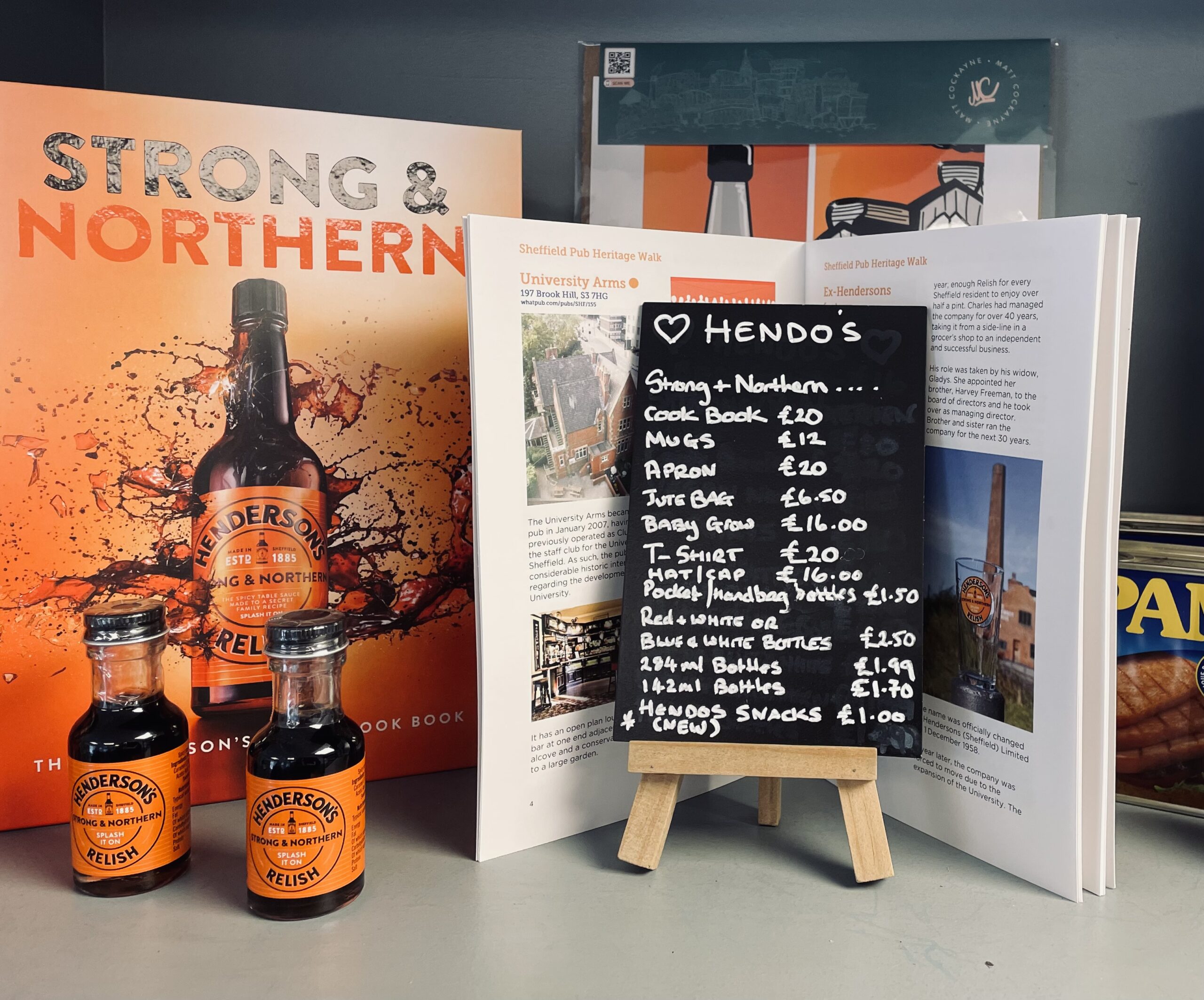
Thanks to all the retail outlets which are stocking, one (or both) of the recently published Sheffield Pub Heritage publications: Abbeydale Brewery, Bath Hotel, Beer Central, Biblioteka (at their new premises on Eyre Street), the CAMRA Shop, the Crow, Dog and Partridge, Draughtsman (Doncaster), Fagan’s, Famous Sheffield Shop, Fat Cat, Hop Hideout, Kelham Island Books and Music, Kelham Island Museum, Makers Shop (Meadowhall), Millennium Galleries, Samuels Kitchen (Stocksbridge), St.Mars of the Desert Brewery, the University Arms and Weston Park Museum.
Both the booklet and the book are selling well – please contact pubheritage@sheffield.camra.org.uk for retail enquiries or copies by post.