A new threat to real ale – or a storm in a Schooner?

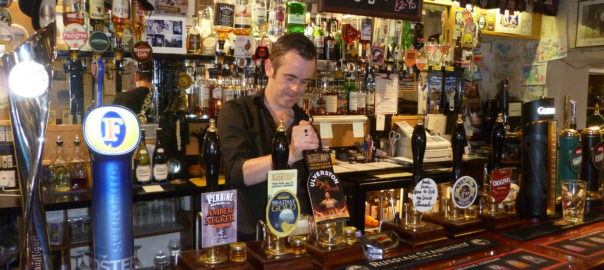
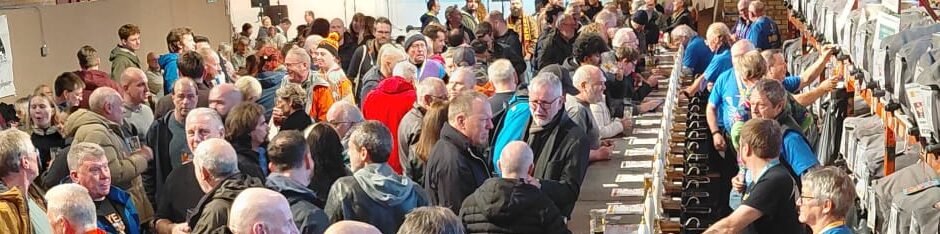
Cloudwater Brewery of Manchester has recently announced that they are to no longer brew cask ale, following a number of other fashionable ‘craft’ brewers that have either discontinued or scaled back cask production. Cloudwater’s business model going forward will be 60% bottles/cans and 40% keg. In 2016 their production split was 23% cask, 39% keg and 38% bottles. The reasons they give for no longer brewing cask is that real ale drinkers demand cheap beer – even when it is brewed with large quantities of quality, expensive ingredients; issues with both publicans and consumers not understanding what is good or bad beer causing demands for refunds on perfectly good beer – for example Cloudwater beers are sometimes served hazy as they are unfined (therefore vegan) plus more labour is involved racking cask beer, collecting empty casks and cleaning them for reuse – bottles, cans and keykegs are all one way containers. The statement from Cloudwater has led to calls from the usual online beer commentators for CAMRA to change attitudes and educate drinkers. They say it should be about promoting beer quality not members discounts or pubs with cheap ale. These same commentators are also forecasting that all the other brewers doing anything interesting are likely to follow suit and leave the cask market to simply be a load of boring, cheap brown swill. Beer writer Pete Brown has waded in to the debate in his Morning Advertiser column, criticising the pub trade for there being too many pubs serving badly kept beer and having staff not properly trained in the art of cask conditioned beer, with him suggesting he avoids drinking real ale in pubs unless he knows they have a good reputation for cask beer. Of course it is worth noting that breweries such as Cloudwater have limited brewing capacity and have made a success of producing one off beers that are well hyped and attract good prices for bottles plus of course bottles and cans are good for direct sales, which are more profitable. They are also doing well with export sales which one way containers such as bottles, cans and keykegs are good for. You cannot blame them for making decisions that are the best for their business – but it doesn’t mean the same decisions are necessarily right for other breweries around Britain. Tiny Rebel Brewery has recently also published a blog looking ahead with their plans for 2017 which sees them producing a lot more interesting and experimental beers – with cask being part of the plan. They say cask works best for certain styles of beer with the cask conditioning adding a certain something to the flavour. They are also opening a new bigger brewhouse. Here in Sheffield we have a long list of breweries based in the City with all but one producing cask beer. Some of them also sell beer in other formats (bottle and/or keg) but generally the cask beer is their biggest output. However not all brewers are aiming at the same market. Some produce simple but well crafted session beers that are good for pubs to have as an affordable house beer. Others produce premium beers that may be hop forward or contain interesting ingredients; some breweries do a combination of the two. Such diversity is necessary to stay in business otherwise the competition would be immense – it is also good for the drinking public too of course. Not all small breweries wish to go down the road of bottling – if you don’t have your own bottling plant – which is an expensive investment – the choices are hand bottling which is slow, tedious and labour intensive or contracting out which can see excessive wastage of beer as well as expense. Kegging also has its issues. The observations of the better pubs in the Sheffield area that have a large range of beers and quality cellarmanship by knowledgeable management and staff generally sees a beer range that includes a couple of cheaper house beers – usually a pale/blonde and a brown bitter along with more interesting (and expensive) changing guests, all of which sell well. It seems the death of real ale is being somewhat exaggerated….  

CAMRA revitalisation project news

he leadership of one of Europe’s most successful consumer organisations is considering refocusing its future purpose after being presented with a wide-ranging review into its aims and activities – but is clear campaigning for real ale, pubs, clubs, cider and perry will remain core. The volunteers heading up the Campaign for Real Ale were presented with a report and proposals by the Revitalisation Project at a meeting in early December. The Revitalisation Project has proposed that the Campaign remains committed to its core aims of promoting real ale, real cider, perry and campaigning for pubs and clubs – but has suggested CAMRA needs to widen its vision and mission to reflect changing consumer needs and developments in the drinks industry. In summary the Revitalisation Project has recommended that:
  • Campaigning for real ale, cider and perry and protecting community pubs and clubs will remain core to CAMRA activities.
  • CAMRA widens its mission and purpose to reflect changing consumer needs and developments that have taken place across the sector since CAMRA’s foundation in 1971. The Revitalisation Project found that there is much CAMRA does well, so its proposals principally relate to opportunities for the organisation to remain relevant and effective in the future.
  • CAMRA broadens its focus to play a “leading role in informing and representing all those with an interest in good beer of any type”.
  • CAMRA promotes the “virtues of well-produced, well-kept cask-conditioned beers as the pinnacle of the brewer’s craft” while also promoting greater awareness and understanding to help drinkers judge for themselves what “quality” beer is.
  • Celebrating and protecting well-run community pubs and clubs should also remain core to CAMRA’s purpose, but the Campaign should do more to improve the range and quality of beer, cider and perry in “communal drinking” venues across the on-trade.
  • In response to the attacks on responsible drinkers by health campaigners, the organisation plays a leading role in speaking on behalf of all UK beer, cider and perry drinkers, and pub and club-goers.
The Revitalisation Project was officially launched in April 2016, to carry out a review of CAMRA’s purpose and activities and to ensure it was positioned to reflect changes in the pub and brewing industry. The Revitalisation Project considered the views of tens of thousands of CAMRA members who responded to three surveys and the opinions of thousands who attended consultation meetings across the country. Its findings also take into account feedback from numerous industry stakeholders including politicians, brewers, cider producers, publicans and journalists. The Revitalisation Project has now agreed a series of proposals which it presented to CAMRA’s National Executive – the most senior elected volunteers in the organisation – at a meeting in early December. The National Executive will now take ownership of the report and will be responsible for deciding whether, how and when, to implement the Revitalisation Project’s proposals. CAMRA members will continue to be fully involved in the process and will be invited to discuss the Revitalisation Project proposals at the CAMRA Members’ Weekend and AGM to be held in Bournemouth in April 2017. A final decision on adopting the proposals will be taken at the Members’ Weekend and AGM in Coventry 2018. Michael Hardman MBE, one of CAMRA’s founders and Chairman of the Revitalisation Project said: “Our proposals were agreed after eight months of hard work and include strengthening some of CAMRA’s best campaigns and practices as well as confirming our 45-year-long commitment to real ale and our long-standing support for pubs and clubs. 

“We have recommended that we should explore some kinds of beer that have previously been outside our scope, but this is hardly a controversial proposal since our latest survey of members showed that there was a clear majority in favour of doing so.

“We now look forward to the National Executive accepting our proposals, depending on the results of an impact study they will be carrying out, and then to our 185,000 members voting on the proposals.”

Colin Valentine, Chairman of the Campaign for Real Ale, said: “I’d like to thank Michael and the Revitalisation Project for the work they have put in over the summer to survey tens of thousands of CAMRA members and meet thousands in person to ask them what they think. “The Revitalisation Project has helped us to understand what our members want for the organisation in the future and the direction they believe we should take to respond to the changes in the pub and beer world. “My fellow National Directors and I will now take the time to fully understand the Revitalisation Project report and the proposals which have been made to us. It’s now our job to decide what we will recommend to our members and seek their approval to changes, if appropriate, to our purpose and strategies and the activities we carry out to achieve them. “While the work of the Revitalisation Project is now finished, this is really only the start of the process for the National Executive and CAMRA members. We need to make sure that members continue to be at the heart of the decisions we take and we will ensure they get a full opportunity to discuss the proposals at our Conference in April and then have the final vote on any changes to CAMRA’s purpose at the Members’ Weekend and AGM in 2018.” As well as presenting its proposals to the National Executive, the Revitalisation Project published the findings of the third and final survey into the views of CAMRA members. The survey findings are available at: https://revitalisation.camra.org.uk/blog/revitalisation-project-survey-three-results A full copy of the Revitalisation Project Proposal document is available here: https://revitalisation.camra.org.uk/blog/revitalisation-project-report-published

National CAMRA AGM

All members are entitled to attend the national AGM to listen to the annual reports from the Chief Executive and national Directors on the National Executive Committee, debate and vote on motions, participate in policy discussion groups and attend volunteer support workshops. The AGM is also part of a wider members weekend which includes a private beer festival, coach trips to breweries and the opportunity to visit some of the pubs in the area. This year the Members Weekend & AGM is being held in Bournemouth from the 7th to 9th April. Conference business takes place Saturday and Sunday daytime with the Members Bar and registration desk open from Friday evening, coach trips depart on Friday and Saturday evening. You can register in advance online and simply collect your conference pack on arrival, alternatively sign up at the registration desk at the venue on the day. For more on the members weekend visit camra.org.uk. Direct Cross Country trains run from Sheffield to Bournemouth and it is usually cheaper to book in advance. Check crosscountrytrains.co.uk for times and fares.

ACV (Asset of Community Value) Update

Since the copy deadline for the December issue of Beer Matters, there have been a number of local developments:
  1. On 21st.November, the Chair of Sheffield CAMRA and myself met with Ccl.Jack Scott in order to discuss ACV applications to Sheffield City Council (SCC). At that meeting, he promised a further meeting, ‘early in 2017,’ in order to discuss the establishment of a city-wide pub promotion/protection and beer destination/tourism strategy. Since then, despite a number of email reminders, there has been no suggestion of a date/venue for such a meeting from SCC.
  2. The Plough –  on 10th.January, SCC Planning committee unanimously rejected an application by Sainsburys to turn the Plough into a ‘convenience store’ – the next step is up to Enterprise Inns. Ideally, they will sell the pub (at a sensible price) to a local pub, brewery or community group.
  3. The Cherry Tree – An ACV application was submitted by a local group on 21st.October. The Co-op have since put in a planning application to demolish the building and replace it by a shop. A forthcoming Planning Committee (14th.February) will make the planning decision. We understand that the ACV decision will be made before that date (the decision was due on 2nd.December).
  4. The White Lion achieved ACV status on 21st.November. Congratulations to all concerned.
  5. Sheffield CAMRA submitted an ACV application for The University Arms on 23rd.December. A decision from SCC is due by 17th.February. An acknowledgement letter from SCC confirms this date.
  6. Paul Ainsworth, the Chair of the National CAMRA Pub Campaigns Group has written to SCC expressing disquiet regarding their procedures and practices
To summarise, we:
  • have little confidence in the way SCC are managing the ACV process. The process is non-uniform and deadlines are not met
  • feel that SCC are expecting Sheffield Citizens to jump higher than Parliament requires (regarding ACV applications). It is over-reaching itself by demanding higher tests than those required by Parliament.
  • have a serious concern that in applying higher hurdles than those required by the Localism Act 2011, SCC is acting Ultra Vires.
Dave Pickersgill, Pub Heritage Officer

Sheffield Beer Week 2017 – first announcements!

2017 sees Sheffield Beer Week celebrate its third year as a city-wide beer festival and umbrella beer-focused event occurring in multiple venues throughout the second week in March. It is with great excitement that the first few breweries have been announced for 2017 #SheffBeerWeek events. Follow updates as they are released via our Twitter. Not only do we have great local breweries such as Neepsend, Thornbridge and Abbeydale all getting involved but a list of national and international breweries including Beavertown and Belgian family brewer Brouwerij De Brabandere, so far. Can’t wait to share more with you all in the next few weeks! With around 5,000 people visiting the city for Beer Alive (formerly Beer X festival), organiser Jules Gray sees Sheffield Beer Week (13-19 March) as a real opportunity to show off the very best of our beer scene. In addition to forming networks, collaborations (locally, nationally and globally) and encouraging additional visitors to Sheffield. In addition to the Society of Independent Brewers’ national conference and beer festival, a new beer-focused conference is launching called – Beer Now. This inaugural conference will look to attract additional beer industry professionals to Sheffield and is focused on marketing, communications and tourism. After 2016’s University of Sheffield commissioned Beer Report written by broadcaster Pete Brown, it is great to see traction building in Sheffield’s beer scene. Jules Gray, joint proprietor of Hop Hideout award-winning beer shop and tasting room, on Abbeydale Road, said: “I’m really pleased to see the year on year interest grow throughout Sheffield and beyond in its appetite for celebrating beer. Beer tourism is a growing area and I see this as a crucial cog to Sheffield’s continued beer success and positive economic growth city-wide. It’s really exciting to be part of developing this expanding annual event. I want to give a big thanks to all those who have been involved in previous years and look forward 2017’s plans as they gather apace.” Sheffield Beer Week runs from 13 to 19th March.  Head to http://sheffieldbeerweek.co.uk. If you’re interested in holding an event, contact Sheffield Beer Week at sheffieldbeerweek@gmail.com for more information.

Beer Now conference comes to Sheffield alongside SIBA BeerX

siba-logoThe Society of Independent Brewers (SIBA) and Zephyr Conferences announced in 2016 the first-ever Beer Now Conference to take place in March 17-19 in Sheffield, England in 2017. The conference is focused on “marketing, tourism, and communications” in the modern beer industry. The conference will take place at ICESheffield, the same venue as and coinciding with Beer Alive, SIBA’s national beer and brewing event. Because Beer Alive primarily focuses on issues related to brewing, having Beer Now co-located in Sheffield will broaden the scope of the events to also cover the marketing side of today’s beer industry, which has changed dramatically in recent decades. “We are extremely pleased to be hosting the Beer Now Conference at Beer Alive in 2017”, stated SIBA Director of Operations Nick Stafford, “the addition of the Beer Now conference widens the scope even further and brings its own audience of beer bloggers and writers who are so influential to our industry.” The beer bloggers and beer writers referred to come from the European Beer Bloggers & Writers Conference (EBBC), which operated the last six years in various European cities including London, Dublin, Brussels, and Amsterdam. Zephyr Conferences, the organizer of the EBBC, elected to broaden the scope of the conference to include industry representatives and change the name to Beer Now. “Beer Now, with its focus on marketing, tourism, and communications, will still be extremely applicable to beer bloggers and writers,” said Zephyr Conferences president Allan Wright. “We are not losing our focus on this audience. At the same time, the expanded content and the opportunity to interact with these beer writers should be of great interest to marketing and communications professionals in the beer industry.” For complete information on Beer Now, please visit www.BeerNow.org. For further information on the Beer Alive trade show and festival of beer visit www.beerx.org.
Sheffield Asset of Community Value update

University Arms ACV rejection – no meeting with SCC In late September, Sheffield City Council (SCC) refused our application to register the University Arms (UA) as an Asset of Community Value (ACV).   The decision then was ‘called-in.’ Our Chair and myself attended the Scrutiny Committee 20th.October, during SCBF42. The ACV rejection decision remained unchanged. However, we posed a series of six questions. In the meeting Ccl.Jack Scott, the SCC Cabinet Member for Community Services and Libraries, agreed to respond to our questions, in writing, within a week and also agreed to meet with ourselves. Such a meeting was originally promised in an email to ourselves dated 3rd.October. A written response from SCC finally arrived on 9th.November. However, despite reminders, at the time of writing, almost five weeks after the initial promise, no meeting has been arranged.  SCC have not suggested  a date/time or venue. They seem reluctant to meet with ourselves. There are currently two other ACV applications for pubs with SCC: both lodged by local community groups: White Lion, London Road – a decision was due on 3rd.November. Cherry Tree, Carterknowle Road – decision due 2nd.December The planning application to alter the ACV-listed Plough (Crosspool) into a Sainsburys received 157 responses from the public (151 against the plan). SCC have yet to make a formal decision, although this was due in late October In short, SCC are not keeping to legal deadlines, seem to be interpreting the rules in their own manner and do not seem to wish to meet with interested parties.                                   – Dave Pickersgill – Pub Heritage Officer, Sheffield and District CAMRA  

Assets of Community Value update – University Arms rejection called in

University Arms ACV rejection is ‘called-in’  On 27th.September, Sheffield City Council (SCC) refused our application to register the University Arms (UA) as an Asset of Community Value (ACV).   However, a week later, the decision was ‘called-in’ by the opposition. As soon as the decision was made public, the Sheffield CAMRA Chair and myself agreed to meet with Ccl.Jack Scott, the SCC Cabinet Member for Community Services and Libraries, who made the ACV rejection decision. However, before this meeting could take place, we learnt that the decision had been ‘called-in.’ A ‘call-in’ is intended to be used in exceptional circumstances when councillors believe that a decision has been taken in a way that is contrary to the council’s principles of decision making. It is not intended to be used to appeal a decision that is simply disagreed with. The Scrutiny Panel for the call-in’ will take place at Sheffield Town Hall on Thursday 20th.October (16:00-19:00). Members of the public can attend and ask questions. The ACV rejection ‘reason for decision,’ includes:  ‘ The owner describes it as a ‘student pub’ suggesting that its patronage is only a section of the community. …. No evidence has been provided to the contrary.’ This statement is simply incorrect, a ‘student pub’ states that access is restricted to students: this is not the case. The pub is a long-standing entry in the  Good Beer Guide: hence, many visitors visit from far-afield. The number of successful ACV pub applications which has been approved by SCC is pitifully small:  seven from a total of (only) 19 applications (5/15 from CAMRA). This compares unfavourably with the record of many other councils. For example, all pubs in Otley have ACV status and Aylesbury and Wycombe have listed over 150 pubs as ACV. CAMRA sees ACV status as a clear badge of honour for both owners and licensees. It is a clear indication that the pub matters to the community. Our UA ACV application was submitted on 16th.May. Advice from CAMRA HQ was followed throughout the nomination process. In our opinion, and that of our colleagues in St.Albans, the application clearly reached the statutory test outlined by the Government. A decision should then arrive within 8 weeks of the application – it took SCC over 4 months …. unfortunately such a delay seems to be the local norm. As part of this process, in late July, we received a six-page objection from a legal company, Pinsent Masons, employed by the owners of the UA, the University of Sheffield.  A number of items which ‘could be used to support the application’ are suggested by Pinsent Masons. However, legally, these are unnecessary. In our opinion, these comments were deliberately added in order to confuse the situation. We were given seven days to respond (which we did). We were surprised to receive an objection from the University as we believe that ACV status is something of which any pub would be proud, especially as, judging from 2016 publications, the University and ourselves do seem to have many common aims and ideas. However, it seems that their long-term ambitions for the site outweigh other considerations. As previously reported, the University development masterplan, includes an option in which the pub is demolished. Dave Pickersgill – Pub Heritage Officer, Sheffield and District CAMRA

L. Stuart Burrows

The Sheffield pub scene has lost one of its great characters. L Stuart Burrows, the long-serving licensee of the Mount Pleasant on Derbyshire Lane, died unexpectedly on Friday, 29th July.

Stuart, a former Sales Metallurgist/Chemist found his true vocation when he took the licence in September, 1993. At the time the only real ale available was Tetley Bitter, but over the years he increased the range to the 6 ales now on offer.

During his tenure very little else did change however because he believed that pleasant surroundings, a warm welcome, good company, and of course, a well kept pint were what his customers wanted. He succeeded in creating a typical, traditional pub atmosphere in this small 2-roomed village local.

The kind of “improvements” introduced elsewhere were considered unnecessary. He frequently referred to the pub as being “Unspoilt by Progress”, a tagline he used as part of the title of his 2015 publication otherwise called, “The Mount Pleasant – A History of a Public House at Bole Hill Norton”.

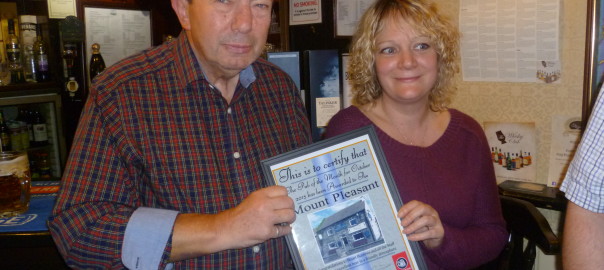
Stuart was passionate about real ale but the fact that he had to operate within the restraints imposed by owners Pubmaster, and from 2001 by Punch Taverns, probably explained why the Mount Pleasant was overlooked for Camra awards. All that changed in June 2012 however when the pub won the branch’s prestigious Pub of the Month award and then went on to win it again in October, 2015. An even higher accolade was the inclusion of the pub in the 2016 edition of the Good Beer Guide. It will be also included in the forthcoming 2017 edition.

October Pub of the Month at the Mount Pleasant, Norton Woodseats
October 2015 Pub of the Month at the Mount Pleasant, Norton Woodseats

Stuart was a lovely man and will be greatly missed. The branch wish to extend heartfelt condolences to his family at this difficult time.   

Andrew Thorpe

Sons of the Desert on tour

A group of Laurel and Hardy fans, Sons of the Dessert, took a mini bus to Ulverston in Cumbria, the birth place of Stan Laurel. The Stan Laurel Inn has six hand pulled beers, mainly from local breweries and my choice was Barngates Brathay Gold. ulverston pub bar A few minutes walk away is the house where Stan Laurel was born so after seeing this we went to Ulverston Brewery, a former livestock market hall with brewery, bar and shop under one roof. Their beers are named after Laurel and Hardy films and the two on offer were Perfect Day and Lonesome Pine. It was Festival Weekend and the town was busy with street food, stalls, entertainment, bands and drummers and much more, even the bronze statue of Stan and Ollie was decorated with flowers and coloured scarves. The museum dedicated to the comedy duo showed some of their most popular films and the stage just outside had entertainment throughout the day. Nearby was the Piel Castle Inn with high beamed ceilings, stone wall and fireplace. This Robinsons pub had four beers and I had Bonj Euros, a special blonde ale. All the pubs were busy and there was time to call in the Rose and Crown, a pub with five distinct areas and four Robinsons beers. There were ten hand pulled beers at The Mill, four from Lancaster brewery and six guests. The pub was developed round a restored water wheel and the layout is on various levels. There are many other good pubs in Ulverston but not enough time to visit them all. John Beardshaw