As many of you know, we recently held our AGM and elected a new committee for the year. With some old hands, and a few new faces, we are hoping to bring a new lease of life to the branch. Without further ado, let us introduce ourselves:
Chair: Kate Major: I have been a real ale lover for a few years now, but was thrown in at the deep end last year when I took on my first CAMRA role as branch secretary. The learning curve was steep but rewarding, and I decided the logical progression was to challenge myself in the role of chair. I currently run a pub as my ‘day job’, so my love for ale and the licensed trade runs deep, and I’m so excited to be a small part of what makes Sheffield the world’s real ale capital!

Vice Chair & Beer Fest Organiser: Louise Singleton: I became involved with Sheffield CAMRA when I volunteered to help at the 2011 AGM. Following that I volunteered at the festival at Ponds Forge, and was soon given the task of Staffing Officer. I became Chair of the Festival Organising Committee for the 41st festival, and again this year. I am not from a Beer Industry background as I work in Pensions Administration, and although working 60+ hours on the festival week I really enjoy it, though at times through the tiredness it doesn’t seem that way! It is a long 11 months organising the festival with many obstacles to overcome, but I do enjoy working with the other volunteers and am very proud of what we achieve together.

Secretary: Richard Short: I joined CAMRA while an archaeology student in York in the early 1990s. My subsequent archaeological work gave him access to pubs and a wide range of ales from around the UK. I am now a life member and an enthusiastic home brewer.
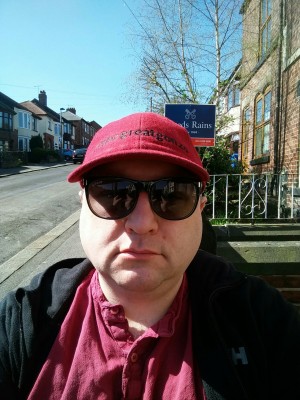
Treasurer: Tony Kennick: Having retained the Olympic cheese tasting gold for the third time in the row I retired to Sheffield to take up a life of dark beers and twice cooked chips.
Have own clown shoes.
Membership Secretary: Andy Cullen: I joined CAMRA at Sheffield’s Steel City Beer Festival when it was held at Hallam University Student Union’s Nelson Mandela Building (since demolished) and my first active role was on the national Young Members committee. Locally, I have held an number of branch committee positions including secretary, Membership Secretary and Chairman along with being editor of Beer Matters, having taken over from Paul Goddard when it was still a black and white publication where the master copy was printed on a photocopier and taken to the printers in hard copy – no PDF files uploaded in those days! I have also been involved with the Steel City Beer Festivals for a few years, generally as staffing officer but more recently as the person in charge of the beer order! I also volunteer on the Membership Stand at the Great British Beer Festival in London, and the Robin Hood Beer Festival in Nottingham, as well as being one of the organisers of the Three Valleys Festival in Dronfield.

Press Officer: Paul Crofts: Although a lifelong beer fan, I only joined the committee last year. I sells kitchen worktops for a living. I’m a huge music fan, particularly live music, and will talk endlessly about Mary-Chapin Carpenter given half a chance. And Sheffield Wednesday, Science Fiction, old Slot Machines, woodwork. In fact, I just generally talk endlessly. Probably best avoided.
Pubs Protection Officer: Dave Pickersgill: CAMRA member since the 1970’s, SCBF42 will be the 35th Sheffield CAMRA festival at which I’ve worked. I lead on Pub Heritage and ACV issues within the branch, and also have an e-book on the ‘Worksop and Retford Brewery’ which for a brief period was top of the Amazon Kindle charts in the ‘beer’ category!
Social Secretaries & Pub Officers: Mark Boardley, Patrick Johnson: I moved to Sheffield from Newcastle 4.5 years ago and straight into the Kelham Island area to partake of its many glorious pubs and their myriad pale ales. While I have been a CAMRA member for almost 10 years, this is the first time I have ever been ‘active’.
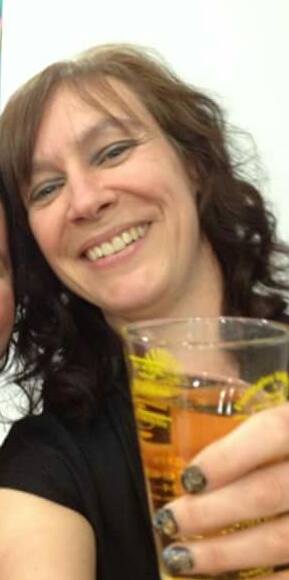
Cider Officer: Sarah Mills: Hi my name is Sarah Mills I have been a member of CAMRA for about six years. I was encouraged to join because I wanted to get involved with the beer festival. I joined at the time when cider was a small sideline and since I have been joint cider bar manager I have seen it go from strength to strength. I enjoy talking about the ciders we sell and like to encourage customers to try the new things we have on offer.
Young Members Contact: Matt Nedved: Hi I’m Matt, a keen lover of beers, ciders and pie. I have another 2 keen interests which are cricket and Geology.
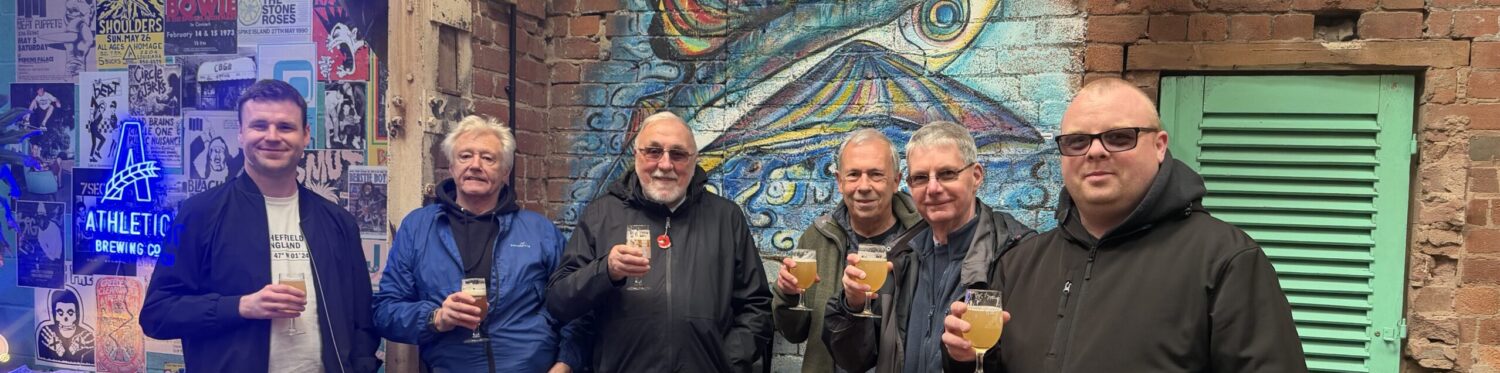


 I read the Sheffield Beer Report while on Eurostar en route for a few days with a ‘Podge’s Tour’ in LambicLand (Belgium). It generated considerable discussion with both colleagues on the tour and also a number of local Brewers. The initial Belgian reaction was ‘Sheffield?’ However, they were impressed by both the numbers and our enthusiasm.
Despite their well-deserved international beer reputation, the Belgium top-seller is Jupiler, a 5.2% Pils brewed by international giant, Anheuser-Busch InBev (this lists maize as one of the main ingredients). This illustrates the variety of the Belgian beer scene: some unique, and excellent, practice, but also a high level of mediocrity.
I read the Sheffield Beer Report while on Eurostar en route for a few days with a ‘Podge’s Tour’ in LambicLand (Belgium). It generated considerable discussion with both colleagues on the tour and also a number of local Brewers. The initial Belgian reaction was ‘Sheffield?’ However, they were impressed by both the numbers and our enthusiasm.
Despite their well-deserved international beer reputation, the Belgium top-seller is Jupiler, a 5.2% Pils brewed by international giant, Anheuser-Busch InBev (this lists maize as one of the main ingredients). This illustrates the variety of the Belgian beer scene: some unique, and excellent, practice, but also a high level of mediocrity.
 For example, we visited the internationally known, biannual lambic beer festival known as ‘The Night of the Great Thirst International Geuze and Kriek Festival of the Pajottenland’ at Itterbeek. This consisted of a marquee, about a dozen Brewers and 40 or so beers, mostly only available in bottles. There was no programme or tasting notes, prices were not low and abvs were only available by asking to look at the bottle label. All the Brewers were local with the single exception of Allagash from Maine (USA). The event needed more organisation and information. By contrast, the vast majority of CAMRA Beer Festivals have a larger beer choice and are a model of customer-friendly information and assistance. We were not impressed.
This lack of information was also apparent in many bars. A chalkboard and/or printed menu often listed the beers available, in bottle and on tap, but the detail is lacking: style? Brewery? abv? One notable exception was the Molenhof Café in Oostvleteren which serves a selection of draught De Struise Brouwerij beers from the brewery across the road. Their chalkboard included both ABV and beer style. Sadly, this level of information seems to be the exception, not the rule. Many Sheffield pubs, by contrast, display such detail and often more.
For example, we visited the internationally known, biannual lambic beer festival known as ‘The Night of the Great Thirst International Geuze and Kriek Festival of the Pajottenland’ at Itterbeek. This consisted of a marquee, about a dozen Brewers and 40 or so beers, mostly only available in bottles. There was no programme or tasting notes, prices were not low and abvs were only available by asking to look at the bottle label. All the Brewers were local with the single exception of Allagash from Maine (USA). The event needed more organisation and information. By contrast, the vast majority of CAMRA Beer Festivals have a larger beer choice and are a model of customer-friendly information and assistance. We were not impressed.
This lack of information was also apparent in many bars. A chalkboard and/or printed menu often listed the beers available, in bottle and on tap, but the detail is lacking: style? Brewery? abv? One notable exception was the Molenhof Café in Oostvleteren which serves a selection of draught De Struise Brouwerij beers from the brewery across the road. Their chalkboard included both ABV and beer style. Sadly, this level of information seems to be the exception, not the rule. Many Sheffield pubs, by contrast, display such detail and often more.

 We also visited the Brabanthal venue just outside Leuven for a visit to the Belgium equivalence of the GBBF, the Zythos Beer Festival with 88 brewers offering over 500 beers. This was a total contrast to the previous evening: lots of staff, a programme available in English, detailed information and even a free beer token for CAMRA members. In short, an excellent event. The provision of free bread at each stand was welcomed, an innovation which UK festivals could take on.

 Belgium has a large a number of fine long-established Brewers and blenders (many of which we visited, for example: Rodenbach, Oud Beersels) with excellent beers, including some world classics which simply could not be brewed elsewhere (think Lambic and Geuze). They also have a growing number of recently established innovative enterprises: for example, Urthel. Their impressive range now includes, ‘Bassets,’ a 24.4% abv freeze-distilled beer which was matured in oak barrels.
The Sheffield Region also has its World classics, but focusses on a different style and market. The vast majority of beers from the Sheffield region are cask-conditioned and sold relatively locally whereas the bottled outputs from Belgium hit the export market, many breweries exporting over 50% of their production.
The Sheffield region needs to up its game regarding exports – the potential is there, as Thornbridge have shown. The Sheffield Beer Report suggests that a local canning/bottling plant is an essential. Anyone care to invest?
It’s also worth noting that at Itterbeek, we had a long beer-related conversation with the Flanders Region Minister of Culture. He expressed more interest in the Sheffield beer scene than seems to emanate from Sheffield Town Hall. The presence of such a high-ranking politician at a beer festival indicates the level of local political support for beer tourism. It would be positive to see similar political representation at both the forthcoming SCBF42 and SIBA BeerX 2017.
In short, an excellent few days away – two contrasting beer scenes:
Belgium has a large a number of fine long-established Brewers and blenders (many of which we visited, for example: Rodenbach, Oud Beersels) with excellent beers, including some world classics which simply could not be brewed elsewhere (think Lambic and Geuze). They also have a growing number of recently established innovative enterprises: for example, Urthel. Their impressive range now includes, ‘Bassets,’ a 24.4% abv freeze-distilled beer which was matured in oak barrels.
The Sheffield Region also has its World classics, but focusses on a different style and market. The vast majority of beers from the Sheffield region are cask-conditioned and sold relatively locally whereas the bottled outputs from Belgium hit the export market, many breweries exporting over 50% of their production.
The Sheffield region needs to up its game regarding exports – the potential is there, as Thornbridge have shown. The Sheffield Beer Report suggests that a local canning/bottling plant is an essential. Anyone care to invest?
It’s also worth noting that at Itterbeek, we had a long beer-related conversation with the Flanders Region Minister of Culture. He expressed more interest in the Sheffield beer scene than seems to emanate from Sheffield Town Hall. The presence of such a high-ranking politician at a beer festival indicates the level of local political support for beer tourism. It would be positive to see similar political representation at both the forthcoming SCBF42 and SIBA BeerX 2017.
In short, an excellent few days away – two contrasting beer scenes:
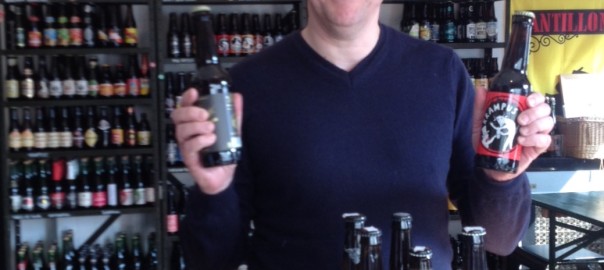
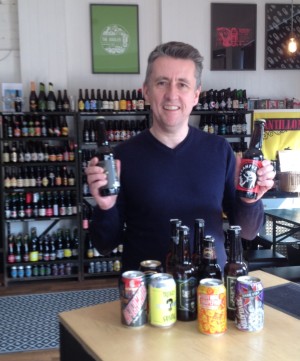 Finally, for all the people who did respond there was a raffle for 12 bottles of beer donated by Hop Hideout. The winner was (drum roll…) Simon Wood, seen here collecting what looks like a fabulous selection of beer.
Congratulations to Simon, and thanks again to Jules and Will at Hop Hideout for providing the prize.
Finally, for all the people who did respond there was a raffle for 12 bottles of beer donated by Hop Hideout. The winner was (drum roll…) Simon Wood, seen here collecting what looks like a fabulous selection of beer.
Congratulations to Simon, and thanks again to Jules and Will at Hop Hideout for providing the prize. 


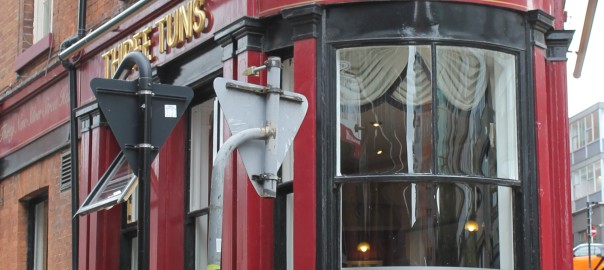
![Three Tuns [216482]](https://sheffield.camra.org.uk/wp-content/uploads/2016/04/Three-Tuns-216482-300x552.jpg) We note that the official SCC response considers that the Three Tuns ‘ offers such events to encompass a large area that could conceivably encompass all of Sheffield itself. … the Property and its stated uses attract the local working community who consider the Property as their local meeting place as well as users from further afield.’
We believe that these statements are significant as it indicates that Sheffield City Council has moved away from seeing ACV status as something which only concerns the geographically-local residential community. The ‘community’ for a pub can extend for many miles – prime examples are pubs located at railway stations. For example; the Sheffield Tap ‘community’ encompasses many who live geographically distant.
Sheffield CAMRA have submitted 15 applications to Sheffield CC – ten were submitted in late July 2015, nine (rejection) decisions were received just before Christmas 2015, almost 5 months since the original Applications. The 2011 Localism Act states that Council have 8 weeks to determine ACV applications.
In our opinion the all our applications to SCC clearly reached the statutory test outlined by the Government and showed how the pubs furthered the social wellbeing and social interests of the community. This was confirmed by our colleagues at CAMRA HQ who compared our documentation to successful applications in other parts of the country. It was also confirmed by conversations at the recent CAMRA Members Weekend in Liverpool.
At the time of writing we have had no decision for the Castle Inn (Bradway). The delay is over eight months. We believe that this delay is a record – no other council has had an application for so long and not made a decision.
We have made a formal complaint to the SCC Monitoring Officer who has responded: ‘I have asked for a review to understand the cause of the delays. Changes will be made shortly to ensure the Council is meeting the statutory timescales.’
Sheffield CAMRA will be making further ACV applications to SCC in the near future.
Dave Pickersgill
Pub Heritage Officer, Sheffield and District CAMRA
We note that the official SCC response considers that the Three Tuns ‘ offers such events to encompass a large area that could conceivably encompass all of Sheffield itself. … the Property and its stated uses attract the local working community who consider the Property as their local meeting place as well as users from further afield.’
We believe that these statements are significant as it indicates that Sheffield City Council has moved away from seeing ACV status as something which only concerns the geographically-local residential community. The ‘community’ for a pub can extend for many miles – prime examples are pubs located at railway stations. For example; the Sheffield Tap ‘community’ encompasses many who live geographically distant.
Sheffield CAMRA have submitted 15 applications to Sheffield CC – ten were submitted in late July 2015, nine (rejection) decisions were received just before Christmas 2015, almost 5 months since the original Applications. The 2011 Localism Act states that Council have 8 weeks to determine ACV applications.
In our opinion the all our applications to SCC clearly reached the statutory test outlined by the Government and showed how the pubs furthered the social wellbeing and social interests of the community. This was confirmed by our colleagues at CAMRA HQ who compared our documentation to successful applications in other parts of the country. It was also confirmed by conversations at the recent CAMRA Members Weekend in Liverpool.
At the time of writing we have had no decision for the Castle Inn (Bradway). The delay is over eight months. We believe that this delay is a record – no other council has had an application for so long and not made a decision.
We have made a formal complaint to the SCC Monitoring Officer who has responded: ‘I have asked for a review to understand the cause of the delays. Changes will be made shortly to ensure the Council is meeting the statutory timescales.’
Sheffield CAMRA will be making further ACV applications to SCC in the near future.
Dave Pickersgill
Pub Heritage Officer, Sheffield and District CAMRA 


