Andy Morton’s 50k

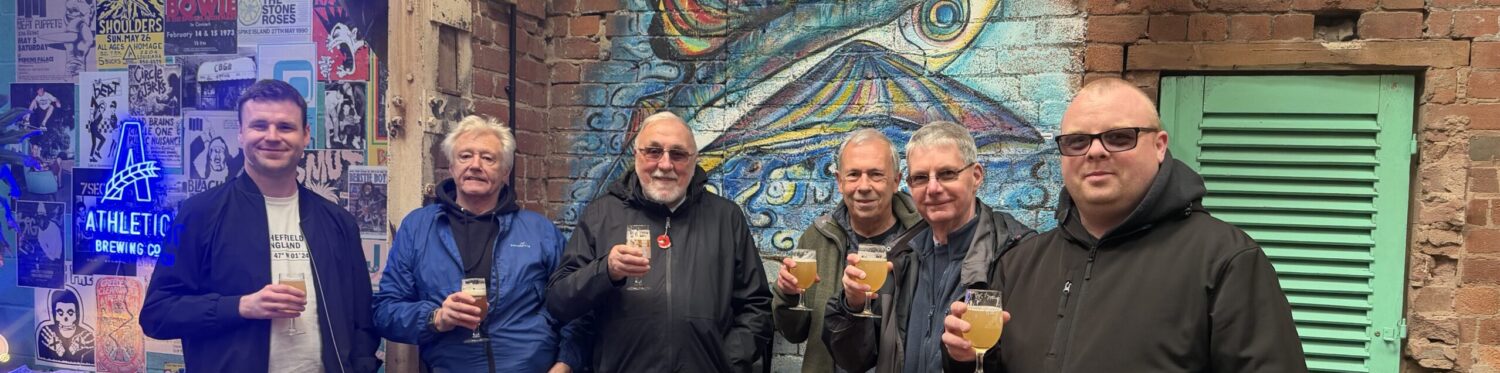
I have recently had my 50,000th different UK cask beer and thought that warranted having a few special beers brewed to mark the milestone, but first I thought I would take a look back over the last four decades.

It is almost 40 years since I started keeping a record of the different beers I drank. My earliest notes relate to attending the University of Sheffield Students’ Union Beer Festival in May 1985, where I sampled Wadworth 6X, Courage Directors, Simpkiss Bitter, Jennings Mild, Gales HSB and Adnams Bitter, all priced at around 80p a half. Before that my staple diet was Brains Dark whilst at university in Cardiff in the late 1970s and Wards, Stones and Tetley’s whilst living back in Sheffield. 

For the next few years my records only relate to beer festivals attended. The year 1985 was also the first year I attended The Great British Beer Festival with my friend Paul, initially in Brighton but now settled in London. We continued to make this in to a holiday every year until 2000, although I have continued to visit this event for a day each year ever since. My records show that I visited three festivals in both 1985 and 1986, eight in 1987 and 13 in 1988. You can tell which way the trend was going and the number of beer festivals I attended peaked at 109 in 2004.

My first record of drinking in a pub in Sheffield is in the Fat Cat on 21 April 1987, although I must have visited it many times before as it opened in 1981, but I never recorded my beers on those earlier visits.

Two early large festivals stand out for me as these specifically marketed themselves as having new beers and new breweries. The first Frodsham Beer Festival in May 1993 with thanks going to Dave Brown for the beer order and the Glastonwick Beer, Music & More Beer Festival, organised by Alex Hall and Attila The Stockbroker at Southwick near Brighton, which started in 1996 and is still going strong.

In the early days I think it was fair to say that most of the festivals I attended were run by CAMRA, but as time went on there were more and more very enjoyable pub festivals in the calendar. Two particularly memorable ones occurred over the weekend of the 50th anniversary of VE Day in June 1995. The festivals were at the Red Lion in Aldershot and the Prince Albert at Stow-cum-Quy near Cambridge. Both these featured a plethora of VE Day celebration beers and of course attracted a good number of beer tickers.

There was a period of about ten years from the mid 1990s when the Greater Manchester area provided five pubs which ran very popular and well attended festivals. These were the Beer House and Smithfield in Manchester, the Crescent in Salford, the Station in Ashton and Stalybridge Buffet Bar. Between them they had many festivals over this period and provided a wide range of new beers for tickers to enjoy.

The nineties and noughties saw me and Brian Moore spend many Saturdays traveling around the UK to visit beer festivals, be they CAMRA events or pub festivals. If festivals were too difficult to get to or we wanted to visit several in a day, then we would take my car. I would drive there and then Brian would take over as he would bottle his beers for consumption later, while I drank mine. To fill the car we would take a couple of guests – Alastair, PJ, Darren and others have accompanied us on these trips. One of the most memorable trips was in June 2002 on the weekend of the Queen’s Golden Jubilee celebrations. Our destination was the Cow & Plough in Oadby, Leicestershire as they were having a Jubilee festival with loads of appropriately named and required beers. After leaving there and driving through the Leicestershire countryside we passed through Ashby-de-la-Zouch and saw a sign advertising a beer festival at the Ashby Court Hotel. We knew nothing about this but on entering we discovered a large marquee full of more Jubilee themed beers. Needless to say I didn’t recall much (nothing!) of the journey home.

When travelling up and down the country, as well as seeing all the different beers, it is always pleasant to meet many fellow beer tickers. Some of these have acquired very unusual and amusing pseudonyms and here are a few examples:  Alefinder General, Aston (to whom I attribute my beer ticking interests), Badger, Beige, Chief, Crimewatch, Desperate Dave, Dicko, Ding Ding, Father Christmas, Gazza, Jimmy Hill, Jingling Geordie, Lord Mayor of Croydon, Meatloaf, Mick The Tick, Molly, Mr & Mrs Ler, Mr Wild To You, Planey Wayne, Pogo, Rockin Robin, Roly, Sleeping Scooper, Sooty, Spoon, Swaaan, The Vicar, Trolley Gary and Unpro. This list is by no means complete, but sadly some of those mentioned are no longer with us.  

During the tenure of previous owners, Neil & Sheila Clarke at the Cask & Cutler (now having reverted back to its previous name of the Wellington) held many successful beer festivals which were very popular with beer tickers. It was to one of these festivals that I first took my future wife to be, Philippa, to meet Sheila. Much to Philippa’s horror I introduced her as a work colleague, which was totally untrue, but fortunately it did have a happy ending as we got married in September 2008. In the May of that year as a precursor to our wedding and to celebrate Philippa’s birthday we arranged, with the help of Mike Knowles and various breweries and pubs, a beer festival around the Fat Cat, Harlequin, Kelham Island Tavern and Wellington featuring amongst other things about 12 special birthday/wedding beers for us.

These days many festivals publish their beer lists in advance so that they can be studied for new beers before we get there, but in the early days this was not possible so we had to wait until we got there before discovering what delights awaited us.

When I first started recording my beers everything had be done with pen and paper. I made the decision some years ago to continue with this method rather than digitising all my records, as obviously this would waste valuable drinking time. To this end I am indebted to Alan Douglas who for many years (at least since 2002 when I bought my first copy) has produced the G.O.B.B.S (Guild of British Beer Samplers) book. This is a list of all current British breweries and their beers that Alan is aware of and in my view is an invaluable guide to the beer ticker. This is available in hard copy only. Also worthy of recognition is the Quaffale directory of UK based breweries, which is available online.

Since Covid I do not travel as much as I used to which in part is due to trains becoming increasingly unreliable and much more expensive. However, the excellent beer ticking pubs of Sheffield are well supplemented by those in Derby which is only 30 minutes away by train. In particular I frequent the Alexandra, Brunswick, Smithfield, Flowerpot, Furnace and Victoria.

Bringing things right up to date now and the beers I had done to celebrate my 50,000th beer. These were grouped under the Morton’s Milestone banner (thanks to John Chapman for this catchy title). The brewers involved were Abbeydale, Big Trip, Blue Bee, Lost Industry, Tigertops and White Rose and the pubs they featured in were the Fat Cat, Kelham Island Tavern, Lost in West Bar, Shakespeares and Two & Six Micropub. Hopefully a Steel City beer will feature in the series soon. Many thanks to all those pubs and breweries who helped me celebrate this milestone and I hope that some of you got to try and least some of the beers.

Cheers, Andy Morton
Thornbridge gains Burton Union set

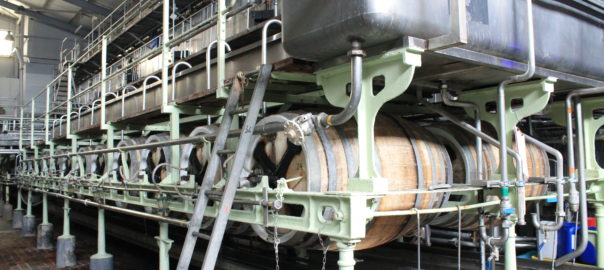
In the March edition of Beer Matters, we reported that Carlsberg Marston’s Brewing Company (CMBC) were ending the use of the Burton Union brewing system at their Albion brewery in Burton-on Trent. This is a method of brewing using an arrangement of wooden barrels and pipes which recirculates beer and yeast during the fermentation period. 

Marston’s established their Union System in 1898: described by Roger Protz as, ‘The Cathedral of Brewing,’ housed in a single brew-house, they had ten sets of Burton Unions, mostly used to produce, Pedigree (4.3% abv). They were the last remaining brewer to use this system, originally developed in 1838.

While the world was watching the snooker final, CMBC posted on both LinkedIn and X. Locally-based Thornbridge Brewery have been gifted one of the ten Burton Union sets. It is being installed at their Riverside Brewery (Bakewell), CMBC providing guidance both on the set-up and maintenance. 

Apparently the success of this transfer is due to the intervention of well-known New York brewer, Garrett Oliver, brewmaster at Brooklyn Brewery. Oliver has had a close relationship with Thornbridge and Brooklyn has a longstanding commercial relationship with Carlsberg. 

Oliver said: “When I heard that the unions were slated to go silent, I immediately thought that Thornbridge would be the perfect inheritors of this beautiful piece of British brewing heritage. I’m thrilled to provide the ‘assist’ on this historic play.” 

The plan is to initially brew a special batch of Jaipur (5.9% abv). The Union will then be used to brew other established beers, some brand-new new beers and collaborations with other brewers who are keen to see what a union-fermented version of their beers will look like.

However, there is no news on what will happen to the remaining nine Union Sets – they still seem destined for the tip. One down, nine to go – anyone want a Burton Union Set? 

Big Gun

After over 200 years, the Big Gun (13-17 Wicker, S3 8HS) closed in September 2023. Building work has since taken place. This includes the creation of a new shop front and the replacement of windows.

Sheffield City Council Planning are aware that these works have been carried out without appropriate permission. No planning application has been submitted and they are not aware of a proposal for a change of use in the building. Their Planning Enforcement Team is currently investigating.

The Big Gun has an interior of special historic interest and, as such, is listed on the national CAMRA Pub Heritage website: ( https://pubheritage.camra.org.uk/pubs/12118). We hope that the owner has not destroyed the many unique features, especially the Victorian fixed seating and the, possibly unique, draught screen. If this is the case, we expect that SCC will use their full powers to ensure that appropriate remedial action is taken.

A beer house has been on this site since 1796. The present building was built around 1900 by Messrs’ Wheatley and Bates Ltd, a local wine, spirit and cigar merchants. At the time of closure, there were many heritage features. For example, the right hand side of the snug had two bays of Victorian fixed seating with decorative bench ends that resemble a (acanthus) leaf.

Volunteer writers needed!

CAMRA branches are entirely volunteer run and likewise Beer Matters magazine – our branch newsletter for Sheffield & District – is written by volunteers – mostly CAMRA members – to share their interests in pubs, real ale and the campaign. Design and print costs are funded by advertisers.

We’re looking for more people to contribute to the content of the magazine (and website) with relevant local content that will interest our readers. If this is something that would interest you please get in touch!

We also always appreciate bits of news from pubs, clubs and breweries!

Beer Matters Plea

Eh up! Copy, and a plea.

Throughout May, the Dorothy Pax at Victoria Quays will be home to an art display with a difference: PUMP-CLIPS. Richard Hough (noted local Brewer, and ale toper) will take you on a journey to some of the beers he has brewed in the past – via the medium of art we know as The Pump-clip.

This humble item provides a splash of colour on the bar, and vital information as well. They are the first point-of-sale for millions of pints sold in pubs across the UK every day. 

Yet so often overlooked, every pump-clip has its own story to tell. 

Rich has some gaps in the collection. If any of you hoarders out there have copies of BM411, BM415, BM418, BM426 for the art installation at DPx, please get in touch. Your copies of Beer Matters will be returned after the event. Many thanks!

Sheffield Beer Report 2024

Sheffield has retained its position as the real ale capital of the world, with the thriving brewing industry driving tourism and regeneration in the steel city, a new report reveals.

The new report, commissioned by the University of Sheffield, found the brewing scene in Sheffield and the wider South Yorkshire Mayoral Combined Authority area is bucking the national trend for closures, despite the challenges of Covid and the cost-of-living crisis. The region is now home to 58 breweries, more per head of population than anywhere else in the country, producing around 1,800 different beers every year.

A strong culture of traditional pubs that “feel different” to elsewhere in the country, and which see over 600 different beers being served every day on its bars, means Sheffield is experiencing a beer tourism boom, the report found. Dozens of events are taking advantage of, and supporting, this pub culture.

First produced in 2016, the new report has been written by Norwich-based, award-winning beer writer, Pete Brown. The report surveyed breweries across Sheffield and the wider region about the state of the industry in the area. Key findings included:

Sheffield has four breweries per 100,000 head of population, many times higher than other cities. These breweries produce around 780 beers each year. Around 70% of the beer brewed by local brewers is drunk locally with 70% of cask ale brands sold in Sheffield brewed within 20 miles of the city centre. Around 300 different real ales are on sale in Sheffield on a daily basis, with the city and region’s breweries and pubs predominately cask focussed.

Sheffield remains the real ale capital of the world. 

Author, Pete Brown, said: “Sheffield’s prowess as a beer city won’t come as a surprise to anyone who drinks here. But it’s fascinating that when you do the research and generate the numbers, the claim of being one of the best beer cities in the world really stands up.” 

The report also notes that while breweries in the region have been resilient and adaptable thus far, they are in “survival mode”, with no capacity to expand. In 2016, two-thirds of the breweries surveyed said that they were planning significant expansion over the next twelve months; today that figure has dropped to around one in five. There is also a lack of support from local authorities which means that while Sheffield in many ways out-performs its brewing rivals, it could do even better with more active, broader involvement and promotion.

Professor Vanessa Toulmin, Director of City Culture and Public Engagement at the University of Sheffield, said: “Sheffield has always been a city of makers and what makes the report’s findings really interesting is the added value this industry of modern-day little mesters are bringing to the region. They are not just brewing beer; they are providing a huge tourism pull for people from far afield, while also regenerating neighbourhoods in organic, unplanned ways.

“To anyone living in Sheffield and visiting its pubs, it will come as no surprise that this new report has reaffirmed what we discovered in 2016; that Sheffield really can lay claim to being the ‘real ale capital of the world’.”

Governments urged to use six-month anniversary of Crooked House demolition to strengthen pub protection laws

Strengthening planning laws and enforcement powers would save more historic pubs, says CAMRA 

The Campaign for Real Ale (CAMRA) is marking the six-month anniversary of the demolition of the Crooked House pub in Himley, Staffordshire by calling on government ministers to commit to extra protections for pubs to avoid them being illegally converted or demolished. 

The consumer organisation, which last week met with Levelling Up minister Lee Rowley MP to discuss protecting the nation’s pubs, wants more enforcement powers for local councils in England to stop pubs being illegally converted or demolished – including the ability for councils to force demolished locals to be rebuilt brick by brick. 

In England, changing the use of a pub or demolishing one requires planning permission – but figures compiled by CAMRA showed that last year up to a third of closures and demolitions may be happening without the required planning permission. 

The Campaign is also calling for similar protections for pubs in the planning system in Wales which don’t currently exist, and for a tightening of loopholes in Scotland to prevent pubs being allowed to be demolished without planning permission. 

CAMRA also produces a range of pub-saving guides offering advice for individuals and community groups looking to save their pub from conversion or demolition and is working with the West Midlands Combined Authority (WMCA) and Mayor Andy Street to list heritage pubs in that region to offer them better protections. 

CAMRA’s pub saving guides are available at Save your local pub – CAMRA – Campaign for Real Ale 

Commenting on the six-month anniversary since the fire and subsequent demolition of the Crooked House pub, CAMRA’s National Chairman Nik Antona said: 

“Six months on, this national scandal rightly still angers people up and down the country. Our pubs are at the heart of community life across the UK and must be protected as a vital part of our social fabric. 

“Local people deserve to have a chance, through the planning system, to save their local pub from demolition or conversion to another use. Where this is done illegally, it is vital that local authorities have the powers and resources to force buildings back into use as pubs – or for them to be rebuilt brick by brick if they have been knocked down. 

“That’s why on this anniversary we are renewing calls for governments in Westminster, Cardiff and Edinburgh to commit to improving planning protection laws and to make sure local authority planning departments are equipped to stop pubs being illegally converted or demolished without permission. Otherwise, we risk seeing more beloved locals across the UK being illegally taken away from the communities they serve.” 

CAMRA calls on Government for support

In response to the news that Elland Brewery is facing liquidation, and reports that Adnams is looking at options to bolster its funding, CAMRA Chairman Nik Antona commented:  

“To hear that Elland Brewery is facing liquidation just six months after their 1872 Porter was crowned CAMRA’s Champion Beer of Britain 2023 is a major cause for concern. This, coupled with the reports that Adnams has been working with a management consultancy to explore options to shore up its finances – including the possibility of an injection of private capital – is a one-two punch at the heart of the UK brewing industry. 

“The news raises the issue of fair competition, access to market and consumer choice. CAMRA does not want any brewery or cider producer to close their doors for good, be it a contemporary small independent brewer or larger family-owned establishments with decades of history. 

“The worrying news that two prestigious, award-winning breweries are both facing pressure to remain trading and survive is indicative of the wider problems the brewing and pub trade are experiencing. CAMRA, along with the Society of Independent Brewers (SIBA) and the Independent Family Brewers of Britain (IFBB), is calling on the Government to increase Draught Relief to 20% from its current figure of 9.2% in the Chancellor’s upcoming Budget. Cutting tax specifically on draught beer and cider in pubs would encourage people to support their community local and help secure jobs and businesses in the pub and beer sector – particularly small and independent breweries that sell more of their products into pubs and taprooms. 

“CAMRA is encouraging everyone to email their MPs asking them to support the ‘Make it 20%’ campaign and call on the Government to show their support for pubs, social clubs, breweries and cider producers.” 

CAMRA Members’ Weekend

CAMRA’s Members’ Weekend, AGM & Conference is held annually in April and is open to all CAMRA members. Not only is it a chance to discuss motions at Conference, it also gives members the opportunity to socialise in the onsite bar, attend information sessions and explore the beer scene of different cities around the UK.

After hosting the event here in Sheffield last year, this year sees it held in Dundee, celebrating the 50th anniversary of CAMRA in Scotland. It is being held over the weekend of 26-28 April. You can register to attend on the CAMRA website and receive details in advance via email, alternatively you can just turn up and register on the door if capacity is available.

Many members make a longer break of the Members’ Weekend rather than just travelling up for the conference. As well as checking out the pubs of Dundee it is a base for day trips to other nearby Scottish towns and cities. There are also other things to do aside from drink, for example Dundee is home to the V&A Design museum and the opportunity to experience life in the Antarctic with Captain Scott and his crew on the RRS Discovery at Discovery Point!

The CAMRA event is being hosted at Caird Hall, located in the City Square. As well as the AGM & Conference this features a Members’ Bar which is a small beer & cider festival open exclusively to members and will principally showcase real ale brewed in Scotland.

Whilst it is a long way to travel from Sheffield it is easy enough to get to on the train with just one change – catch a Cross Country service up to Edinburgh and connect with Scotrail services to Dundee. The cheapest train tickets are available in limited numbers if you book a specific time in advance, they are also most likely to be available at the less busy times/days. See the Cross Country Trains website for availability and to book. Alternative LNER run a daily service between York and Dundee with connections available to/from Sheffield. Various third party agencies also sell train tickets such as Uber or Trainline.

If you need cheaper but slower options it is possible by coach – some direct coaches operate, otherwise it requires a connection in Edinburgh – check out Megabus.com, Flixbus and National Express.

Dundee fairly recently hosted a previous Members’ Weekend, in 2019. Read about that here.