What is real ale or cider? What’s craft?

Do you keep seeing talk of real ale and craft beer and wonder exactly what it means? Hopefully we can answer your questions in simple terms!

Most beer is brewed in the same way at a basic level – Malt added to water which is boiled, hops are added into the boil and the result is cooled then fermented with yeast into beer! (ingredients may vary and I know that’s an over simplification!)

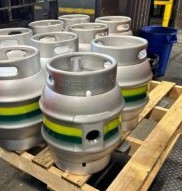
Real Ale is a term originally coined by CAMRA activists in the early days. It can be applied to bottled beer that has a yeast sediment, however the most common use is for “cask conditioned” beer (or live beer to use a more modern term) where the brewery has racked fresh beer into casks with live yeast which allows secondary fermentation to take place in the cask in the pub cellar, meaning the beer is not only fresh but has a natural sparkle without needing to add gas on dispense to make it fizzy. However on the flip side, as it is a fresh live product it has a short shelf life and if on the bar too long can go off, oxidising and gaining vinegar characteristics!

Craft beer doesn’t really have an officially recognised definition and as a term is often abused by marketing people. It was intended to promote beer where the production is the opposite of industrial – smaller scale brewers using quality ingredients, manual processes and a love of the product where the recipe is dictated by the brewer rather than the accountant.

Of course there are success stories of craft brewers that have grown and the question is then whether they are still considered craft. Beavertown sold a good share of their brewery to Heineken who invested in a much bigger scale brewery and bigger distribution and there is a view the beer isn’t as flavorful as it used to be whilst Brewdog is now a multinational industrial scale brewer that supplies supermarkets and chain bars. On the other hand closer to home we have Thornbridge that has expanded significantly over the years with investment in bigger production facilities for their core brands, on site lab facilities, canning/bottling lines, a sales & marketing team and more – however the care for product, visions and values and an excitement to experiment (for example their barrel aging programmes and the installation of a Burton Union set) lives on, suggesting they still deserve to be called craft!

You may also see talk of cask versus keg for how draught beer is packaged. Typically real ale is in a cask as if facilitates secondary fermentation (although some single use keg products such as keykeg can also be used for real ale) and in CAMRA’s early days it was very much cask is good and keg is bad as the brewers that were replacing their traditional cask beer with keg products were filling their kegs with a poorer quality product made with cheaper ingredients with a process designed to make the beer long life rather then fresh with the lower production costs and lower wastage from expired beer proving financially attractive to both brewers and publicans.

These days things are less simple with craft brewers putting beer in kegs that are a good quality product (with decent ingredients, not pasteurized and often not filtered) and has much more flavour than the big industrial brands. The craft term isn’t tied to a specific format with such brewers often choosing cask or keg based on which they feel suits the style of beer best – for example a high strength stout that is likely to sell slower may be best in keg as it won’t go off so quick or a continental style lager may be enjoyed with some extra carbonation whilst a mild, malt bitter or gently hopped blonde might taste better on cask.

CAMRA does continue to champion the tradition of real ale, it is a fantastic part of our beer heritage we want people to continue to enjoy and are still passionate about that, however often now at CAMRA beer festivals other formats will be showcased alongside the cask where it is a good quality example of the genre (after all CAMRA was founded on the basis of wanting a choice of good quality beer) and campaigning priorities have moved on with issues facing consumers, publicans and brewers, particularly with the cost of living crisis!

Next is the subject of what we refer to as “real cider” or “real perry”. Similar to real ale it is the traditional, fresh, good quality product, however the key thing here is slightly different – it needs to be made from freshly pressed apple or pear juice that has been fermented rather than the more industrial product made from concentrate. Also any additional flavouring should be the real thing, not just a syrup chucked in.

Irresponsible drinking?

Many of you will have noted the recent advertising for a ‘craft Brew Festival’ to be held in Neepsend in September. The ticket price is £35 upwards, depending on the session attended. Included in this fee is ‘five hours of unlimited craft beer.’ 

I believe that offering unlimited alcohol over a five hour period is irresponsible and will lead to attendees over indulging. It does not encourage responsible drinking.

It is also divisive: many of us, for many reasons, are restricted in our alcohol intake. For example, while recovering from radiotherapy, I recently attended Indie Beer Feast in Sheffield: almost five hours attendance saw me drink seven beers, a total of 2 and one third pints. I had an excellent time, meeting many friends, aiding my recovery. However, such a price tag would have meant non-attendance. 

Why not have a pricing policy similar to the forthcoming Sheffield Steel City Beer and Cider Festival? Thursday 17 October will cost non-CAMRA members £17. This includes £10 beer tokens which are refundable if not used plus a glass (£3) which is also refundable on exit. If you don’t drink, up to eleven hours on site, including the entertainment and the river Don Steam Engine will cost you the princely sum of £4 (CAMRA members, £2). If you do sample some of the over 200 beers available, you will pay for exactly what you imbibe.

Beer people – Jules Gray

Sheffield Beer Week celebrated its 10th anniversary this March. Now that the dust has settled on another successful event, we talk to organiser Jules Gray to get her thoughts on how it has developed since its beginning in 2015.

What changes do you think you’ve seen over the last 10 years?

When we started, it’s the first one so I don’t necessarily think people understand what it is, or what you’re trying to achieve, which is understandable. It was great in that first year that we had a few venues like the Rutland and Shakespeare’s that really got on board straight away and it launched in a very short space of time. I think we organised it in two months.

How many venues were involved the first year.

Probably only about twenty venues and maybe about twenty events. But then once it happened, people saw the positivity from it, not only the people attending events but the economic and longer term benefits of it. The year after it basically doubled in size. At its maximum it was something like forty venues with over seventy events.

How do you think that the Sheffield beer scene has changed in the ten years.

Well, it’s changed in lots of different respects. There’s some of the longer standing Sheffield breweries that are still around, such as Abbeydale, and recently of course Kelham Island Brewery is under new ownership, but it’s still around.

So there’s been a changing of the guard as it were. I’ve seen breweries launch and sadly disappear, such as North Union who actually launched in Sheffield Beer Week. St Mars Of The Desert opened up around the end of 2018-2019 and it’s about recognising that a brewery might be in Sheffield but will be importing ingredients from all around the world and also doing collaborations, which is something that I’ve seen develop.

There’s been a move for traditional breweries to try experimental styles, such as mixed fermentation brewing, and also put in their beers not only in a firkin or keg, but putting it in cans and bottles. When I started Hop Hideout in 2013 I think I only had Bradfield and Kelham Island I could sell in bottles from local breweries.

Are there any standout breweries or beers over the 10 years?

Ohh, that’s difficult. And my memory is terrible these days. I mean, the Abbeydale & Thornbridge collab, ‘Stepping Stones’, was a big thing. I really like the Edward Carpenter beer that we did with Lost Industry. It was a beetroot sour, which was bright purple and had this earthy sourness. He was a Sheffield character from the late 1800’s who lived openly as a gay man in Sheffield and fought for gay rights and women’s suffrage, things like that.

There was the ‘Right To Roam’ IPA we did with St Mars Of The Desert, that was a good one as well. It was a collaboration with Nick Hayes, who’s a best-selling author and campaigner for the countryside, to celebrate the 90th anniversary of the Kinder Trespass.

I’m really proud of the beer ‘Ethel’ that we did with Triple Point this year to celebrate Ethel Haythornthwaite. She was a passionate environmentalist who helped establish the Peak District.

To be honest, when I look back and I talk to people about it, there’s loads of amazing things that have been part of Beer Week.

Indie Beer Feast is now an important part of Sheffield Beer Week. When was that introduced?

I think the first indie beer feast was in 2018, it was just one day at the Abbeydale Picture House. I’ve always wanted to do a beer festival. It attracts people to the city. What typically happens when you put beer festival on is people visit places whilst they’re here, so it benefits the local economy and local beer businesses.

And have you had any breweries that have been at Indie Beer Feast every year?

I don’t know to be honest. Abbeydale have been quite a lot, but I’m not sure they’ve been at every one. In general, it’s chopped and changed. I generally have some Sheffield breweries represented and then a nice pick from across the country. People like to see a bit of variety.

I like to champion under-represented, minority groups and stuff as well, lots of women-owned businesses and things. So Neptune Brewery have poured quite a lot at Indie Beer Feast.

When you first started it did you think from the outset it would run for years.

I didn’t think that at all. I knew that I really wanted to do it, and I thought it would be really beneficial for a lot of people and I had a feeling that people would support it and be positive about it. I’ve never said this will go on for x number of years, it’s quite organic in that respect.

I noticed that there was four or five cask lines at Indy Beer Feast. Is that something that’s increased, because traditionally it always was mainly keg.

Yeah, it wasn’t ever set in stone you know. It was always down to the breweries, and it can be quite challenging with cask because of the venting and tapping and letting it settle. Obviously some of the newer breweries have typically focused on keg. For example, Kernel Brewery started in 2009 and its only recently they’ve started doing cask beer. But I I’ve always left it down to the brewery, it’s their choice.

You know, I think a lot of people are falling in love with cask beer again as it’s a traditional British way of brewing and packaging beer and I think it’s come full circle in a way. So some of those modern craft breweries are now producing more of it. I mean, some of those that were pouring were Sheffield breweries so it was easier for them but we had Torrside offering cask as well.

I do think that there will always be a place for cask ale.

Hop Hideout are moving to the new development at Leah’s Yard on Cambridge Street in Sheffield City Centre. Their Crowdfunder successfully raised nearly £10,000! Visit www.hophideout.co.uk  to keep up to date with their new move and opening this summer. We’ll talk again to Jules to get the lowdown on how the move has gone once they’re settled in the new premises.

Sheffield, the musicAle city

Sheffield has a tradition as a brewery city since the mid-late 18th century when there were around 30 in the city. It is also a music city, which sees the real ale bars busy most nights.      

The ‘60s saw the advent of Sheffield as an emerging force in music, mainly through Joe Cocker. A gas fitter. He lived in Crookes. He took the scene by storm, singing “With a Little Help from My Friends.” This song landed him a 1969 Woodstock Festival spot, and his famous animated performance shot him to fame. Joe was a local legend often drinking Stones, Magnet or Whitbread in Crookes and Sheffield Lane Top pubs.

The ‘70s saw a more pubs and clubs vying to put performances on, among the best of these The Mucky Duck and The Jolly Buffer. The Mucky Duck hosting the first gig by British punk band The Clash.  The late ‘70s and ‘80s saw the emergence of rock and electronic bands playing pubs and clubs around the City including The Limit Club.

There is much to celebrate from the City’s new bars that provide music. Many of them around Neepsend, Kelham, Commonside and Ecclesall all serve real ales from Blue Bee, Stancill, True North, Abbeydale, Vocation, and provide entertainment. Thornbridge are also popular and provide music on a regular basis. The Gardeners Rest at Neepsend has a regular Sunday session with the likes of M&J Blues (pictured) and Jake’s Rake, this goes well with the wide selection of 8 cask beers, and a few kegs and ciders

Just down the road on Percy Street sits Alder Bar, an old Victorian polish factory. The bar hosts a brewery and live music at the weekend. A real ale enthusiast bar, although the odd keg is served. Music ranges from bands to DJs.

The 3 giants of the local music scene however, are The Leadmill, a club that began in the ‘80s, partly due to Martin Bedford (local artist and music promoter), way before he founded the Honey Bees Blues Club which launched a good few local careers. The venue has hosted many bands including Big Country (pictured), Manic Street Preachers, The Killers, Suede and Muse. Although there is no cask ale available, Craft beer from breweries such as Triple Point, Abbeydale, Thornbridge and Heist is sold here on keg and in cans.

Shakespeares Ale & Cider House and The Greystones, sit at opposite ends of the City; Shakespeare’s being part of the Kelham Island catchment area. A very good range of cask beers is supplemented by unus International Americana ((Massy Ferguson pictured) and folk bands play. Cask, kegs and stouts including strong Imperial Stouts feature strongly. They regularly host a Tramlines Fringe every year, which sees the local and International artists.  Meanwhile down at Victoria Quays on the edge of the City Centre is the Dorothy Pax hosting regular gigs.

On the South of the City sits The Greystones, atop the Greystones Road hill. A pub taken over by Thornbridge some time ago, they regenerated The Backroom. This hosts anything from Americana, Country, Folk, Blues and the odd rock band. These are mainly British, but again American bands come over to play such as Wild Ponies (pictured).

New kids on the block like Hillsborough Social Club have joined the fray, hosting Honey Bees Blues Club bands in the afternoon on the Sunday Sessions (Donovylan pictured), as well as faces from clubland and the local Indie/rock scene on Saturday evenings.

A great scene, at little or no cost to the drinker.        

Inn Sign Society

Founded in 1990, the Inn Sign Society raises awareness of the nation’s pub signs and compiles a record for the benefit of future generations. Many pub names have links with events from the past or personalities of national and local importance, and the Society provides a forum for members to research the history of inns and pub names.

It has an active web site and a quarterly full-colour journal to which members are encouraged to submit articles, pictures of pub signs and news from their areas.

As inns and pubs close at an alarming rate, much local heritage is in danger of being lost forever. Pubs are not just a place to enjoy a drink, they are often at the heart of the community and can reflect its history. Many members take a general interest in all signs, with some specialising in particular breweries, counties, aircraft or railways, to name but a few.

The Inn Sign Society is seeking to recruit more members and bring in new blood to help continue the good work done over the last 34 years. For more information, including on how to join, see the website at innsignsociety.com If the Inn Sign Society doesn’t research, capture and save our pub sign heritage, perhaps no-one else will.

Iain Perks, Membership Secretary Inn Sign Society

Pale Rider

Pale Rider, from Stephen Wragg

Like many of us, I was so disappointed when Kelham Island brewery stopped brewing beer, especially their flagship Pale Rider. Then, I was delighted when the Thornbridge brewery was involved with its renaissance.

Having tried several examples from Thornbridge, I’m not sure that it is an exact copy of the original and wondered if any Sheffield CAMRA members had expressed a similar opinion?

Geoff Fuller

I’ve been reminded by Rick Ellison, the boss of Atlantik Inns, who run the Old Hall Hotel in Hope and a few others, that October saw the 35th anniversary of the late Geoff Fuller and his wife Pat taking over the licence of the Three Stags’ Heads at Wardlow Mires – they arrived there on 14 October 1988.

some Sheffield CAMRA members arriving at the Three Stags Head

The Three Stags’ Heads has quite the legendary status being a very long established, unspoiled rural pub that is listed in CAMRA’s National Inventory of historic pub interiors and has won many awards, full of characters and dogs. It just opens for a long weekend, from Thursday evening onwards and has a selection of local ales on the bar. The pub has two rooms, both with open fires.

Geoff and Pat retired from running the pub in 2019 with Andy & Cath installed as managers.

Pat Fuller

Pat tells the story that when they bought the pub she just wanted a place where she could make pottery with Geoff, with room for a kiln. Geoff, who had already made a name for himself in ceramic circles, fancied the idea of tying it in with a traditional English pub. I’m sure that anyone who has visited the Three Stags will agree you can’t get any more traditional than this!

The Three Stags is somewhere you will enjoy a visit to as long as you do it with respect and on the terms of the landlord and regulars! You also need to appreciate the specific character and charm that some may consider eccentric or quirky. I recall back when I first visited the beer range was cask from Abbeydale (including their house special Black Lurcher Ale named after the dogs) and some bottled Belgian beers, with a notice above the bar stating “please do not ask for draught lager as a punch in the gob often offends”.

Rick Ellison recalls once being in there somewhat under the influence and almost tripping over something that moved. He asked on his next visit “Geoff, did I trip over a chicken last week?” with Geoff replying without hesitation “the biggest we’ve had in was a donkey!”.

“Andy Knives” the manager recalls a stormy afternoon when a group of soaking wet walkers came in and completely surrounded the fireplace. Geoff was heard to say “would you mind moving so that the rest of the pub can feel the fire?” to which the reply was “we will when we are warm and dry”. To Geoff this was a red rag to a bull! He went straight to the cellar and got a plastic Newcastle Brown crate that happened to fir perfectly into the open fire, much to the upset of Pat who was heard shouting “we get a deposit back off them Geoff!” The stern reply was “I don’t care”. Within 30 seconds the tap room floor parted like the Red Sea and the heat was like napalm, Once the pandemonium had started to subside, Geoff was heard to say “Are ya warm enough lads?”

Geoff’s funeral service took place on 1 June 2022, the pub remains open and unspoilt.

managers Andy and Cath receive a District pub of the year award in 2019

You can read Geoff’s obituary in the Guardian newspaper here.

The back room of the Three Stags Head with the fire lit

Pins

Green King recently announced that they are supplying pins (4.5 gallon casks of beer) of ‘Fresh Cask Releases’ to all their managed, leased, tenanted and free trade customers, as part of their seasonal cask beers calendar. The first releases, in July, were Ale Fresco (4.3%, golden ale) and New Tricks (a 4% collaboration with Nethergate, which includes ginger and lemon).

Are there any local breweries doing the same? If so, please tell us, as we know of several local outlets who are attempting to purchase pins of local cask beer, but having zero success. Pins have the advantage of both offering an additional choice and allowing the provision of cask beer when throughput is not high.

Cider, perry & mead

Whilst CAMRA is better known for banging the drum about real ale and pubs, we also campaign for better availability of proper cider and perry in pubs and bars and have two months a year – May and October – when we are asked to make a special effort to promote cider & perry and encourage drinkers to seek it out and try it. The reason those two months are chosen is October is typically when the apples and pears are harvested and pressed and May is usually when new batches of cider and perry are ready and released!

When we talk about “real” cider or perry, we mean products that are made by fermenting freshly pressed juice and using only natural, genuine flavours. The vast majority of ciders on the bars in the UK are industrial products manufactured from concentrate.

A flashback to 2017 and the Harlequin’s cider board

Sheffield isn’t exactly known for its cider scene but we do have a few people and places doing great things. The longer term stalwarts have been Liz at the Harlequin and Steph & Kev at the New Barrack Tavern which both stock a large range of bag in box ciders with a number of them fitting CAMRA’s definition of “real” and just over the border in Holmesfield, Derbyshire, we have Dick Shepley at Woodthorpe Hall making cider.

Ross on Wye cider tasting at Hop Hideout

Since then they’ve been joined by Hop Hideout in the Kommune food hall in Sheffield City Centre stocking an impressive selection of bottled ciders and perries as well as occasionally having a keg conditioned cider on tap and for national Cider Week in April a number of events were organised by Jules showcasing various producers and I attended a special tasting session with Albert from Ross on Wye cider. Whilst the majority of the differences in flavours and characters in the different ciders are down to which apple variety is used, they also make a number of interesting ciders that have been fermented in oak casks and also do blends of different vintages to maintain the right flavours.

Mike Pomranz at the Cider Hole

Finally, the newest show in town, Mike Pomranz, who opened the Cider Hole at Shalesmoor and started making his own cider there under the Exemption Ciderhouse banner. He’s also worked with us to host tutored tasting events at our Steel City Beer & Cider Festival and the CAMRA Members’ Weekend plus each year he works with Heist Brew Co. to put on an annual cider festival in their tap room, this year it is planned for 15 July. The end of May saw the Cider Hole close with it all relocating to a new City Centre bar – The Old Shoe in Orchard Square – opening in partnership with Matt from the Bear on Abbeydale Road (read more elsewhere in this issue).

Grizzly Grain’s Sheffield Mead

You may have noticed the headline also mentioned mead – an alcoholic drink made from fermented honey – and wondered where that fitted in. Well partly because I have memories of attending certain CAMRA beer festivals years ago where the cider bar randomly had bottles of mead tucked away at the end and I don’t ever recall seeing mead on sale at any pubs or bars in that era – but also because Grizzly Grain brewery has been making Sheffield mead in small batches using honey from Heeley City Farm with bottles available at their tap sessions. Interestingly as well as the traditional strong mead in big bottles they also offer a session mead at a more sensible strength with a hopped version available. Changes are afoot on the mead front however with beekeeping due to end at the farm so the honey will be sourced elsewhere with an opportunity to produce slightly bigger volumes as a result and there is talk of putting mead into cask for a pub to serve on handpump!

2023 Budget

Responding to the Budget, CAMRA Chairman Nik Antona said: 

“The Chancellor has made a welcome move to increase the draught duty rate discount to 11p, which will help pubs compete with the likes of supermarket alcohol. However, the lower tax rate is not coming until August, and we must hope that as many pubs as possible will be able to keep their doors open until then.  

 “With many parts of the licensed trade struggling to make ends meet, and consumers tightening their belts, hikes in general duty rates are the last thing breweries need, so it’s right that general duty rates have been frozen until the new system is introduced.  

 “With support for energy bills being extended for households, licensees will be devastated to hear that help for them will end on 1 April. This was a make-or-break Budget for pubs and social clubs, and the future of many businesses is now at risk, with an imminent cliff edge in support and rocketing energy costs on top of the other pressures facing the licensed trade. Communities will lose their local pubs because energy support is ending. 

 “It is also bitterly disappointing not to see the extension of help for pubs and breweries with the burden of business rates. With current support schemes due to end in 2024, these rates bills can be the difference between continuing to trade or having to close for good. The Government urgently needs to reform the whole business rates system to fix the issues with this unfair system and help to protect our pubs.” 

Notes/references: 

Spending point 40 of the supporting Budget Documentation reads: 

Alcohol Duty: freeze rates until August 2023 then uprate by RPI and increase Draught Relief to 9.2% for beer and cider and 23% for wine, other fermented beverages and spirits 

Spring Budget 2023 (HTML) – GOV.UK (www.gov.uk)