Regional Awards 2014

The Yorkshire Cider Pub of the Year has been announced as the Hop & Vine in Hull, with the runner up being the Valley in Scarborough. The Derbyshire Pub of the Year has been named as the Furnace Inn at Derby. Sadly this means our local entries – The Harlequin on Nursery Street, Anglers Rest at Millers Dale and Travellers Rest in Apperknowle have all been beaten in their respective County competitions. Of course winning a best in Sheffield & District or best in Dronfield & District is a great achievement on its own. We are yet to find out the results of the Yorkshire Pub of the year, which we entered the Kelham Island Tavern into.

More reader comment on keg beer…

I’d like to fully support the comments made in Nick Williams’ letter regarding “Craft Keg Beer” in the June 14 edition of Beer Matters. Keg beer is Keg beer.  It is dead in the cask, it is pressurised and, as such, certainly doesn’t qualify under CAMRA’s definition of “Real Ale” which has served us well since CAMRA’s establishment in 1971 So why is there any question of us “embracing it?” The term “craft beer” is a misleading diversion.  As Dave Pickersgill outlines in his adjacent letter, it means a variety of things in a variety of situations and is sometimes being used to give the impression of quality with no other evidence of that quality.  Further to this, the term “craft beer”  is being used in the context of real ale, keg beer and filtered bottle beer which renders the term ambiguous and confusing. Quality issues aside though, keg beer is keg beer and real ale is real ale.  We are the” Campaign for Real Ale” and whilst we have a mandate to campaign about associated issues connected with real ale, we have no mandate to support the production and supply of types of beers which are a threat to our aims. Those of us who have been around since the 70s and experienced the first demise of real ale in favour of keg are very concerned that history is about to repeat itself.  I can remember the Worthington E, Whitbread Tankard, Watneys Red Barrel, Youngers Tartan etc establishing themselves as the standard and driving out traditional brews from pubs leaving us with nothing but pasteurised fiz for miles around, de-skilling bar and cellar staff in the process.  We can’t let it happen again! If real ale brewers choose to use their foothold in the market to peddle keg beer to the outlets CAMRA members and supporters have patronised for many years, there’s little we can do about it (except not drink it!) However it does seem a little like the brewers and the pubs teaming up to “bite the hand that feeds them.”  After all, many of them wouldn’t exist without the presence of CAMRA establishing the virtue of real ale over the last 40+ years. Keg beer has proved to be a threat to real ale in the past and, regardless of how it is “dressed up”  is a real threat in the future.  We should remind ourselves of our aims, and as we did in the 70s, discourage our pubs to sell it and have nothing to do with it! Roger Simmons

The Beer History Lectures

Based on Dave’s recently published history of the brewery, we recently gave a presentation at Bassetlaw Museum (Retford). We were billed to provide a one hour talk: starting at 13:30, the presentation finished at 14:30. Then the questions and comments came … so much so, that  a follow-up ‘show and tell’ is set for  July. The WRB was taken over by Tennants in 1958 and demolished in 1962. Photographs provide an indication of the sheer size of the operation. Ornate wrought iron gates opened out onto a large eye-catching and decorative five storey building, built from bricks of different colour in a style in favour at the time. There is obviously a lot of archive material, memories and anecdotes out there. We want to ensure that it is not forgotten. If you have any memories or artefacts from the WRB, please feel free to join us at Bassetlaw Museum at 10:30 on Saturday 19th.July. The aim is to finish by 12:30 and then adjourn to the Beer Festival at Worksop Rugby Club. The associated book is available from Amazon Kindle: http://tinyurl.com/ptakjfm or search using:  Worksop Brewery.

Beer from the Wood

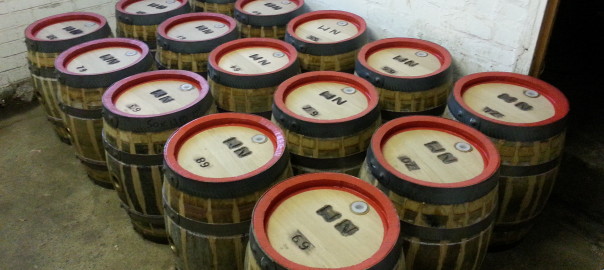
The ancient trade of making traditional casks from wooden staves for beer, wine, cider and spirits took on a new lease of life last year when Master Cooper Alastair Simms returned to God’s Own County to establish the White Rose Cooperage Ltd on the Thorp Arch Estate near Wetherby. Alastair, the last remaining Master Cooper, who, together with three Journeyman Coopers, preserves the ancient craft of making wooden casks bound by metal hoops for the brewing industry. Born in Masham, North Yorkshire, Alastair became an apprentice cooper at Theakston’s Brewery in his home town in May 1979. Following a six month trial period he signed his indentures and went on to undertake his four year apprenticeship under the supervision of Master Cooper Clive Hollis. He successfully completed his training in 1983 with the “trussing in” ceremony and became a Journeyman Cooper. In 1994 he became a Master Cooper following the completion of his training of Peter Coates as a Journeyman Cooper. A year later, after sixteen years at Theakston’s Alastair moved to Wadworth Brewery at Devises where he took over from the retiring Eddy Hodder. Meanwhile, at Theakston’s Clive Hollis passed away and his apprentice Jonathan Manby completed his apprenticeship under the guidance of Alastair in 1999. Eleven years later in 2010 he was admitted as a Liveryman to the Worshipful Company of Coopers which dates back over five hundred years. After eighteen years at Wadworth, Alastair returned to his native Yorkshire to establish White Rose Cooperage at Thorp Arch on his 50th birthday in May 2013 as the country’s only independent commercial cooper. When he began back in the 1970’s, there were still around one hundred coopers in the UK but the advent of metal casks in the 1960’s saw numbers decline resulting in the craft almost fading away but for the handful of skilled craftsmen existing today. However, the amazing growth in numbers of real ale microbreweries in Britain as a whole and Yorkshire in particular has meant that there is hope and the revival of demand for wooden casks is already taking place. Leading the way are Maureen Shaw and Neil Midgley at the Junction pub in Castleford, West Yorkshire where only wooden casks are now used for real ale. After purchasing the run down, empty, failed pubco pub, not only have they transformed it into a wonderful traditional local with many unique features but have backed it up with the gradual introduction of wooden casks. Now “wood only” is their mantra and people are taking notice of this revolution. Neil and Maureen have invested in over 100 casks from Alastair and have around 10 local breweries supplying beers in the wood on a regular basis. The first and most regular supplier is Simon Bolderson and his Ridgeside brewery located in Leeds. Together, the pub and the breweries have proved that great beer can have that extra dimension if stored in wood. They have experimented with spirit casks and have also had great success with “Ageing in Wood”. Not only do wooden casks add a depth of taste to the stronger, darker beers which metal casks cannot provide but successful recent trials with lighter beers also show that they certainly add that something extra to them too. Several progressive brewers in Yorkshire and a few from around the country have also take note of this great revival and have already purchased casks or placed orders from White Rose Cooperage. Alastair has also carried out contracts and orders from more pubs (e.g. Engineers Arms at Henlow), traditional cider makers and produces custom made bespoke furniture. From the beer and cider perspective, perhaps the most interesting creations are the glass head casks which enable the viewing of the activity and changes that occur when traditional real ales are clarified in wooden casks. Alastair is hoping to take on an apprentice and wife Julie also plans to join the business. The long-term aim is to buy a few acres of land to build a cooperage and visitor centre so people can learn about this historic trade and watch coopers at work. Back to the future – long may it continue. Further information for Alastair can be found at: www.whiterosecooperage.co.uk and the Junction at: www.thejunctionpubcastleford.com. David Litten

Reader comment – ‘craft’ keg beer

I was a bit taken aback by Mark Coxon’s article about keg beer. (Beer Matters May 2014). He seems to be advocating drinking keg beers simply because it has been brewed by a craft ‘small’ brewer. Just to be clear. Any pint of keg beer sold is a pint of real ale that isn’t. I thought the Campaign for Real Ale was about promoting real ale and not suggesting folk embrance keg. It seems to be a sell out on everything CAMRA has stood for these past 3 decades. Nick Williams

More on the term ‘craft beer’…

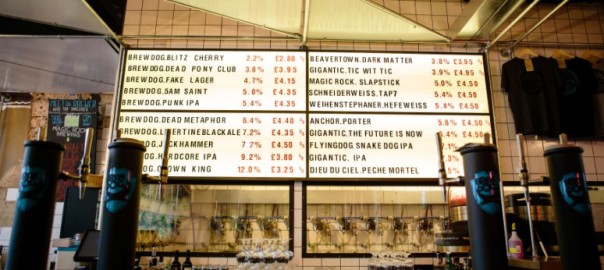
I attended the recent CAMRA Members Weekend and was interested to note that “CAMRA recognises the term “craft beer” as describing beers with distinctive flavour brewed by artisans. Most real ales are craft beers but not all craft beers are real ale.” (CAMRA External policy Document, 2013-2014, para.3.8). The Oxford English Dictionary defines artisan as: “A worker in a skilled trade, especially one that involves making things by hand” with the modifier: “(Of food or drink) made in a traditional or non-mechanized way using high-quality ingredients.” Hence, according to this CAMRA definition, ‘most real ales’ are brewed in a ‘non-mechanised way.’ This is clearly nonsense, (virtually) all brewers use some form of mechanisation as part of the brewing process. CAMRA needs to think again regarding this definition. The American Brewers Association has also recently updated their definition of “craft brewer.” Before the update, their definition was, “A brewer who has either an all malt flagship or has at least 50% of its volume in either all malt beers or in beers which use adjuncts to enhance rather than lighten flavor.” Now: “A brewer that has a majority of its total beverage alcohol volume in beers whose flavor derives from traditional or innovative brewing ingredients and their fermentation.” The new definition allows brewers to use virtually anything (including corn or rice) and still be considered “craft.” Interestingly, the Americans do not define either ‘traditional’ or ‘craft beer’ – perhaps they agree, that as their definition of a ‘craft brewery’ becomes ever more wider, ‘craft beer’ has become a meaningless marketing term? To take one example: our local supermarket sells ‘Hatherwood, Ruby Rooster,’ (3.8% abv) described, on the label, as ‘Craft Ale.’ The label reverse states that it ‘has been traditionally craft-brewed using Burton water, 100% British barley and a blend of Pale, Crystal & Chocolate malts.’ The only other clue to the brewer is the London address of the supermarket – Lidl Uk GmbH. After research, I discovered Ruby Rooster is a product of that well-known ‘craft brewer,’ Marstons plc ……. the price of this ‘Craft Ale’ is 99p for 500 ml, perhaps an indication of the quality of the ingredients? Regarding quality of ingredients, Brewdog have recently opened a new bar on Division Street. The tiling is not yet finished but high abv ‘craft keg’ beers are available at over £4 for 2/3 of a pint. At these prices, the ingredients need to be the highest quality possible. To summarise, ‘craft beer’ remains a meaningless term, perhaps it’s a phrase we should stop using? Dave Pickersgill

Charity Quiz 2014

The British Polio Fellowship 75th Anniversary Quiz Thanks to those of you who have given your previous support and a warm welcome to new supporters. Good luck with this quiz along with our hopes that you and your loved ones are having a great summer. Please feel free to share the quiz with family and friends – many thanks. Entry: £1 Prize: 10% of proceeds (90% to The British Polio Fellowship in aid of British Polio Month – July 2014) Closing date: Saturday 30th August 2014 [quiz] The following are cryptic clues related in one way or another to a 75th Anniversary (and others) or the work of TBPF.
  1. What do you get if you score three times + half score + half of a half score? [answer letters=”7-4″]
  2. Your wife wouldn’t mind you throwing this rock at her on this occasion. [answer letters=”7″]
  3. Who were those bugs who bit Uncle Sam all those years ago? [answer letters=”3, 7″]
  4. What the old sailor may expect to receive on this anniversary? [answer letters=”4″]
  5. Accommodation offered by TBPF in the west country where part of a pig’s leg smoked by a northern stream played about with a blow gun. [answer letters=”7, 8″]
  6. Spoil arose anew to raise the aim of this quiz. [answer letters=”5, 9″]
  7. All should become clear on the 15th. [answer letters=”7″]
  8. Twas on the Ides of March that the modern day Antony & Cleopatra would have for the first time around celebrated a golden event. [answer letters=”7, 6 & 9, 6″]
  9. No time for mixed talks whilst basin breaking – which leads us to the developers of polio vaccines. [answer letters=”4, 5″]
  10. An alternative to this tot somehow could result in you being given a bracing experience by him or her. [answer letters=”9″]
  11. There’s no way with a confused brain or regents could he have run that fast. But he did – it’s on the record – it was a gem of a year! His running mate couldn’t stop talking about it (once he got his breath back?). [answer letters=”5, 9″]
  12. Is this the colour of the ale CAMRA members will be celebrating with this year? [answer letters=”4″]
  13. Weave rug as gift on this occasion. [answer letters=”5″]
  14. After effects which lead to moodily person? TBPF does try to help those suffering from this. [answer letters=”4, 5, 8″]
  15. Probably not the preferred container for CAMRA members when celebrating this festival. [answer letters=”3″]
  16. Even though he wrote bugger all, on reflection he’s well remembered. [answer letters=”5, 6″]
  17. One way of coping with the ups and downs of life. [answer letters=”5, 4″]
  18. 4 fatalities short of a century but a quarter of a century later we’re still looking for those accountable for that tragedy. [answer letters=”3, 12, 8″]
  19. Can CAMRA members remember what they were celebrating 3 years ago? [answer letters=”8, 8″]
  20. Steal nine quinces? Naughty! We’ll not be around to enjoy them by this time but no doubt the TBPF will be celebrating this anniversary. [answer letters=”16″]
[/quiz] All entries must be accompanied by the appropriate payment to be entered into the draw.  To enter by post, please send your entry fee and completed quiz or donations (cheque‘s payable to: The British Polio Fellowship) to: TBPF 75th Anniversary Quiz, c/o 80 Kendal Road, Sheffield S6 4QH. Completed quiz sheets and entry fees/donations may also be left at The Hillsborough. The winner is the first most correct answer sheet drawn at random. The judge’s decision is final. image1 For further information about the work of The British Polio Fellowship visit their website. For details of local or regional branch activities please contact Ann Kay. British Polio Fellowship is a registered charity in England and Wales (1108335) and in Scotland (SC038863). A company limited by guarantee and registered in England and Wales No. 5294321.

Should CAMRA embrace craft beer on keg?

The rise of craft beer has accelerated in the US and is quickly becoming more and more popular in the UK. This has caused the establishment of craft beers being more readily  available by breweries to pubs and festivals. Many breweries who traditionally brew cask ales have started creating their own keg beers to partake in this new part of the market. For example, Abbeydale have recently brewed there first craft beer “Pale #1”. Thornbridge continue to offer some of their traditional cask ales (Jaipur, Saint Petersburg, Wild Swan etc.) in keg form and have proven popular throughout Sheffield. This has encouraged more and more pubs to provide keg beers and therefore a broader range of beers; for example, the refurbishment of “The Cavendish” on West Street has allowed 6 taps for keg beer to be added. As well as this, the establishment of the “BrewDog” bar on Division Street has prompted even more craft beer availability in Sheffield offering up to 20 different types of keg beer from a wide range of breweries. SIBA’s “BeerX” festival held at “Ice Sheffield” saw many keg beers on offer from a wide range of breweries such as Bradfield, Acorn, Saltaire etc. therefore promoting this growing beer form. Craft and keg beers usually have more fizz, served a lot cooler and have a higher price tag than cask ales which has caused many ale lovers to turn away from this type of beer in favour of traditional casks. The association of cold and sparkly has some ale drinkers concerned as it feels too familiar to your standard lagers – Carling, Carlsberg, Fosters etc. However, keg beers have a lot to offer in terms of taste, appearance and aroma. Abbeydale’s “Pale #1” has passsionfruit and peach overtones which leaves you feeling extremely refreshed, and while Thornbridge’s “Jaipur” is one of my favourite cask ales, I enjoy it more so in its keg form. BrewDog’s “Punk IPA” is generously hopped with a sharp bitter finish and there black IPA “Libertine Black Ale” is much hopped while retaining malty overtones. While the prices of kegs may be higher, they are an exciting form of beer that can be full of flavour. I am not saying that we should turn our back on cask and turn to the fizz, but if you are ever in the Rutland, passing by the Cavendish, wandering along Division Street or wherever else keg beers are on offer, give them a try. They are on the rise all over the UK and will most likely be here to stay; therefore they are worth having every so often, even if it is every so often.  Most pubs will offer you a taste and you have nothing to lose (except a few extra pence). Mark Coxon

Editor’s comment – CAMRA’s position

I’ve included this article by Mark, one of our branch Young Members contacts and a student at the University of Sheffield as it reflects a question that still gets asked regularly – if CAMRA is about good beer, surely good beer is good beer regardless of dispense method? Well, lets first of all look at what CAMRA is about. We have grown into a big successful consumer group that campaigns on all sorts of issues that affect beer drinkers and pub-goers, however at heart, as the name suggests, we are the Campaign for Real Ale – set up to promote the availability of real ale. CAMRA’s definition of real ale, in basic terms, is beer that goes through secondary fermentation in the container it is dispensed from (cask conditioning) and is served without the addition of  gas. Real Ale that has been cared for properly by both the brewer and publican has a natural sparkle from the secondary fermentation and doesn’t require gas adding – meaning it is a natural drink that tastes full flavoured as the brewer intended. CAMRA isn’t about campaigning against other drinks on the bar, just about ensuring real ale is available – Britain’s traditional quality beer, however the reason a lot of older members get a bit twitchy when keg gets mentioned is back in the 1970s when CAMRA began, keg was the enemy, threatening the survival of real ale. They remember some truly dreadful keg beers that were launched such as the infamous Watneys Red Barrel. Back then keg was all about big brewers cutting costs and quality and about giving publicans a beer with a longer shelf life – akin to replacing fresh milk with UHT long life milk. CAMRA was formed by drinkers unhappy at the increasing difficulty in obtaining good beer. Back to the current era, whilst we do have poor keg beers such as the smoothflow bitters and generic industrial lagers, keg isn’t really the enemy, the new wave of craft kegs which have become fashionable, inspired by brewers in the USA, are bringing us keg beers brewed with quality ingredients and passion with some absolute hop monster IPAs, rocket fuel chilli stouts, Belgian style sour beer and more, some with quite high ABVs! Many of these go into the keg in a similar state to real ale, the only difference being gas is added on dispense to create artificial carbonation. So – if these craft kegs are good, why doesn’t CAMRA move with the times and campaign for good ale rather than real ale? Well, there is a problem of course. If you are campaigning for something you have to be able to define what you are campaigning for. We’ve defined real ale. Good is a bit more subjective…… There is also a danger of course that if everyone goes down the keg route in future we will lose the tradition of natural, cask conditioned beer. So the CAMRA angle is simple – we campaign for real ale. We acknowledge craft keg is out there and adding some interest to the pub scene and we don’t campaign against it, we simply consider it outside the parameters of what we do. Andy Cullen

Dronfield do the Brampton Mile

There have been a number for exciting developments in the Chesterfield real ale scene of late, and in order to investigate this some intrepid members from Dronfield & District sub-branch set out on a Saturday night in early April to sample the delights of some of the best pubs on the Brampton Mile, to the west of Chesterfield town centre. We met up at the Rutland Arms, a busy pub in the shadow of the Crooked Spire, with 7 real ales on offer. Salopian Shropshire Gold proving popular here. From there our intention was to catch the bus to the furtherest point on our route but as the bus timetables were against us we decided that it would be more productive to visit the Chesterfield Ale House on West Bar as our next point of call. This is a micro-pub, laid out over split level with six real ales to choose from. The beers from Blue Monkey Brewery, Ape Ale and 99 Red Baboons were the beers that stood out here. The Chesterfield Ale House has only opened a few months ago but is an excellent addition to Chesterfield and well worth a visit. From there we took the number 84 bus up Chatsworth Road to Real Ale Corner, a real ale off licence offering two cask ales in addition to the range of mostly local bottled ales. Both of these cask ales were golden beers, with Slater’s Haka being the beer most of us seemed to choose. We found it very friendly in here with plenty of good conversation. For our next port of call we headed just off the Chatsworth Road to the Rose & Crown, a Brampton pub with eight real ales on. This is a welcoming, excellent local pub that was very busy. From there we headed back onto Chatsworth Road the Barlow Tap House, recently taken over by Barlow brewery offering six real ales. Here I found the beer I enjoyed most all evening, Durham Brewery’s Columbus IPA. IMAG0213 Our final port of all was the Tramway Tavern, another Brampton pub with eight real ales. Blue Bee Section was popular here with our group, although my own choice was Raw Edge Pale Ale, which is a beer I am already quite fond of. The Tramway Tavern is the Chesterfield CAMRA pub of the year owing to beer quality, very good service and an enjoyable atmosphere. All in all this was a very enjoyable evening, and it was notable how many of the venues we visited are not so much real ale “theme” pubs as just honest, good quality friendly local pubs with very good ranges of cask ale. If you are in Chesterfield this is a little crawl that is well worth your time. 10013196_10152348200988210_823053387_n 1979578_10152348195218210_614682828_n

Welcome to the Beer Capital of the Britain!

The world has woken up to what we’ve been saying for some years – The New York Times has published an article detailing their top 52 places in the world to visit this year with Yorkshire featuring at number 22 with the big attraction being drinking beer in Sheffield. As well as many breweries, Sheffield has a diverse choice of pubs and bars serving a huge choice of great beers and lots going on! In case you were wondering, the destination at number 23 was Dubai (not for beer!). The Star High praise for Sheffield pubs New York Times and search for our holy gr-ale