Sheffield Beer House micropub celebrates second birthday

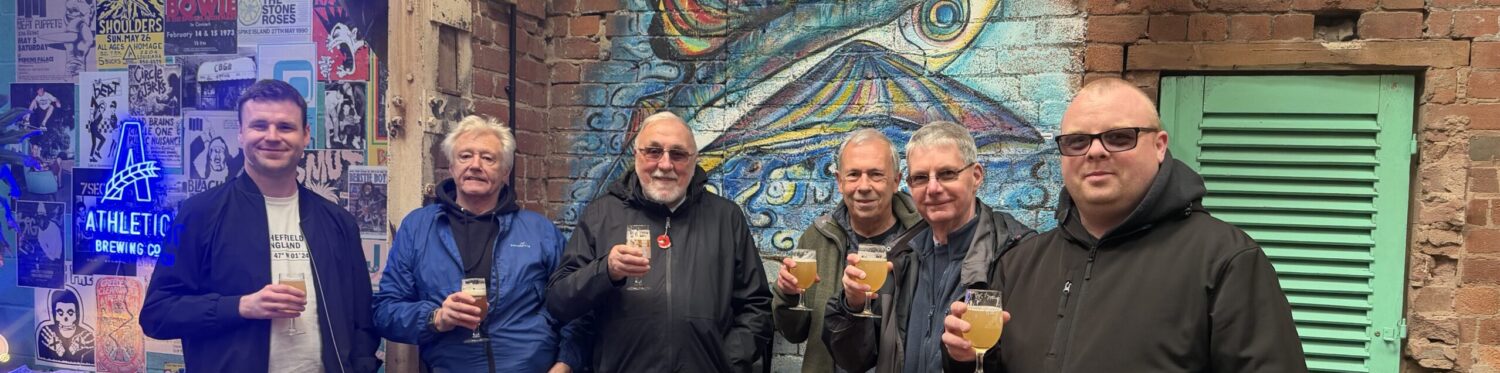
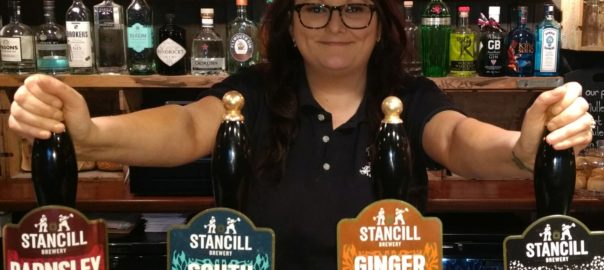
The Sheffield Beer House on Ecclesall Road was the City’s first full time micropub and was popular from the word go, offering real ale and other quality drinks, friendly service and a proper pub environment on a compact scale. In December the Beer House celebrated its second birthday with a low key celebration evening with both owners present and offering a complimentary pint of Hopjacker Beer House Pale to all customers when they arrived. They are clearly getting it right and we wish the Beer House ongoing success!

A new threat to real ale – or a storm in a Schooner?

Cloudwater Brewery of Manchester has recently announced that they are to no longer brew cask ale, following a number of other fashionable ‘craft’ brewers that have either discontinued or scaled back cask production. Cloudwater’s business model going forward will be 60% bottles/cans and 40% keg. In 2016 their production split was 23% cask, 39% keg and 38% bottles. The reasons they give for no longer brewing cask is that real ale drinkers demand cheap beer – even when it is brewed with large quantities of quality, expensive ingredients; issues with both publicans and consumers not understanding what is good or bad beer causing demands for refunds on perfectly good beer – for example Cloudwater beers are sometimes served hazy as they are unfined (therefore vegan) plus more labour is involved racking cask beer, collecting empty casks and cleaning them for reuse – bottles, cans and keykegs are all one way containers. The statement from Cloudwater has led to calls from the usual online beer commentators for CAMRA to change attitudes and educate drinkers. They say it should be about promoting beer quality not members discounts or pubs with cheap ale. These same commentators are also forecasting that all the other brewers doing anything interesting are likely to follow suit and leave the cask market to simply be a load of boring, cheap brown swill. Beer writer Pete Brown has waded in to the debate in his Morning Advertiser column, criticising the pub trade for there being too many pubs serving badly kept beer and having staff not properly trained in the art of cask conditioned beer, with him suggesting he avoids drinking real ale in pubs unless he knows they have a good reputation for cask beer. Of course it is worth noting that breweries such as Cloudwater have limited brewing capacity and have made a success of producing one off beers that are well hyped and attract good prices for bottles plus of course bottles and cans are good for direct sales, which are more profitable. They are also doing well with export sales which one way containers such as bottles, cans and keykegs are good for. You cannot blame them for making decisions that are the best for their business – but it doesn’t mean the same decisions are necessarily right for other breweries around Britain. Tiny Rebel Brewery has recently also published a blog looking ahead with their plans for 2017 which sees them producing a lot more interesting and experimental beers – with cask being part of the plan. They say cask works best for certain styles of beer with the cask conditioning adding a certain something to the flavour. They are also opening a new bigger brewhouse. Here in Sheffield we have a long list of breweries based in the City with all but one producing cask beer. Some of them also sell beer in other formats (bottle and/or keg) but generally the cask beer is their biggest output. However not all brewers are aiming at the same market. Some produce simple but well crafted session beers that are good for pubs to have as an affordable house beer. Others produce premium beers that may be hop forward or contain interesting ingredients; some breweries do a combination of the two. Such diversity is necessary to stay in business otherwise the competition would be immense – it is also good for the drinking public too of course. Not all small breweries wish to go down the road of bottling – if you don’t have your own bottling plant – which is an expensive investment – the choices are hand bottling which is slow, tedious and labour intensive or contracting out which can see excessive wastage of beer as well as expense. Kegging also has its issues. The observations of the better pubs in the Sheffield area that have a large range of beers and quality cellarmanship by knowledgeable management and staff generally sees a beer range that includes a couple of cheaper house beers – usually a pale/blonde and a brown bitter along with more interesting (and expensive) changing guests, all of which sell well. It seems the death of real ale is being somewhat exaggerated….  

District Pub of the Season Autumn 2016

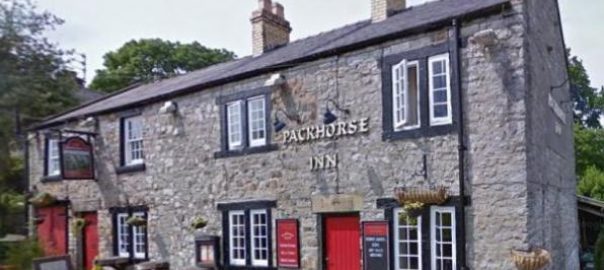
Our members have been voting through the autumn for our latest District Pub of the Season and we are pleased to announce the winner as the Packhorse at Little Longstone. This award is for pubs in the Derbyshire part of our branch area and is designed to raise the profile with real ale drinkers of those pubs that are beyond the city limits, often in rural areas such as the Peak District. The Packhorse is a cosy village pub with small rooms, a roaring fire in winter, a beer garden for the summer months, friendly staff, good fresh food and of course well kept ales, usually from Thornbridge Brewery. We’re running a minibus trip on Saturday 25th February and will be calling in the Pack Horse to present their winners certificate and enjoy a beer, this will be combined with a visit to Thornbridge Brewery in Bakewell for a tour where there will be a bar open selling beer and pies! If you want to join us on the minibus, please book your seat via our social secretaries, it costs just £5 per person for the travel for members.

CAMRA revitalisation project news

he leadership of one of Europe’s most successful consumer organisations is considering refocusing its future purpose after being presented with a wide-ranging review into its aims and activities – but is clear campaigning for real ale, pubs, clubs, cider and perry will remain core. The volunteers heading up the Campaign for Real Ale were presented with a report and proposals by the Revitalisation Project at a meeting in early December. The Revitalisation Project has proposed that the Campaign remains committed to its core aims of promoting real ale, real cider, perry and campaigning for pubs and clubs – but has suggested CAMRA needs to widen its vision and mission to reflect changing consumer needs and developments in the drinks industry. In summary the Revitalisation Project has recommended that:
  • Campaigning for real ale, cider and perry and protecting community pubs and clubs will remain core to CAMRA activities.
  • CAMRA widens its mission and purpose to reflect changing consumer needs and developments that have taken place across the sector since CAMRA’s foundation in 1971. The Revitalisation Project found that there is much CAMRA does well, so its proposals principally relate to opportunities for the organisation to remain relevant and effective in the future.
  • CAMRA broadens its focus to play a “leading role in informing and representing all those with an interest in good beer of any type”.
  • CAMRA promotes the “virtues of well-produced, well-kept cask-conditioned beers as the pinnacle of the brewer’s craft” while also promoting greater awareness and understanding to help drinkers judge for themselves what “quality” beer is.
  • Celebrating and protecting well-run community pubs and clubs should also remain core to CAMRA’s purpose, but the Campaign should do more to improve the range and quality of beer, cider and perry in “communal drinking” venues across the on-trade.
  • In response to the attacks on responsible drinkers by health campaigners, the organisation plays a leading role in speaking on behalf of all UK beer, cider and perry drinkers, and pub and club-goers.
The Revitalisation Project was officially launched in April 2016, to carry out a review of CAMRA’s purpose and activities and to ensure it was positioned to reflect changes in the pub and brewing industry. The Revitalisation Project considered the views of tens of thousands of CAMRA members who responded to three surveys and the opinions of thousands who attended consultation meetings across the country. Its findings also take into account feedback from numerous industry stakeholders including politicians, brewers, cider producers, publicans and journalists. The Revitalisation Project has now agreed a series of proposals which it presented to CAMRA’s National Executive – the most senior elected volunteers in the organisation – at a meeting in early December. The National Executive will now take ownership of the report and will be responsible for deciding whether, how and when, to implement the Revitalisation Project’s proposals. CAMRA members will continue to be fully involved in the process and will be invited to discuss the Revitalisation Project proposals at the CAMRA Members’ Weekend and AGM to be held in Bournemouth in April 2017. A final decision on adopting the proposals will be taken at the Members’ Weekend and AGM in Coventry 2018. Michael Hardman MBE, one of CAMRA’s founders and Chairman of the Revitalisation Project said: “Our proposals were agreed after eight months of hard work and include strengthening some of CAMRA’s best campaigns and practices as well as confirming our 45-year-long commitment to real ale and our long-standing support for pubs and clubs. 

“We have recommended that we should explore some kinds of beer that have previously been outside our scope, but this is hardly a controversial proposal since our latest survey of members showed that there was a clear majority in favour of doing so.

“We now look forward to the National Executive accepting our proposals, depending on the results of an impact study they will be carrying out, and then to our 185,000 members voting on the proposals.”

Colin Valentine, Chairman of the Campaign for Real Ale, said: “I’d like to thank Michael and the Revitalisation Project for the work they have put in over the summer to survey tens of thousands of CAMRA members and meet thousands in person to ask them what they think. “The Revitalisation Project has helped us to understand what our members want for the organisation in the future and the direction they believe we should take to respond to the changes in the pub and beer world. “My fellow National Directors and I will now take the time to fully understand the Revitalisation Project report and the proposals which have been made to us. It’s now our job to decide what we will recommend to our members and seek their approval to changes, if appropriate, to our purpose and strategies and the activities we carry out to achieve them. “While the work of the Revitalisation Project is now finished, this is really only the start of the process for the National Executive and CAMRA members. We need to make sure that members continue to be at the heart of the decisions we take and we will ensure they get a full opportunity to discuss the proposals at our Conference in April and then have the final vote on any changes to CAMRA’s purpose at the Members’ Weekend and AGM in 2018.” As well as presenting its proposals to the National Executive, the Revitalisation Project published the findings of the third and final survey into the views of CAMRA members. The survey findings are available at: https://revitalisation.camra.org.uk/blog/revitalisation-project-survey-three-results A full copy of the Revitalisation Project Proposal document is available here: https://revitalisation.camra.org.uk/blog/revitalisation-project-report-published

Fuggle Bunny Brewhouse

Fuggle is looking forward to celebrating its third birthday shortly and will be launching another new chapter, so keep watching for Chapter 9.  The Bunny is going from strength to strength and has some exciting news to tell you all shortly.  In the meantime apart from selling to local, Tied & Free houses, wholesalers and JD Wetherspoon we are now selling our award winning ales nationally. What has become a very popular event is our Fuggletastic Friday Club when we are open to the public.  Our opening times are 9.00am until 11.00pm on Fridays which allows anyone to call in for tasters and take outs, purchase of merchandise eg: Hoodies, T-shirts, Glasses, Growlers stainless and PET jugs, our own chutneys and sauces made with our beers created by OME Made which can be bought individually or as a hamper, there is free pool and darts, snacks, bread & dripping, what moor could one wish for on a relaxing Friday Fuggle Day. Cheers, Wendy. You can find Fuggle Bunny Brewhouse at Holbrook near Halfway, just off the main road towards Killamarsh. Bus 70/71 will drop you off close or its a short walk from Halfway tram terminus.

National CAMRA AGM

All members are entitled to attend the national AGM to listen to the annual reports from the Chief Executive and national Directors on the National Executive Committee, debate and vote on motions, participate in policy discussion groups and attend volunteer support workshops. The AGM is also part of a wider members weekend which includes a private beer festival, coach trips to breweries and the opportunity to visit some of the pubs in the area. This year the Members Weekend & AGM is being held in Bournemouth from the 7th to 9th April. Conference business takes place Saturday and Sunday daytime with the Members Bar and registration desk open from Friday evening, coach trips depart on Friday and Saturday evening. You can register in advance online and simply collect your conference pack on arrival, alternatively sign up at the registration desk at the venue on the day. For more on the members weekend visit camra.org.uk. Direct Cross Country trains run from Sheffield to Bournemouth and it is usually cheaper to book in advance. Check crosscountrytrains.co.uk for times and fares.

Heritage Corner – The Fat Cat

The Fat Cat is a little-altered and typically detailed example of a mid-C19th. pub and former hotel in, what was, an industrial quarter close to central Sheffield. It has an excellent original layout: two downstairs rooms, a small central bar, mosaic in the doorway and a terrazzo floor passageway. Opened in 1850 and originally known as ‘The Kelham Tavern,’ the pub was renamed ‘The Alma,’ in 1856, after the Battle of the Alma River (SW Crimea) in 1854. It was taken over by Sheffield brewer, William Stones in 1912. A small entrance lobby with mosaic floor bearing the legend “CANNON ALES” leads into a corridor with terrazzo floor leading to a rooms on the left and a doorway to the servery on right. The entrance lobby also leads to a room on the right. The bar was up-graded in 1981 from a formica-topped surface. The three-sided servery has a canopy including coloured glass over, and a clock under, a rounded pediment. The latter is believed to be a payment settling kiosk obtained from a Co-op butchers in Rotherham. The left hand-room has bench seating on most of the walls. The Victorian style fireplace with tiled base was installed in 1981. The right-hand room has a Victorian green tiled, cast iron and wood surround fireplace at the rear and has bench seating on the outside walls. fat-cat-sheffield-1A 1914 plan (James R.Wigfull for Messr’s.Wm.Stones Ltd.) shows a pub layout which is similar to the current layout with three exceptions. 1914 has two entrances to the building: the current position and a second corner entrance. The current corner room is split into two rooms: a ‘public bar’ which is only accessible from the corner entrance and a ‘Smoke Room’ which is accessible from the central corridor. The bar has a rounded corner in the Public Bar. In addition, ‘Cottages’ are indicated at the rear of the pub. 1914 has these changing into ‘Scullery,’ ‘Pantry’ and ‘Coals.’ There is also an upstairs ‘Club Room’ in the same position as to-days upstairs room. Plans approved in 1941 (Wigfull, Inott and Ridgeway, Sheffield) indicate that, with the removal of an internal wall, the corner ‘Public Bar’ has extended into the ‘Smoke Room’ and that the bar is squared off into the current layout. The corner entrance has also been removed. The pub became the Fat Cat on 29th.July 1981 when the building was bought, at auction, for £33,750 by Solicitor, Bruce Bentley and his business partner, Sheffield Polytechnic Economics Lecturer, Dave Wickett (1947-2012), becoming one of the first ‘Real Ale Freehouses’ in the UK. In 1989, Dave bought out the share owned by Bruce. Opening day (21st.August) saw queues down the street and the debut behind the bar of Diane Johnston. Diane has worked at the pub since and is currently Assistant Manager. fat-cat-plans-10-1982A 1982 plan shows that the ‘Scullery,’ ‘Pantry’ and ‘Coals’ have changed into an extended ‘Gents,’ and a new ‘Ladies W.C.’ and ‘Stores.’ The ‘Tap Room’ is now named ‘No-smoking room,’ the first such facility to be available in Sheffield – this fact was mentioned in the House of Commons by Bassetlaw MP Joe Ashton and therefore recorded in Hansard. In addition, the ‘Club Room’ is now ‘Function Room.’ In the 1980’s, an internal door in the right-hand room which led directly to the urinals was removed; customers were thus compelled to visit, via the corridor. This door had been installed at some point post-WW2. The Fat Cat has recently achieved SRI (‘Some Regional Importance’)on the CAMRA registry of Pub Interiors. There is a possibility of RI (‘Regional Inventory’). Hence, we would be interested in internal photos from earlier than 1981. If you have any, please contact myself: dpickersgill1@googlemail.com Dave Pickersgill

ACV (Asset of Community Value) Update

Since the copy deadline for the December issue of Beer Matters, there have been a number of local developments:
  1. On 21st.November, the Chair of Sheffield CAMRA and myself met with Ccl.Jack Scott in order to discuss ACV applications to Sheffield City Council (SCC). At that meeting, he promised a further meeting, ‘early in 2017,’ in order to discuss the establishment of a city-wide pub promotion/protection and beer destination/tourism strategy. Since then, despite a number of email reminders, there has been no suggestion of a date/venue for such a meeting from SCC.
  2. The Plough –  on 10th.January, SCC Planning committee unanimously rejected an application by Sainsburys to turn the Plough into a ‘convenience store’ – the next step is up to Enterprise Inns. Ideally, they will sell the pub (at a sensible price) to a local pub, brewery or community group.
  3. The Cherry Tree – An ACV application was submitted by a local group on 21st.October. The Co-op have since put in a planning application to demolish the building and replace it by a shop. A forthcoming Planning Committee (14th.February) will make the planning decision. We understand that the ACV decision will be made before that date (the decision was due on 2nd.December).
  4. The White Lion achieved ACV status on 21st.November. Congratulations to all concerned.
  5. Sheffield CAMRA submitted an ACV application for The University Arms on 23rd.December. A decision from SCC is due by 17th.February. An acknowledgement letter from SCC confirms this date.
  6. Paul Ainsworth, the Chair of the National CAMRA Pub Campaigns Group has written to SCC expressing disquiet regarding their procedures and practices
To summarise, we:
  • have little confidence in the way SCC are managing the ACV process. The process is non-uniform and deadlines are not met
  • feel that SCC are expecting Sheffield Citizens to jump higher than Parliament requires (regarding ACV applications). It is over-reaching itself by demanding higher tests than those required by Parliament.
  • have a serious concern that in applying higher hurdles than those required by the Localism Act 2011, SCC is acting Ultra Vires.
Dave Pickersgill, Pub Heritage Officer

Sheffield Beer Week 2017 – first announcements!

2017 sees Sheffield Beer Week celebrate its third year as a city-wide beer festival and umbrella beer-focused event occurring in multiple venues throughout the second week in March. It is with great excitement that the first few breweries have been announced for 2017 #SheffBeerWeek events. Follow updates as they are released via our Twitter. Not only do we have great local breweries such as Neepsend, Thornbridge and Abbeydale all getting involved but a list of national and international breweries including Beavertown and Belgian family brewer Brouwerij De Brabandere, so far. Can’t wait to share more with you all in the next few weeks! With around 5,000 people visiting the city for Beer Alive (formerly Beer X festival), organiser Jules Gray sees Sheffield Beer Week (13-19 March) as a real opportunity to show off the very best of our beer scene. In addition to forming networks, collaborations (locally, nationally and globally) and encouraging additional visitors to Sheffield. In addition to the Society of Independent Brewers’ national conference and beer festival, a new beer-focused conference is launching called – Beer Now. This inaugural conference will look to attract additional beer industry professionals to Sheffield and is focused on marketing, communications and tourism. After 2016’s University of Sheffield commissioned Beer Report written by broadcaster Pete Brown, it is great to see traction building in Sheffield’s beer scene. Jules Gray, joint proprietor of Hop Hideout award-winning beer shop and tasting room, on Abbeydale Road, said: “I’m really pleased to see the year on year interest grow throughout Sheffield and beyond in its appetite for celebrating beer. Beer tourism is a growing area and I see this as a crucial cog to Sheffield’s continued beer success and positive economic growth city-wide. It’s really exciting to be part of developing this expanding annual event. I want to give a big thanks to all those who have been involved in previous years and look forward 2017’s plans as they gather apace.” Sheffield Beer Week runs from 13 to 19th March.  Head to http://sheffieldbeerweek.co.uk. If you’re interested in holding an event, contact Sheffield Beer Week at sheffieldbeerweek@gmail.com for more information.

Beer Now conference comes to Sheffield alongside SIBA BeerX

siba-logoThe Society of Independent Brewers (SIBA) and Zephyr Conferences announced in 2016 the first-ever Beer Now Conference to take place in March 17-19 in Sheffield, England in 2017. The conference is focused on “marketing, tourism, and communications” in the modern beer industry. The conference will take place at ICESheffield, the same venue as and coinciding with Beer Alive, SIBA’s national beer and brewing event. Because Beer Alive primarily focuses on issues related to brewing, having Beer Now co-located in Sheffield will broaden the scope of the events to also cover the marketing side of today’s beer industry, which has changed dramatically in recent decades. “We are extremely pleased to be hosting the Beer Now Conference at Beer Alive in 2017”, stated SIBA Director of Operations Nick Stafford, “the addition of the Beer Now conference widens the scope even further and brings its own audience of beer bloggers and writers who are so influential to our industry.” The beer bloggers and beer writers referred to come from the European Beer Bloggers & Writers Conference (EBBC), which operated the last six years in various European cities including London, Dublin, Brussels, and Amsterdam. Zephyr Conferences, the organizer of the EBBC, elected to broaden the scope of the conference to include industry representatives and change the name to Beer Now. “Beer Now, with its focus on marketing, tourism, and communications, will still be extremely applicable to beer bloggers and writers,” said Zephyr Conferences president Allan Wright. “We are not losing our focus on this audience. At the same time, the expanded content and the opportunity to interact with these beer writers should be of great interest to marketing and communications professionals in the beer industry.” For complete information on Beer Now, please visit www.BeerNow.org. For further information on the Beer Alive trade show and festival of beer visit www.beerx.org.