 July Pub of the Month – Walkley Beer Company


CAMRA Sheffield & District
Sheffield & District branch of CAMRA
 July Pub of the Month – Walkley Beer Company

 As part of Heritage Open days 2016, I’m leading a Pub Heritage Walk on Friday 9th.September. This short tour will take in some of the entries in the CAMRA ‘Yorkshire’s Real Heritage Pubs’ book (copies will be available for purchase). Also included are a number of ‘try also’ pubs which include aspects of architectural merit.
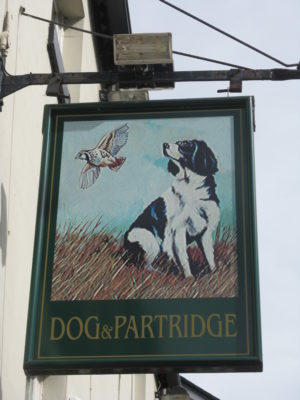 We will commence at ‘Fagans’ and proceed to the ‘Dog and Partridge’ via a short stop outside the ‘Grapes.’ After a short refreshment break, we will proceed past the ‘Red Deer’ and ‘Bloo88,’ before completing the walk at ‘The Bath Hotel.’
 En route we will pass: ‘Stanch,’ (the statue of a Pointer dog), the building with three different date stones, and the then home of the company whose claim to fame is that the owner was the first man to climb Nelson’s Column. There will also be Victorian tilework, terrazzo flooring, art deco glasswork, a mention of both long-gone Sheffield Breweries, Samuel Plimsoll and much more ….
The walk will take place twice: 14:00 and 17:30. Places are limited (to 15) and may be booked via Eventbrite:
14:00 start: http://tinyurl.com/jh3ogzz
17:30 start: http://tinyurl.com/jgqfa2r
Participants who wish to sample the beer served at the various en route stops are recommended to use public transport.
If you can’t wait until September, you could try the e-book, ‘History of Worksop and Retford Brewery’ http://tinyurl.com/j4d34ow
Dave Pickersgill, Sheffield CAMRA, Pub Heritage Officer
En route we will pass: ‘Stanch,’ (the statue of a Pointer dog), the building with three different date stones, and the then home of the company whose claim to fame is that the owner was the first man to climb Nelson’s Column. There will also be Victorian tilework, terrazzo flooring, art deco glasswork, a mention of both long-gone Sheffield Breweries, Samuel Plimsoll and much more ….
The walk will take place twice: 14:00 and 17:30. Places are limited (to 15) and may be booked via Eventbrite:
14:00 start: http://tinyurl.com/jh3ogzz
17:30 start: http://tinyurl.com/jgqfa2r
Participants who wish to sample the beer served at the various en route stops are recommended to use public transport.
If you can’t wait until September, you could try the e-book, ‘History of Worksop and Retford Brewery’ http://tinyurl.com/j4d34ow
Dave Pickersgill, Sheffield CAMRA, Pub Heritage Officer ![Steel City 42 barrel sponsor 0.1 [898397]](https://sheffield.camra.org.uk/wp-content/uploads/2016/07/Steel-City-42-barrel-sponsor-0.1-898397-300x212.png) One of the more inexpensive options for this years festival is sponsoring a cask.
For only £50 + vat you or your company can sponsor a specific cask and have the pleasure of showing your friends or colleagues your support for one of Sheffield’s best festivals.
With a highly visible new label design, you can incorporate your company logo and details, and with 4 free entry tickets included in the price, you will be able to invite your guests to see (and taste!) your sponsored beer.
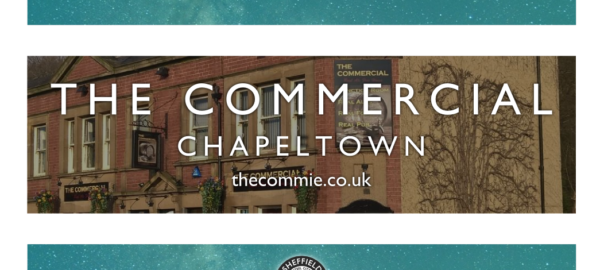
The picture shows the newly designed layout, seen here with the details for The Commercial at Chapeltown, our first label sponsor.
Anyone interested should contact sponsorship@sheffieldcamra.org.uk for more details.
One of the more inexpensive options for this years festival is sponsoring a cask.
For only £50 + vat you or your company can sponsor a specific cask and have the pleasure of showing your friends or colleagues your support for one of Sheffield’s best festivals.
With a highly visible new label design, you can incorporate your company logo and details, and with 4 free entry tickets included in the price, you will be able to invite your guests to see (and taste!) your sponsored beer.
The picture shows the newly designed layout, seen here with the details for The Commercial at Chapeltown, our first label sponsor.
Anyone interested should contact sponsorship@sheffieldcamra.org.uk for more details. ![beermat pallet [898406]](https://sheffield.camra.org.uk/wp-content/uploads/2016/07/beermat-pallet-898406-300x533.jpg) The first sponsored items for this years festival have begun to appear at pubs, clubs and various venues across the city. Beermats! Lots of them. A number of sponsors have kindly contributed to a bumper print run of 90,000 mats, which started appearing in early July to put the festival in front of the 100,000 people who come into Sheffield for the Tramlines Festival.
A total of 13 sponsors took advantage of our special rate to help promote both the festival and their business. The mats will be released in phases up to the Festival in October, so collectors will need to be eagle-eyed to get one of each.
Alternatively for the serious collectors, we have put together three collectors sets containing one of all 13 designs and will be auctioning them on ebay once a month over the summer with proceeds going to the Childrens Hospital Charity.
The first sponsored items for this years festival have begun to appear at pubs, clubs and various venues across the city. Beermats! Lots of them. A number of sponsors have kindly contributed to a bumper print run of 90,000 mats, which started appearing in early July to put the festival in front of the 100,000 people who come into Sheffield for the Tramlines Festival.
A total of 13 sponsors took advantage of our special rate to help promote both the festival and their business. The mats will be released in phases up to the Festival in October, so collectors will need to be eagle-eyed to get one of each.
Alternatively for the serious collectors, we have put together three collectors sets containing one of all 13 designs and will be auctioning them on ebay once a month over the summer with proceeds going to the Childrens Hospital Charity.

 We’ve also just racked off ALMIGHTY ZEUS, a 7.2% triple dry hopped IPA, which, as the name suggests, is packed full of Zeus hops, but with the addition of a little Comet for a more celestial feel. Expect orange notes, followed by a big pine hit before a lightly spicy finish. The ABV is well hidden, so treat Zeus with respect or feel his wrath!
We’ve lots more exciting beers in the pipeline, including return collaborations with North Riding, Steel City and Neepsend, so watch this space!
Edd Entwhistle.
We’ve also just racked off ALMIGHTY ZEUS, a 7.2% triple dry hopped IPA, which, as the name suggests, is packed full of Zeus hops, but with the addition of a little Comet for a more celestial feel. Expect orange notes, followed by a big pine hit before a lightly spicy finish. The ABV is well hidden, so treat Zeus with respect or feel his wrath!
We’ve lots more exciting beers in the pipeline, including return collaborations with North Riding, Steel City and Neepsend, so watch this space!
Edd Entwhistle. 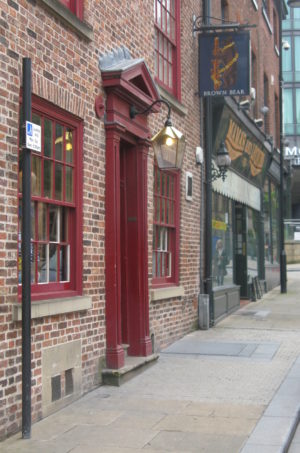 97–117 Norfolk Street (including the Brown Bear) was grade II listed in 1972. It was built late 1700’s to 1875, predating most of the buildings in the surrounding area (which include the Town Hall). There has been a pub on the site for over 200 years. It was probably named after the bear baiting pit which was in the botanical gardens. The pit closed in the 1870s when a curious child got too near and was killed by the two resident bears.
In the 1920’s, the Brown Bear had a game called ” bumble puppy, ” a version of the centuries old game of ‘Trou Madame,’ which is still played in Belgium and France. Played on a raised board, balls were rolled down a sloping top towards nine numbered arches.
The Brown Bear was bought by Sheffield Corporation in the 1930’s. The pub survived the Sheffield blitz and planners in the 50s and 60s. In 1981, when the lease was up for renewal, a stipulation was included that the character of the pub could not be altered. The winning bidder was John Smiths who had been lease holders since 1955. The pub was in the first CAMRA Good Beer Guide (1974). However, it was erroneously named, the ‘Brown Bull.’
About ten years ago, the premises were taken over by Samuel Smith. There was an extensive facelift soon after: a rare example of a typical 18th.Century Sheffield house being restored to how it used to look.
Dave Pickersgill
97–117 Norfolk Street (including the Brown Bear) was grade II listed in 1972. It was built late 1700’s to 1875, predating most of the buildings in the surrounding area (which include the Town Hall). There has been a pub on the site for over 200 years. It was probably named after the bear baiting pit which was in the botanical gardens. The pit closed in the 1870s when a curious child got too near and was killed by the two resident bears.
In the 1920’s, the Brown Bear had a game called ” bumble puppy, ” a version of the centuries old game of ‘Trou Madame,’ which is still played in Belgium and France. Played on a raised board, balls were rolled down a sloping top towards nine numbered arches.
The Brown Bear was bought by Sheffield Corporation in the 1930’s. The pub survived the Sheffield blitz and planners in the 50s and 60s. In 1981, when the lease was up for renewal, a stipulation was included that the character of the pub could not be altered. The winning bidder was John Smiths who had been lease holders since 1955. The pub was in the first CAMRA Good Beer Guide (1974). However, it was erroneously named, the ‘Brown Bull.’
About ten years ago, the premises were taken over by Samuel Smith. There was an extensive facelift soon after: a rare example of a typical 18th.Century Sheffield house being restored to how it used to look.
Dave Pickersgill  And so, I decided to call it a day and pursue my other passion – making beer – which I felt, unlike music, was more likely earn me more of a crust than the pittance of royalties from music streaming service such as Spotify and Apple Music.
You’ll probably appreciate the irony then, that over the last ten years I’ve had little exposure to my music over the airwaves, and yet, seemingly within ten minutes of word getting out about Emmanuales, a researcher from Songs of Praise phones me to discuss putting ‘the Christian brewer with the Jesus beer’ on BBC One.
Emmanuales, which is now brewed at and as part of The Sheffield Brewery Company, will feature on BBC’s Songs of Praise program in August (transmission date TBC).
In other, less glamorous news, we have new beer hitting the shops.
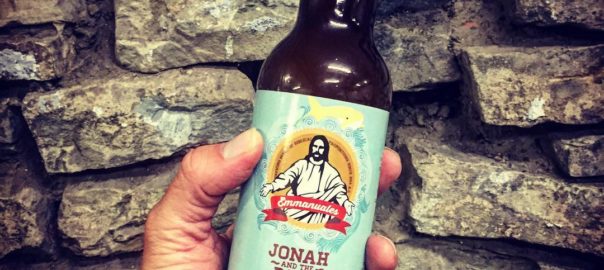
A revised Jonah and the Pale makes its return this month, now brewed with more hops, yet still as smooth. In addition, we’re releasing a Rhubarb Saison (4.2%) – yet to be named, at the time of writing – to quench that thirst on a hot summer’s day, and our biggest beer yet. Four Horsemen of the Hopocalypse is a 10% Quadruple hopped with Chinook, Saaz, and Ahtanhum.
Keep a look out in August for more Oh Hoppy Day, Nothing But The Blood – a Blood Orange IPA (see what we did there!), and our Black IPA, Midnight Mass, making its first 2016 return.
For more details visit www.emmanuales.co.uk
Nick Law
And so, I decided to call it a day and pursue my other passion – making beer – which I felt, unlike music, was more likely earn me more of a crust than the pittance of royalties from music streaming service such as Spotify and Apple Music.
You’ll probably appreciate the irony then, that over the last ten years I’ve had little exposure to my music over the airwaves, and yet, seemingly within ten minutes of word getting out about Emmanuales, a researcher from Songs of Praise phones me to discuss putting ‘the Christian brewer with the Jesus beer’ on BBC One.
Emmanuales, which is now brewed at and as part of The Sheffield Brewery Company, will feature on BBC’s Songs of Praise program in August (transmission date TBC).
In other, less glamorous news, we have new beer hitting the shops.
A revised Jonah and the Pale makes its return this month, now brewed with more hops, yet still as smooth. In addition, we’re releasing a Rhubarb Saison (4.2%) – yet to be named, at the time of writing – to quench that thirst on a hot summer’s day, and our biggest beer yet. Four Horsemen of the Hopocalypse is a 10% Quadruple hopped with Chinook, Saaz, and Ahtanhum.
Keep a look out in August for more Oh Hoppy Day, Nothing But The Blood – a Blood Orange IPA (see what we did there!), and our Black IPA, Midnight Mass, making its first 2016 return.
For more details visit www.emmanuales.co.uk
Nick Law