Dave has been a CAMRA member since the 1970s and has worked at almost 40 Sheffield CAMRA festivals, plus a fair number of others. He is Brewery Liaison Officer (BLO) for Abbeydale, Blue Bee, Bradfield and Loxley. He was also the Chair of the Local Organising Committee for the 2023 national CAMRA Members’ Weekend, AGM & Conference.
A member of the National Pub Heritage Group, he leads on planning and pub heritage issues. He also edited the Sheffield's Real Heritage Pubs book, for which downloads vastly exceeded expectations. The hard copy was available in October 2018 and again in 2021. On both occasions, it was a sell-out. The 5th edition (2023) is available as both a hard copy and a free download.
Thanks again to all who made donations to Sheffield Children’s Hospital Charity at SCBF49. Over the last few weeks, many of you will have noticed references to Sheffield CAMRA on their snowflakes.
Illustrated are: Sheffield City Hall, the Childrens’ Hospital, the Ryegate Centre and our Chair, Paul Manning and grandson, Marcus, with Theo the charity bear at the Becton snowflake unveiling.
The Royal Standard – retrospective planning application
A retrospective Planning Application (25/030409/FUL) has been submitted for the Royal Standard (156 St.Marys Gate, S2 4AX). It is evident from both the application and outside observation, that the proposed changes have already occurred: the premises are functioning as a fast-food restaurant.
In planning terms, the key questions are:
(i) can the loss of a pub be justified in terms of local and national planning policies?
(ii) can the loss of a valuable community facility be justified?
This is a decision for the planning authorities. We are sure they will check that the applicants have carried out a full feasibility study as to the continuing use of the building as a public house before they commenced alterations.
We also note two heritage aspects of the building:
(i) the stone representations of the ‘Royal Standard’ flag above the two ground floor windows. As far as we are aware, this distinctive stonework is unique.
(ii) the ceramic tiling above the main entrance which says ‘Royal Standard.’ After many years of obscurity, this signage was revealed in early 2015 when the obscuring placard was storm-damaged.
It is not possible to accurately date these artefacts, except to say that they have been in place for many years, possibility for over a century. We hope that these heritage aspects will remain after this planning process is complete. We hope that the relevant SCC planning reports for this planning application will make appropriate references.
We look forward to the result of this planning application with interest: a retrospective application which has involved the loss of a public house.
White Lion, HeeleyGrapes, Sheffield City CentreEyre Arms, HassopThree Stags Heads, Wardlow Mires
Despite on-going turmoil in the licensed trade, Britain remains blessed with many pubs that retain traditional and often beautiful, historic interiors. Over thirty years ago, a group of CAMRA members began formally compiling a National Inventory of such Historic Pub Interiors. Initially, they aimed to identify and record the most intact pre-war pub interiors, regardless of their architectural distinction. Before long, it was decided to also include pubs with special features or rooms of national significance. By then, around 270 pubs had inventory status.
The next step was to develop Regional Inventories, capturing interiors that fell short of the criteria for the national list but were nonetheless of significant historic interest. Around the same time, early post-war pubs built on traditional lines, and still intact, became eligible for inclusion.
Several years ago, CAMRA’s Pub Heritage Group (PHG) agreed to move to a single Inventory, based around a grading system. Interiors are eligible for consideration if they have remained essentially unaltered for at least 50 years. There are three key aspects for assessments: –
Layout – survival of historic layout and internal divisions, either intact or readily discernible.
Historic Fittings – particularly old or original bar counters, bar-backs (gantries), fixed seating, fireplaces, vestibules, panelling, tiling and other ceramics
Notable Rooms & Features – such as partitioned snugs; counter-less pubs; tiled paintings; snob screens etc.
The rarity of both historic layouts and historic fittings counts very high in the selection process.
The current grading system is, we hope, simple and easy to understand. Within the single National Inventory of Historic Pub Interiors there are three grades:
Three Star pubs are of outstanding historic importance. They have stayed wholly or largely intact, in terms of layout and fittings, and/or retain rooms or features that are truly rare or exceptional. Only limited loss of such components is allowable before an interior fails this standard. Nationally, only 303 pubs are in this category.
Two Star pubs are of very special historic interest. They are highly important but fall just short of Three Star levels of overall intactness and/or rarity. Lost elements, often of layout, are clearly in evidence. There are presently 270 such pubs.
One Star pubs (740) are of special historic interest. They have either readily identifiable historic layouts or retain rooms or features of special interest. More significant changes are allowable than for the first two categories.
Bath Hotel, Sheffield City Centre
Locally, Sheffield has more pubs listed on the National Inventory than any other city in Yorkshire. Two pubs (Bath Hotel and Sheffield Tap) are listed as Three Star with another three as Two Star (Grapes, Sportsman (Hackenthorpe) and White Lion). A further 13 are listed as One Star. However, one of these (the Big Gun) has been closed for over two years: we are unsure if the Heritage interior remains intact. The Derbyshire part of our Branch area includes two Three Star pubs, the Eyre Arms (Hassop) and the Three Stags Head (Wardlow Mires).
Sheffield Tap, Sheffield station
PHG also campaigns hard to protect and promote these precious heritage assets. Over the years, we’ve been able to get many of them statutorily listed so that they enjoy an extra layer of protection from unwanted alterations. Where Inventory pubs come under threat of closure or unsympathetic change, we’ll do what we can to save them. On a positive note, we seek to raise awareness of the delights these pubs afford, through our website and a range of publications. One local example is the Sheffield Pub Heritage book (free download at: https://sheffield.camra.org.uk/rhp/ ).
PHG keeps gradings under continual review and makes changes where appropriate. Generally, this is because there have been alterations to an interior that impact on the pub’s historic importance. In other cases, members will re-assess current gradings, especially where a pub has not been surveyed for a long time or where a wider range of views is felt to be beneficial. Unfortunately, some NI pubs close and are subsequently demolished. A local example was the One Star, Silver Fox (Stocksbridge). The footprint of the pub and car park is currently a construction site.
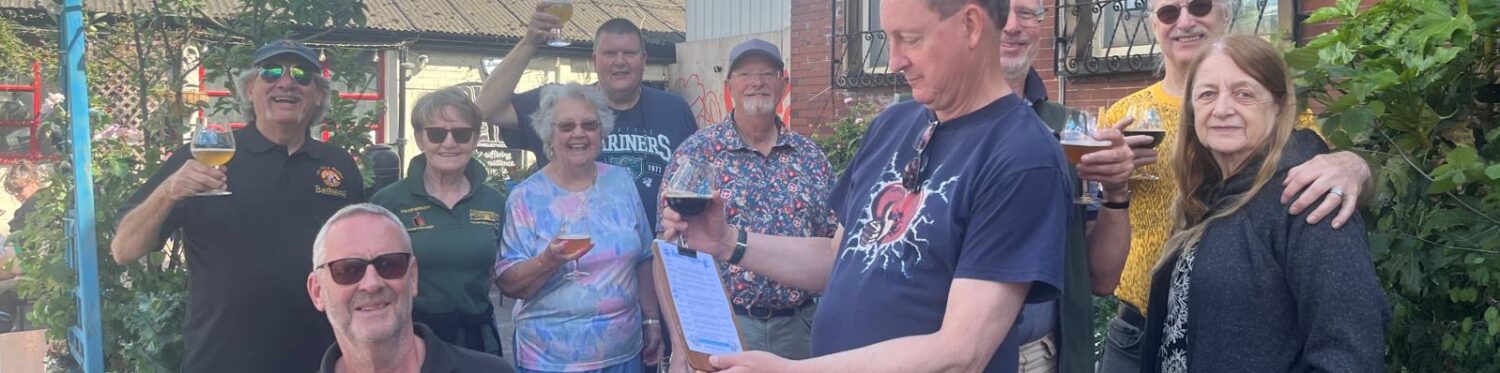
Saturday November 15th saw the annual Steel City Beer Festival volunteer day out. After a last-minute check on Storm Claudia flood warnings, our coach travelled north taking 46 passengers to the joys of Happy Valley. Here we met several fellow workers who had journeyed from other parts of West Yorkshire before splitting into smaller groups to investigate the 15 outlets listed on our guide. The relatively small size of Hebden Bridge meant that all of us spent the afternoon meeting-up with colleagues as we moved from pub to pub. As one participant said afterwards, ‘my first Sheff CAMRA trip. Got to say how great it was.’
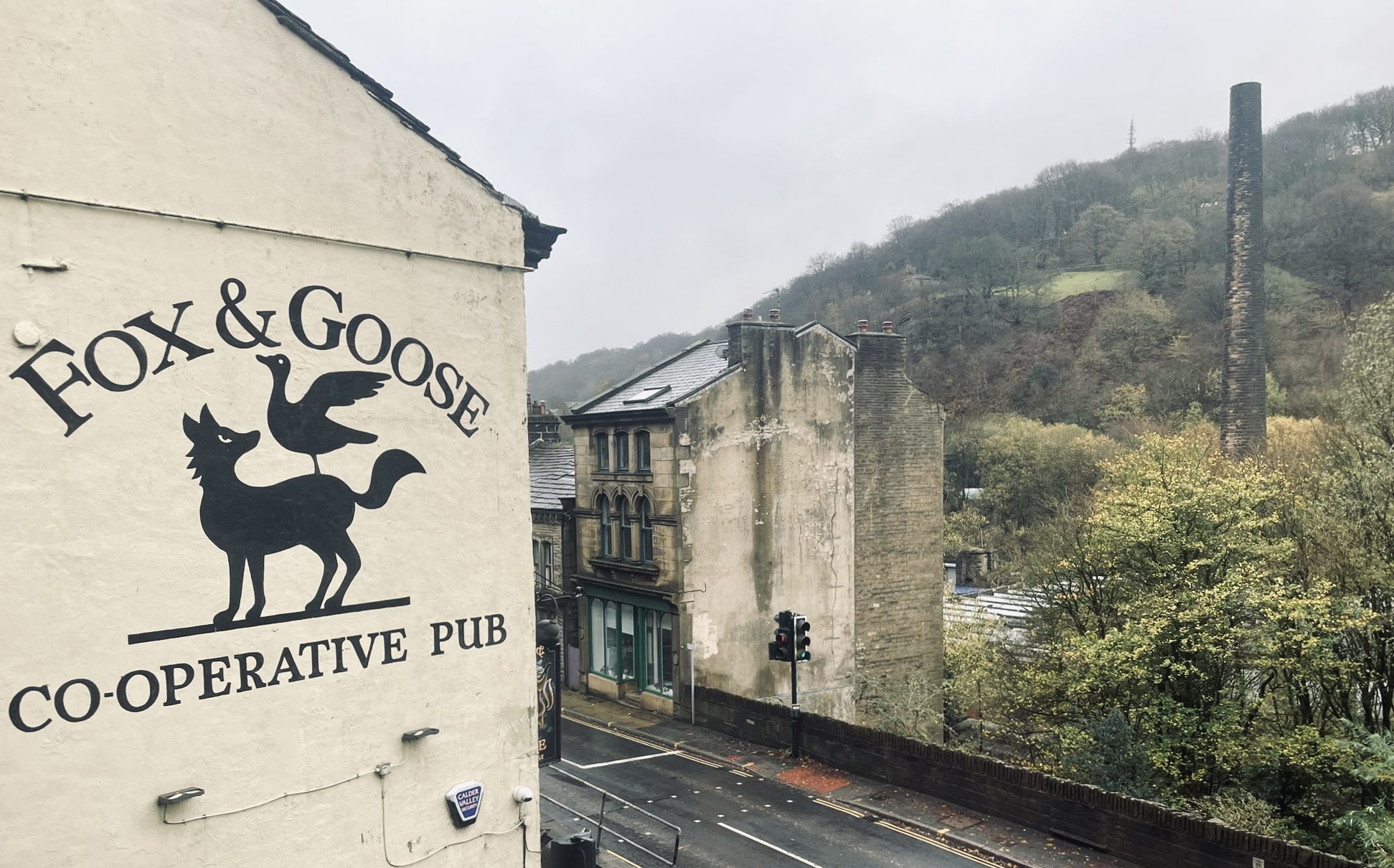
Ten of us commenced with the most outlying pub: Stubbing Wharf with four hand-pumps. Then it was to West Yorkshire’s first community co-operative pub: the Fox and Goose where a single bar served three flagstone floored rooms and a beer garden which seems to stretch as far as Heptonstall.
Other outlets included the Albert (the ‘Duke of Wellington’ in the recent BBC series, ‘Riot Women’), Drink! – a specialist bottle shop and sampling room with bar, Hidden Hebden, the Trades Club, Vocation & Co. and the tap for local brewery, Nightjar.
Also visited was MAMIL*, a recent addition to a small local chain of cycle-themed café-bars: this was felt to be the bar with the most garish facilities.
Beers sampled included several from local brewery, Vocation plus many others. Big Drop, Black Sheep, Deeply Vale, Harrogate, Nightjar, Ossett, Pictish, Pomona Island, Redwillow, Small World, Squark, Theakston and Timothy Taylor were among the many breweries encountered.
Thanks to our driver, Glyn, and for their local knowledge as our map was constructed, Hebden residents, Alice, Josh and their dog, Mars. Also thanks to everyone who was on the coach for their exemplary time-keeping – much appreciated. Also, it was good to see that none of you turned left after using the on-board facilities.
See you next year!
* MAMIL, Middle Aged Men In Lycra, is an acronym which was heavily used in 2014 when the Tour de France visited Hebden Bridge and also saw it’s best-ever Grand Départ.
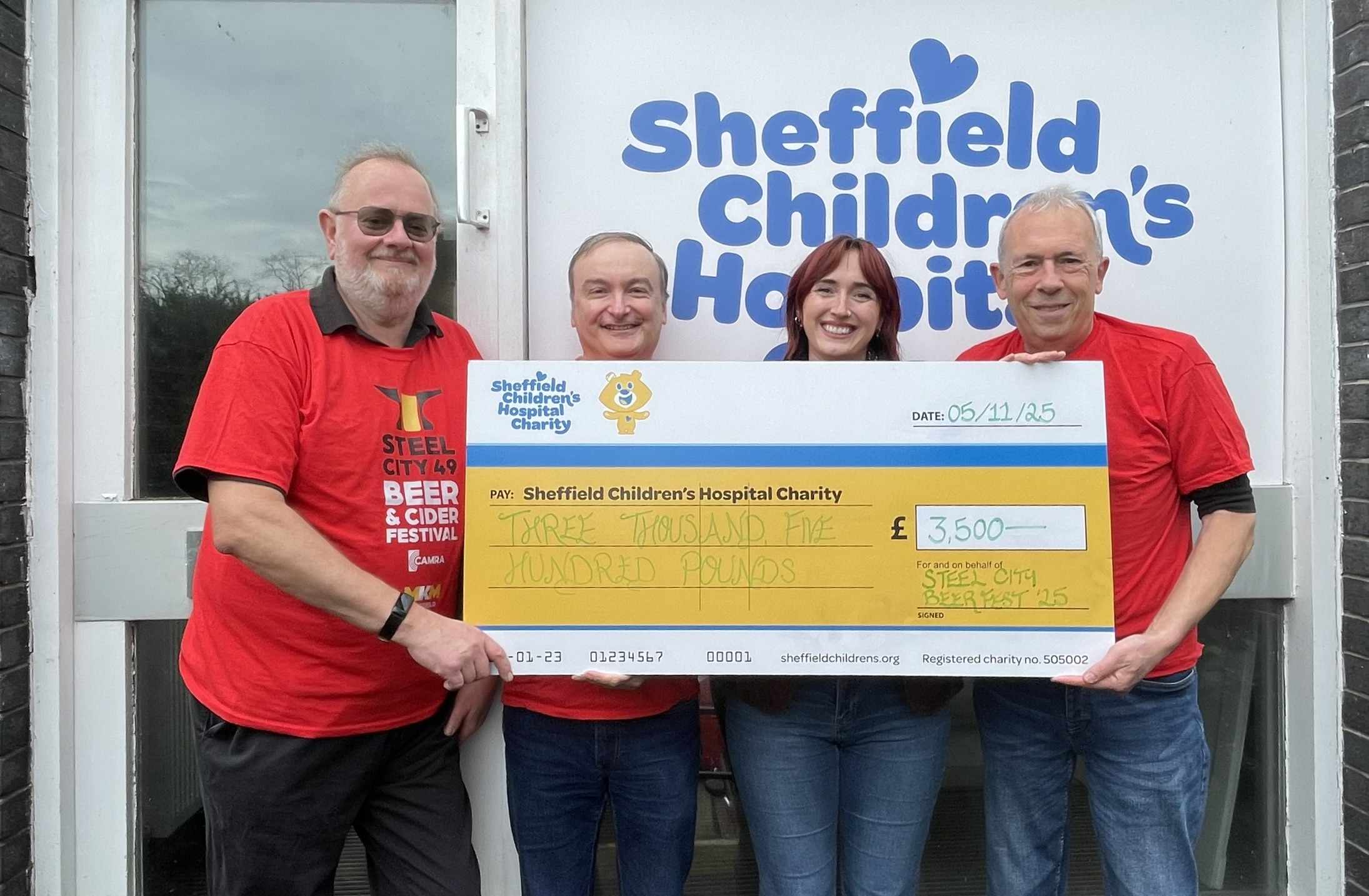
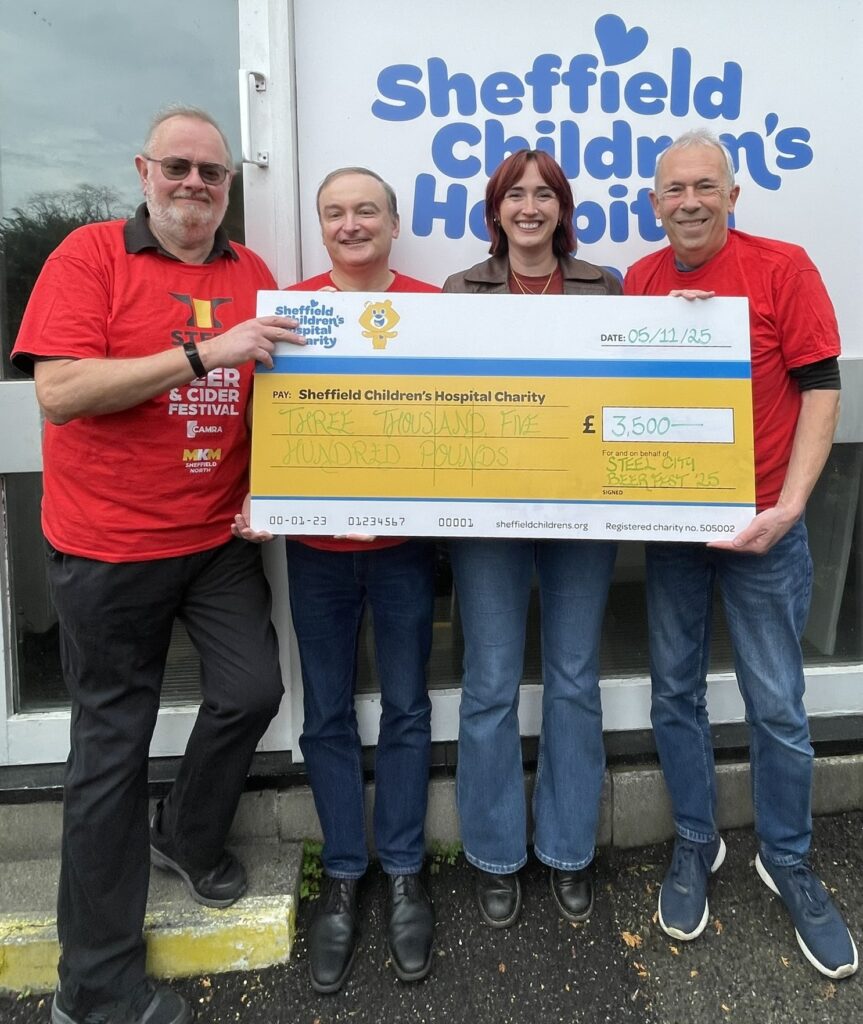
Thanks to everyone at the recent Sheffield Steel City Beer Festival SCBF49) who supported Sheffield Children’s Hospital Charity (SCHC). Your generosity produced a record charity donation from this Festival – a whopping £3500.00 – a donation rate of almost £100/hour, £1.60/minute!
This magnificent sum includes loose change, unused beer tokens, eBay sales of three full sets of SCBF49 beer mats, net proceeds from the charity beer and a donation from Sheffield and District CAMRA. Thanks to everyone who contributed and thanks again to Bradfield Brewery for providing the charity beer, ‘Pride of Yorkshire,’ a 4.3% abv bittersweet amber bitter which links to the planned 2026 charity sculpture trail. From next June, a new free trail will feature 150 large lion and lioness sculptures, and 150 smaller lion cub sculptures. They will be positioned across South Yorkshire to celebrate 150 years of the Hospital.
Festival Organiser, Paul Crofts said, ‘It’s a fantastic sum to raise for such a good charity. It was far more than we predicted and shows how much local people appreciate the work of the Children’s Hospital.’
Holly Newton-Steele, SCHC Corporate Partnerships Officer said, ‘This is absolutely incredible, thank you SO much!!! We are very grateful for your support and for making our team of volunteers and staff so welcome, I’ve had amazing feedback on just how brilliant it has all been …. it really will make such a difference.’ The festival was formally opened by Holly and local legend, Reverend and the Makers lead singer, John McClure.
During the next month, look out for the Children’s Hospital Christmas displays which formally thank: ‘Sheffield CAMRA Steel City Beer Festival 2025.’ There will be snowflakes at both the Children’s Hospital and City Hall with snowflake tags at Ryegate (Paediatric Neuro-disabilities) and Becton (Paediatric Mental Health).
Sheffield Children’s Hospital Charity works together with the hospital, to ensure that children and young people can receive the very best care, in the best possible environment. The money raised buys life-saving equipment, funds vital research and treatment for thousands of children from across the world and helps create a comfortable, engaging environment for hospital patients.
An event at the Portland Works in early October saw the formal launch of a new report by Prof. Phil Withington and Dr. Nicholas Groat (University of Sheffield) which explores the place of ‘craft’ alcohol in the city’s past, present, and future. The research was funded by the Arts and Humanities Research Council.
Sheffield was chosen as previous reports have established the city as the ‘UK capital of beer.’ A high density of independent breweries is mirrored by a large proportion of independent pubs, bars, and specialist off-licences.
An immediate key finding: one which was not expected at the project inception is that the word ‘craft’ has been devalued. It is now a problematic term, one which has been taken by the multi-nationals.
‘Independent’ is more appropriate. This captures a commitment to small-scale, autonomous artisanship, passion, skill & community (see for example, the SIBA ‘Indie Beer’ campaign). ‘Independent’ is part of the Sheffield heritage.
Since 2021, Sheffield and District CAMRA publications have defined ‘craft beer’ as ‘a meaningless phrase, often used in marketing or an enigma: ‘undefinable and misunderstood.’’ It seems that the University researchers agree with this definition.
The study also shows how the independent sector’s geography reflects Sheffield’s long history as a ‘city of neighbourhoods’ and how the values and working practices of the sector can contribute to a sustainable and vibrant future. The ‘Independent’ sector forms a significant proportion of sites dedicated to producing, retailing & consuming alcohol. The survey found that 42% of their sample (464) were independent. Sheffield has a high percentage of such ownership, a direct reflection of the city’s unique history of distinct, interconnected neighbourhoods.
Other findings include a local emphasis on drink ‘better’ not ‘more.’ In addition, quality of ingredients, culture of drinking environments and responsible & considerate habits are all important.
The lack of means for the independent sector was to organise was also noted. There is no city-wide forum, a need for liaising with city authorities and a lack of marketing & other strategies to enhance the sector.
Recommendations include:
Use ‘independence’ not ‘craft’
Form a Sheffield Indy Drinks Hub as the collective voice of the sector
Explore how other places with concentrations of independent producers organise and market themselves
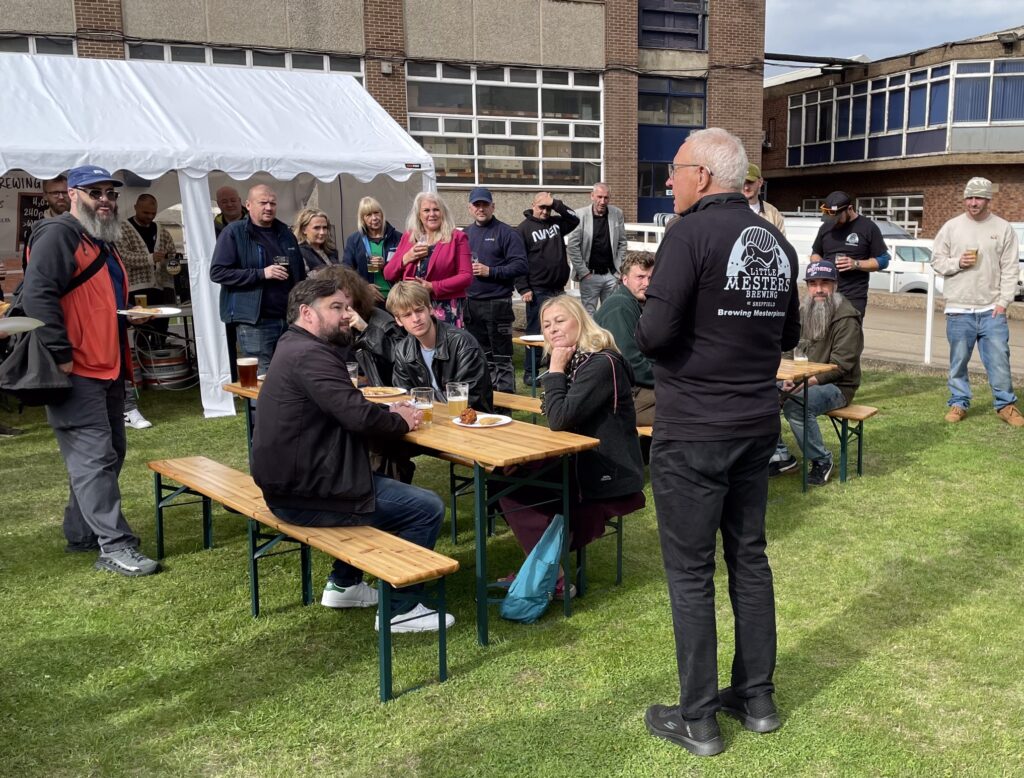
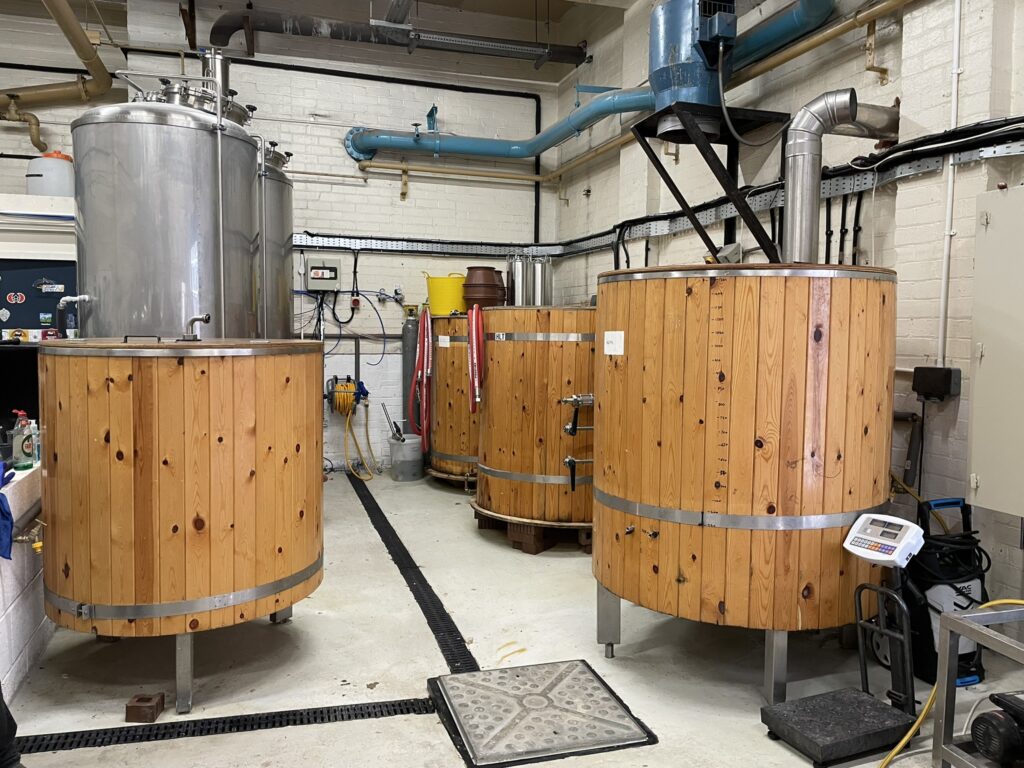
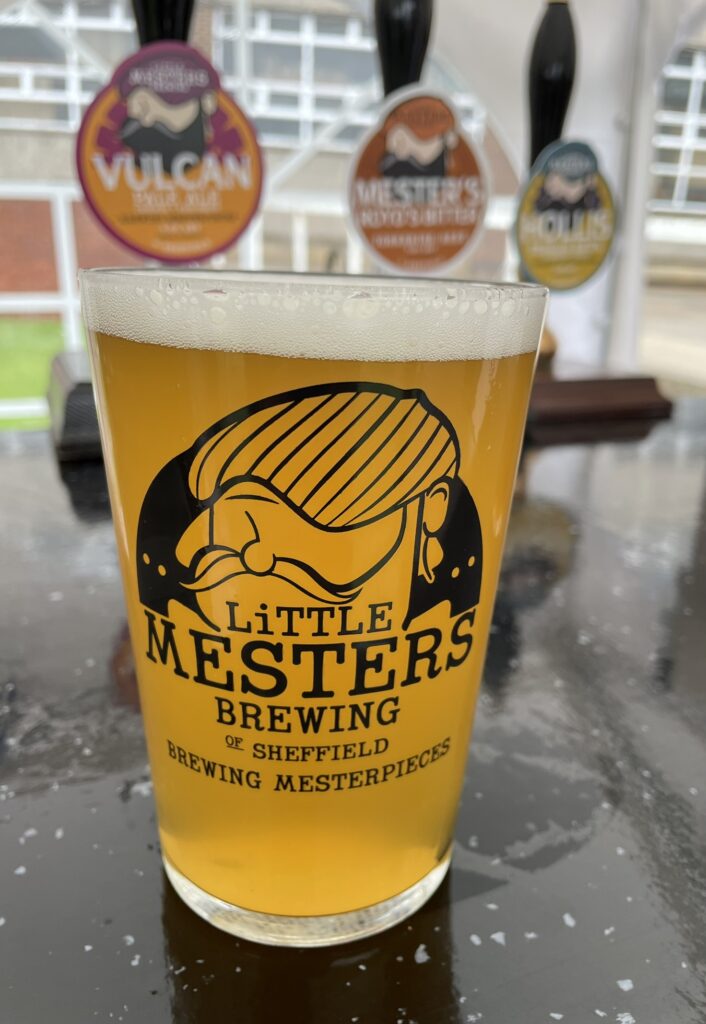
Locally-based Little Mesters have relaunched. They first brewed in 2020 in the premises previously used by Mitchells Hop House (S8 7UJ) and have recently seen investment, expansion and relocation. In 2023, they opened their first bar, the Little Mesters Tap (Woodseats, S8 0SD). Then in late 2024, the brewery moved to Solpro Business Park in Attercliffe (S4 7WB), close to compatriots, St. Mars of the Desert. The relaunch event took place in late September: onion bhajis and samosas were enjoyed, all accompanied by a range of cask/keg beer from the adjacent brewery. In addition, there were several brewery tours.
The new brewery site is on the footprint of the 18th century, Royds Brewery. This large operation later became the Burton Weir Brewery of Thomas Marrian & Co. Ltd. (1850-1904). In Victorian times, Marrian’s were one of the biggest breweries in the area. Their No.2 beer store which held 10,000 barrels, claimed to be the largest cellar in Sheffield. In 1903, brothers F.A. and James Kelley acquired Marrian’s. The brewery was closed with their 66 pubs divided between Whitworth, Son & Nephew Ltd. (Wath Upon Dearne) and Whitmarsh, Watson & Co. Ltd. (South Street Moor, Sheffield). Marrian’s most well-known pub was probably the Bull & Mouth on Waingate (S3 8LB). This was acquired in March 1854 and later became part of the Tap & Spile chain.
By 1937, the Mesters brewery space was part of the Effingham Steelworks and Mills. Last November, the space was a derelict shell. Now, there is a mix of new and relocated brewery kit: including some from both Broadtown Brewery (Swindon) and Lost Industry (Wadsley Bridge, S6 1NA). The latter were in operation from 2015 until last summer.
The five, 1000 litre (6 Bbl.) fermenting vessels allow brewing to take place twice weekly with each brew comprising 40% cask, 40% keg and 20% cans. Two new conical fermenting vessels have just arrived: these will increase capacity.
Head Brewer is Sam Bennett, the driving force behind the highly rated Grizzly Grains Brewery: a one-person operation (2020-24) which produced award-winning beers initially from his house in Walkley then from March 2021, in a 4.5 Bbl. plant in an industrial unit near Bramall Lane. He is assisted by Tom Naylor.
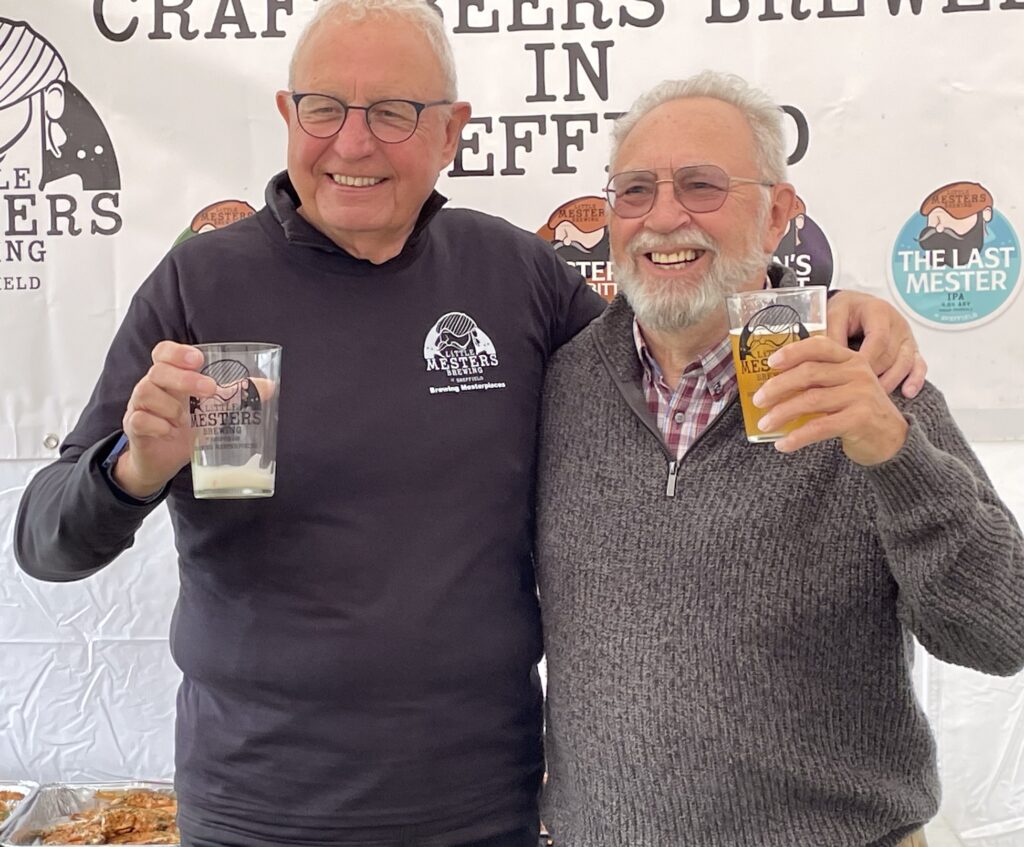
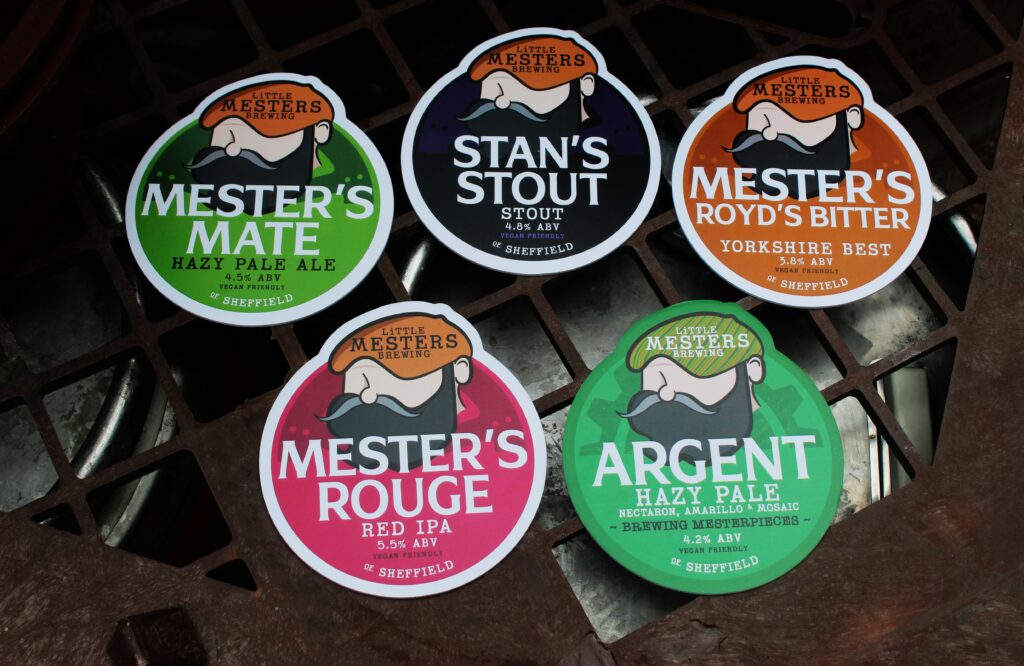
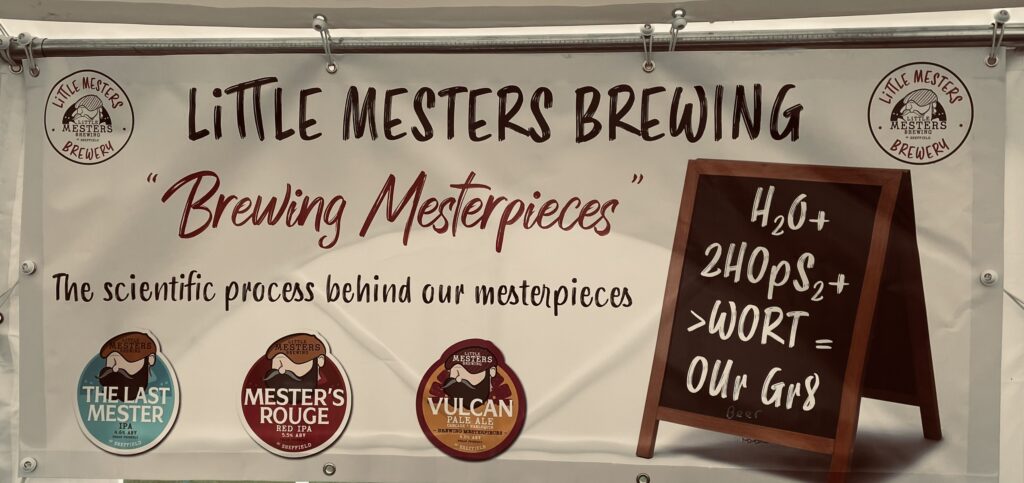
The move and relaunch has brought a rebrand, involving design input from Nick Law (Emmanuales Brewery). The logo has been tweaked but continues to include the ‘Little Mester’ figure which advertises their ‘Mesterly Beers.’ A Little Mester was a self-employed worker who was involved in the cutlery trade: The Last Mester IPA (4.6%) and Stan’s Stout (4.8%) are tributes to the last Little Mester, Stan Shaw (1926-2021). The brewery originally chose their name, to honour those who helped to put Sheffield on the map. The reputation of skilled work and producing quality products, sums up how they feel about making beer.
In addition to the stout, the core beer range includes Mesters Royds Bitter (3.8%), and two hazy pales: Argent (4.2%) and Mesters Mate (4.5%). The red IPA, Mesters Rouge, (5%) is named after a fine polishing paste, Jewellers Rouge, which is used for buffing and shining up high quality knife blades. Made from iron oxide, the paste is dark red in colour. Other beer plans include a Kolsch, lager, a Christmas beer, and a Cherry IPA. As Co-owner, Neil Adgie explains: ‘The idea is to do some beers that aren’t necessarily experimental but to perhaps do things that haven’t been done for a while. We want to do some fruit beers. We’ve got five really big cherry trees on site and we’ve got permission to harvest all of the cherries, so at some point it’s likely we’ll do a Cherry IPA.’
Little Mesters beers are increasing seen across Sheffield and the local area. For example, two of their beers were recently showcased at the Barnsley CAMRA Beer Festival. One of their bigger customers is Sheffield Cathedral events. Neil explains: ‘We supply them with cans and kegs for all of the events they have in the cathedral, so they sell lots of beer.’ The brewery has also been involved with Sheffield Home of Football (SHoF), providing canned beers for their events. This charity promotes Sheffield as the home of modern-day football. Little Mesters are currently on the up: we wish them luck with their relaunch as the brewery continues to grow and develop.
Our chosen charity for SCBF49 is Sheffield Children’s Hospital Charity. The charity works together with the hospital, to ensure that children and young people can receive the very best care, in the best possible environment.
The money raised through donations buys life-saving equipment, funds vital research and treatment for thousands of children from across the world and helps us create a comfortable, engaging environments for our patients at Sheffield Children’s Hospital.
Please support this vital local charity: all donations, including glass deposits and unused beer tokens, are gratefully received. Our past charities have included Burton Street Foundation, Roundabout and Yorkshire Air Ambulance. Last year we raised £2700 for Weston Park Cancer Charity. It would be great if we could raise a similar figure this year.
The 49thSheffield Steel City Beer and Cider Festival (SCBF49) will be opened by local legend, Jon McClure, lead singer of the Sheffield-based band, Reverend & The Makers. Their 2007 debut album, “The State of Things”, helped them gain success in Britain and spawned the UK top 10 single “Heavyweight Champion of the World”.
The band are currently celebrating their 20th year, with a new line-up and a series of festival gigs. Their latest single, ‘Haircut,‘ features vocals from actor Vicky McClure (Line of Duty, This Is England, Broadchurch). After a recent appearance on BBC’s The One Show, it went to number one on the iTunes download chart. The track is taken from the band’s eighth album, “Is This How Happiness Feels?“
Last year the festival was opened by South Yorkshire firefighter Brontë Jones, runner-up in the BBC’s 2024 Gladiators series. 2023 saw local BBC Radio Sheffield presenter, Paulette Edwards, do the honours.
The festival will take place at Kelham Island Industrial Museum, 15-18 October.
The third booklet in our pub heritage walk series is now available. This concentrates on Neepsend, the ‘new Kelham Island.’ Included are copious images, a map, detail on the various pubs featured and lots of information on the area and its history, including a timeline.
The formal launch will be at the forthcoming Sheffield Steel City Beer Festival (15-18 October 2025). The first booklet which was produced for the 2023 CAMRA Members’ Weekend, AGM and Conference is sold out and there are relatively few copies left of the second booklet: Little Chicago. The pub heritage walk series will continue with Kelham Island in 2026 and Riverside in 2027.
In common with the preceding two booklets, it is: 32 pages, A5, full colour throughout, £2.99 rrp and had a print-run of 1000 copies. It is currently available from several local stockists, including: Abbeydale Brewery, Beer Central, Biblioteka, Bradfield Brewery, The Crow, Draughtsman (Doncaster Railway Station), Famous Sheffield Shop, Forest, Gardeners Rest, Hop Hideout, Kelham Island Books and Records, Millennium Galleries, Pangolin, Rhyme and Reason and St.Mars of the Desert.