Dave has been a CAMRA member since the 1970s and has worked at almost 40 Sheffield CAMRA festivals, plus a fair number of others. He is Brewery Liaison Officer (BLO) for Abbeydale, Blue Bee, Bradfield and Loxley. He was also the Chair of the Local Organising Committee for the 2023 national CAMRA Members’ Weekend, AGM & Conference.
A member of the National Pub Heritage Group, he leads on planning and pub heritage issues. He also edited the Sheffield's Real Heritage Pubs book, for which downloads vastly exceeded expectations. The hard copy was available in October 2018 and again in 2021. On both occasions, it was a sell-out. The 5th edition (2023) is available as both a hard copy and a free download.
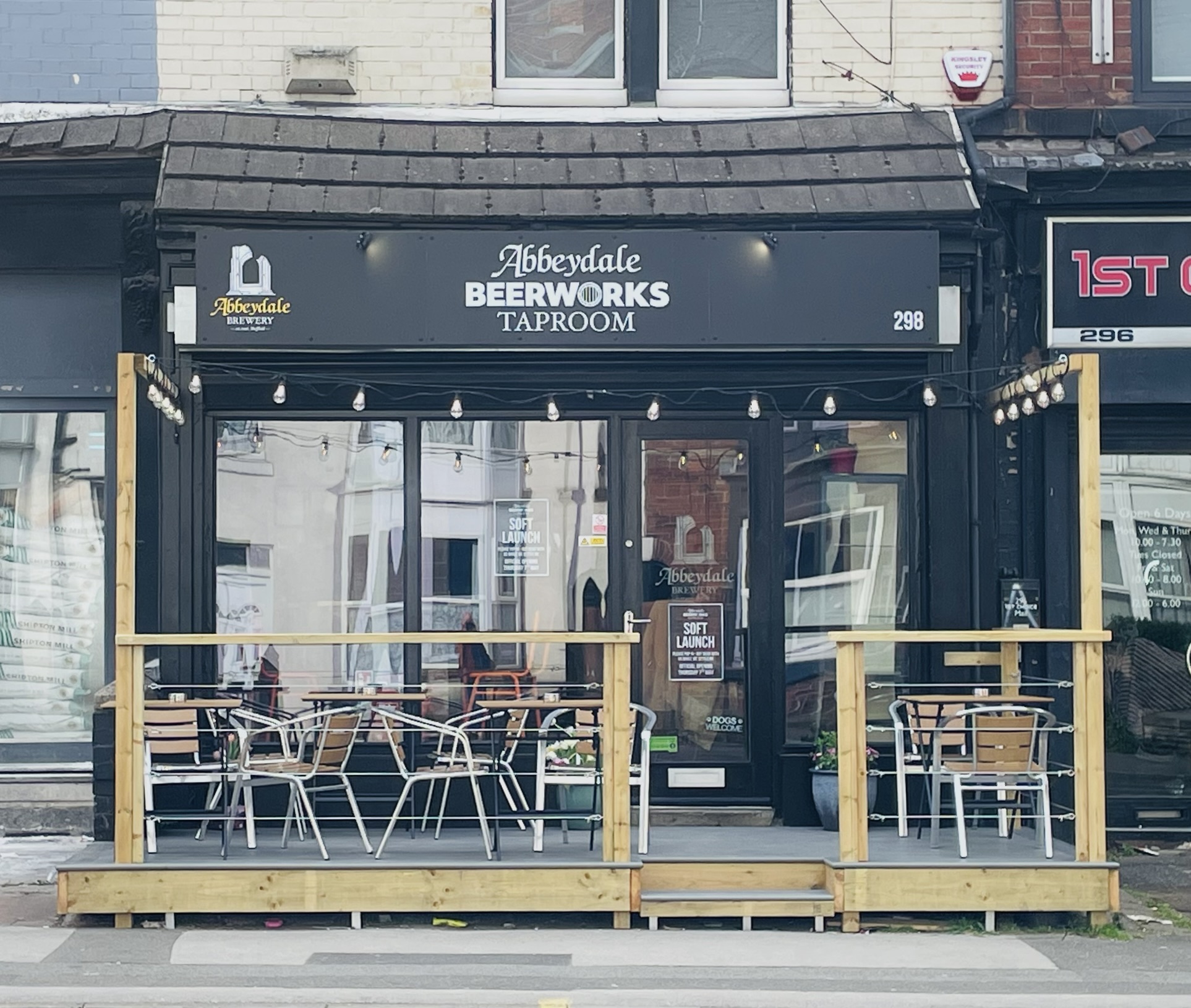
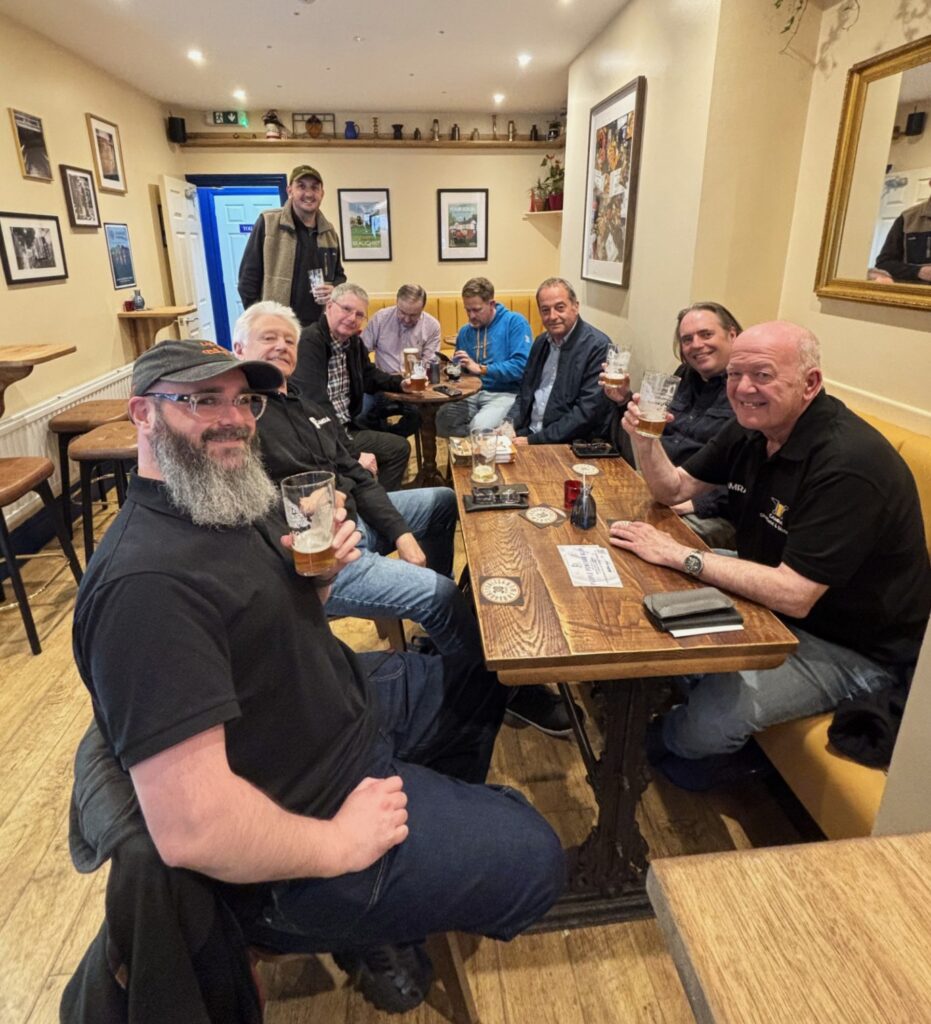
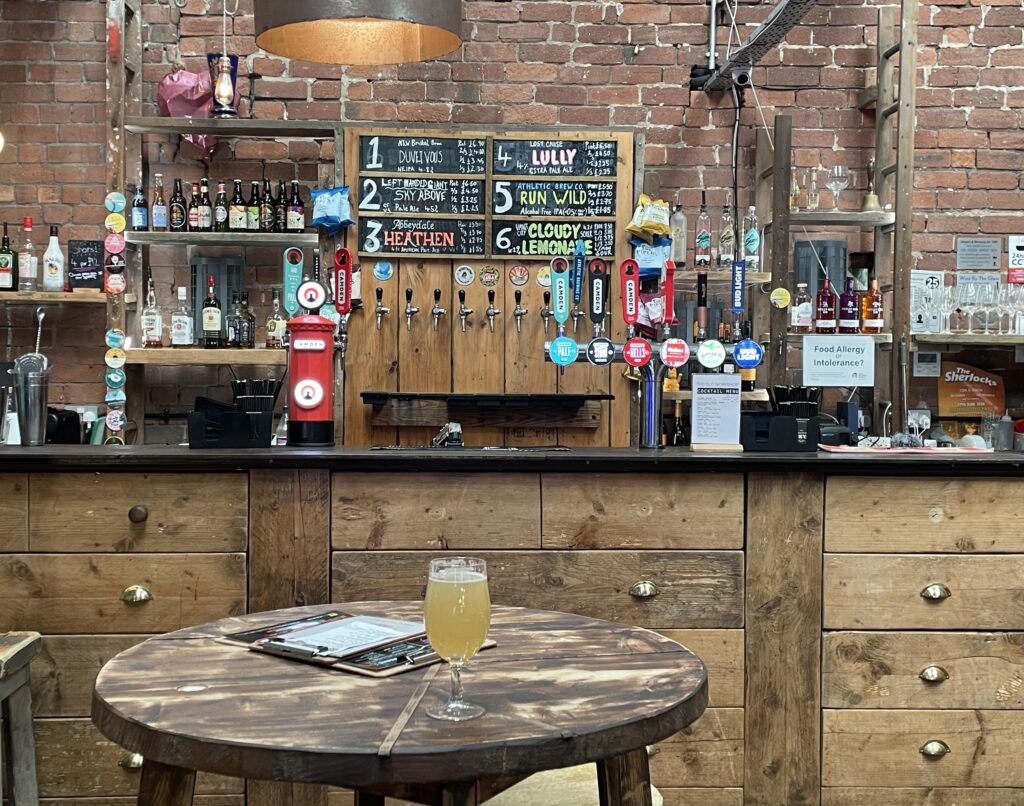
In early May, employee-owned Abbeydale, the oldest brewery in Sheffield, opened Abbeydale Beerworks, their long-awaited tap, a mere 200 paces from the brewery. Using the same space as the ex-Turners Bottle & Tap (Abbeydale Road, S7 1FL), covered outside seating leads you into a cosy space. The bar is on your left, with seating on the right and to the rear. Decor includes brewery-inspired imagery on the walls and a selection of trinkets, many obtained locally or from the brewery.
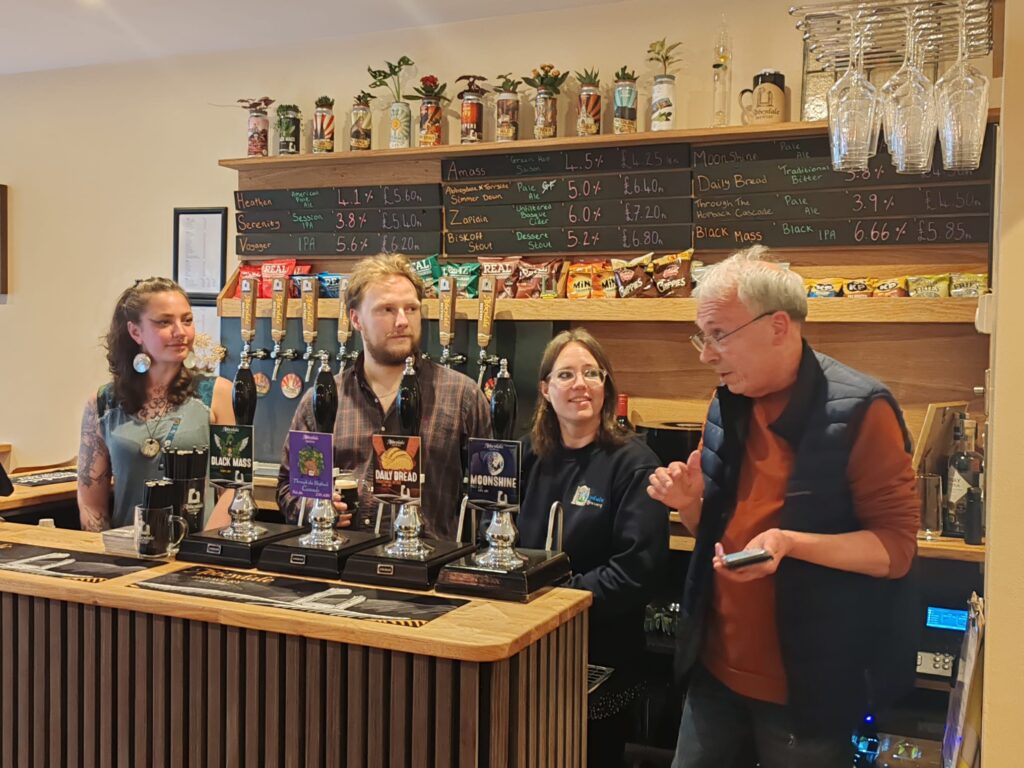
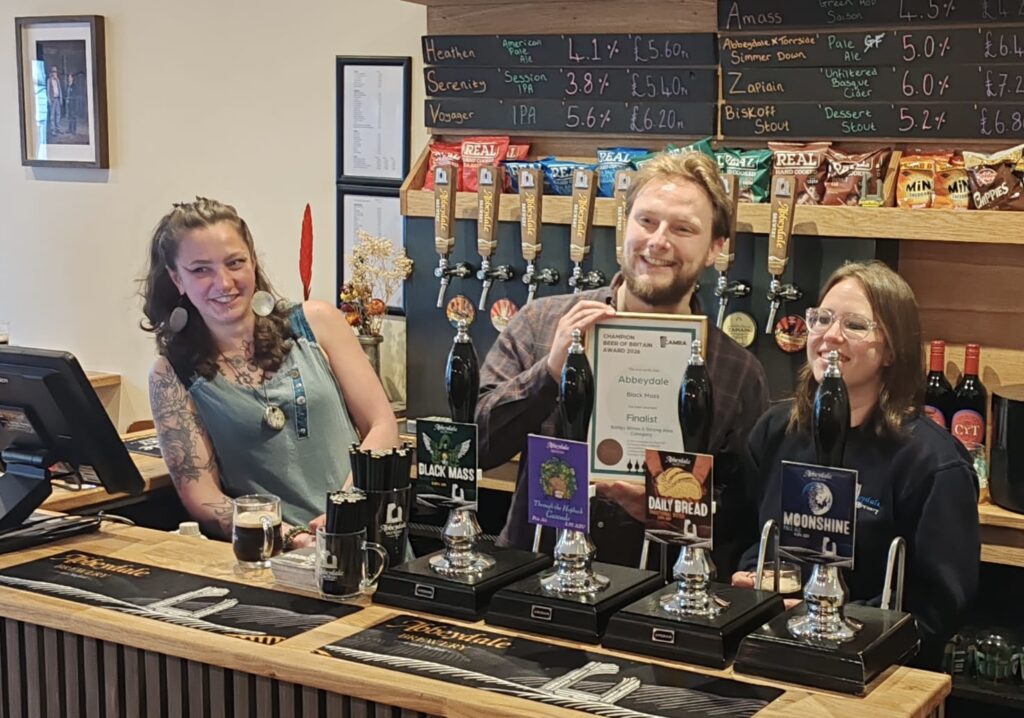
Beer-wise, there are four cask beers from Abbeydale and six keg selections. Opening night saw the permanent cask, Moonshine, joined by Black Mass, Daily Bread and Through the Hopback Cascade.
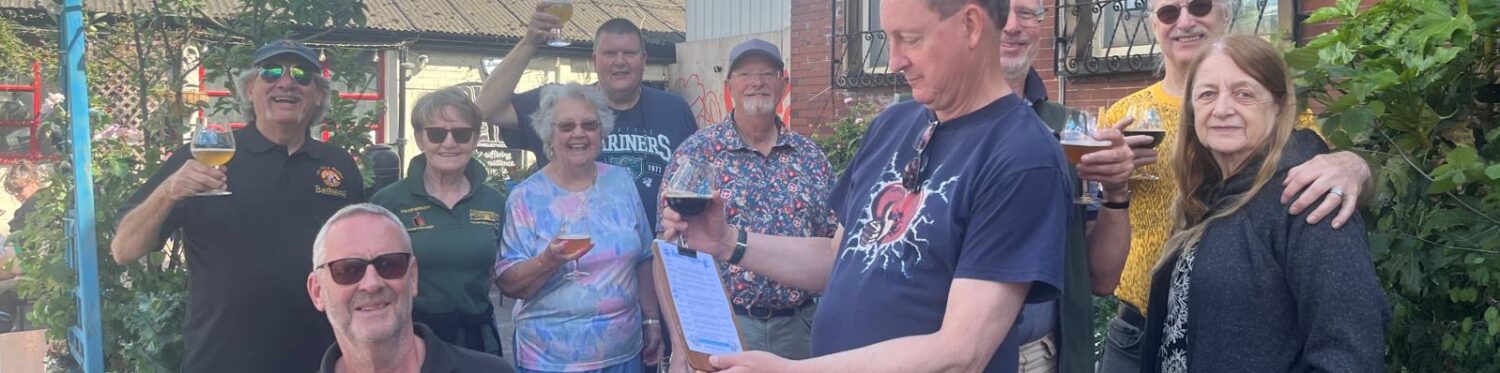
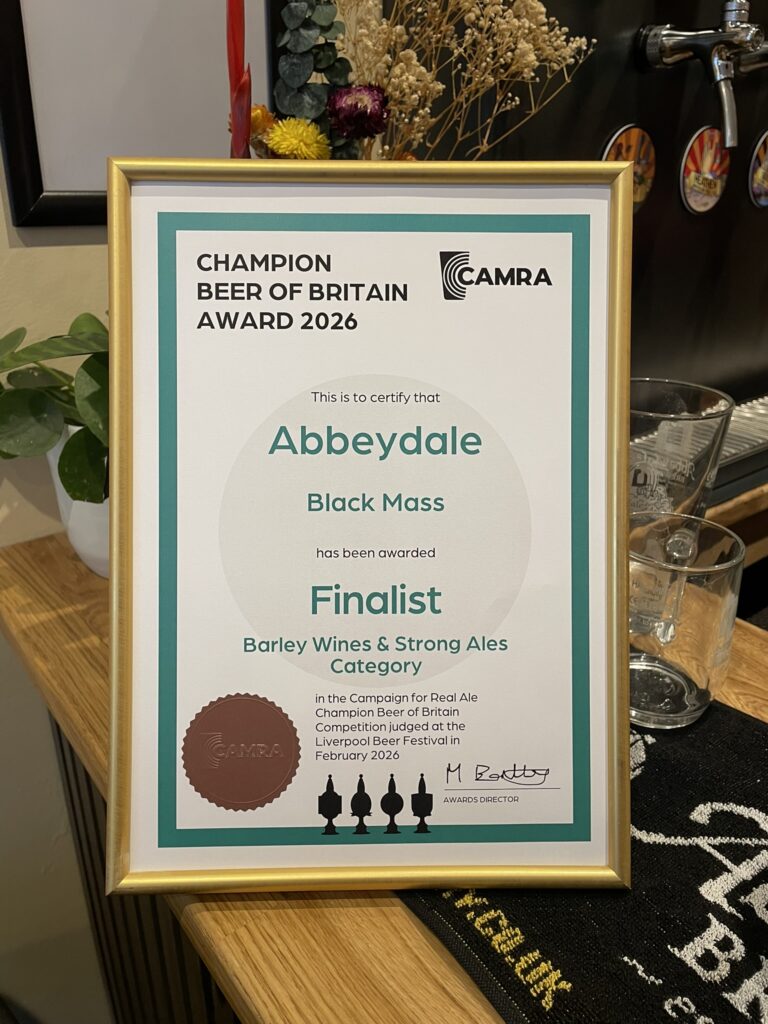
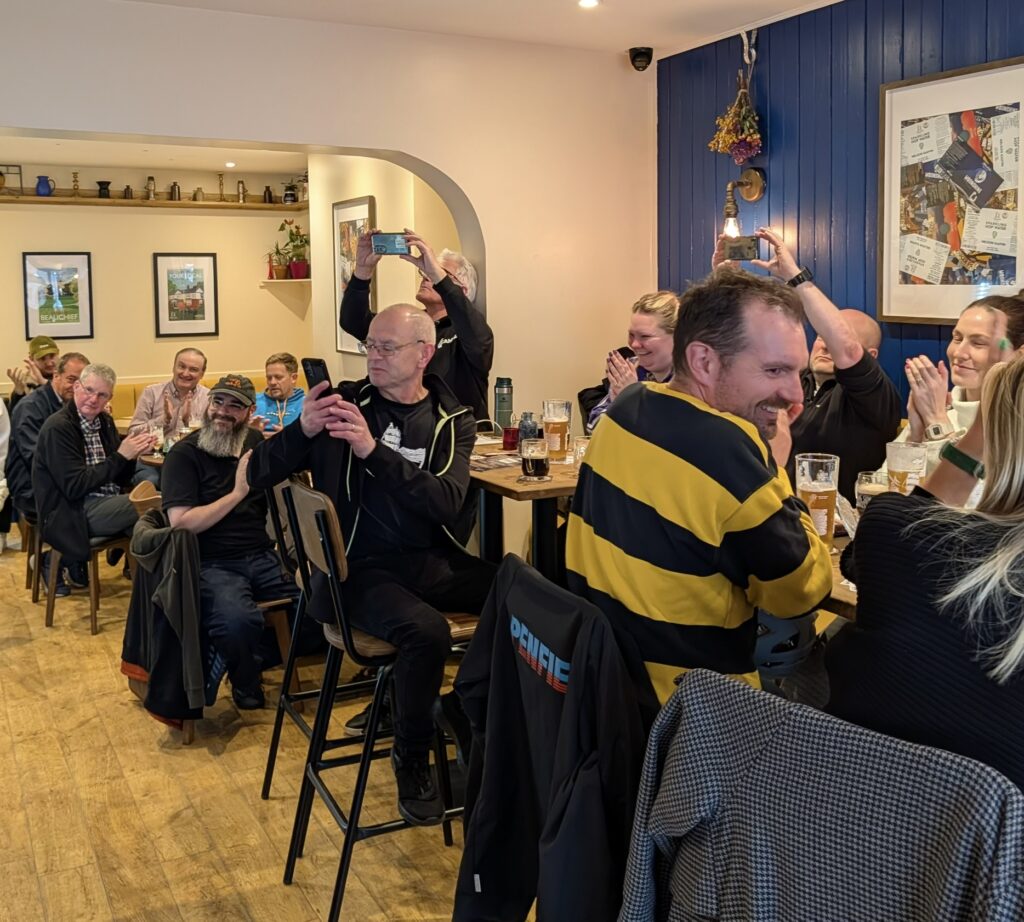
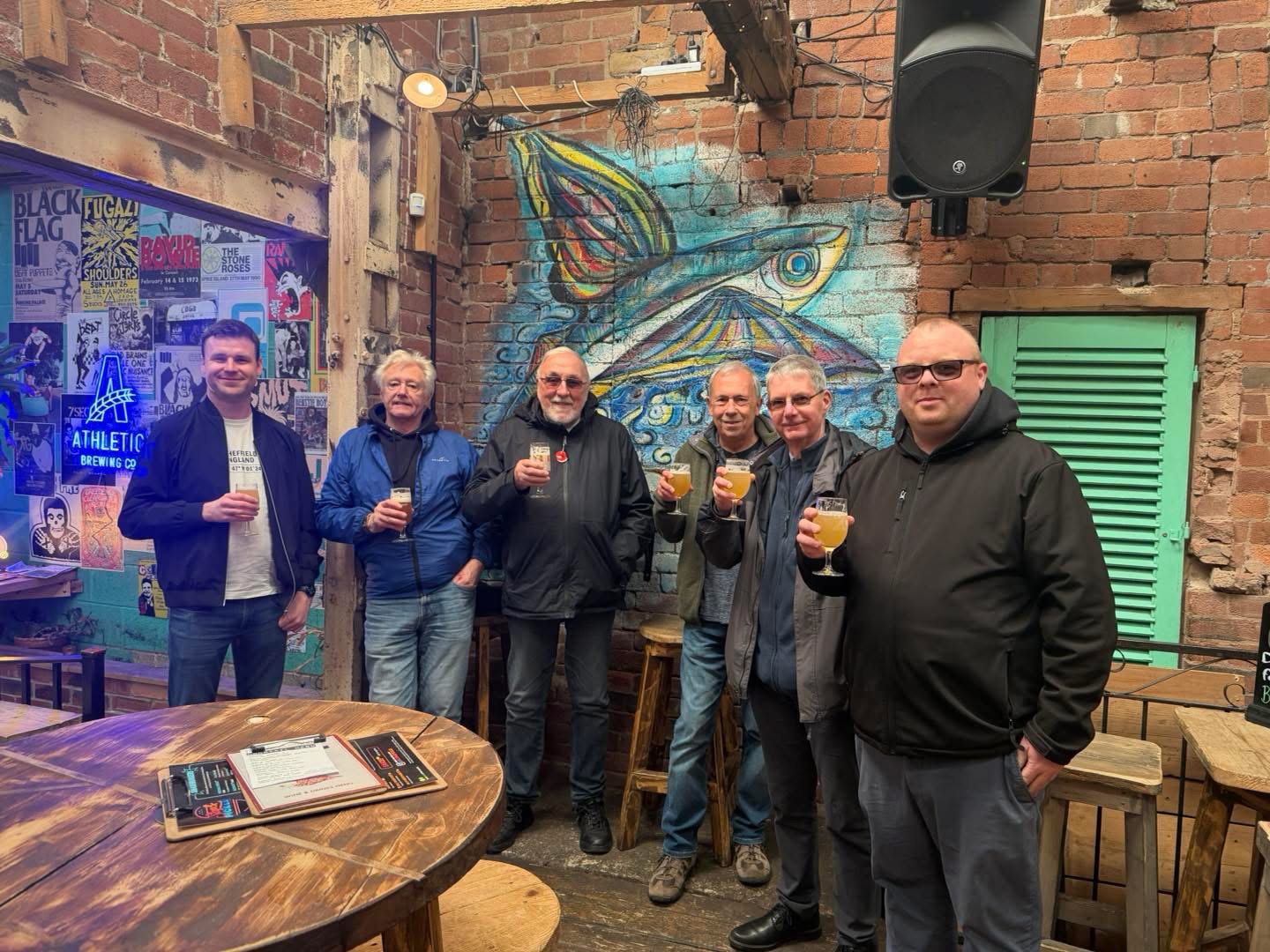
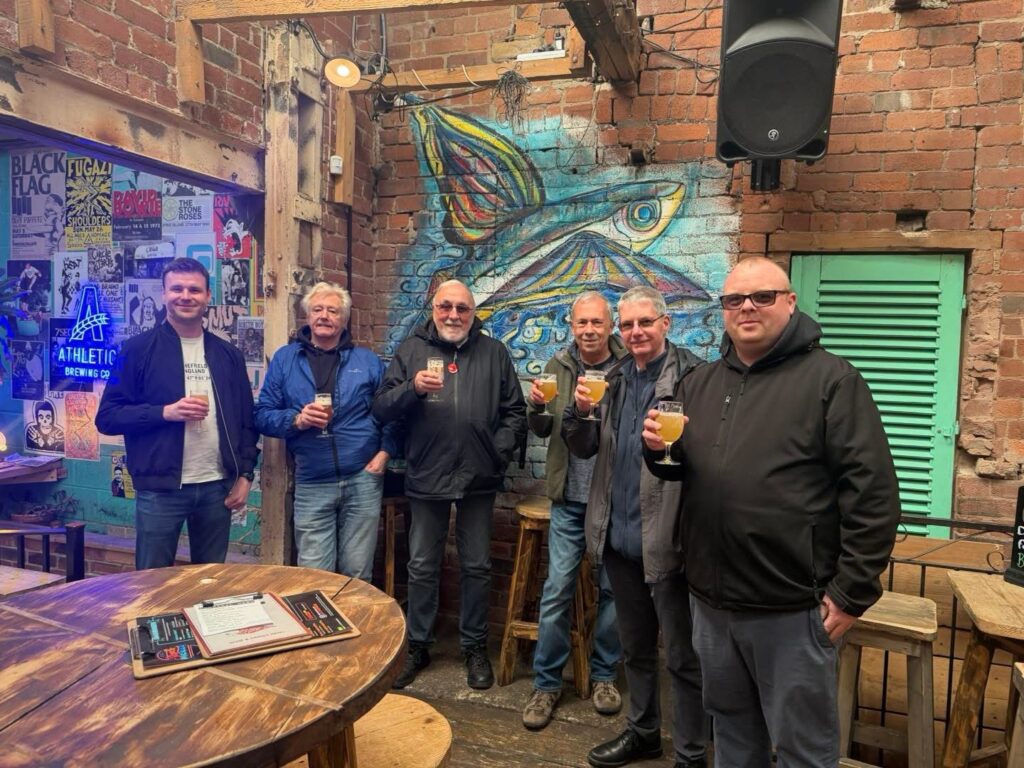
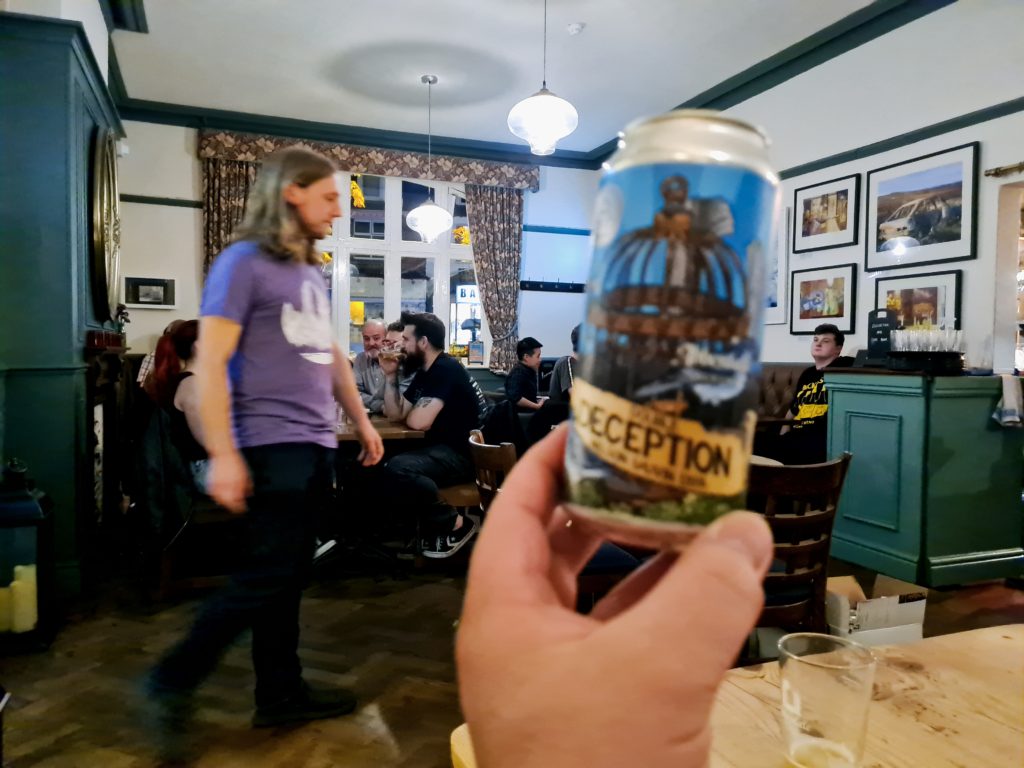
On preview evening, the first award presentation at this new venue was made – no doubt, the first of many. The certificate, for a finalist in the Barley Wines & Strong Ales category in the CAMRA Champion Beer of Britain Award 2026 was for one of the Abbeydale core beers: Black Mass.
This was first brewed almost 30 years ago, on 6 November 1996. The 26th brew from the then new brewery was developed from a beer which the co-founder of Abbeydale, Pat Morton, had previously brewed: Kelham Island Brewery Bête Noire, a 5.5% stout.
Over time, the recipe for Black Mass has evolved. The first brew was single hopped with Cascade, and had oats and mixed cereals in the grist. The malt bill remains complex, currently featuring crystal malt, both chocolate and pale chocolate malts, black malt, and roasted barley.
Some say Black Mass is a stout, others say it’s a well-hopped dark beer: suffice to say Black Mass was one the first black IPAs. It has an IBU of over 150. IBU (International Bitterness Units) is a measure of the bitterness of beer based on the amount of bittering compounds from hops, the iso-alpha acids. The scale typically ranges from 0 to 100, with higher values indicating a more bitter taste. For example, a Pilsner would be 15-30 and a West Coast IPA would be 50-70. With an IBU of over 150, there are a lot of hops in Black Mass: Columbus, Cascade, and Green Bullet. Rich and smooth on the palate, with flavours reminiscent of bitter chocolate, fruitcake and raisins, and aromas of coffee, dark chocolate, and just a hint of burnt toast: it’s classic and familiar yet also unique and boundary defying.
It is also the only beer listed in the CAMRA Good Beer Guide with an ABV to two decimal places: 6.66%.
Black Mass is one of Abbeydale’s many multi-award winning beers. It also recently won a major Society of Independent Brewers and Associates (SIBA) award: Gold in the Bottle/Can Speciality IPA category at their flagship BeerX UK event in Liverpool, the Indie Beer Awards 2026. This is an indication of it’s quality, and yet another acknowledgment of the outstanding beers produced by Team Abbeydale. We wish them well with Abbeydale Beerworks.
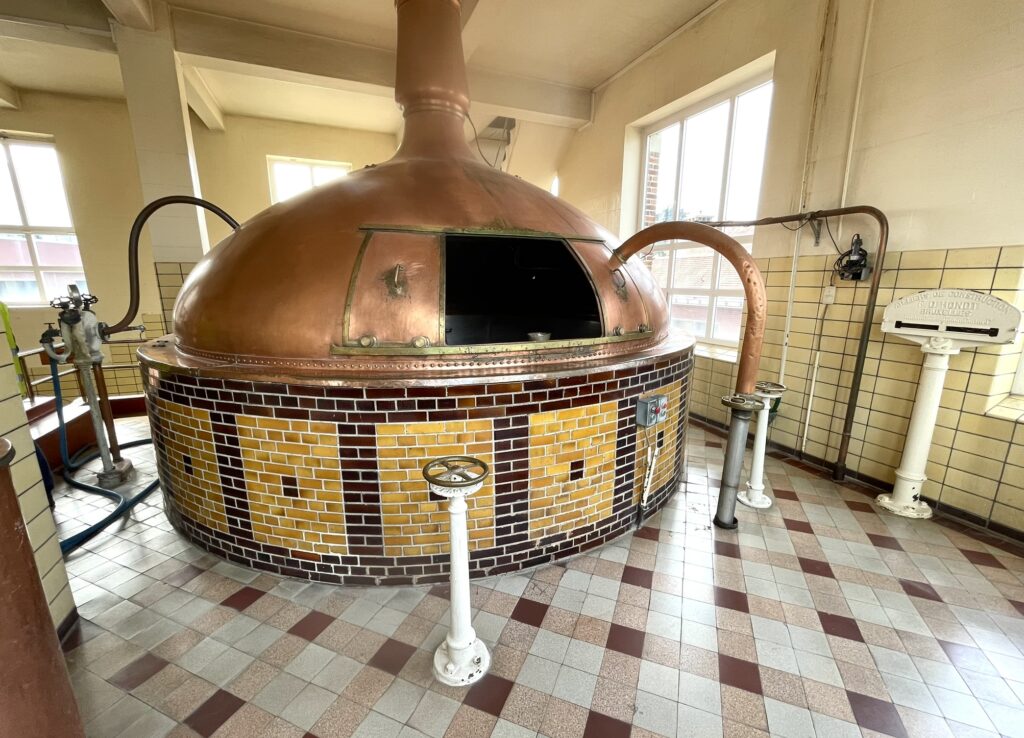
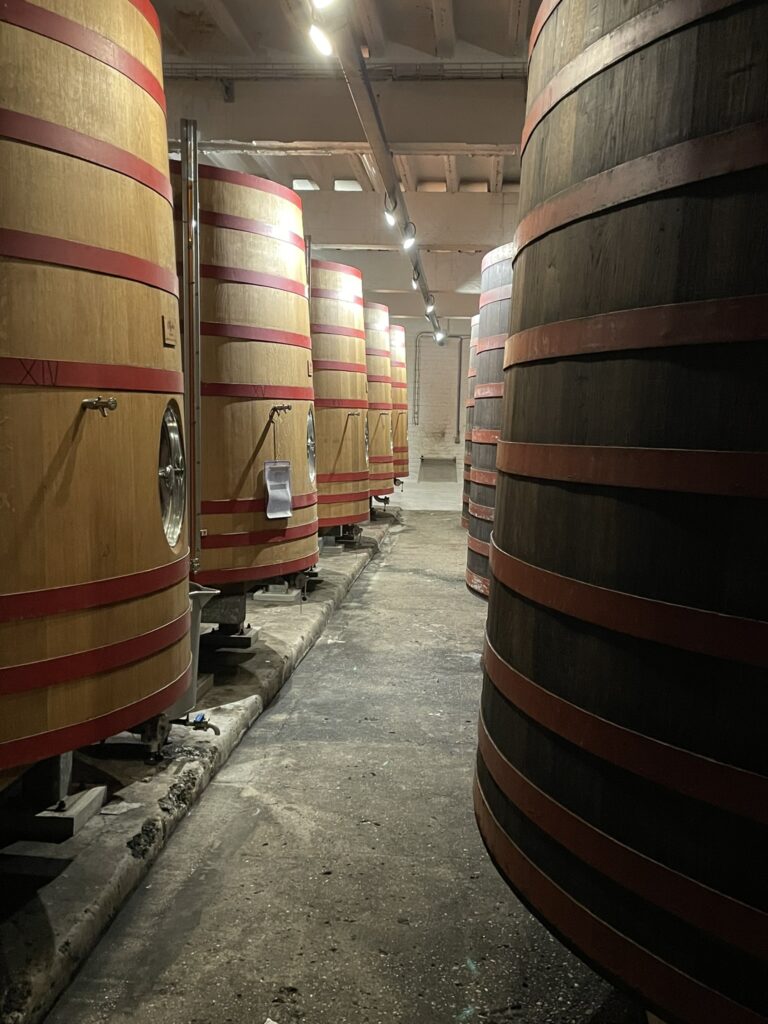
Recently, I was fortunate enough to visit several breweries and taprooms in Belgium. These included several of great age and others of a more recent vintage.
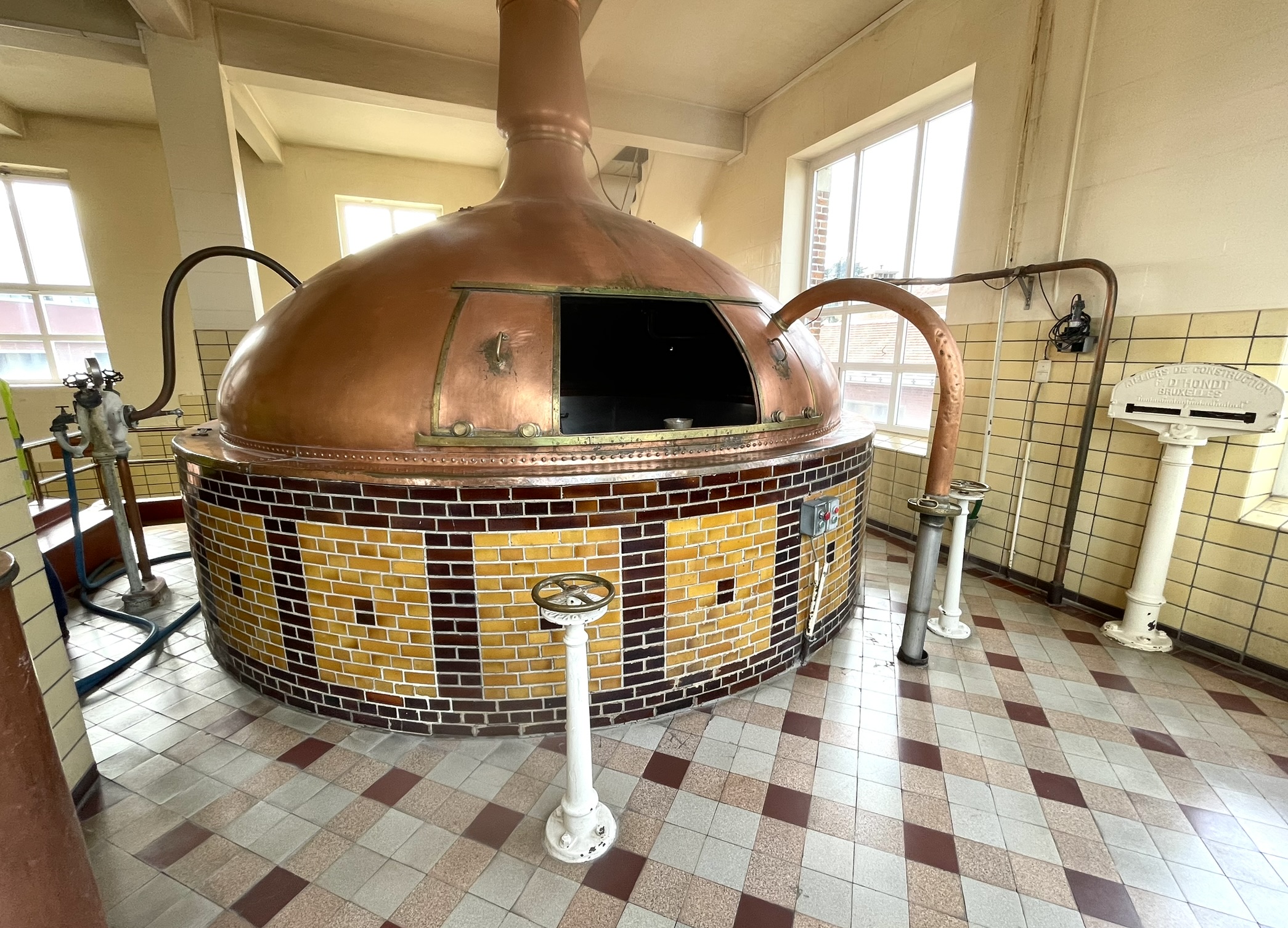
Roman (Oudenaarde) showed both their now decommissioned coppers and their new shiny brewery. The brewery dates to 1545, and founder Joos Roman: a bailiff who sold beer at an inn on the main trading route from Germany to France. The current management are the 14th generation, brothers Carlo and Lode Roman.
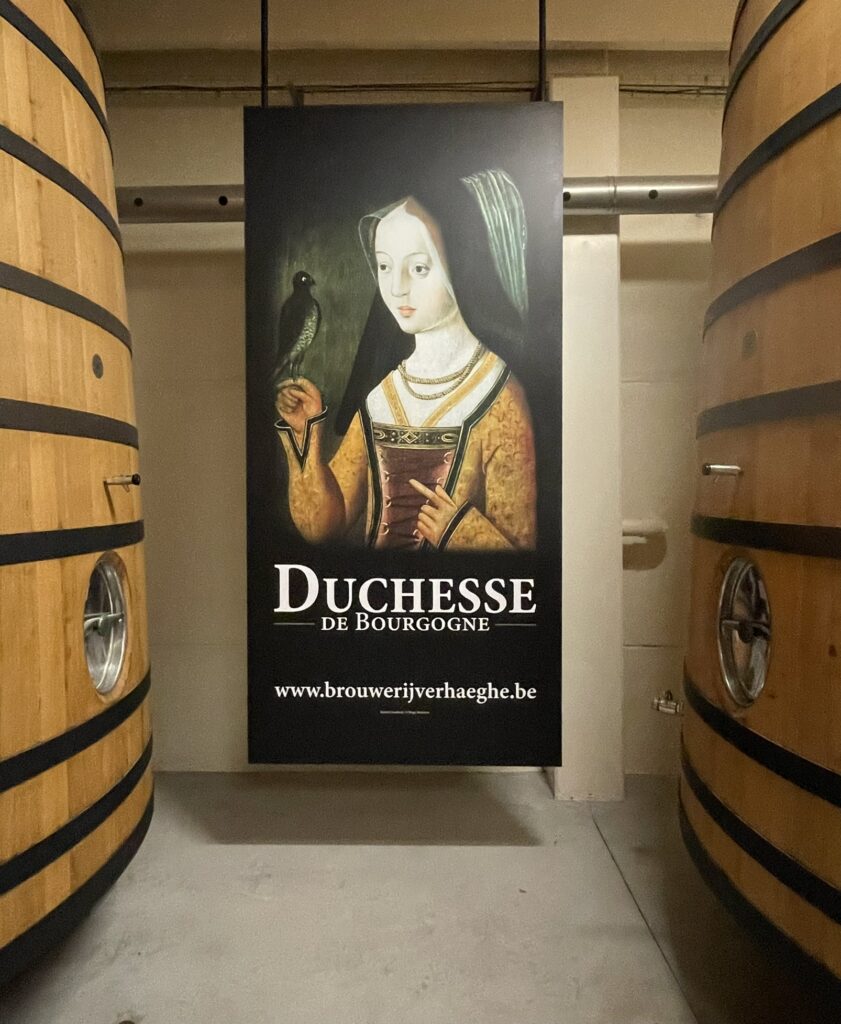
Founded over three centuries later (1875), Verhagne (Vichte) was visited on a Sunday morning: 90% of their production is the ruby-red, Duchess be Bourgogne (6.2%)
Silly Brewery in the town of Silly is one of the smaller members of the Belgian Family Brewers Association. The brewery began in 1852 in a farm bought by Marcellin Meynsbrughen and was called Meynsbrughen Brewery until 1973. They now have a handsome town-centre site with views over France. Their logo is an agricultural worker with a scythe in one hand and a beer in the other. Their most well-known beers are Silly Saison (5%), Silly Scotch (8%), and the Enghien range.
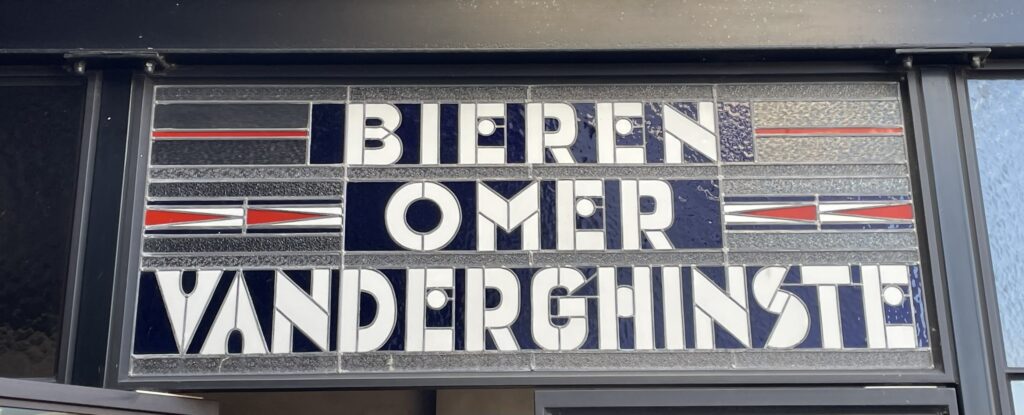
Omer Vander Ghinste began in 1892 when Remi Vander Ghinste bought a house with brewery buildings in Bellegem for his son Omer. The family were careful with their spending as Marguerite named her son, born in 1901, “Omer” for practical reasons, so expensive bar, and brewery windows would not have to be replaced. This was the beginning of a family tradition. The latest Omer Vander Ghinste has been in charge since 1993. Their most well-known beers are Omer Blond (8%) and VanderGhinste Roodbruin (5.5%), a Flemish Red Brown.
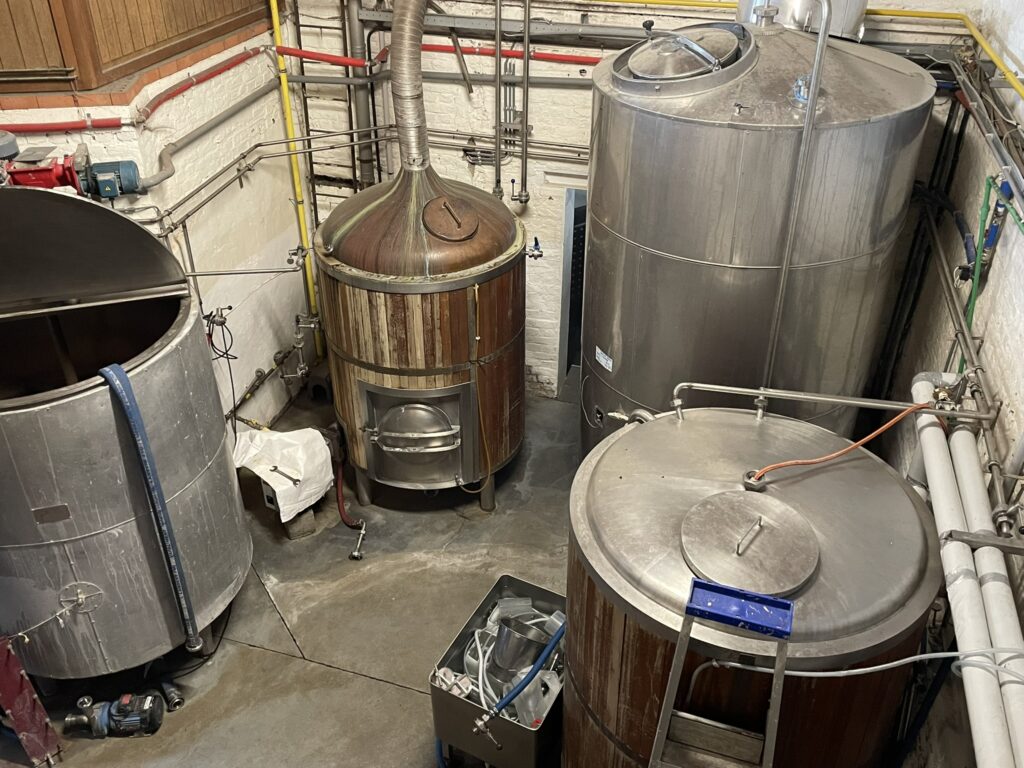
Brasserie Cazeau (Templeuve) is heir to a legacy name, the current brewery dating from 1995. It is a real mix of the old and the new, including a wood-panelled copper, lots of stairs and many ‘interesting’ sets of pipework. About 70% of production is secondary fermented in the bottle. Beers include the Tournay range, including Blonde (6.5%), Noire (7.6%), Saison (5%), Noel (8.2%), and Triple (9.4%). We were also provided with a sample of Tourney Hop Harvest 2025 (4%) straight from the fermenting vessel. A year earlier, Brasserie ‘t Gaverhopke, an ancient farm, commenced brewing. All beers are unfiltered and refermented in the bottle.
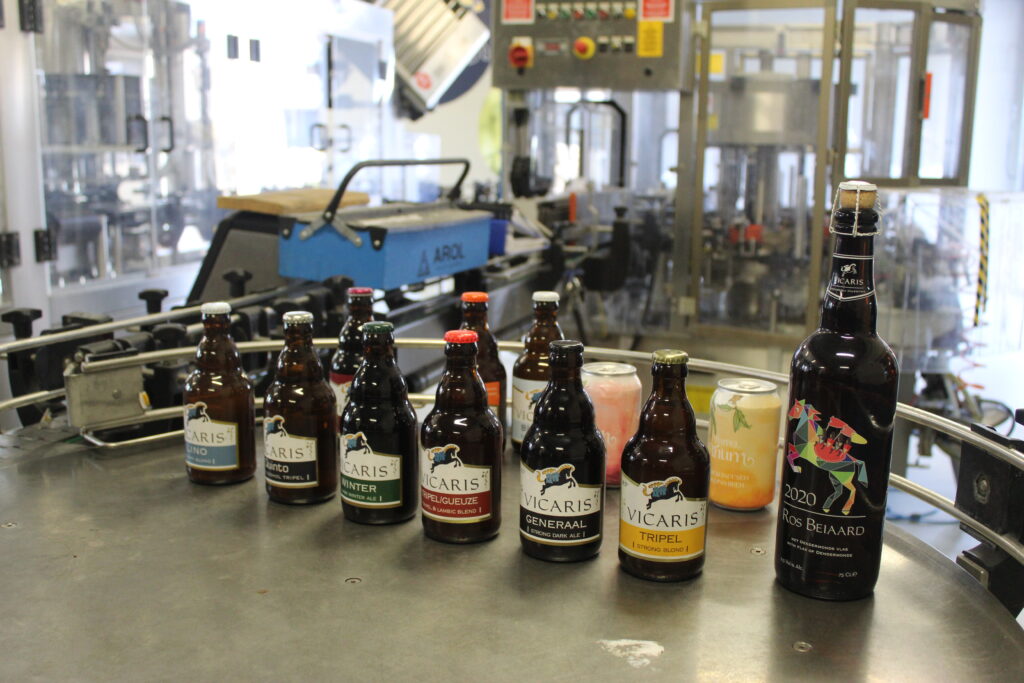
Vicaris Brewery (Dendermonde) was founded by dental engineer Vincent Dilewyns who began brewing at home in 2000 and produced a lovely Tripel. It was never the intention to go commercial, but after success at a local event the leftover crates were sold to locals and some ended up at the 2006 national Zythos Beer Festival. The current brewery opened in 2021. Their beers are unpasteurised and unfiltered and include: Vicaris NANOo, one of the best Belgian zero-alcohol beers.
Established in 2005, De Ranke (Dottignes) also produces unpasteurised and unfiltered beers, utilising whole hops in a traditional gravity-led set-up. Brewing to sale for their heavily hopped high IBU beers (40-70) takes between 8 and 20 weeks. Their most well-known beer is XX Bitter (6%).
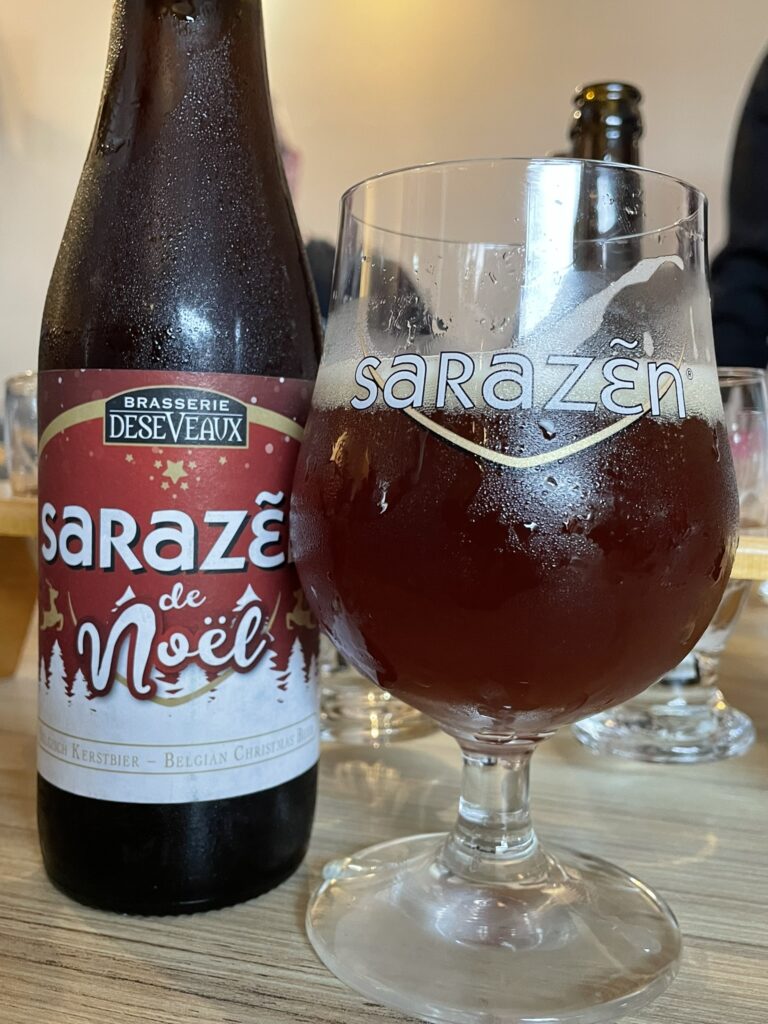
Deseveaux (Bossu) were set up in 2011. Production on the old family farm commencing in 2014. They specialise in brewing with buckwheat and spelt in conjunction with malted barley and wheat. 35% of production is organic. Mostly Belgian hops are used including some grown on-site (Cascade, Goldings, and Phoenix). Water, from their well, is treated before use. Their most well-known beers are the Abbaye de Saint-Ghislain and Sarazen ranges.
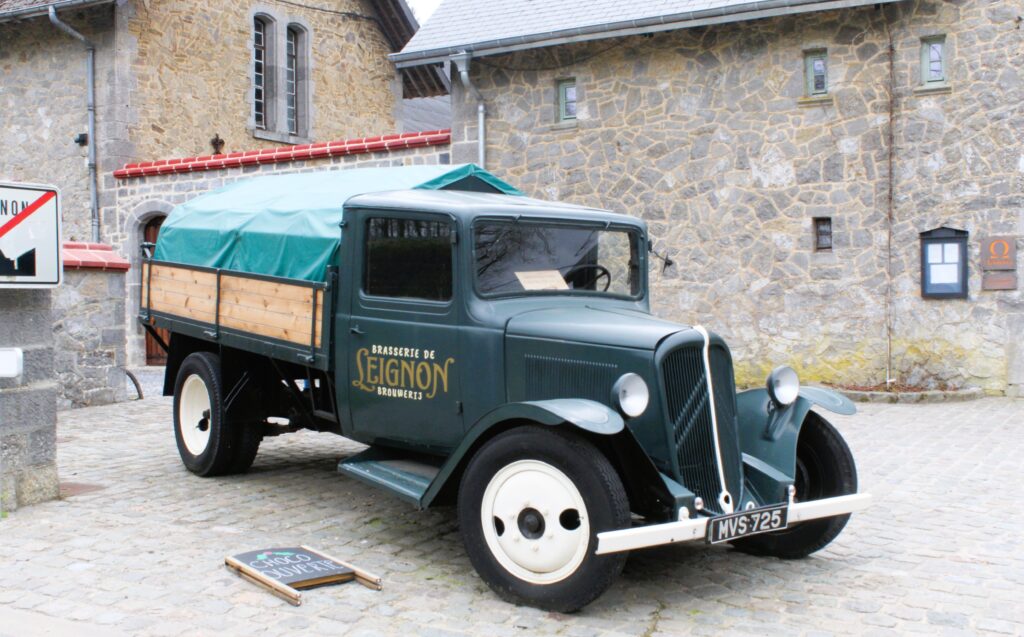
Chateau de Leigonon (Ciney) opened in 2024 as part of a larger complex in an ex-farm on the estate. Belgian Process Solutions installed the extensive kit. They currently brew 3-4 times/month. Beers include Ambree (5%), IPA (5.5%), and Imperial Solstice (8.1%).
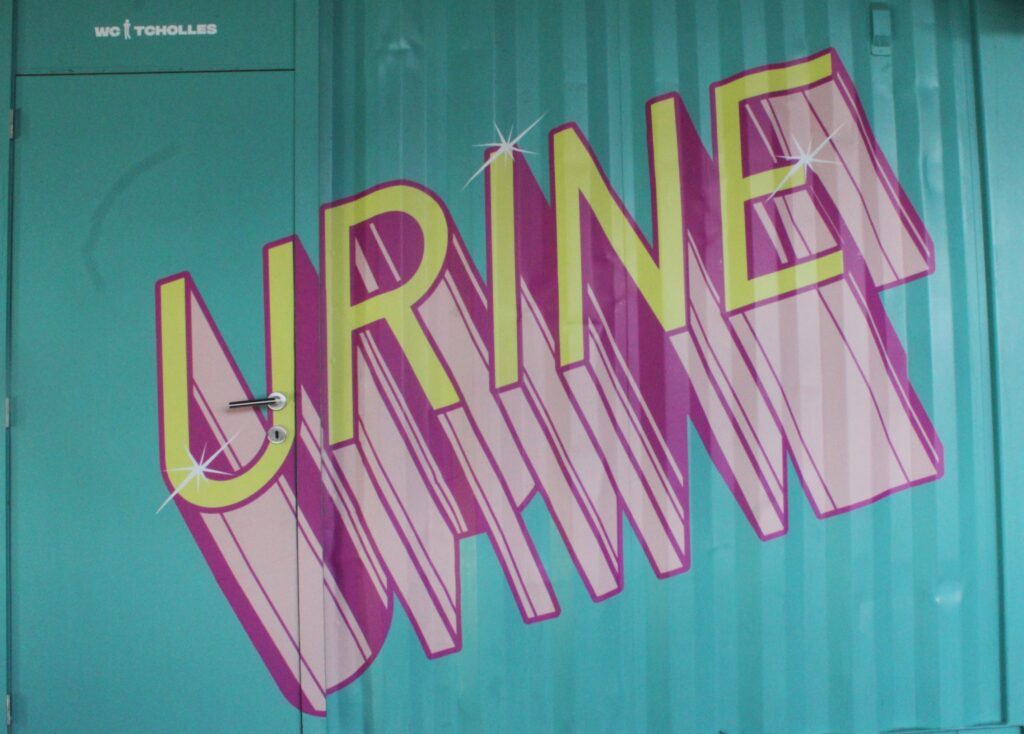
Along the way, several visits were made to brewery taprooms. These included the Duvel-Moorgat Maredsous Monastery microbrewery and bar, the Taproom Brouwerij de Brabandere Brewery (Harelbeke, opened in 2025) and the Trolls & Bush Beer Restaurant and Brewery Tap for Dubuisson Brewery in Pipaix. The Borinage Brewery Tap (Boussu) provided the oddest beer name: Urine Double IPA (7%).
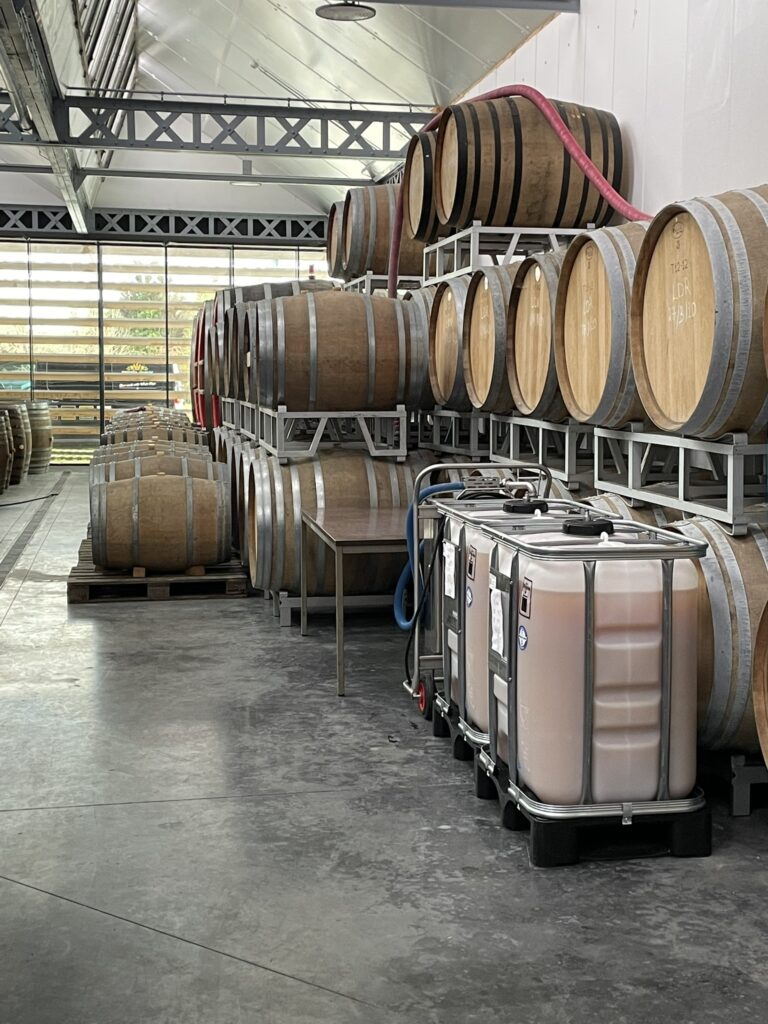
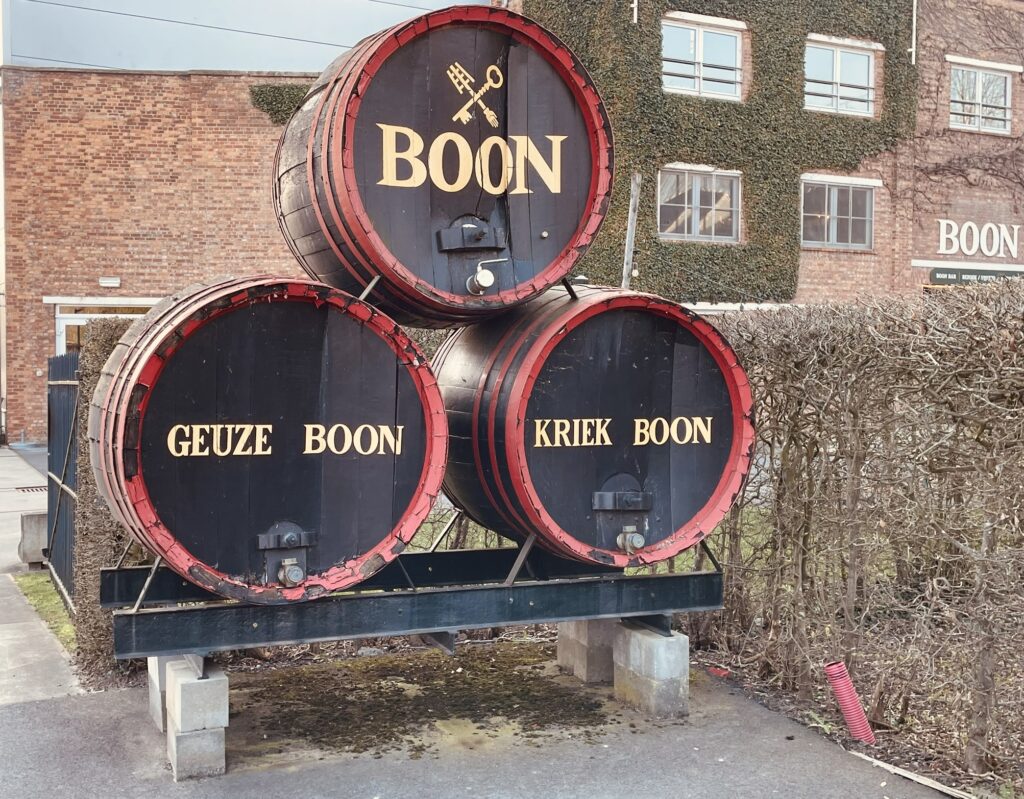
At the Boon Tap Room (Lambeek), Frank, the man who brought lambic back from the dead, appeared behind the bar, then joined us at our table: suffice to say his knowledge regarding foeders, sour beers and barrel aging is unsurpassed. Boon now has the world’s largest stock of lambic beer in oak barrels, 2.1 million litres. Frank retired in 2021 and his two sons now run the brewery.
Across the country are an increasing number of high-quality low alcohol beers. For example, Ramon (in a can, 0.3%) was “Beer of the Year” at the 2025 London Beer Competition. It is brewed using a specially selected yeast that minimises alcohol production while unlocking aromatic, hop-flavours.
Thanks to Podge Beer Tours and Wakefield CAMRA for arranging the two trips which included these, and several other, visits.
Thanks to Micropub Adventures (Scott Sinclair) and Sheffield with Pubs (Niall Green), for joining several of us on a recent guided Pub Heritage walk. We took the Neepsend route (as in our walk-booklet) before going, via the New Barrack, into Hillsborough. The booklet is available from our website with paper copies obtainable at several local outlets.
We were very impressed by both the range and quality of the available beers, but also, by the many bar-staff we encounted – polite, professional and enthusiastic: an excellent advertisement for the city. Thanks for looking after us.
Neepsend pubs visited were: Church – Temple of Fun, The Old Workshop, Alder, Forest, Heist Brew Co. and the Gardeners Rest. We also passed the ruins of both Stones Cannon and Deardens High House Breweries. In addition, I played bar billiards for the first time in about twenty years, and managed to rack up over 1000 points. In all, an excellent afternoon.
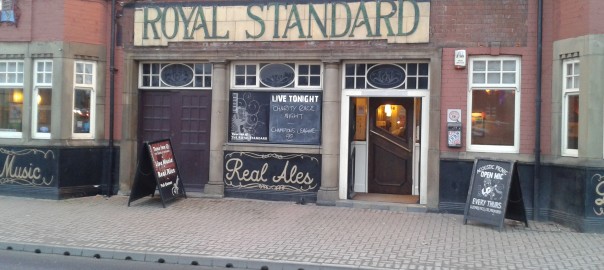
Sheffield City Council have ruled regarding the recent retrospective planning application (25/030409/FUL) for the Royal Standard: Refuse with Enforcement Action.
‘The Local Planning Authority (LPA) consider that the impact of the works, principally the introduction of inappropriate windows and works to the entrance including the loss of historic fabric have a detrimental impact on the character and architectural and cultural heritage of the building which is a non-designated heritage asset. No clear justification for alterations has been put forward. The building could have been brought back into use in a manner that respected the character and history of the building. It is considered that the proposal is unacceptable and harms the character of the building itself and the immediate locality being contrary to paragraph 135 and 216 of the NPPF and policies BE5 and IB9 of the Unitary Development Plan and Policy CS74 of the Core Strategy.’
The current owners of the building made many alterations to this 19th century public house, without obtaining planning permission. Their retrospective planning application has been refused.
The Planning Officers Report states that: ‘It is therefore expedient to require removal of unauthorised works with a remedial scheme to be provided by the developer and agreed with the Local Planning Authority to reinstate the original building fabric.’
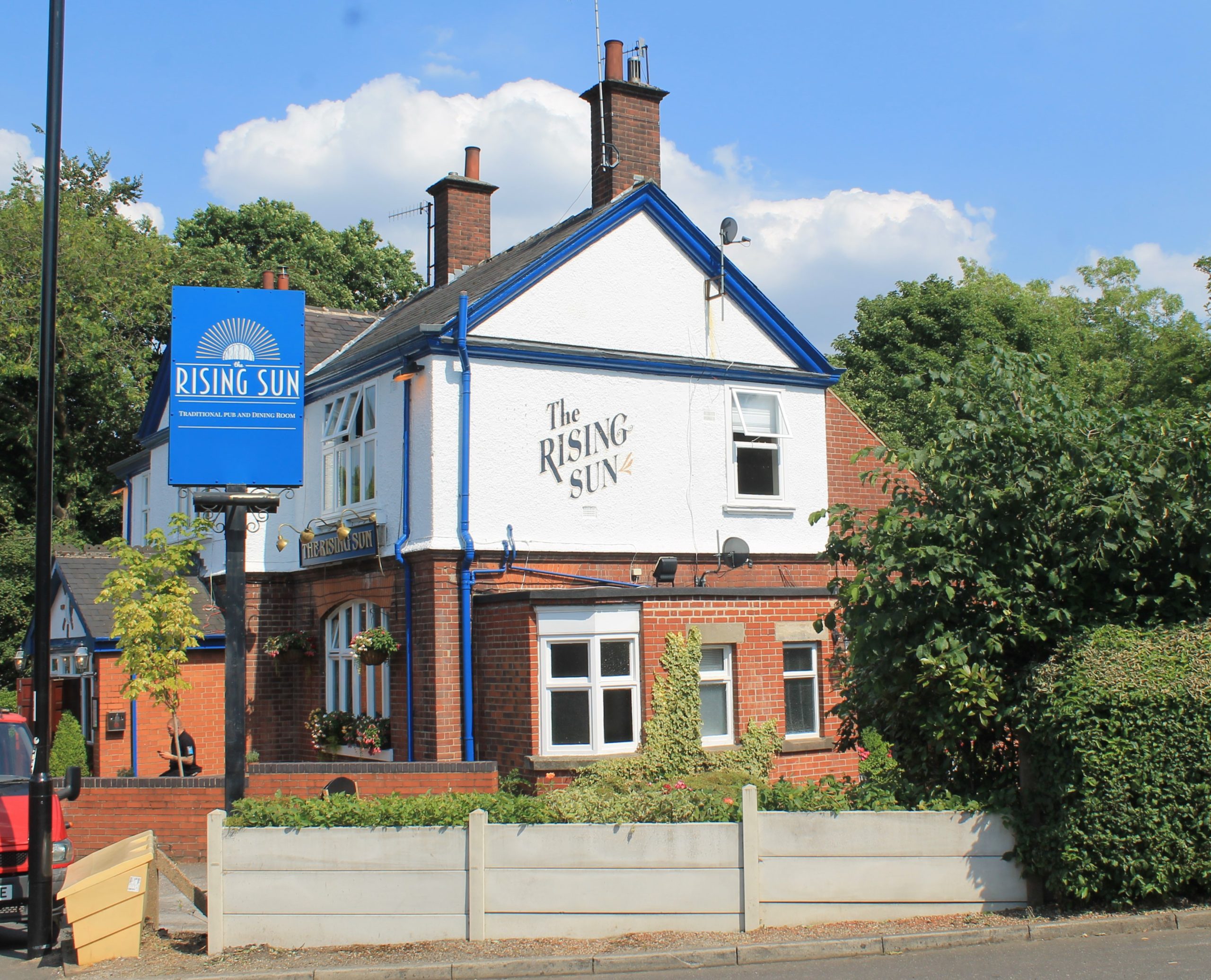
Congratulations to Garry and the team at the Rising Sun (471 Fulwood Road, S10 3QA), winners of the Sheffield and District CAMRA, Sheffield (West) Pub of the Year 2025.
Owned by Sheffield Beerworks EOT Ltd., the Employee Owned Trust which also includes Abbeydale Brewery, the Riding Sun has been an Abbeydale community pub and dining room since 19th December 2005 when the brewery took over from the University of Sheffield Union of Students. The Union had run the building for just over 23 years. Previous management includes the Sheffield & District Public House Trust Co.Ltd. and John Smiths Tadcaster Brewery.
The original pub opened around 1860. The name refers to pubs which face east and receive early-morning sun, as did the earlier Rising Sun. The current pub opened when the, then, owners, the Sheffield Town Trustees agreed to provide land for the widening of Fulwood Road to Sheffield Corporation in return for the demolition and reconstruction of the original pub. The current building opened in July 1904. Abbeydale carried out an extensive refurbishment in 2014.
Rising Sun’s bar
There are two comfortably furnished rooms with a log burning fire between the main bar and the glass roofed extension. The large beer garden includes covered, heated areas. The pub is also both child and dog friendly. Quizzes are on Sunday evenings.
In 1914, the Sheffield and Rotherham Red Book and Almanac (p.407) stated that: ‘many pleasure seekers finding this suburban house very convenient for the supply of general refreshments.’ To-day, the situation is similar: the pub provides 13 cask beers, including a large Abbeydale range, together with several rotating guest specials across both cask and keg. There is also an ever-changing cider selection, a carefully curated wine list, a large range of quality spirits and plenty of non-alcoholic options. In addition, the creative, seasonal food menu aims to showcase the best of British produce and sees the pub working with a host of local suppliers.
Presentation of a previous award!
We hope you can join us for the presentation on 31 March from 8pm.
Abbeydale brewery event at the Rising Sun
On the presentation evening we’ll also be holding an Abbeydale Brewery tutored tasting event, led by experts from the oldest established brewery in Sheffield. This event will explore the depth and breadth of the Abbeydale range.You will be introduced to five beers, each in a 1/3 pint measure. Tickets for this are available online in advance for £10.
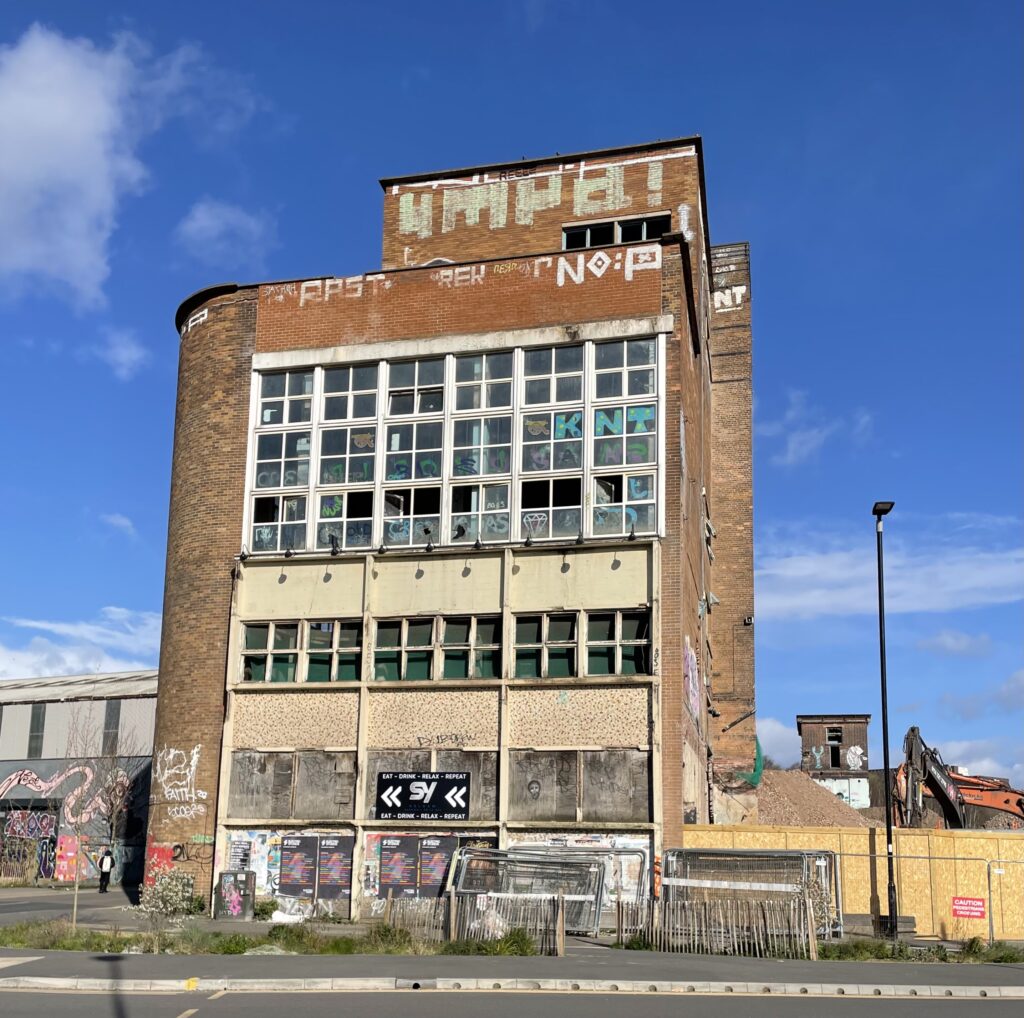
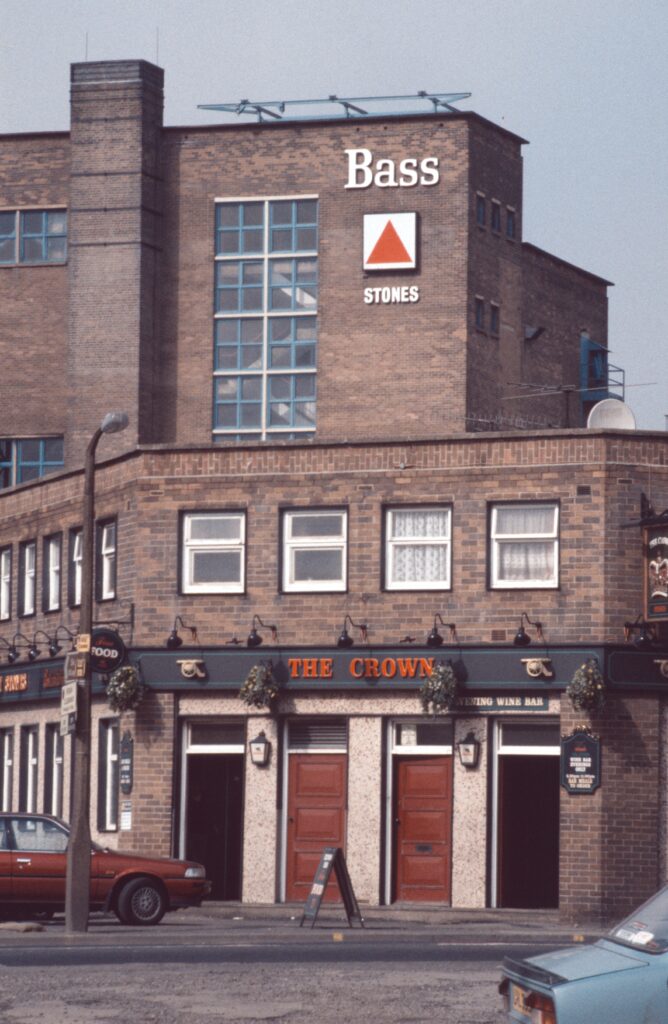
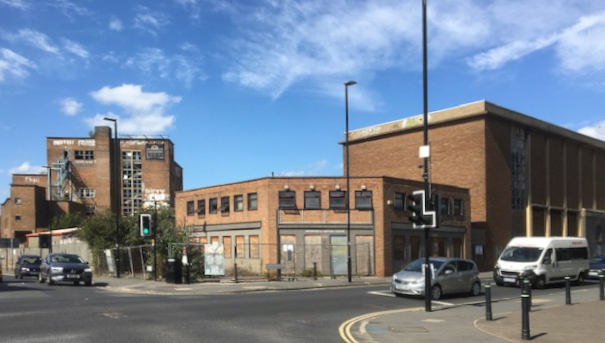
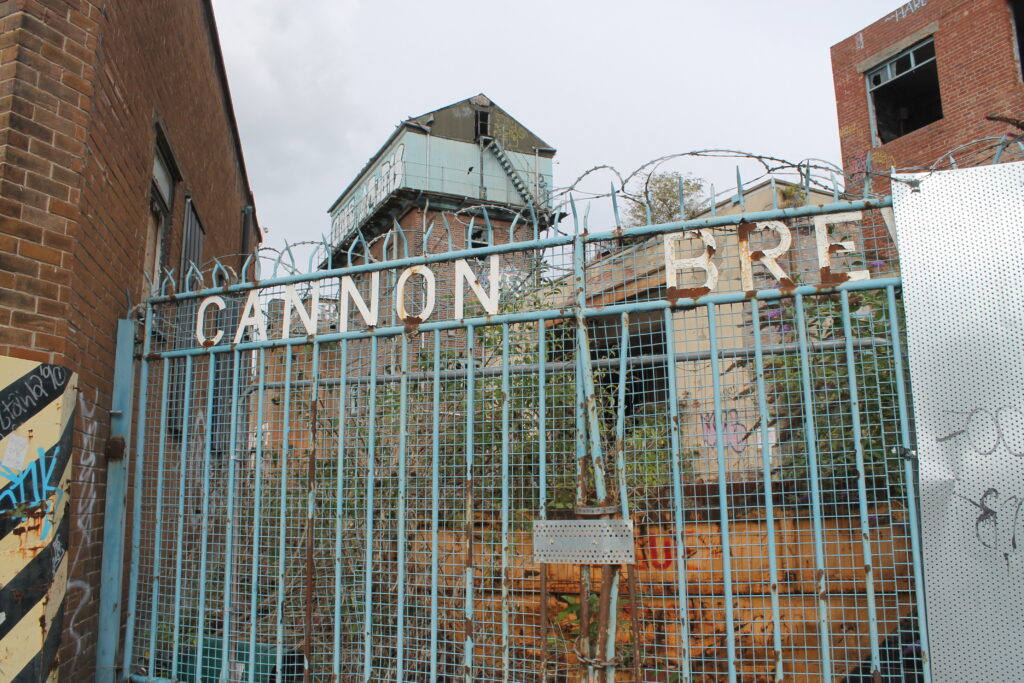
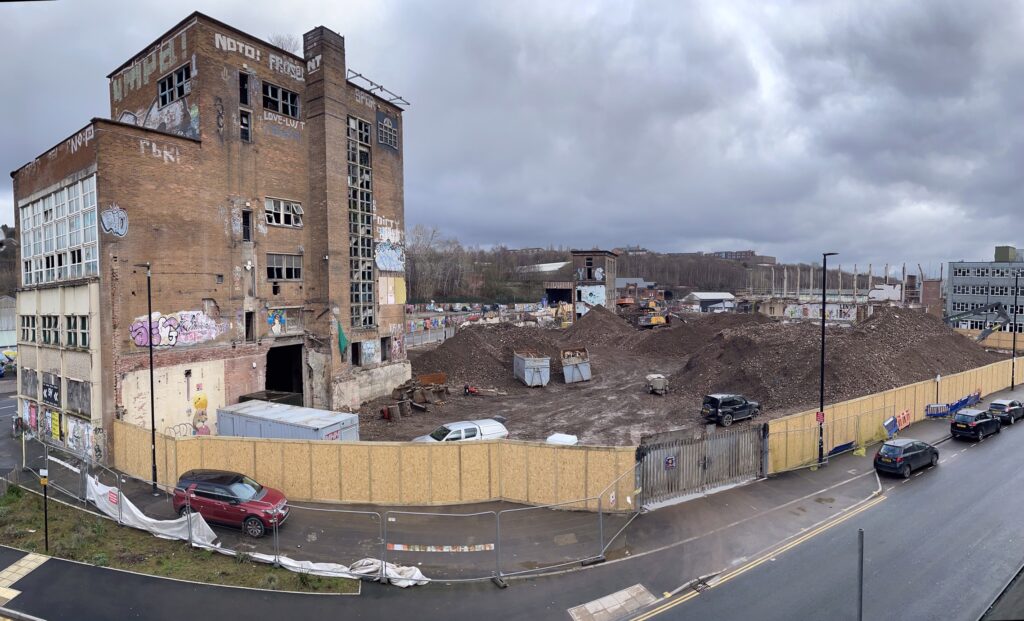
The Cannon Brewery site in Neepsend, the original home of Stones Bitter, is currently under regeneration. The brewery closed, almost thirty years ago, in 1999, when Bass acquired their Burton-on-Trent neighbour, Ind Coope, and decided that their Sheffield Brewery was surplus to requirements.
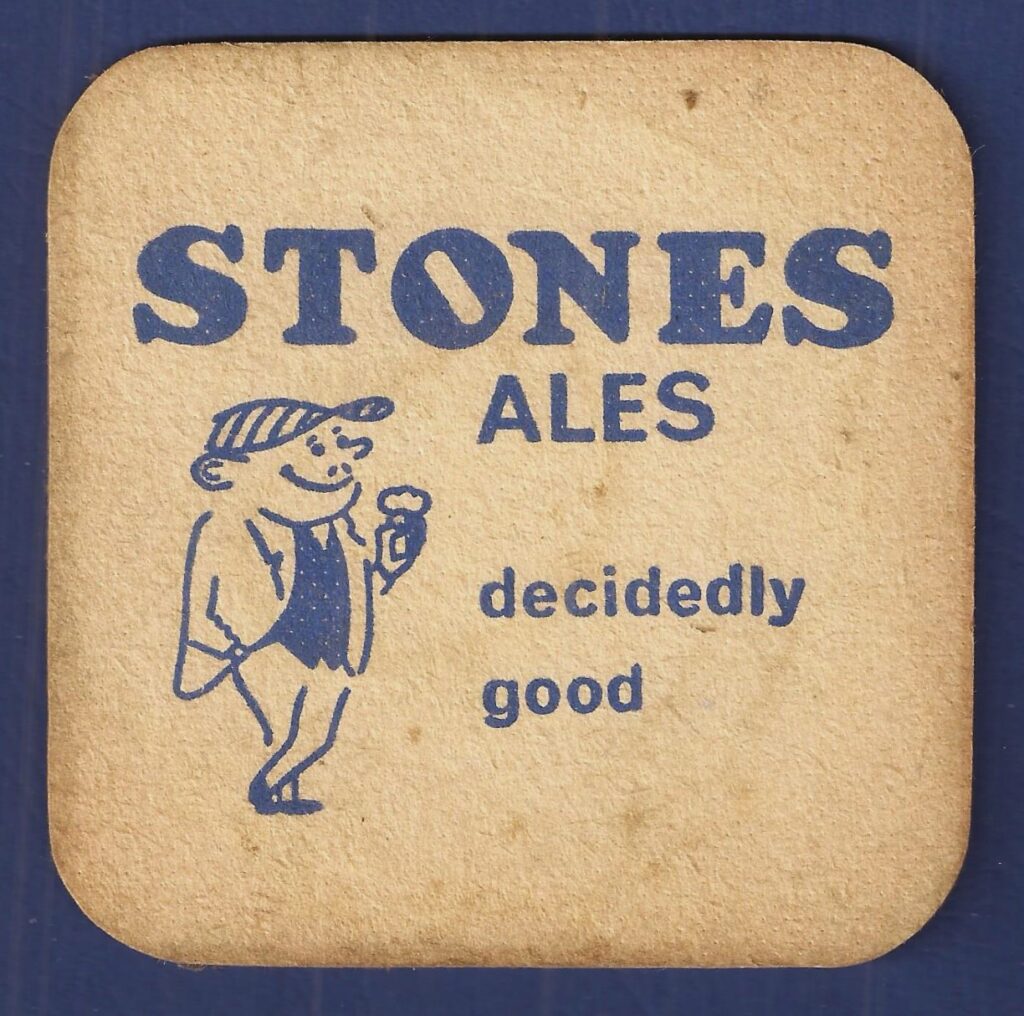
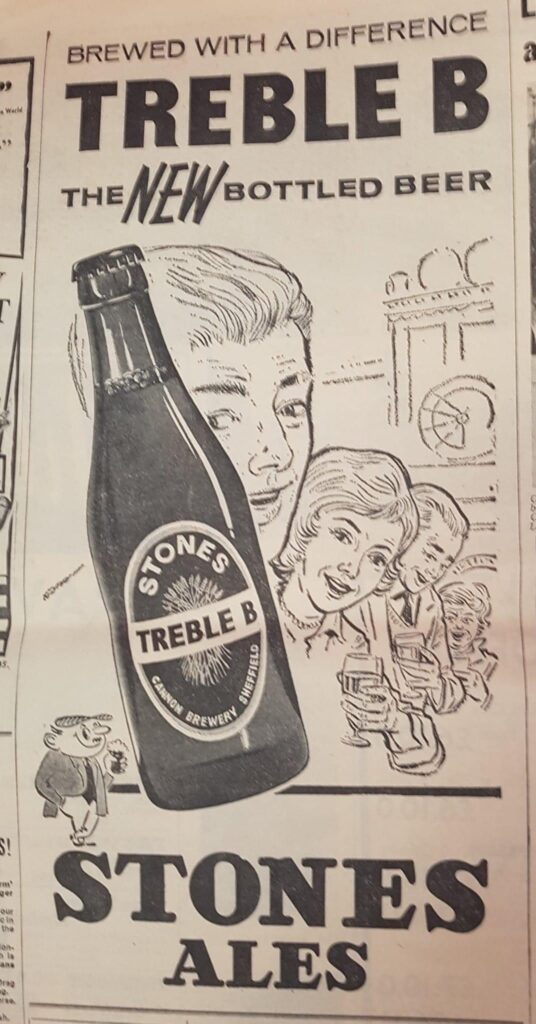
The Cannon Brewery was named in 1868 by William Stones (1826-1894) and purchased by Bass Charrington in 1968. William started brewing in 1847 with Joseph Watts. Following Watts’ death in 1854, Stones continued. In 1868 he bought the lease of the brewery of Shepherd, Green & Hatfield (the Neepsend Brewery), renamed it the Cannon Brewery and continued to brew there until his death. Shortly afterwards, the company was registered as William Stones Ltd. This success saw him become one of the richest men in Sheffield.
Stones Bitter was introduced by Head Brewer, Edward “Ted” Collins in 1948. It was popular with Sheffield’s steel workers and was originally available across South Yorkshire, Derbyshire, and Nottinghamshire. Increasing demand saw the beer brewed at other Bass breweries from the 1970s onwards. Distribution was extended to the rest of the north of England in 1977, and accompanied by a considerable marketing push, nationwide from 1979.
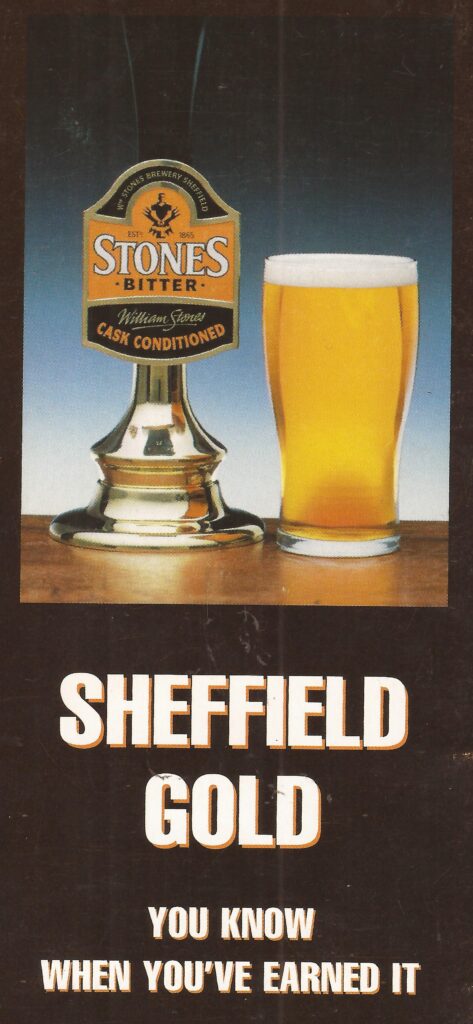
The beer’s popularity reached its peak in 1992 when it was the country’s highest selling bitter, selling over a million barrels. In 1994-96, the “Sheffield Gold” campaign was set in a steel foundry: it was filmed in the Czech Republic because Sheffield’s own foundries were considered to be too clean and automated for the desired gritty, industrial effect. The beer has been lauded as “one of Sheffield’s most famous exports.”
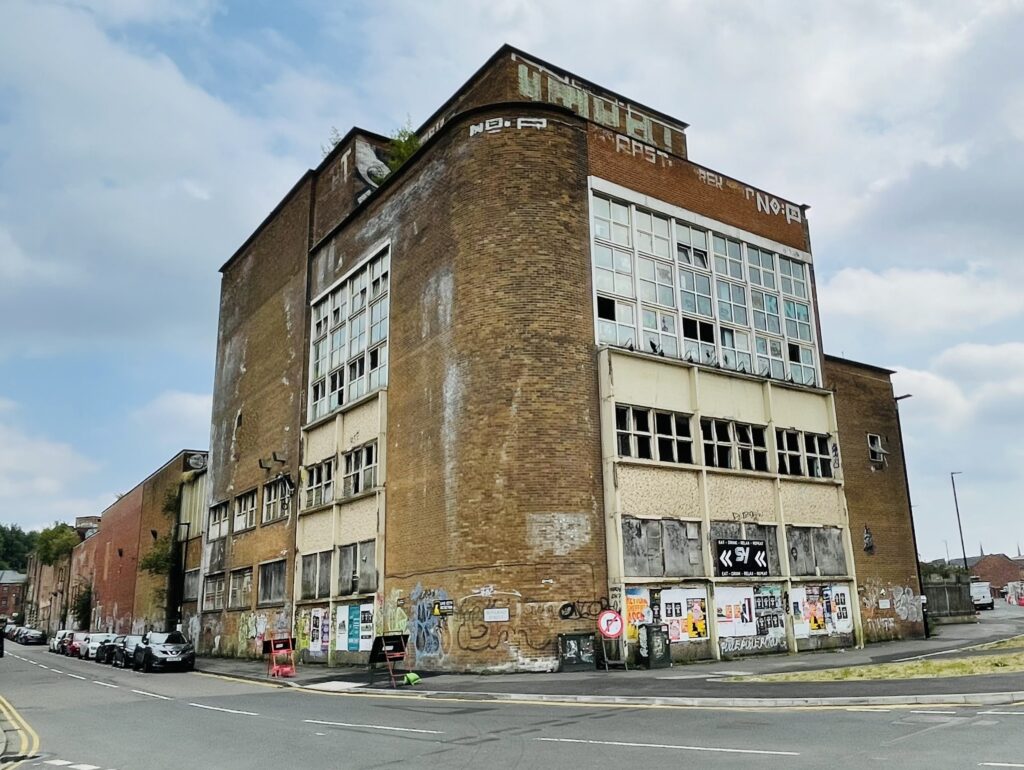
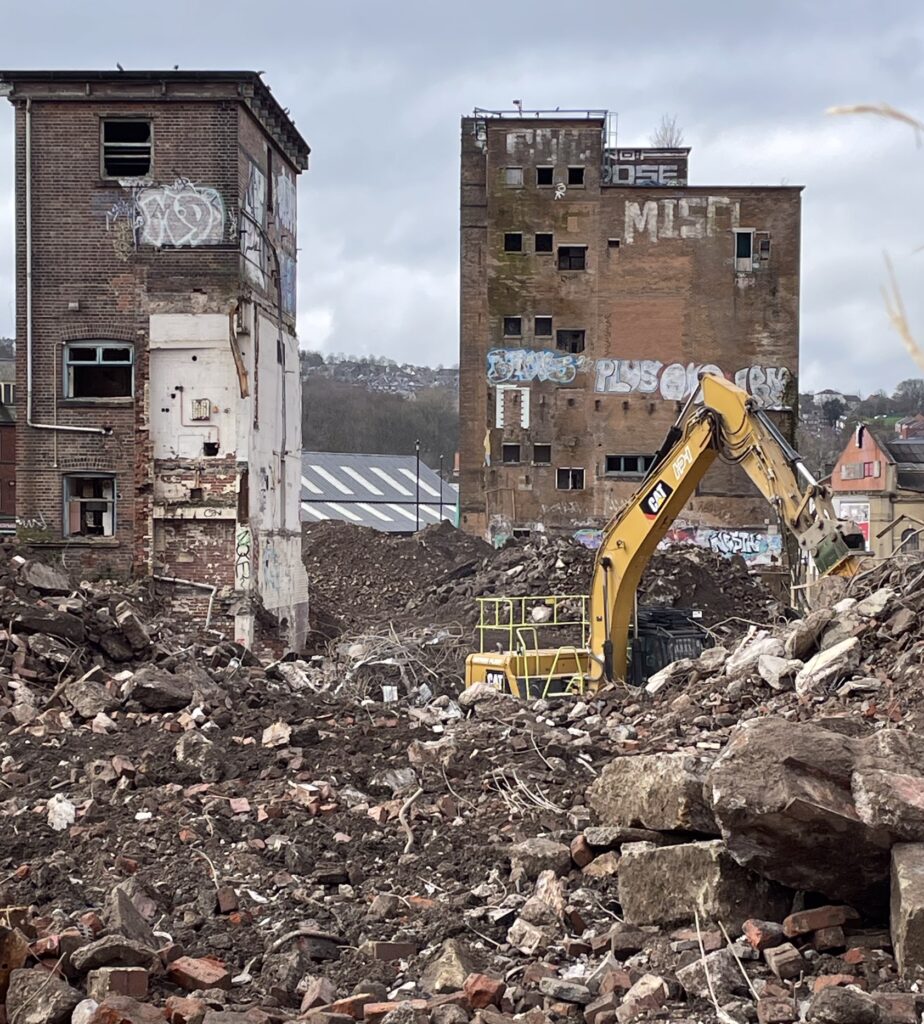
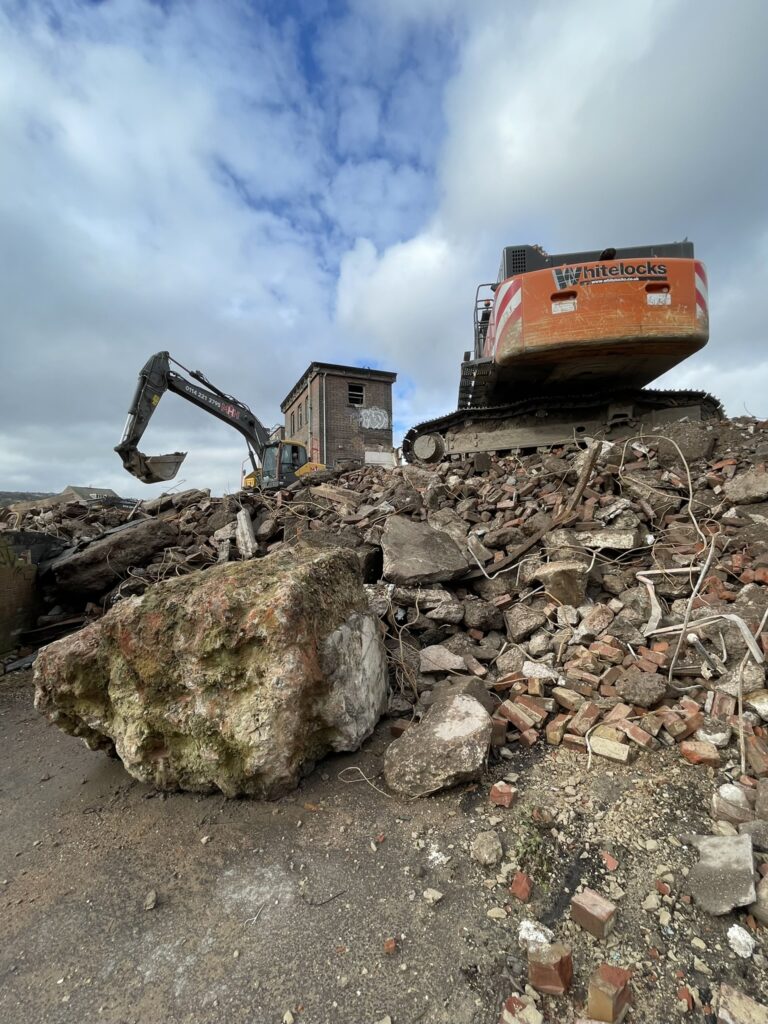
At closure, the site consisted of buildings of differing ages, character and size clustered round a large triangular internal courtyard. Little of the original Victorian and Edwardian buildings remained: the water tower and some internal features. In August 2024, Capital & Centric obtained hybrid planning permission. Their outline plans included the repurposing of several buildings, new builds of cultural and workspaces and over 500 homes, a new public square and an urban park. Subsequent investigation has shown the grain store to be in a critical state of disrepair: Regent Street Disease, corrosion of the steel frame within a masonry-clad building, is prevalent. There is also cracking of concrete on the façade and deterioration of the roof slab.
Demolition is now in progress: the end of a significant chapter in the history of brewing in Sheffield.
The planned redevelopment, with support from the South Yorkshire Mayoral Combined Authority, will see further growth of the community living around Kelham Island and Neepsend.
Following a £1m interior renovation, the Fargate opened on 22nd October 2025. The venue brings together the storied elegance of a large former bank with a carefully designed pub interior (SCC planning application: 24/02165/FUL). Located in the Sheffield City Centre Conservation Area, this new pub is part of the regeneration of Fargate: the road was pedestrianised back in 1973, revitalisation commencing in 2022.
On the ground floor (2680 ft.2), brass accents, chandeliers, curated artwork, dark polished wood, elegant leather seating and herringbone floors create the impression of a bar that could have been built in Victorian times. This level also features screened booths, a snug, banquette seating, and full-height glazing to the front, offering a light and inviting space. The striking horseshoe bar serves ten cask beers and sixteen keg lines. The cask offering tends to be six from the extensive, and well-regarded, Thornbridge range complimented by four interesting guest beers.
The original spiral staircase leads to the first floor (2017 ft.2). Here, a pizza kitchen with an Italian corner oven, is visible through glazed screens. The design combines reclaimed timber walls, decorated ceilings, and original architectural details to create a bright contemporary setting. Now used for storage, the basement includes the original strong rooms.
Branded, ‘Thornbridge & Co,’ the two-storey pub is a joint venture from Peak District-based Thornbridge Brewery and York-based importer and distributor, Pivovar. The other pubs in the chain are:
Banker’s Cat: Leeds (opened 2019)
Colmore: Birmingham (2019)
Market Cat: York (2018)
Wild Swan: City of London (expected to open in Spring 2026)
In the 1880s, the directors of the Yorkshire Penny Bank (previously the West Riding of Yorkshire Penny Savings Bank) bought the land to erect a new bank. Leeds-based architects Henry Perkin and George Bertram Bulmer took on the task. The corner stones were laid on 18th January 1888 by builders Armitage and Hodgson of Leeds and the building was officially opened by the president of the bank, Lord Lascelles, on 25th July 1889. It is late-Gothic design, with five-storeys and a long curved Holmfirth stone front.
The Bank occupied two floors. The basement contained the strong-room: ground level was the large banking hall, fitted out in polished wainscot oak with a mosaic-tiled floor.
The upper floors became a restaurant and high quality hotel. It was initially leased by Sheffield Café Company, formed in 1877 as part of a growing movement of temperance houses: their Albany Hotel opened in September with electric light throughout, a restaurant, billiard room, coffee and smoking rooms, private dining rooms and 40 bedrooms. By the 1920s, the Company was struggling financially, ceasing trading in 1922. Their assets were bought by Sheffield Refreshment Houses, who operated the hotel until closure in 1958.
In its centenary year, 1959, the Yorkshire Penny Bank became the Yorkshire Bank Ltd. The ex-hotel was converted into offices: Yorkshire Bank Chambers. The bank closed in August 2020. The external appearance remains relatively unchanged, with carved winged lions, medieval figures, shields and gargoyles on the outside of the building. Gabled dormers, lofty chimneys and a crenelated parapet were sacrificed during the 1960s.
As for the pub, following a pre-Christmas visit, respected beer bloggers Boak & Bailey stated: ‘the quality of the service, and the presentation of the staff, was impeccable. Despite the scrum at the bar we were served within seconds by a calm, polite, smartly-dressed young man. He was one of many people gliding about behind the counter and we got the sense that our expensive pints were covering the cost of proper levels of staffing for the season.’
I totally agree with their comments: the Fargate is not a cheap pub, but, as always, you get what you pay for. It’s also a welcome addition to local beer attractions.
The pub is located on the corner of Fargate and Surrey Street, Sheffield City Centre, S1 1LL. The nearest tram stop is Cathedral and there are numerous bus routes close by on High Street and Arundel Gate along with the free City Centre Connect bus SC1 on Leopold Street.
In 2013, Jules Gray opened ‘a labour of beery love’: one of the first ‘drink in’ beer shops in the UK, the multiple award-winning Hop Hideout. Originally based in a former Yorkshire Penny Bank on Abbeydale Road, 2019 saw a move to the Kommune food hall in the centre of Sheffield.
Hop Hideout’s taps when they were in the Kommune food hall
Five years later, after the rigours of Covid, brought relocation to the Grade II listed, Leah’s Yard (S1 4HP) when, it reopened after restoration. This early 19th century site was originally built as small workshops for the manufacture of hand tools.
Hop Hideout in Leah’s Yard
Brought up in County Durham, her journey to Sheffield included a bar-job in a local WMC, study at Sheffield Hallam University, time in both Birmingham and Manchester and after several other positions, working in technical support for a multi-national brewing company in Burton on Trent. After seven years, it was time to move on. A seminal conversation with Zak Avery, the founder of Beer Paradise and co-founder of Beer-Ritz (Leeds), led to an interesting question: ‘Why don’t you set up your own beer shop?’ The rest is history.
Jules also runs the annual Sheffield Beer Week (SBW, https://sheffieldbeerweek.co.uk/). This takes place during the second week in March, coinciding with International Women’s Day (8th). Organised by Jules and her colleague, Claire Tollick, the first incarnation in 2015, saw about ten venues, with events spread over the week: recent years have had over forty venues. SBW and Norwich City of Beer are the only two UK-based city-wide beer events which have been in place for over a decade.
She recalls the first year: ‘SBW was inspired by the early days of my newly launched beer business. I was getting excited by the independent beer sector. I noticed that there were lots of beer weeks in America, and also Norwich City of Ale was happening in the UK. It was joined up with the frustration of hearing a lot of people talk about near-by cities like Manchester or Leeds and not mentioning Sheffield. And living in the city and seeing it, a tangible beer history, culture, brewers … I was getting quite frustrated as to why people were not talking about Sheffield. And I thought wouldn’t it be great to shout more about the beer scene in the city that I had made my home. And I spoke to a friend who really supported the idea and about two months before the date we got the ball rolling.’
‘After the first-year people saw the economic benefits: increased footfall, a heightening awareness and celebrating venues, the breweries, and the culture, but also attracting people from outside the region to visit Sheffield to discover wonderful things that we sometimes take for granted. I just love it. I want people to get that joy and excitement across to other people. On the flip side you do need a bit of a cheerleader to raise awareness and join up the dots of the community. There is a tipping-point. You need more than one, it becomes a trail. You bounce off each other.’
The main aim of this independent beer focused event is to bring additional footfall. The first three years coincided with Sheffield hosting the annual SIBA Conference, this providing a ready source of beer-interested visitors. When the SIBA conference moved to Liverpool, Jules was both humbled, and reassured, by the local demand for SBW to continue. It was something people thought was really valuable.
She recalls: ‘At the time it felt like the local council weren’t valuing the culture, community and historic value of the brewing and beer sector, the businesses which were driving visitor footfall. This has definitely changed: momentum has grown. That momentum has led the Sheffield Inspires campaign to include ‘the Craft of Brewing’ as one of their five main strands. It’s been a gradual positive relationship development.’
In 2020, SBW was the last large beer event in the UK before lockdown. Personally, I recall leading a Pub Heritage Walk on Friday 13th March. This was my last ‘big go-out’ for a considerable period … 16th March saw official advice to avoid all non-essential contact, lockdown following on the 23rd. The following year saw a virtual event.
Dave Pickersgill at the last pre-Covid SBW heritage walk
2026 brings the 12th incarnation: a week-long festival (6-15 March) celebrating the region’s brewing landscape. Collaboration is key with Sheffield’s bars, pubs and restaurants joining forces with both local organisations and local, national, and international breweries to host a large variety of events. I led my first SBW pub heritage walk from Fagan’s in 2017: this year, in collaboration with local historian, John Stocks, a talk, and a walk, will concentrate on Little Chicago.
Indie Beer Feast
SBW commences with Indie Beer Feast, a two-day celebration of independent craft beer: brewery bars, street food, low intervention wines, and fine cider.
Until 2020, this took place at Abbeydale Picture House. After a break due to Covid, 2022 saw a move to the 1930s industrial space of Trafalgar Warehouse.
Pete Brown, Author of “Tasting Notes”
As usual, 2026 will see several collaborative brews, all focused on the theme of Sheffield synth city: a tribute to the pioneering electronic music which the city has produced. For example, St.Mars of the Desert are hosting an, as yet, unannounced local band while relatively new breweries Duality and Ticking Clock are working together. Designed by Lewis Ryan, the visual map for the event is taking inspiration from the 1981 Human League album, Dare, while the botanical inspired artwork has been designed by local illustrator, Sanpo. There is also an input from well-known beer writer, Pete Brown, who at an event hosted by Hop Hideout, will be interviewed by music and culture writer Daniel Dylan Wray about matching beer and music.
As Jules put it: ‘‘Sheffield Synth City’ allows us to blend the creativity of our independent breweries with the ground-breaking spirit of our electronic music pioneers. It’s powerful to showcase how innovation thrives across all creative industries in the Steel City.”
Reflecting back on SBW, she comments: ‘it’s an umbrella event‘…it’s something customers love, it really chimes with them, it creates a good buzz and excitement. There are lots of positives: learning and knowledge transfer. From both a trade and customer perspective, customers love it.’
‘Sheffield has so many things, the Home of Football, electronic music legacy, beer, and brewing. I think people don’t mention Sheffield, City of Stainless Steel and what drives the brewing industry. We don’t mention the impact we’ve had in the sector. To me, that’s a massive light-bulb revelation.’
The invention of stainless steel is often credited to Sheffield native, Harry Brearley, who in 1913, discovered that adding chromium to molten iron created a rust-resistant alloy. Stainless Steel is extensively used worldwide as a key part of the brewing process, from coppers to fermenting vessels to casks … it is an often un-noticed, but crucial part of the contribution of Sheffield to the worldwide beer industry: Sheffield could be seen as the ‘Home of Modern Beer.’
Beer tourism is a crucial cog in Sheffield; the footfall and financial benefit is a win-win for the local hospitality and brewing industries. Sheffield Beer Week is a crucial part of this jigsaw. We hope you all have an enjoyable time when you visit the best beer city in the world.
Jules Gray in Hop HideoutOutside Hop Hideout in Leah’s YardMerch at Hop HideoutLittle Chicago talk at the Crow Inn
The folks from Sheffield Beer Week joined Abbeydale Brewery’s team for a special brewday to produce a collaboration beer that will be available in various participating venues during beer week.
We are very concerned by the increasing number of retrospective planning applications which have been submitted to Sheffield City Council.
The law is clear: to change the use of a building (‘a material change of use’) from that of a pub (use class ‘sui generis’) requires planning permission.
Recent local examples of such changes, without prior planning permission, include: the Big Gun, the Highcliffe Club, the Royal Oak (Mosborough) and the Royal Standard.Two of these examples have involved closing the pub, trashing the interior and, later, applying for retrospective planning permission.
The application for the Royal Standard is currently in progress whereas the application for the Big Gun was recently approved (‘Grant Conditionally,’ reference: 25/03230/FUL). On expiry of the lease, this pub closed in September 2023: the historic interior was gutted and, over two years later, planning permission has been obtained. This is despite flawed documentation, which included several errors. For example, the Big Gun was not ‘a former’ public house and its use class was not E(b). These, and other, errors should have invalidated this recent application.
At the time of closure, the Big Gun had many historical features. For example, the right-hand side of the snug had two bays of unique Victorian fixed seating with decorative bench ends that resembled a (acanthus) leaf. This heritage is lost forever.
For this, and other, retrospective applications, we would expect a rigorous reaction from the planning authorities: a response which makes it clear that this is potentially a serious breach of the law, not a simple administrative error: a response which clearly references Sheffield as one of the best beer cities in the world, a city which cares about its pubs!
Councillor Ben Miskell, chairman of the Transport, Regeneration and Climate Policy Committee at Sheffield City Council, said: “Pubs and working men’s clubs are a vital part of our shared heritage and community life, and every effort needs to be made to keep them open for the benefit of the community they serve.
“In the incredibly unfortunate event of one closing, it is vitally important that the new owners follow the correct process when planning permission is required, breaking planning rules will lead to the council taking a robust approach and use all the powers available to us.
“We also work closely with residents across the city to protect valued community buildings from village shops and community centres to local pubs – including by registering them as Assets of Community Value. Developers must respect Sheffield’s heritage, including the importance of our public houses.”