Council calls for support for nightlife

One of the sectors hardest hit by the pandemic and its lockdowns has been nightlife, with many businesses facing an uphill battle to bring back their venues and events when restrictions ease. Sheffield City Council has today called on the Government to support the sector so that the city’s much loved pubs, bars and clubs can recover from the financial impact of Covid-19, which has seen many businesses forced to remain closed for nearly a year.

Sheffield has over a thousand businesses offering a huge range of experiences in the night-time economy, which also includes live music, exhibitions and cinema, as well as a reputation for hosting many internationally renowned events and festivals, such as Tramlines, Sensoria, MelaninFest, Sheffield Beer Week and Sheffield Doc/Fest. These businesses support nearly 12,000 jobs directly, and many more through the gig economy and their supply chains.

Alongside industry partners such as UNIGHT, a not-for-profit organisation that represents Sheffield’s night-time community, and CAMRA (the Campaign for Real Ale) the Council is calling on the Government to put practical support and funding in place to ensure the survival of businesses that play a key role in Sheffield’s identity and attract residents, visitors, students, and investment to the city.

The Council has submitted its proposals to the All-Party Parliamentary Inquiry into the night-time economy. These include:

  • A continuation of the furlough scheme, business rates relief and 5% VAT relief for the rest of 2021
  • Funds to be allocated to encourage the creation of new businesses and to enable training for new staff entering the sector
  • A national campaign aimed at restoring consumer confidence and encouraging people to continue to spend local when restrictions are lifted
  • Ensuring a level playing field between pubs, restaurants, takeaways and shops so that pubs have a lifeline during the current lockdown

Cllr Mazher Iqbal, Cabinet Member for Business and Investment at Sheffield City Council, said: “We have iconic venues and events in Sheffield that are known worldwide and are an integral part of our appeal as a visitor destination. That there is something for everyone is central to Sheffield’s uniqueness, and we simply cannot afford to lose these much-loved and valuable assets and their vital contribution to the local economy.

“The Council is calling on the Government to support these businesses who have been hardest hit by the pandemic so that when the time is right, they can come back fighting and provide the vibrant nightlife we are all so looking forward to experiencing again.”

Nick Simmonite, Chair of UNIGHT and Manager of the Frog and Parrot, said:

“So many businesses I work with are on their knees, because of the pandemic. Many will not survive. I hope that Government will listen to those working in the industry, who know and love it and who have worked hard to protect both business and our customers, throughout this unprecedented time. With support, we will bounce back. We are ready to provide the services and experiences that we absolutely know our people are going to want right now.”

Dave Pickersgill, Pub Heritage Officer of CAMRA Sheffield said:

“The Government should realise the immense value of pubs to communities, individuals, and the economy – and it should protect them and allow them to trade on a par with restaurants and shops. Pubs are essential to our local economy and we should be doing all we can to support them to survive through these difficult times, not hindering them.”

The All-Party Parliamentary Group is calling for evidence from night-time economy businesses, employees, freelancers and consumers to share their views on the challenges facing the sector, its importance to our society and economy, and how nightlife can be reopened. Members of the public, employers, employees and freelancers are asked to submit their views to the inquiry via htntia.co.uk/appg.

UPDATE:

The report is now published and is available to download.

Local MP tries to protect small brewers

Small breweries in Sheffield, who have already been hugely impacted by the pandemic, are now facing another blow as the government proposes cuts to a subsidy known as Small Brewers Relief (SBR). Hallam MP Olivia Blake is working with local brewers and campaigners to reverse these proposed cuts.

SBR was introduced in 2002 to enable small brewers to exist in a market dominated by multinationals. It is widely credited for being the reason why such a diverse and exciting craft beer industry has flourished in the UK over the past two decades.

Within Sheffield’s City boundary, there are currently 27 functioning brewing companies, more per head of population than any other UK city. These vary from long-established breweries like Abbeydale, Bradfield and Kelham Island, to newer breweries, like Little Mesters, Lost Industry and Loxley.

Hallam MP Olivia Blake has tabled a parliamentary motion calling on the government to reverse these proposed cuts.

Olivia Blake MP said:

“Covid-19 is having a huge impact on small breweries in Sheffield and across the country. Right now sales have fallen by 80% and two small breweries are going out of business every week.

But at this critical time, when small breweries so desperately need more support, the government is proposing the opposite – cuts, which will threaten the whole industry.

I have tabled a Parliamentary Motion, to call on the government to rethink this damaging plan, and am working with breweries in my constituency as well as national campaign groups to hold the government to account over this.”

A spokesperson for Loxley Brewery, established in 2018, said:

“Small Brewers’ Relief has been a lifeline to independent breweries, such as Loxley Brewery.

Without the scheme, breweries such as ours would not have been able to grow by reinvesting the duty relief back into the business, purchasing new equipment to increase our capacity, create jobs and boost the local economy.

With the effects of the coronavirus pandemic on the hospitality industry, the proposed change to SBR could not have come at a worse time for the industry, especially after pubs – a lifeline especially for predominantly cask and keg producing breweries – have been closed for months on end and brewers are struggling to make ends meet.

As a predominantly cask producing brewery with ambitions to grow, penalising brewers by reducing the annual threshold to 2100HL will only result in many closing their shutter doors for one last time as they face mounting bills on top of decreasing sales; all this on top of successive lockdowns on the hospitality industry is nothing short of a slap in the face for a nation that has culturally, economically and historically been the centre of brewing for many centuries.

We, at Loxley Brewery, do not support the changes to SBR, which will only really benefit larger breweries who have higher lobbying power than those trying to craft a future for beer in a local setting and create a meaningful experience for our residents and expand our footprint further afield.

We implore the treasury to rethink the matter during their technical consultation.”

Dave Pickersgill, Pubs Officer at Sheffield and District CAMRA, said:

‘CAMRA do not believe that the proposed changes, resulting in around 150 small brewers paying more tax, are the best route to improve Small Brewers’ Relief. The Government should be providing more support to our vibrant small brewing sector to aid its recovery, rather than planning on withdrawing tax relief from some of the smallest operators, brewers who are vital to maintaining consumer choice in the beer market. We fully support the Early Day Motion, as proposed by Olivia.”

Dry January, Tryanuary and Flavourful February

If you’ve managed to stay Dry for the month of January we should immediately congratulate you for a sterling effort, the drinking excesses of the festive season can often by balanced with a fit & healthy Dry January, but given the current Covid 19 situation, staying fully Dry since New Year’s Day is a true personal achievement, we wish you luck during this final week of the month!

Resisting temptation is a touch easier of course due to the rapid expansion of No/Low Alcohol beers over the last five years & its now a much simpler task to get the flavour without the big ABV, with dozens of 0.5% choices now available. If you’re new to the No/Low Alcohol scene then watch out for fantastic beers from Big Drop, Nirvana & Lucky Saint alongside tasty 0.5% options from established brewers like Thornbridge, Sam Smiths, Northern Monk, Lervig & To Ol.

The flipside to Dry for many drinkers in January is of course, Tryanuary, with many people choosing to Try new things during the month to help support brewers, pubs & retailers during a normally quieter time for sales. If you’ve been a Tryer during January then please accept our thanks, we hope you’ve enjoyed trying lots of new styles or new breweries over the month. Despite the ongoing pub closures, breweries are doing a fantastic job in getting as much beer as possible into bottles & cans & with a week of Tryanuary to go as we write this, we wish you the very best in trying something new over the next 7 days!

February is likely to bring us all back together on the same page, as drinkers & customers settle back into a normal rhythm once January is out of the way. It also seems likely that Covid19 restrictions are to continue & so drinking at home is going to remain our only option. With that in mind we’re sure that the beer retailers of Sheffield & North Derbyshire are ordering some spectacular new brews as we speak, the cans, bottles & growlers will continue to fly out of the doors.

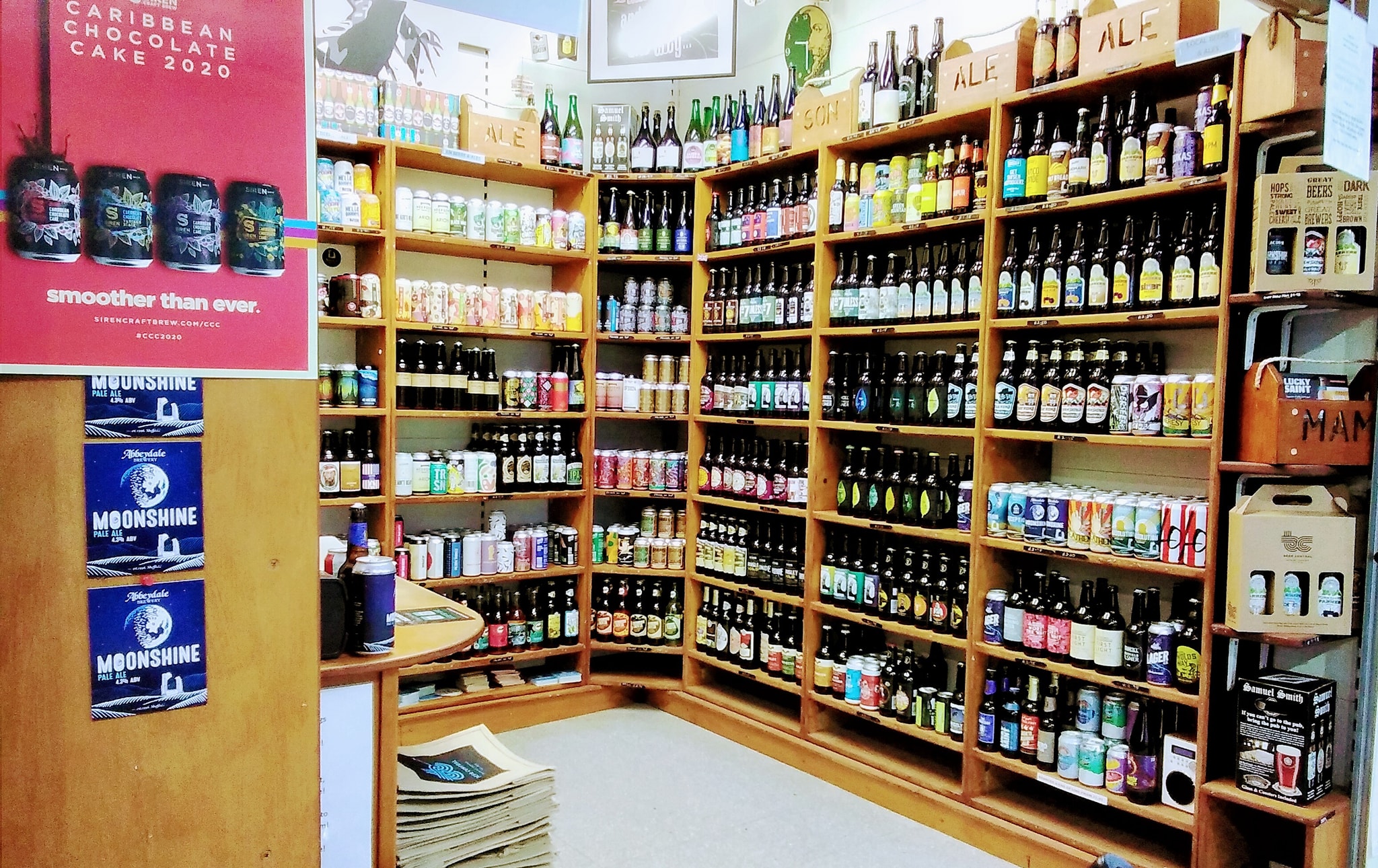
Here at Beer Central we remain open as normal (with plenty of safety measures in place of course) and you should expect to see new beers in February from a whole range of brewing superstars including, North Riding, Vault City, Nerd, Deya, Kees, Pomona Island, Five Towns, Northern Monk, Verdant, Cloudwater & North, in addition to an endless stream of local brews from Thornbridge, St Mars, Loxley, Bradfield, Kelham, & so on.

Whatever you did in January, whatever your plans are for February, give yourself a pat on the back. Life isn’t quite what it should be at the moment, but we’re all doing our bit, at some point along the way we all deserve a beer….. but the choices are endless, thank goodness for that!

Sean Clarke

BEER CENTRAL – AWARD WINNING BEER SHOP IN SHEFFIELD CITY CENTRE
Outlet MS3, The Moor Market. Sheffield. S1 4PF. Open Mon-Sat 8.30am-5.30pm. On Sundays we stay in bed.

Majority of pub-goers feel safe

CAMRA, the Campaign for Real Ale, has called on governments to adapt the tier systems to let all pubs trade in December, after new YouGov research finds that the majority of pub-goers believe that pubs and other hospitality venues offer a Covid-secure environment.

The survey, conducted on the behalf of CAMRA, found that 82% of GB adults who have been to the pub at least once in the last six months felt hospitality businesses were Covid-secure environments, reflecting the huge investment many pubs have made to re-open during the pandemic.

Many pubs have invested thousands to utilise new technologies to introduce track and trace, table service, flexi glass screening, new sanitation stations and deep cleans. CAMRA has consistently called on government to offer evidence into virus transmissions within the pub setting and is asking ministers to publish the evidence on which decisions are being taken about what the tier system in England will look like after lockdown ends on 2 December.

The Campaign has also called on the Scottish Government to reexamine strict restrictions on pubs as part of its five tier system.

The consumer group now wants the UK Government to adapt the tier system in England to allow all pubs to open on the 3 December – regardless of whether they serve food or not – so that consumers can enjoy the personal wellbeing benefits of pub-going over the Christmas season.

CAMRA’s National Chairman Nik Antona said:

“Businesses should be allowed to open based on whether they can provide a Covid-secure environment – not based on whether they serve food. Publicans have invested thousands to keep their customers safe this year and comply with additional regulations and track and trace requirements, and this research shows that customers recognise this too.

“We are particularly concerned that wet-led pubs have been hit by forced closure in Tier 3 areas even before lockdown and have been left out from the VAT reductions that only apply to food and non-alcoholic drinks, despite needing support just as much as other hospitality venues.  It’s vital that they are given the chance to trade after lockdown ends. 

 “The Government also need to properly review curfew, which Sage scientists advise has a marginal effect on suppressing the virus and there are concerns that it leads to mingling in non-Covid-safe environments, such as people’s homes. With no evidence to suggest that curfews work, we believe the initiative should be scrapped – especially from the lower Tier levels when lockdown ends.“

“For a long time, CAMRA has championed community pubs as the home of responsible drinking. This Christmas, we believe pubs should be the Covid-safe home to enjoy a pint.” 


How often Pub Since pubs have reopened 
 Total Every day A few times a week Once a fortnight Once a month Once every 2 to 3 months Once every 6 months Never Don’t know/ can’t recall 
Weighted Sample20187102176233242176101468
Unweighted Sample 2018897170244255182100161
Thinking about places that you have visited since the coronavirus outbreak, how covid secure, if at all, do you feel in the following…Hospitality businesses e.g. pubs, bars, restaurants etc.)          
Very secure 1549332229221379
Fairly secure 401463625363582326
TOTAL SECURE556396848285713035
Not very secure 13184121511191310
Not secure at all 4180414656
TOTAL NOT SECURE17364161615251816
Not applicable – I have not visited this place since the coronavirus outbreak 280001045249

All figures, unless otherwise stated, are from YouGov Plc. Total sample size was 2018 adults. Fieldwork was undertaken between 29-30 October 2020. The survey was carried out online. The figures have been weighted and are representative of all GB adults (aged 18+).

Save Our Pubs campaign – email your MP

A pint-sized social history

Discover the story of the how the Peak District ‘local’ made the journey from humble alehouse to modern public house and meet some of the regulars along the way, including lead miners, packhorse men and navvies, plus the odd highwayman and a fair sprinkling of ghosts.

The author Andrew McCloy lives in the Peak District and has written and
edited over 20 books covering subjects such as the Pennine Way, Roman Britain and the Peak District Boundary Walk. He is currently Chair of the Peak District National Park Authority.

Buy Peak District Pubs: A pint-sized social history online

Review coming soon!

A Drink With Our Ancestors review

The new book from Claire Pearson is now available. This detailed and well-researched tome includes a myriad of stories from public houses, past and present, from their early days until the eve of World War II. It is a  potted history of her local pubs, where generations of locals and a succession of travellers have spent their leisure hours. The 325 page book includes many stories from the pubs in and around the South Yorkshire town of Stocksbridge and the nearby villages of Bolsterstone, Deepcar, Green Moor, Hunshelf and Wigtwizzle.

A Drink With Our Ancestors

Many of the pubs featured are no more: the Broomhead Mill Inn, the Butchers Arms, the Coach & Horses, the Miners Arms, the New inn, the Rising Sun, the Rock Inn, the Sportsmans Arms and the Travellers Inn. However, pubs featured include the CAMRA heritage listed, Friendship (Stocksbridge) and, in Deepcar, both the Bradfield Brewery owned King & Miller and the Royal Oak.

A Drink With Our Ancestors is available, on Kindle. In addition, Claire has put together a website which includes dozens of relevant images. She aims to produce second volume next year featuring the pubs of Midhope, Langsett and the surrounding area.

An excellent addition to your bookshelf!

First weekend of curfew

Socially distanced layout and hand sanitising station at the Industry Tap
Bar now behind safety screens at the Washington

New government rules came in from Thursday 24 September, which in addition to the existing Covid-secure guidelines (which are now law), includes a requirement for all pubs, clubs, restaurants and fast food outlets to be closed by no later than 10pm.

Publicans have put a lot of work, time and money into ensuring their venues are clean, safe and in line with government Covid-secure guidelines. This includes a reduced capacity (with reduced income!) to ensure tables are socially distanced, cleaning tables between every customer, signing customers in for NHS Test and Trace, everyone wearing face coverings when moving around the premises, installing perspex barriers where necessary, operating table service and more. They are also enforcing the ‘rule of six’ with groups of no more than six people allowed together and reminding customers they should not mix with other groups.

Back in 2005, Tony Blair’s government introduced reform of our licencing laws, which included the ability of pubs to apply for whatever opening hours suited the location instead of the established rules where every pub had to close at 11pm and nightclub at 2am, which saw large numbers leaving every venue at the same time putting huge pressure on late night fast food establishments and transport infrastructure with queues in takeaways, taxi ranks, bus stops etc. with arguments and disorder breaking out. Many of these problems were now history to some degree.

So back to the present, September 2020, with pubs, clubs, restaurants and fast food joints all closing their doors at the same time, 10pm… how were the first few days?

Many venues reported poor trade on Thursday and a disappointing Friday. The issue of course, for a viable evening out that finishes earlier, is it needs to start earlier – which isn’t always possible on days when people are at work or university all day. Saturday was a different story with areas such as the City Centre and Kelham Island buzzing by around 5pm and queues forming in some locations, with an hour wait for a table reported at the Benjamin Huntsman Wetherspoon as an example.

Note this week was Freshers’ Week, when the new university students have arrived and enjoying discovering their new home city ahead of the academic year starting next week.

Bargain Beers – 24 hour shop stayed open doing great trade supplying house parties long after the pubs shut!
Sainsbury’s Local stays open until 11pm – an hour later than pubs

What was observed on both Friday and Saturday night was come 10pm when the pubs closed, the off licences and convenience stores – which have not been hit by any requirement to close early – were doing a roaring trade in alcohol and snacks to take back to house parties (which of course are totally unregulated and a much bigger health risk than a pub!). It is also worth noting that while fast food takeaways and restaurants have to close their doors by 10pm, they can still do home deliveries all night if they wish, catering for house parties quite nicely!

While public transport appears to have coped in Sheffield, there was clearly a higher than normal demand for taxis with Uber implementing surge pricing, charging double the normal fare. In some cities the crowds in the streets that had all left the pubs at the same time apparently formed impromptu street parties, although there doesn’t seem to have been any reports of this in Sheffield.

So the conclusion – the 10pm curfew is potentially killing hospitality businesses and the jobs in that trade as well as putting people at greater risk to Covid. I would encourage all to raise this with their MP and get this policy overturned.

CAMRA’s response to the government’s 10pm closure announcement

Welcome to Yorkshire but not Sheffield?

The Welcome to Yorkshire website includes a page which claims to list ‘fine establishment[s] in which you can enjoy a pint of Yorkshire’s finest ale.’

This seems to be a totally inaccurate phrase as there are only three entries in South Yorkshire: two in Barnsley (not Sheffield as is inaccurately stated for the Wortley Arms) and one which does not serve beer.

In his 2016 seminal report, beer-writer Pete Brown described Sheffield as ‘the world’s greatest beer city.’

Since then, things have only improved. Sheffield has niche pubs, and an excellent, diverse beer scene: a mix of traditional heritage assets and modern bars. It has 30 pubs in CAMRA’s Good Beer Guide, more pubs on the CAMRA Heritage Lists than any other city in Yorkshire and, outside London is the only UK city, to have its own heritage pub guide. It also hosts the only pub to win the CAMRA National Pub of the Year Award in successive years.

Beer tourism brings vastly more income to the city than the annual two-week World Snooker Championship. And the Neepsend Brewery Trail is becoming a ‘must-see’ attraction.

Within the city boundary, there are 27 functioning brewing companies, more per head of population than any other UK city. These vary from the long-established: Abbeydale, Bradfield, Kelham Island and Sheffield to the new: Heist, Lost Industry and Saint Mars of the Desert (SMOD). The oldest brewery in the city, Kelham Island, continue to produce a past CAMRA Champion Beer of Britain, Pale Rider, while earlier this year, SMOD were included in the RateBeer top ten list of ‘the world’s best new breweries.’

So, why are there no entries for Sheffield?

New restrictions hit pubs from Thursday

In response to the Government announcement that pubs and restaurants will be forced to close at 10pm from Thursday 24th September onwards, CAMRA National Chairman Nik Antona commented:

“As things stand this morning, hospitality is the only sector to be subject to new restrictions. This will be devastating news for thousands of publicans across England who have been willing to do whatever is necessary to provide a safe, Covid-secure place for people to enjoy the wellbeing benefits of having a pint with friends and family.

“The Government should not impose arbitrary restrictions that target one sector without explanation or evidence, which, so far, we have not seen. We are now calling for a new financial support package to be introduced for pubs immediately, which includes the extension of the furlough scheme and the cancellation of business rates for another year, or they risk countless pub closures and job losses.”

In addition to the 10pm close, pubs are now required to operate table service and both customers and staff are required to wear face coverings whenever not seated.

Click here for our rough guide to Covid Safe pub going.


A meeting with Miriam Cates MP

On Tuesday 15 September, Paul Ainsworth (Barnsley CAMRA) and Dave Pickersgill (Sheffield & District CAMRA) had a short meeting with Miriam Cates, the recently-elected MP for Penistone and Stocksbridge.

The discussion included several areas: the effect of lockdown on pubs and breweries (both local and nationwide), the pubs code, business rates, community pubs and international trade.

Pubs and bars were closed from late March until, at the earliest, 4 July. Many pubs have struggled to  reopen, having invested their dwindling reserves to do so safely and securely in line with Covid-safe guidance. We believe that support is required as they struggle to reestablish.

Last month, the British Beer and Pub Association said more than a third of pubs failed to break even in July, and a quarter of pubs and bars were uncertain their businesses would still be viable by 2021.

Sales at pub, restaurant and bar chains halved in July compared with last summer. Trade in bars was down almost two-thirds (63%) and pubs saw a 45% slump in the first month that businesses were able to reopen.

The furlough wage support scheme has allowed many pubs to retain their staff. In lockdown areas and in struggling areas, many pubs and bars will be forced to close unless the government agrees to extend the furlough, which is due to be withdrawn. Miriam believes that this furlough scheme ‘was one of the best in the world.’ However, she is also in favour of the scheme ending as it is not financially sustainable beyond October, especially given that debt is now at 100% of GDP. Other support schemes are available but the priority must now shift to creating new jobs  She also mentioned the ‘possibility that pubs won’t be able to operate at full capacity for a year.’ Miriam did, though, agree that ‘pubs are vital to local communities’.

Alcohol was excluded from the government’s six month VAT cut from 20% to 5% designed to stimulate the hospitality industry. More than 60% of the UK’s 47,000 pubs are “wet-led”, meaning they make more money from alcohol than food. This puts them at an immediate disadvantage. Miriam defended this difference.on the grounds that lines have to be drawn somewhere and often difficult decisions made.

Pubs are also facing huge rent bills with nearly all of the major pub companies (the exception being Admiral Taverns) opting to defer their demands, or offer a discounted rate, instead of cancelling payments as business has dried up during the pandemic. This is likely to lead to opportunistic planning applications, as pubs continue to close. Miriam mentioned the impact of ‘Big chains not willing to have a conversation about rent.’

There are currently 153 community owned pubs in UK. None has gone bust. Miriam was very interested in how this figure could be increased. It was agreed that we would provide suitable written background material. She ‘wants a return of small independent retailers.’

The Pubs Code was introduced in 2016. Since then Publicans have expressed bitter complaints about the financial impact of the “beer tie” – the arrangement that governs the relationship between large pub companies that own thousands of pub premises and the tenants who run the business. We believe that an urgent review of the not-working Pubs Code is required. Miriam committed herself to writing to the Small Firms Minister, Paul Scully, on this point.

CAMRA will be asking for extension to the  business rates holiday which runs out in March 2021. We also want to see business rates system for pubs to be reformed with a low business rates multiplier for hospitality business generally.

Miriam stated that Business rates in general need looking at compared to other European countries. She ‘completely supports the need for business rates reform’ saying they could be based on takings not the size of property. She is also concerned regarding  possible holes in Local Authority finances given that rates revenue goes directly into their coffers.

During lockdown, breweries saw a much reduced outlet for cask beer. There was much ullage, and many staff were furloughed. Some breweries increased their direct sales while others had no income as they had no packaging facilities. Some took the opportunity to deep clean, rebrand and/or  review. For example, Penistone-based Brewery Whitefaced (named after local sheep: the Whitefaced Woodland) have put in a planning application for a new bar and location for their nano brewery in central Penistone. Miriam promised her support for this development. (The other brewery in the constituency is Korrupt Brew Co (also Penistone)).

We also discussed the effect on breweries of current trade talks. Many UK Breweries, including both Korrupt and Whitefaced, make extensive use of aromatic hops from Central Europe, New Zealand, and USA. We have major concerns regarding supply after the end of this year – both continuity and cost – it is likely to be more difficult to import (more/new paperwork).

Miriam stated that it is vital that ‘vital that we get a free trade agreement.’ We should ‘put everything into negotiating that deal.’

All breweries need support as they reestablish.

Paul Ainsworth & Dave Pickersgill