Britain’s Best Real Heritage Pubs

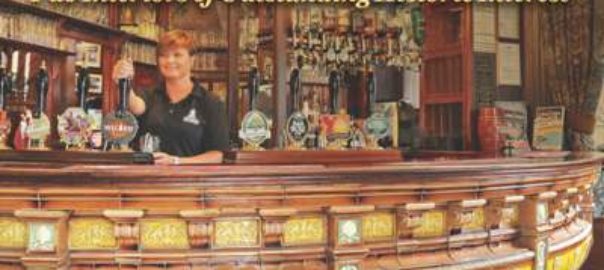
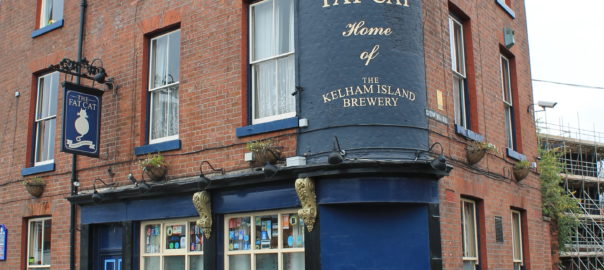
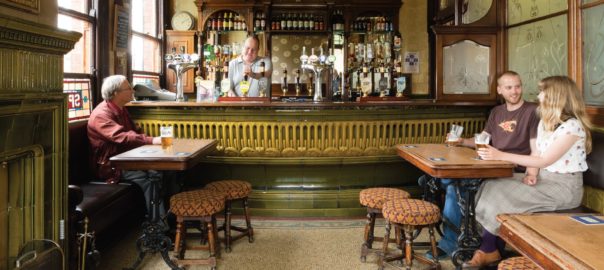
CAMRA has recently released the new edition of Britain’s Best Real Heritage Pubs. This book explores over 250 UK pubs which have real historic significance. This book and its regional companions are the result of over 25 years research by CAMRA to discover pubs that are essentially unaltered and/or have features of national historic importance. Sheffield has four entries:  The Bath Hotel, The Grapes, The Sheffield Tap and The White Lion. These, and many more, are included on the CAMRA Pub Heritage website: www.heritagepubs.org.uk On this site, Sheffield has the largest number of entries of any Yorkshire city: Sheffield 17, York 14, Leeds 12. bath-heritage-certificate-2016 Sheffield has three pubs which have an historic pub interior of national importance: The Bath, The Sheffield Tap and the Sportsman (Hackenthorpe). – Dave Pickersgill

Heritage pubs with Dave Pickersgill – Carbrook Hall

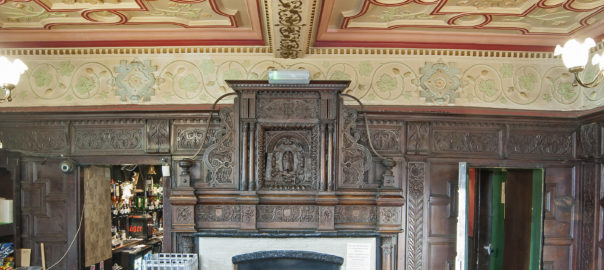
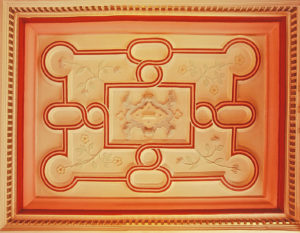
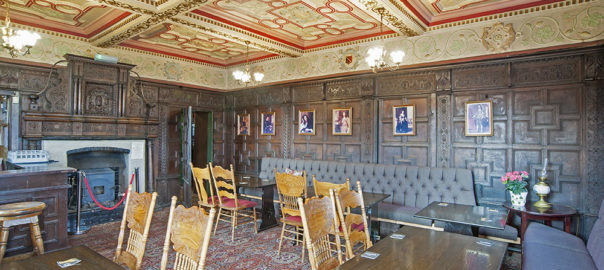
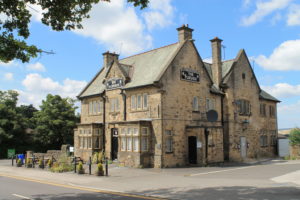
Carbrook Hall (537 Attercliffe Common, S9 2FJ) has an historic pub interior of some regional importance. The original building was owned by the Blunt family from 1176. It was rebuilt in 1462, and was bought by Thomas Bright (Lord of the Manor of Ecclesall) in the late 16th century. His descendant, John Bright, was an active Parliamentarian during the English Civil War, and the building was used as a Roundhead meeting place during the siege of Sheffield Castle (1644). Most of the building was demolished in the 19th century, what survives is a Grade II listed stone wing that was added ~1620. By 1860 Carbrook Hall was listed as a common beer house. A 1917 plan indicates that the pub was multi-roomed (for brewers Messr’s. J.Richdale & Co.Ltd. By Hall & Fenton, 10 Paradise Square, 28/01/17). Alterations were approved by Sheffield Licensing Justices in January 1917. Further plans (24/11/1925) indicate that, at this point, the central Tap Room was opened out with the bar becoming repositioned. A further set of plans (F.Ratcliff, Orchard Chambers, Church Street 2/12/1937, approved 15/03/1938) indicate extensions for ‘Urinals, Coats and Garage.’ The panelled room is now designated as ‘Old Oak Room,’ previously it was described as ‘Smoke Room.’ A further set of plans (approved 26/10/1943) indicate a relocation of the bar area and the removal of a staircase from the bar area. The central Smoke Room is now designated as ‘Lounge.’ 1965 brought the addition of interior toilets. The next change is in 1970. Plans from Bass Charrington North Ltd (Hadfield Cawkwell Davidson and Partners) show a further reconfiguration of the bar area into its current position. A final set of plans for Wm.Stones (Melling & Ridgeway, Charter House, Moore Street, S3 7UR, August 1982) also have the current lay-out. The ‘Old Oak Room’ includes a 17th.century panelled ground floor room with vine trail plaster frieze and enriched cross beam ceiling, also with vine trail. There is also an elaborate early 17th.century oak chimneypiece with Corinthian columns and allegorical figures and Latin inscription on the over mantel. The motif represents Wisdom trampling upon Ignorance. It also has framed panelling with painted decoration and larger stone chimneypiece with corniced mantelshelf and over mantel flanked by unusual caryatids. Carbrook Hall was a CAMRA GBG entry in the 1990’s: we hope the recent re-introduction of cask conditioned beer heralds a renaissance of the pub. Thanks to Sheffield Archives for assistance in located various plans.carbrook-hall-1

Pub heritage feature – Cross Keys, Handsworth

The Cross Keys (Handsworth Road, S13 9BZ) is rated by CAMRA as a pub with an interior of regional importance.

cross-keys-bell-push cross-keys-fireplace

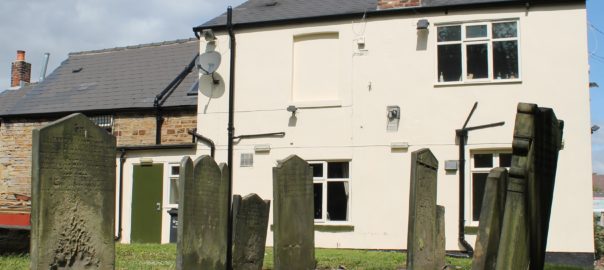
It is a three-roomed pub with lots of vintage fitting and low ceilings supported by oak beams. The back parts are the main interest, with the snug a particular delight. This little room, refitted probably in the 1920s and largely untouched since, has all its original seating, panelling and Art Deco fire surround. There is more old seating in the other rooms and a (disused) corridor hatch near the entrance. The servery and bar-fittings are all modern. The Cross Keys is one only three pubs in the UK built on holy ground. There is a cemetery on the grounds of the pub. Originally a mid-13th century house for chaplains and then a schoolroom, It became a pub in in 1804. It is an old vernacular building that stands virtually within the churchyard. The other two UK pubs situated on holy ground are: The Mug House, Claines Lane, Claines, Worcester WR3 7RN Ring o’ Bells, 39 Kirkland, Kendal, Cumbria LA9 5AF – Dave Pickersgill, Pub Heritage Officer
Pub heritage news

the-plough-sandygate-sheffield-6-1511416

The Plough Inn, Sandygate Road

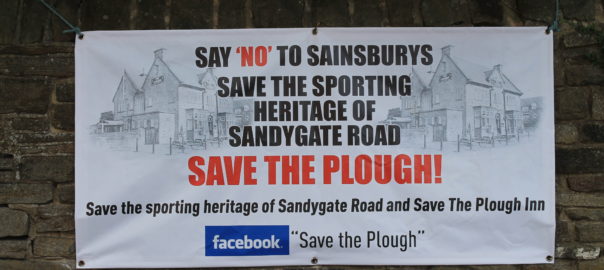
The Plough Inn (Crosspool) was a Tennants pub for many years. In 1962, ownership changed when Whitbread took over Sheffield-based Tennants. More recently, in 2003, Enterprise Inns took over the pub. Since then, there appears to have been no serious maintenance work and very little spend on upkeep. Enterprise have left the pub to rot. When the pub closed in 2015, a local community group successfully obtained ACV (Asset of Community Value) status from Sheffield City Council (SCC). This a clear badge of honour for the pub. In their comments regarding the application, SCC said: ‘The Property is a thriving pub….  It supports certain community groups and community activities that cater for the interests of a wide cross section of the local community. It is also apparent  ….  that the Property is well regarded by the local community and that there are no alternative premises within a reasonable travelling distance for many of individuals who use the Property.’ Enterprise Inns then leased the building to Sainsburys who then waited until peak holiday time before, on 2nd.August, submitting a planning application to turn the pub into a ‘convenience store.’ Without the ACV status, such a change of use would not require a formal planning application. The pub is adjacent to the ground of Hallam FC (the 2nd.oldest football club in the world). Hallam occupy Sandygate, the oldest football ground in the world and the site of the first football game (Hallam v Sheffield FC) as recognised by FIFA. The Plough is important in the history of football (the first inter-club game was adjacent, the rules of football written in the pub ………). Hallam FC also have various anniversary events planned in the near future, including an event when various old football trophies will be in the same place for the first time before going to Zurich to the FIFA Museum. We can only assume that Sainsburys were not aware of the historical importance when they took on the site. If they were aware, we would hope that they would not be aiming to effectively destroy a national historic asset. An ideal solution would be for the Plough to become a football museum with a community bar. We hope sense will prevail and that this planning application will be rejected. By the 6th.September deadline SCC had received 86 comments, many long and detailed, 85 of which were against the planning proposal.

Pub Heritage walks

As part of the recent Heritage Open Day events, Sheffield CAMRA led two Pub Heritage walks. Thanks to the 28 people who attended for their positive feedback. Details of the walk are included in the November 2015 edition of ‘Beer Matters.’ This is available to download for our website. Dave Pickersgill, Pub Heritage Officer
Sheffield’s pub heritage – Fagan’s

Barrel 1815 map Fagan’s, originally ‘The Barrel’ is documented on an 1815 map. This indicates that the current left-hand room was, at that time, a neighbouring tenement, the pub and the tenement sharing a yard at the rear of the property. The last major change to the interior was in 1953 (architect, John Foster):
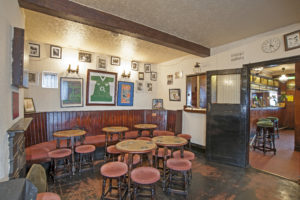
  • an extension which includes the current inside toilets.
  • removal of an internal wall opposite the bar, thus opening up the tap room into the current larger, ‘Lounge Hall.’ The walls were covered in full height ply panels and the fixed seating looks to date from then. Front windows have ‘Public’ and ‘Lounge’ etched and frosted panels.
There have only been three licensees in the past 100 years: ex-Bomber Command, Joe Fagan ran the pub from 1947 to 1985 becoming Tetley’s longest serving landlord. A new sign was erected in 1985. When the sign rotted, this was replaced in 2008 with a sign which shows a photo of Joe against a bomber.  Joe died only a few weeks after passing on the tenancy to the current Landlord, Tom Boulding. On the front right is a tiny snug originally called the dram shop – a pub room name only seen in the Sheffield area (the wording appears in the ceramic exterior of the Ship, Shalesmoor). The snug has a very old counter and the walls are covered with ply panelling. Sheffield artist Pete McKee, famous for his comic cartoon paintings, took to the streets of Sheffield in April 2013 to a bigger canvas: the gable end of Fagan’s is the home of one of Pete’s projects, ‘The Snog‘. At the time, this was the largest mural painted by Pete. The mural on the gable end at Fox Valley (Stocksbridge), completed in May 2016, dwarves this example. In the 19th.century, the pub was owned by local brewer, Rawsons. In turn ownership passed to Gilmours, Tetleys, Allied Breweries and, currently, Punch Taverns. Early in September, Fagan’s will be the start point for a Pub Heritage Walk, as part of the Heritage Open day weekend. On Friday 9th.September, the walk will take place twice: 14:00 and 17:30. Places are limited and may be booked via Eventbrite: 14:00 start: http://tinyurl.com/jh3ogzz 17:30 start: http://tinyurl.com/jgqfa2r  – Dave Pickersgill & Mick Slaughter SheffieldCityCentre-Fagans-RearRoom

Asset of Community Value (ACV) update

On 16th May, Sheffield and District CAMRA submitted an ACV application for the University Arms to Sheffield City Council (SCC). Over eight weeks later, on 27th July we received an email from SCC which included a six-page document from a legal company, Pinsent Masons, employed by the owners of the pub, the University of Sheffield. This letter was an objection to the ACV nomination submitted by ourselves. We were given seven days to respond. In our opinion, and that of our colleagues at CAMRA HQ in St Albans, this ACV application clearly reaches the statutory test outlined by the Government. Advice from CAMRA, nationally, was followed throughout the nomination process. The application was compared to successful ACV applications from other parts of the country. It is felt that the detail included was more than adequate to guarantee an ACV listing. We were surprised to receive an objection as we believe that ACV status is something of which any pub would be proud, especially as the University and ourselves do seem to have many common aims and ideas. See for example, two recently published research documents Sheffield Beer Report and Pubs and Places: The Social Value of Community Pubs in which the IPPR commissioned colleagues at Sheffield University. We responded to the letter, sending a five page document which refuted the observations made. However, this action by the university raises a number of issues:
  • CAMRA sees ACV status as a clear badge of honour for both owners and licensees. It is a clear indication that their pub matters to the community. We do not understand why the university should be against the award of such status.
  • A number of items which could be used to support the application are suggested by Pinsent Masons. However, these are unnecessary. In our opinion, these comments are deliberately added in order to confuse the situation.
Pinsent Masons LLP is an international company who rank among the top 100 law firms in the world by turnover. They have over 400 partners, a legal team of around 1,500 and more than 2,500 staff. We await developments with interest. Dave Pickersgill – Pub Heritage Officer, Sheffield and District CAMRA

Heritage Open Days 2016 – Pub history walk

Heritage open days HODs_Box_ARTWORK_a4 As part of Heritage Open days 2016, I’m leading a Pub Heritage Walk on Friday 9th.September. This short tour will take in some of the entries in the CAMRA ‘Yorkshire’s Real Heritage Pubs’ book (copies will be available for purchase). Also included are a number of ‘try also’ pubs which include aspects of architectural merit. IMG_6342 We will commence at ‘Fagans’ and proceed to the ‘Dog and Partridge’ via a short stop outside the ‘Grapes.’ After a short refreshment break, we will proceed past the ‘Red Deer’ and ‘Bloo88,’ before completing the walk at ‘The Bath Hotel.’ IMG_7558 En route we will pass: ‘Stanch,’ (the statue of a Pointer dog), the building with three different date stones, and the then home of the company whose claim to fame is that the owner was the first man to climb Nelson’s Column. There will also be Victorian tilework, terrazzo flooring, art deco glasswork, a mention of both long-gone Sheffield Breweries, Samuel Plimsoll and much more …. The walk will take place twice: 14:00 and 17:30. Places are limited (to 15) and may be booked via Eventbrite: 14:00 start: http://tinyurl.com/jh3ogzz 17:30 start: http://tinyurl.com/jgqfa2r Participants who wish to sample the beer served at the various en route stops are recommended to use public transport. If you can’t wait until September, you could try the e-book, ‘History of Worksop and Retford Brewery’  http://tinyurl.com/j4d34ow  Dave Pickersgill, Sheffield CAMRA, Pub Heritage Officer

Sheffield’s Pub Heritage – The Brown Bear

The Brown Bear (109 Norfolk Street, S1 2JE) is one of the oldest pubs in Sheffield city centre. It is a square-set Georgian building, with a fine pediment above the single door, with the public bar to the right and the lounge to the left. The pub features walls covered with theatre posters from the nearby Crucible and Lyceum Theatres and is one of five Samuel Smith pubs in Sheffield. brown bear ext1 97–117 Norfolk Street (including the Brown Bear) was grade II listed in 1972.  It was built late 1700’s to 1875, predating most of the buildings in the surrounding area (which include the Town Hall). There has been a pub on the site for over 200 years. It was probably named after the bear baiting pit which was in the botanical gardens. The pit closed in the 1870s when a curious child got too near and was killed by the two resident bears. In the 1920’s, the Brown Bear had a game called ” bumble puppy, ” a version of the centuries old game of ‘Trou Madame,’ which is still played in Belgium and France.  Played on a raised board, balls were rolled down a sloping top towards nine numbered arches. The Brown Bear was bought by Sheffield Corporation in the 1930’s. The pub survived the Sheffield blitz and planners in the 50s and 60s. In 1981, when the lease was up for renewal, a stipulation was included that the character of the pub could not be altered. The winning bidder was John Smiths who had been lease holders since 1955. The pub was in the first CAMRA Good Beer Guide (1974). However, it was erroneously named, the ‘Brown Bull.’ About ten years ago, the premises were taken over by Samuel Smith. There was an extensive facelift soon after: a rare example of a typical 18th.Century Sheffield house being restored to how it used to look. Dave Pickersgill

Heritage in Hackenthorpe

  The Sportsman, (Main Street, Hackenthorpe, S12 4LA) has recently gained a place on the CAMRA Regional Inventory of Pub Interiors and has been proposed for the prestigious National Inventory. The Sportsman was the last pub to be built by the Worksop and Retford Brewery (plans dated, 1955 and 1956). ‘Serious discrepancies‘ were found in the 1955 plans, 1956 seeing a successful resubmission. The previous building was originally in the hands of Sheffield-based Old Albion Brewery who were taken over by the WRB in 1939. WRB were subsequently taken over by Tennants Brewery of Sheffield in 1958, who, in turn, who were taken over by Whitbread in 1962. Building work was carried out by J.E.Smith (Worksop) Ltd., Kilton Road, Worksop, and the design was by W.S.Daniel, Estates Surveyor for the WRB. At that time, the pub was in North East Derbyshire (Chesterfield Rural District Council), 1973 boundary changes bringing in it into the City of Sheffield. In the mid 1950’s, Sheffield City Council were developing the new Hackenthorpe estate, and some public house licences were transferred from the centre of Sheffield to the new estate. In October 1955, Derbyshire County Council Planning Department, referring to the licence of the Sportsman, suggested that ‘it would appear that this should be diverted to a site out of the village and towards the estate if possible.’ Superintendent E.Wallis, Renishaw Police Station, responded on 5th.November stating: ‘ This is practicably an impossibility, there are no sites available, the Sheffield Corporation and Planning Authorities would certainly not tolerate any idea of the transferring of this house onto the new estate ….. I suggest that this plan be approved so that the work can be put into operation as soon as possible to give the increasing population the benefit of using a modern house, a wider main road and increased parking facilities.‘ The previous pub fronted the road. It was totally demolished, the front of the new build been built in the same place as the rear of the old building. The pub is remarkably little altered with three rooms, a 1985 map showing there have been no changes to the room layout since construction. There is a sizeable entrance lobby inside the front door. This originally included a hatch for off-sales. A door on the left leads to the games room which retains a bar counter of a distinctive 1950s style, the bar back fitting and the fixed seating are both original. It now has a pool table but until recently it was a three-quarter sized snooker table. A 1972 painting of the pub is displayed above the bar. A door to the right of the lobby leads into the lounge bar with another distinctive 1950s style bar counter, the bar back fitting and the fixed seating are original. All bars have original canopies, the shape matching that of the bar. The linked bar feeds the three separate rooms. A door on the right hand side of the lounge bar leads into a lobby with 1950s panelling to picture frame height all around. A door leads to the concert/function room at the rear with another bar counter of a distinctive 1950s style, the bar back has more bays than that in the lounge bar and the fixed seating is original. There is another large lobby at the rear off of which are the toilets. The wall tiles in the gents ante room and toilets themselves are 1950s light blue ones that have been painted over in a dark blue colour – the gents is otherwise little changed. The ladies has modern tiles. All the doors have distinctive 1950s style wooden handles on one side (brass plates on the ‘push side’). The windows have been replaced with uPVC. When opened the Sportsman, in addition to bottled Don Jon and Donovan would have offered cask conditioned Worksop Amber (OG 1032.5) and Best Bitter (1038.5).  Donovan achieved a Diploma at the British Bottles Institute Competition in 1955 and, in 1899, was described as ‘the Perfection of Strong Ale, Brewed October and November, specially for Christmas.’ Unfortunately, the Sportsman does not currently provide cask-conditioned beer. The hope is that this may change in the future. Thanks to Tim Knebel at Sheffield Archives for assistance in sourcing original material. A history of the Worksop and Retford Brewery is available at: http://tinyurl.com/j4d34ow

ACV update

In mid June, the Bath Hotel and the Sheffield Tap both achieved Asset of Community Value (ACV) status. We are very pleased to see that the only two Sheffield pubs which appear on the CAMRA National Inventory of Pub Interiors now have this added protection – congratulations to all concerned. The Manager of the Bath only discovered their achievement when, on 14th.June, she was presented with our Pub of the Month Award, the decision having been announced a few hours earlier. Bath Hotel external Bath Hotel window However, Sheffield City Council are still not working to their statutory obligations. Decisions on these applications were due on 30th.May, not over two weeks later. A couple of weeks earlier, another Sheffield & District nomination, the Castle Inn (Bradway), also became an ACV. This application was originally submitted on 16th.June 2015. This delay, of almost a year, is a record – no other council has had an application for so long and not made a decision. The 2011 Localism Act states that Council have 8 weeks to determine ACV applications. However, we are pleased to note that the formal decision record for the Castle (the Cabinet Member for Community Services and Libraries) states; ‘On the evidence provided the Property is popular with the people of Bradway and neighbouring communities, but also attracts a wider community ….. It is reasonable to consider local …….. to encompass not only the local ……. community of Bradway but also a large area that could conceivably encompass all of Sheffield itself. ‘ This emphasises a point that we have made in other applications that the ‘local community’ for a public house can encompass a considerable area. Sheffield Tap Brewery Sheffield Tap Pint This point is further emphasised in their report on the Sheffield Tap: ‘the Property is not only popular with rail travellers and neighbouring communities, but also attracts a wider community who visit the pub as part of “beer tourism”. The use by the neighbouring groups and to an extent rail travellers collectively identifies a “local community”. Therefore, it is a venue that attracts not only the local, in the normal sense of the word, community immediately in the railway station’s vicinity but also a national and arguably an international clientele.’ Following nomination by a local community group, The Plough (Crosspool) is registered as an ACV until 29th.June 2020. Recently Enterprise Inns closed the pub and are now believed to be leasing the building to Sainsburys. ACV status means that the Plough cannot be demolished or converted without planning permission, and also that local residents are given six months to buy the property if it is put on the market. A planning application for change of use has not yet been submitted. The Sandygate Road pub is opposite Hallam FC, the world’s oldest football ground. It is believed a pub has been on the site for 400 years. In April, both the Three Tuns and the Cremorne gained ACV status. Sheffield and District CAMRA will continue to make further ACV applications to Sheffield City Council. We are expecting their next decision on one of our applications in early August. Dave Pickersgill Pub Heritage Officer, Sheffield and District CAMRA