ACV update
Sheffield and District CAMRA have piloted a national CAMRA scheme which encourages branches to nominate pubs in their area as Assets of Community Value (ACV). We nominated eleven pubs, ten in Sheffield and one in the Derbyshire Dales. Derbyshire Dales have approved our application to list The Red Lion (Litton) as an ACV.

However, Sheffield City Council, who also received the applications in late June responded with a series of further questions. They have since stated that decisions will be made by 24th.October. The ten pubs are a mix of heritage, suburban, city centre and rural. Once Sheffield has ruled on these applications, we will review our position and may submit more pubs for ACV status.
Currently only two Sheffield pubs, the Castle (Bolsterstone) and the Plough (Crosspool) have ACV listing. In our wider ‘district,’ the Red Lion has joined the Angel (Spinkhill) and the Anglers Rest (Bamford). Once a pub is ACV listed, planning permission is required for any change of use or demolition.
The ACV listing scheme is open to all CAMRA branches. Each branch can use this assistance to nominate up to ten pubs/month. The branch provides basic details, then CAMRA nationally, complete the paperwork, check ownership, obtain ground plans and paid the fee. After checking the details and adding more information, the branch then submits the completed documentation to the appropriate Local Authority. Four workshops are planned for CAMRA branches.
These will discuss how to access CAMRA’s Support Service and will also hear from other Branches leading the way with ACV nominations. Sheffield CAMRA will be represented at the first workshop which is in Manchester on 3rd. October.
Nationally, Communities Pubs Minister Marcus Jones has presented the first ‘Badge of Honour’ to an ACV-listed pub. To date, more than 800 pubs have achieved ACV status. The first new badge – declaring ‘This Pub Matters’ – was presented to Tina Massie of The Red Lion, Knotty Green, Buckinghamshire, at the recent Great British Beer Festival which was held, in London, at Olympia. The initiative is a joint venture between the Campaign for Real Ale and the Department for Communities & Local Government.
More information is available at:
CAMRA – List your Local
CAMRA – Nominating as a CAMRA branch
Sheffield City Council – Assets of Community Value
Derbyshire Dales District Council – Community Right to Bid
Listing for post-war pubs?
Historic England seeks details of pubs that could lead to them getting listed status: Heritage body Historic England is seeking details of the nation’s pubs for a research project that could lead to more getting listed status. It particularly wants to hear about pubs built or rebuilt between 1945 and 1985 as part of a new thematic review. The project, which could last up to two years, could then recommend additions to the 11 post-war pubs that already have listed status. Historic England said: “Currently, post-war pubs are a severely threatened building type, with many being converted to other uses or demolished altogether. Through this project we are aiming to help people understand and appreciate these buildings, and hopefully to help protect them.”
The buildings nominated need not be still used as a pub and could have been closed, altered or even demolished. Historic England said the information would help ensure “the knowledge of post-war pubs across England is as complete and up-to-date as possible”. Currently just two post-war public houses are listed in their own right – the former Lord High Admiral in Pimlico, London, which is now in use as an Argentinian restaurant and Jack Straw’s Public House in Hampstead, London, which replaced an 18th century pub destroyed during the Blitz.
Another eight post-war pubs are currently listed as part of wider development schemes: The Shakespeare – part of the Barbican Estate in London; The Pimlico Tram, Westminster; the former Crowders Well – part of the Barbican estate in London; The Earl George, The Link, The Scottish Queen and The Parkway at the Park Hill estate, Sheffield; The Pride of Pimlico in Westminster and The Cock Tavern at Smithfield Market in London. Suggestions can be emailed to
jo.bradley@HistoricEngland.org.uk.
Pub company Punch Taverns has announced it is to sell 158 of its pubs. The Burton headquartered firm has agreed to sell 158 outlets to New River Retail for £53.5 million. The move is part of the firm’s strategy to sell its non-core pubs at a rate of about 200 a year. Following the sale, Punch will have 2,900 “core” pubs and 550 non-core pubs. New River Retail is a specialist real estate investment trust (REIT) focussed on the UK food and value retail sector. The proceeds will be used to reduce Punch’s debt. It is feared that New River will convert many of the pubs into stores. In November 2013, Marston’s, sold 202 pubs to New River.
Proposals have been submitted to Sheffield City Council to turn The Market Inn, on Wortley Road, High Green, into a business centre, as well as building 14 houses on the surrounding land. And under separate plans developers want to convert The Ball Inn, on Myrtle Road, Heeley, into five apartments, while also putting up a four-storey building with 15 flats.
Under The Market Inn scheme, the pub building will be retained, with the interior rearranged to create several office suites. The Ball would be turned into five two-bedroom flats. The new building will be constructed to the rear of the site, offering 15 two and three-bedroom flats.
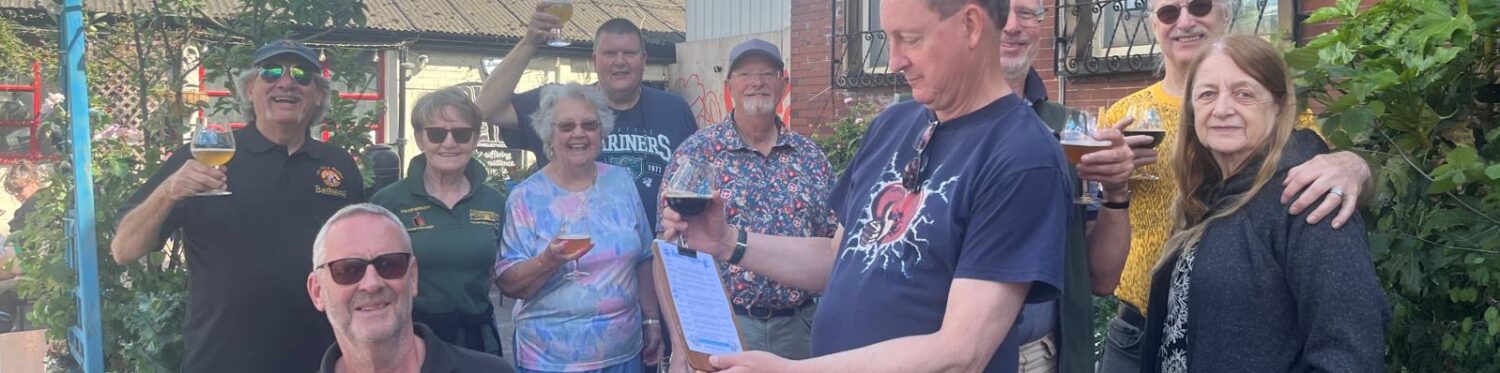




 As part of Heritage Open days 2016, I’m leading a Pub Heritage Walk on Friday 9th.September. This short tour will take in some of the entries in the CAMRA ‘Yorkshire’s Real Heritage Pubs’ book (copies will be available for purchase). Also included are a number of ‘try also’ pubs which include aspects of architectural merit.
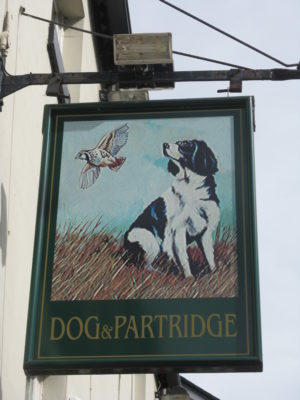 We will commence at ‘Fagans’ and proceed to the ‘Dog and Partridge’ via a short stop outside the ‘Grapes.’ After a short refreshment break, we will proceed past the ‘Red Deer’ and ‘Bloo88,’ before completing the walk at ‘The Bath Hotel.’
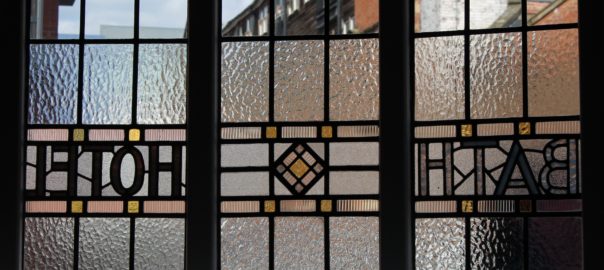
 En route we will pass: ‘Stanch,’ (the statue of a Pointer dog), the building with three different date stones, and the then home of the company whose claim to fame is that the owner was the first man to climb Nelson’s Column. There will also be Victorian tilework, terrazzo flooring, art deco glasswork, a mention of both long-gone Sheffield Breweries, Samuel Plimsoll and much more ….
The walk will take place twice: 14:00 and 17:30. Places are limited (to 15) and may be booked via Eventbrite:
14:00 start: http://tinyurl.com/jh3ogzz
17:30 start: http://tinyurl.com/jgqfa2r
Participants who wish to sample the beer served at the various en route stops are recommended to use public transport.
If you can’t wait until September, you could try the e-book, ‘History of Worksop and Retford Brewery’ http://tinyurl.com/j4d34ow
Dave Pickersgill, Sheffield CAMRA, Pub Heritage Officer
En route we will pass: ‘Stanch,’ (the statue of a Pointer dog), the building with three different date stones, and the then home of the company whose claim to fame is that the owner was the first man to climb Nelson’s Column. There will also be Victorian tilework, terrazzo flooring, art deco glasswork, a mention of both long-gone Sheffield Breweries, Samuel Plimsoll and much more ….
The walk will take place twice: 14:00 and 17:30. Places are limited (to 15) and may be booked via Eventbrite:
14:00 start: http://tinyurl.com/jh3ogzz
17:30 start: http://tinyurl.com/jgqfa2r
Participants who wish to sample the beer served at the various en route stops are recommended to use public transport.
If you can’t wait until September, you could try the e-book, ‘History of Worksop and Retford Brewery’ http://tinyurl.com/j4d34ow
Dave Pickersgill, Sheffield CAMRA, Pub Heritage Officer 
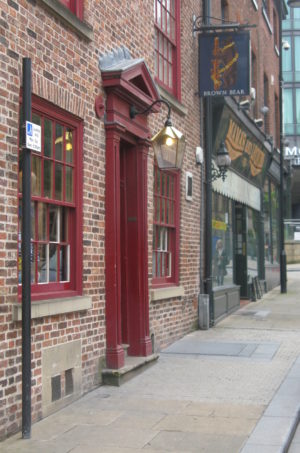 97–117 Norfolk Street (including the Brown Bear) was grade II listed in 1972. It was built late 1700’s to 1875, predating most of the buildings in the surrounding area (which include the Town Hall). There has been a pub on the site for over 200 years. It was probably named after the bear baiting pit which was in the botanical gardens. The pit closed in the 1870s when a curious child got too near and was killed by the two resident bears.
In the 1920’s, the Brown Bear had a game called ” bumble puppy, ” a version of the centuries old game of ‘Trou Madame,’ which is still played in Belgium and France. Played on a raised board, balls were rolled down a sloping top towards nine numbered arches.
The Brown Bear was bought by Sheffield Corporation in the 1930’s. The pub survived the Sheffield blitz and planners in the 50s and 60s. In 1981, when the lease was up for renewal, a stipulation was included that the character of the pub could not be altered. The winning bidder was John Smiths who had been lease holders since 1955. The pub was in the first CAMRA Good Beer Guide (1974). However, it was erroneously named, the ‘Brown Bull.’
About ten years ago, the premises were taken over by Samuel Smith. There was an extensive facelift soon after: a rare example of a typical 18th.Century Sheffield house being restored to how it used to look.
Dave Pickersgill
97–117 Norfolk Street (including the Brown Bear) was grade II listed in 1972. It was built late 1700’s to 1875, predating most of the buildings in the surrounding area (which include the Town Hall). There has been a pub on the site for over 200 years. It was probably named after the bear baiting pit which was in the botanical gardens. The pit closed in the 1870s when a curious child got too near and was killed by the two resident bears.
In the 1920’s, the Brown Bear had a game called ” bumble puppy, ” a version of the centuries old game of ‘Trou Madame,’ which is still played in Belgium and France. Played on a raised board, balls were rolled down a sloping top towards nine numbered arches.
The Brown Bear was bought by Sheffield Corporation in the 1930’s. The pub survived the Sheffield blitz and planners in the 50s and 60s. In 1981, when the lease was up for renewal, a stipulation was included that the character of the pub could not be altered. The winning bidder was John Smiths who had been lease holders since 1955. The pub was in the first CAMRA Good Beer Guide (1974). However, it was erroneously named, the ‘Brown Bull.’
About ten years ago, the premises were taken over by Samuel Smith. There was an extensive facelift soon after: a rare example of a typical 18th.Century Sheffield house being restored to how it used to look.
Dave Pickersgill 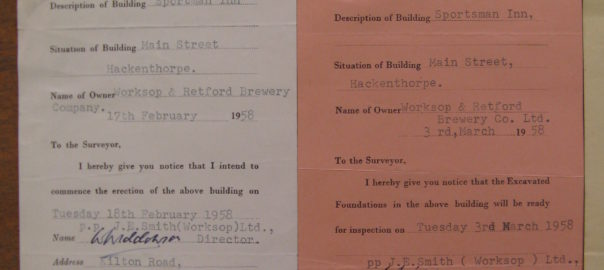



 However, Sheffield City Council are still not working to their statutory obligations. Decisions on these applications were due on 30th.May, not over two weeks later.
A couple of weeks earlier, another Sheffield & District nomination, the Castle Inn (Bradway), also became an ACV. This application was originally submitted on 16th.June 2015. This delay, of almost a year, is a record – no other council has had an application for so long and not made a decision. The 2011 Localism Act states that Council have 8 weeks to determine ACV applications.
However, we are pleased to note that the formal decision record for the Castle (the Cabinet Member for Community Services and Libraries) states; ‘On the evidence provided the Property is popular with the people of Bradway and neighbouring communities, but also attracts a wider community ….. It is reasonable to consider local …….. to encompass not only the local ……. community of Bradway but also a large area that could conceivably encompass all of Sheffield itself. ‘ This emphasises a point that we have made in other applications that the ‘local community’ for a public house can encompass a considerable area.
However, Sheffield City Council are still not working to their statutory obligations. Decisions on these applications were due on 30th.May, not over two weeks later.
A couple of weeks earlier, another Sheffield & District nomination, the Castle Inn (Bradway), also became an ACV. This application was originally submitted on 16th.June 2015. This delay, of almost a year, is a record – no other council has had an application for so long and not made a decision. The 2011 Localism Act states that Council have 8 weeks to determine ACV applications.
However, we are pleased to note that the formal decision record for the Castle (the Cabinet Member for Community Services and Libraries) states; ‘On the evidence provided the Property is popular with the people of Bradway and neighbouring communities, but also attracts a wider community ….. It is reasonable to consider local …….. to encompass not only the local ……. community of Bradway but also a large area that could conceivably encompass all of Sheffield itself. ‘ This emphasises a point that we have made in other applications that the ‘local community’ for a public house can encompass a considerable area.

 This point is further emphasised in their report on the Sheffield Tap: ‘the Property is not only popular with rail travellers and neighbouring communities, but also attracts a wider community who visit the pub as part of “beer tourism”. The use by the neighbouring groups and to an extent rail travellers collectively identifies a “local community”. Therefore, it is a venue that attracts not only the local, in the normal sense of the word, community immediately in the railway station’s vicinity but also a national and arguably an international clientele.’
Following nomination by a local community group, The Plough (Crosspool) is registered as an ACV until 29th.June 2020. Recently Enterprise Inns closed the pub and are now believed to be leasing the building to Sainsburys. ACV status means that the Plough cannot be demolished or converted without planning permission, and also that local residents are given six months to buy the property if it is put on the market. A planning application for change of use has not yet been submitted. The Sandygate Road pub is opposite Hallam FC, the world’s oldest football ground. It is believed a pub has been on the site for 400 years.
In April, both the Three Tuns and the Cremorne gained ACV status. Sheffield and District CAMRA will continue to make further ACV applications to Sheffield City Council. We are expecting their next decision on one of our applications in early August.
Dave Pickersgill
Pub Heritage Officer, Sheffield and District CAMRA
This point is further emphasised in their report on the Sheffield Tap: ‘the Property is not only popular with rail travellers and neighbouring communities, but also attracts a wider community who visit the pub as part of “beer tourism”. The use by the neighbouring groups and to an extent rail travellers collectively identifies a “local community”. Therefore, it is a venue that attracts not only the local, in the normal sense of the word, community immediately in the railway station’s vicinity but also a national and arguably an international clientele.’
Following nomination by a local community group, The Plough (Crosspool) is registered as an ACV until 29th.June 2020. Recently Enterprise Inns closed the pub and are now believed to be leasing the building to Sainsburys. ACV status means that the Plough cannot be demolished or converted without planning permission, and also that local residents are given six months to buy the property if it is put on the market. A planning application for change of use has not yet been submitted. The Sandygate Road pub is opposite Hallam FC, the world’s oldest football ground. It is believed a pub has been on the site for 400 years.
In April, both the Three Tuns and the Cremorne gained ACV status. Sheffield and District CAMRA will continue to make further ACV applications to Sheffield City Council. We are expecting their next decision on one of our applications in early August.
Dave Pickersgill
Pub Heritage Officer, Sheffield and District CAMRA 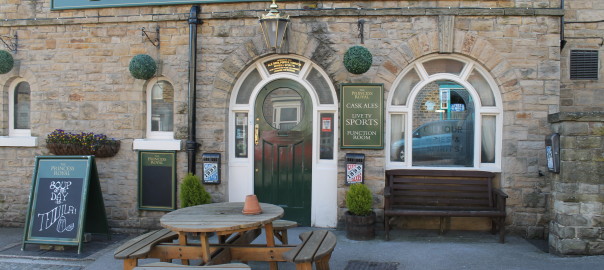

 Previously a beerhouse, the Princess Royal was re-built of stone in the mid-1920s for Duncan Gilmour (architects: Hall & Fenton, Sheffield). The current-day external footprint of the pub is identical to this rebuild. The interior was changed in ~1949 when the small servery situated just inside the pub and an off sales to the right of the porch were removed; the present centrally situated servery added; internal toilets replaced the Kitchen and Scullery and the outside toilets were demolished.
Apart from the opening-up of the smoke room on the right (in the 1980s?) the interior is little changed for over 65 years with two (was three) rooms still including an active billiard room. It has a lovely set of Gilmour’s etched and frosted exterior windows, some with their Windsor Castle symbol.
Previously a beerhouse, the Princess Royal was re-built of stone in the mid-1920s for Duncan Gilmour (architects: Hall & Fenton, Sheffield). The current-day external footprint of the pub is identical to this rebuild. The interior was changed in ~1949 when the small servery situated just inside the pub and an off sales to the right of the porch were removed; the present centrally situated servery added; internal toilets replaced the Kitchen and Scullery and the outside toilets were demolished.
Apart from the opening-up of the smoke room on the right (in the 1980s?) the interior is little changed for over 65 years with two (was three) rooms still including an active billiard room. It has a lovely set of Gilmour’s etched and frosted exterior windows, some with their Windsor Castle symbol.
 The entrance lobby has a mosaic floor and a dado of 1920s tiling in cream and green and an inner door in a good screen. Across the front of the pub is the single room originally the Lounge & Dining Room on the left and the Smoke Room on the right but a small piece of wall including the door to the smoke room has been removed (in the 1980s?). The bar counter is 1949 with a modern top and has a row of tiles at the top. The back fitting is from ~1949 with some modernisation. There is some 1920s panelling one piece of wall on the left, in the former smoke room area on the right and also on the left there is 1920s fixed seating which has been re-fitted and boxed-in, and there is a modern tiled dado in the former off sales area and to the right of the servery.
 At the rear left is the billiard room now with a three-quarter sized table (presumable replacing a full sized one). The fixed seating looks to be the original from the 1920s but has been re-fitted and boxed-in. There are three good 1920s baffles by doors – two by the door to the corridor created in ~1949 leading to the toilets. There is a small counter from ~1949 with a modern top. The fireplace looks like a replacement (or is it the ~1949 one?). There is also a Club Room above the billiard room
The first mention of the name, ‘Princess Royal’ in a Directory is in 1937. Also, in that year, the building was designated as a ‘Public House,’ not, as previously, a ‘Beerhouse.’ The first mention of a phone number is in a 1954 Directory. The pub has had the same phone number since then. Gilmours were taken over by Tetleys (Leeds) in 1954 – perhaps the telephone was installed at this point?
Thanks to Tim Knebel at Sheffield Archives for assistance in sourcing original floor plans.
Dave Pickersgill
At the rear left is the billiard room now with a three-quarter sized table (presumable replacing a full sized one). The fixed seating looks to be the original from the 1920s but has been re-fitted and boxed-in. There are three good 1920s baffles by doors – two by the door to the corridor created in ~1949 leading to the toilets. There is a small counter from ~1949 with a modern top. The fireplace looks like a replacement (or is it the ~1949 one?). There is also a Club Room above the billiard room
The first mention of the name, ‘Princess Royal’ in a Directory is in 1937. Also, in that year, the building was designated as a ‘Public House,’ not, as previously, a ‘Beerhouse.’ The first mention of a phone number is in a 1954 Directory. The pub has had the same phone number since then. Gilmours were taken over by Tetleys (Leeds) in 1954 – perhaps the telephone was installed at this point?
Thanks to Tim Knebel at Sheffield Archives for assistance in sourcing original floor plans.
Dave Pickersgill