
CAMRA Sheffield & District
Sheffield & District branch of CAMRA


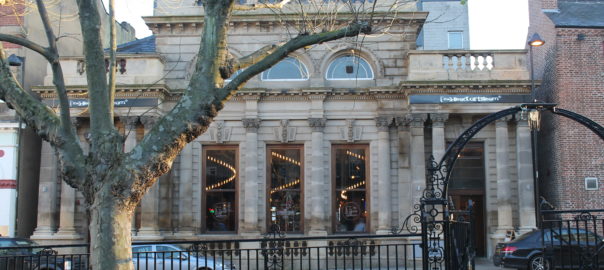
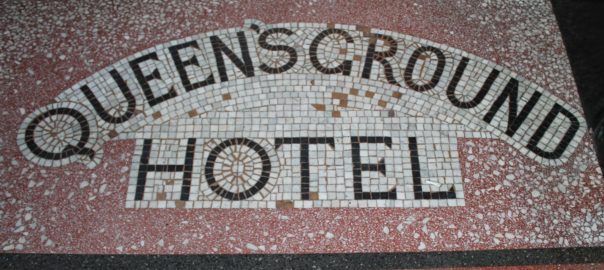
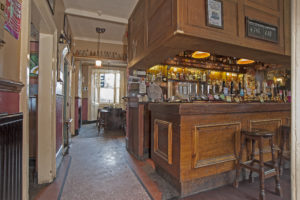
 The terrazzo flooring which flows from the entrance lobby indicates the original floor plan. There is a leaded ‘Ward’s Fine Malt Ales’ window and a distinctive exterior sign with the same wording. In earlier days, the pub name was over the door, in a similar style (see 1982 photo).
 A 1946 plan (Hadfield Cawkwell, Sheffield) indicates that the rear room was split into two, the right-hand ‘Parlour’ having a separate door (opposite the bar). ‘Service’ and ‘Tap Room’ (front left) are both in their current positions. This plan has 1980 amendments which indicate the position of gaming machines. A 1962 plan (Hadfield, Cawkwell & Davidson, Rotherham for Messrs. S.H. Ward & Co.Ltd.) shows a new counter for the bar and the removal of a screen into the rear left Public Bar.
 A December 1981 plan (Sackville Design Co.) shows the rear rooms changing into a single ‘Lounge’ and the conversion of a kitchen and wash room into a smaller ‘catering kitchen’ and internal toilets. This is repeated on a 1984 plan (Jenkinson Palmer & Associated, Rotherham).
 Dave Pickersgill and Mick Slaughter
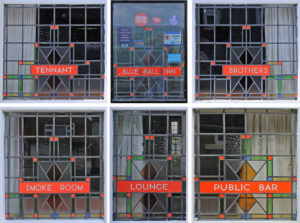 There is a central bar with three rooms off. A 1930’s refitting has left bench seating in all rooms and ‘Tennants’ windows. The Smoke Room pre-dates this refitting with quality 1930s (or possibly older) seating and some parquet flooring. The Public Bar (left) has an inter-war graced counter to bar and 1960s timbering. There are also a considerable number of Tennants windows remaining.
Dave Pickersgill & Mick Slaughter
There is a central bar with three rooms off. A 1930’s refitting has left bench seating in all rooms and ‘Tennants’ windows. The Smoke Room pre-dates this refitting with quality 1930s (or possibly older) seating and some parquet flooring. The Public Bar (left) has an inter-war graced counter to bar and 1960s timbering. There are also a considerable number of Tennants windows remaining.
Dave Pickersgill & Mick Slaughter  A 1913 plan (see image) shows the bar is on your left after passing through the lobby. Plans indicate some reconfiguring of the bar area to make the bar wider and allow slight reconfiguration of seating in the ‘big room’ at the front of the building (left room looking from Langsett Road). Other front room is a ‘billiard room.’ A 1939 plan shows no change to the three existing rooms – ‘Smoke Room’ at the rear left, ‘Tap Room’ (front left) and ‘Billiard Room’ (front right). A bottle store in the kitchen (rear right) is changed into a ‘Larder’ with a new window to Hatton Road and ‘Wooden Sheds’ in the yard are converted into ‘Bottles,’ Wash House’ and ‘WC’ (Fenton and Robinson, Chartered Architects, Sheffield).
1973 brings more changes (Jenkinson Palmer and Associates, Rotherham for S.H.Ward & Co.Ltd.). The bar is moved to its current location and the existing ‘Living Kitchen’ becomes a new ‘Billiard Room.’ The existing Billiard Room’ becomes part of the ‘Lounge’ which now extends across the full width of the building. In addition, inside toilets are built, as an extension, at the rear left of the building. A ‘Club Room’ continues to exist at the front right of the building. A 1982 plan indicates no changes since 1973. 1986 (Worksop Home Planners, see image) brought a catering kitchen, as an extension at the rear right of the pub.
A 1913 plan (see image) shows the bar is on your left after passing through the lobby. Plans indicate some reconfiguring of the bar area to make the bar wider and allow slight reconfiguration of seating in the ‘big room’ at the front of the building (left room looking from Langsett Road). Other front room is a ‘billiard room.’ A 1939 plan shows no change to the three existing rooms – ‘Smoke Room’ at the rear left, ‘Tap Room’ (front left) and ‘Billiard Room’ (front right). A bottle store in the kitchen (rear right) is changed into a ‘Larder’ with a new window to Hatton Road and ‘Wooden Sheds’ in the yard are converted into ‘Bottles,’ Wash House’ and ‘WC’ (Fenton and Robinson, Chartered Architects, Sheffield).
1973 brings more changes (Jenkinson Palmer and Associates, Rotherham for S.H.Ward & Co.Ltd.). The bar is moved to its current location and the existing ‘Living Kitchen’ becomes a new ‘Billiard Room.’ The existing Billiard Room’ becomes part of the ‘Lounge’ which now extends across the full width of the building. In addition, inside toilets are built, as an extension, at the rear left of the building. A ‘Club Room’ continues to exist at the front right of the building. A 1982 plan indicates no changes since 1973. 1986 (Worksop Home Planners, see image) brought a catering kitchen, as an extension at the rear right of the pub.
 The name changed from ‘Queens Ground Hotel’ to ‘Queens Ground’ in the 1960s.
The pub was in the same family for three generations. Landlord William Wild Banks in 1910, his widow became Landlord and the son followed. Fred Kelvey was Landlord from 1959 until 1985. The name originated from the cricket and athletics ground which was situated at the back of the pub.
Dave Pickersgill
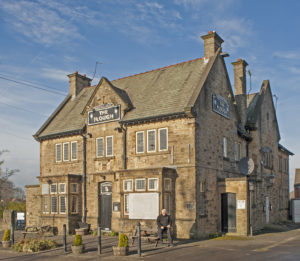
The Queen’s Ground is located at 401 Langsett Road, Hillsborough, S6 2JL. Buses 31a, 57, 61, 62, 81, 82 and 85 all stop nearby, or you can get the Blue or Yellow trams to Hillsborough.
The name changed from ‘Queens Ground Hotel’ to ‘Queens Ground’ in the 1960s.
The pub was in the same family for three generations. Landlord William Wild Banks in 1910, his widow became Landlord and the son followed. Fred Kelvey was Landlord from 1959 until 1985. The name originated from the cricket and athletics ground which was situated at the back of the pub.
Dave Pickersgill
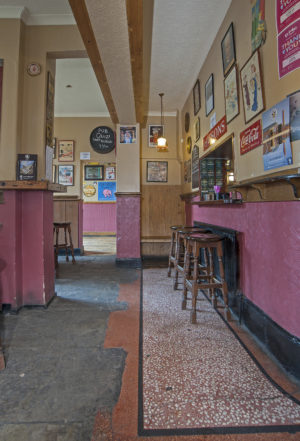
The Queen’s Ground is located at 401 Langsett Road, Hillsborough, S6 2JL. Buses 31a, 57, 61, 62, 81, 82 and 85 all stop nearby, or you can get the Blue or Yellow trams to Hillsborough.  A door on the left with a leaded glazed panel in the top and the figure ‘3’ leads to the tap room with inter-war fixed seating around most of it and it retains the 1940 ply panelled bar counter with a dark stain added. The exterior has 1930s stained and leaded windows and the fireplace is Victorian-style. The piece of wall near the counter is a modern addition having closed a gap created when the lobby bar counter was pushed back. There are good exterior inter-war (Tennants) leaded windows.
The front smoke room on the right has a wide gap to the lobby with more 1930s exterior windows but the fixed seating is post-war and has lost its fireplace. The terrazzo floor continues to the right with another door with 1930s stained and leaded windows and the figure ‘1’ and beyond is a terrazzo passage that goes past a door with the figure ‘5’ on it and the ladies’ toilet has a 1930s door and terrazzo floor (modern tiles); the gents’ toilet is modern.
The late 1980’s saw the pub becoming run-down, many original features becoming hidden. It became a free house in 1993 under the ownership of Neil and Sheila Clarke. At that time, the walls and ceilings were yellow and the bar was covered with hardboard. This was removed and stripped back to bare wood, before stain and varnish were added. Over a period of some years, they renovated the building. The window frames were stripped and repainted, the wood was stained dark and varnished, the walls were papered and boarding was removed from the door to the toilets.
A door on the left with a leaded glazed panel in the top and the figure ‘3’ leads to the tap room with inter-war fixed seating around most of it and it retains the 1940 ply panelled bar counter with a dark stain added. The exterior has 1930s stained and leaded windows and the fireplace is Victorian-style. The piece of wall near the counter is a modern addition having closed a gap created when the lobby bar counter was pushed back. There are good exterior inter-war (Tennants) leaded windows.
The front smoke room on the right has a wide gap to the lobby with more 1930s exterior windows but the fixed seating is post-war and has lost its fireplace. The terrazzo floor continues to the right with another door with 1930s stained and leaded windows and the figure ‘1’ and beyond is a terrazzo passage that goes past a door with the figure ‘5’ on it and the ladies’ toilet has a 1930s door and terrazzo floor (modern tiles); the gents’ toilet is modern.
The late 1980’s saw the pub becoming run-down, many original features becoming hidden. It became a free house in 1993 under the ownership of Neil and Sheila Clarke. At that time, the walls and ceilings were yellow and the bar was covered with hardboard. This was removed and stripped back to bare wood, before stain and varnish were added. Over a period of some years, they renovated the building. The window frames were stripped and repainted, the wood was stained dark and varnished, the walls were papered and boarding was removed from the door to the toilets.
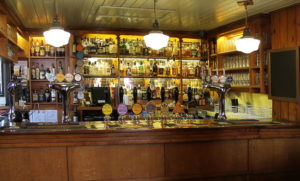 They renamed the pub as ‘The Cask and Cutler,’ establishing the Port Mahon Brewery in 2000. In 2006, when they moved to France, Richard Appleton took on the pub, reinstated the old name and, after a two year pause, restarted and renamed the brewery, Little Ale Cart. The brewery has hosted a number of cuckoo breweries, most notably Steel City who were in residence from their inception in 2010 until 2013. Brewing ceased in 2016, when the pub was taken on by James Birkett, owner of two other Sheffield pubs, the Blake and the Sheaf View. It was closed for a period, redecoration and some refurbishment occurring. The pub reopened in late September 2016 as the brewery tap for the nearby Neepsend Brewery.
Dave Pickersgill
They renamed the pub as ‘The Cask and Cutler,’ establishing the Port Mahon Brewery in 2000. In 2006, when they moved to France, Richard Appleton took on the pub, reinstated the old name and, after a two year pause, restarted and renamed the brewery, Little Ale Cart. The brewery has hosted a number of cuckoo breweries, most notably Steel City who were in residence from their inception in 2010 until 2013. Brewing ceased in 2016, when the pub was taken on by James Birkett, owner of two other Sheffield pubs, the Blake and the Sheaf View. It was closed for a period, redecoration and some refurbishment occurring. The pub reopened in late September 2016 as the brewery tap for the nearby Neepsend Brewery.
Dave Pickersgill  Pending Sheffield ACV decisions are the Cherry Tree (Carterknowle Road) (decision was due 14/04/17) and Carbrook Hall (17/04/17). Hopefully, these will be the last ACV applications that will need to made for Sheffield pubs.
Dave Pickersgill, Pub Heritage Officer
Pending Sheffield ACV decisions are the Cherry Tree (Carterknowle Road) (decision was due 14/04/17) and Carbrook Hall (17/04/17). Hopefully, these will be the last ACV applications that will need to made for Sheffield pubs.
Dave Pickersgill, Pub Heritage Officer 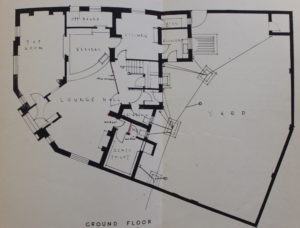 In addition to a considerable amount of Art Deco-style interior glasswork (installed in 1952) and eight original exterior windows (including ‘Smoke Room’ (2) and ‘Off Sales’), the Rutland has a very impressive tiled exterior. ‘DUNCAN GILMOUR & Co. LIMITED. RUTLAND ARMS.’
Dave Pickersgill
In addition to a considerable amount of Art Deco-style interior glasswork (installed in 1952) and eight original exterior windows (including ‘Smoke Room’ (2) and ‘Off Sales’), the Rutland has a very impressive tiled exterior. ‘DUNCAN GILMOUR & Co. LIMITED. RUTLAND ARMS.’
Dave Pickersgill 
 1. Arbourthorne Hotel, Arbourthorne
2. Ball Inn, Darnall
3. The Boardwalk, Snig Hill, City Centre
4. The Botanical, Ecclesall Road
5. Burgoyne Arms, Langsett Road
6. Cannon Hotel, 30 Castle Street, City Centre
7. Cuthbert Bank, 164 Langsett Road
8. Fairfield, Neepsend Lane
9. Market Tavern, City Centre
10. Matilda, City Centre
11. Olde Harrow, 80 Broad Street
12. Queens Hotel, Scotland Street
13. Stockroom, Leadmill Road
14. Turf Tavern, Handsworth Road
15. Under the Boardwalk, Snig Hill, City Centre
This is not a complete list – please add others!
1. Arbourthorne Hotel, Arbourthorne
2. Ball Inn, Darnall
3. The Boardwalk, Snig Hill, City Centre
4. The Botanical, Ecclesall Road
5. Burgoyne Arms, Langsett Road
6. Cannon Hotel, 30 Castle Street, City Centre
7. Cuthbert Bank, 164 Langsett Road
8. Fairfield, Neepsend Lane
9. Market Tavern, City Centre
10. Matilda, City Centre
11. Olde Harrow, 80 Broad Street
12. Queens Hotel, Scotland Street
13. Stockroom, Leadmill Road
14. Turf Tavern, Handsworth Road
15. Under the Boardwalk, Snig Hill, City Centre
This is not a complete list – please add others!