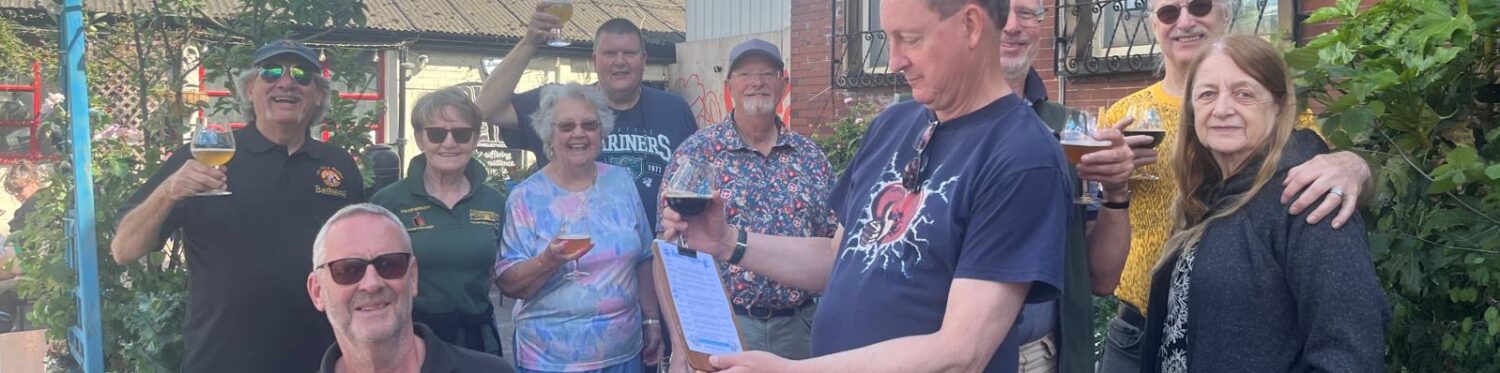


The 4th edition of the Sheffield’s Real Heritage Pubs Book arrived from the printers in late September (1000 copies, A5, 112 pages, £6.99 rrp). Compared to the third edition, this edition includes ninety new images, plus many text changes.
Paul Ainsworth, the Chair of the National CAMRA Pub Heritage group says; ‘For almost forty years, CAMRA has developed its national inventory (NI) of historic pub interiors. These highlight the crème de la crème which have either escaped much alteration or contain features of exceptional interest. We are aware that below the NI are a host of interiors which still offer a great deal worth seeing. The pioneering work carried out in Sheffield to locate and record these pubs has been an inspiring exercise. This publication portrays the rich tapestry of Sheffield’s pubs: from the nationally important to those where what remains, even if fragmented, should be cherished. A bonus, of course, is that many of these pubs sell great real ale.’
At the time of writing, the following local outlets have agreed to sell copies directly:
- Abbeydale Brewery
- Bath Hotel
- Beer Central, Moor Market
- Beer Inn Print (mail order)
- Biblioteka, Kommune
- Bradfield Brewery Shop
- Crow Inn
- Dog and Partridge
- Fat Cat
- Friendship, Stocksbridge
- Kelham Island Books and Music, Shalesmoor
- Maison du Biere, Elsecar Heritage Centre
- New Chapter Books
- Rhyme and Reason
- the Sheffield Shop
- White Lion
Copies will also be available at four book signing events which are part of the Sheffield Beer Festival on tour event.
If you want to stock copies to sell or order a copy, contact pubheritage@sheffield.camra.org.uk
The 4th edition is also now available as a free download: https://sheffield.camra.org.uk/SheffieldsRealHeritagePubs.pdf.






 The Plough was rebuilt in 1929 and is an important example of an inter war public house which, according to Historic England, are ‘rare and overlooked buildings’. National planning policy recognises the importance of protecting historic assets and their ‘setting’. This was confirmed in the decision of the local authority to refuse the application from Sainsbury’s.
The recent planning history of a site is also a relevant consideration in planning decisions. In 2017, the local authority rejected Sainsbury’s application for change of use based on the Plough’s listing as an ACV and it accepted that there were no alternative community facilities within a reasonable distance. In 2018, following the sale of the Plough, the local authority re-listed the pub as an ACV. As there have been no material changes in the reasons why the Plough was listed as an ACV, this should remain an overriding consideration in any decision.
There are
The Plough was rebuilt in 1929 and is an important example of an inter war public house which, according to Historic England, are ‘rare and overlooked buildings’. National planning policy recognises the importance of protecting historic assets and their ‘setting’. This was confirmed in the decision of the local authority to refuse the application from Sainsbury’s.
The recent planning history of a site is also a relevant consideration in planning decisions. In 2017, the local authority rejected Sainsbury’s application for change of use based on the Plough’s listing as an ACV and it accepted that there were no alternative community facilities within a reasonable distance. In 2018, following the sale of the Plough, the local authority re-listed the pub as an ACV. As there have been no material changes in the reasons why the Plough was listed as an ACV, this should remain an overriding consideration in any decision.
There are 


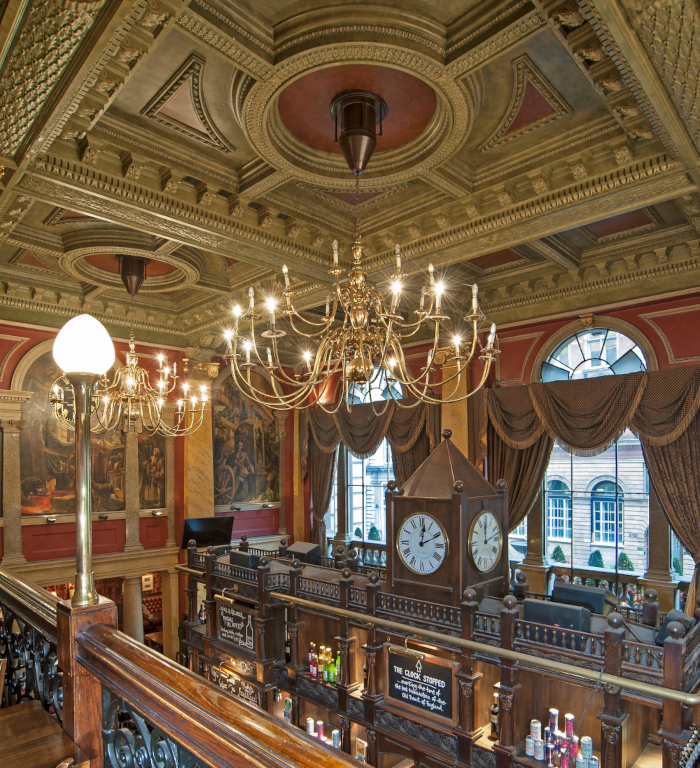
 In 1903, “Re-built, Re-furbished and up-to-date.“ By 2014, run-down and failing: purchased by new owners, a sensitive refurbishment and Regional Inventory listing followed.
The latest chapter in the renovation is now in hand, planning permission for locally-needed hotel accommodation: nine en suite B&B rooms on the first floor. Historical elements such as the dumbwaiter and fireplaces will be kept and restored as sympathetically as possible.
The planning application also mentions praise from CAMRA for the sympathetic restoration of the ground floor public house. We anticipate that this positive ethos will be continued as the owners develop the first floor. See the entry on the
In 1903, “Re-built, Re-furbished and up-to-date.“ By 2014, run-down and failing: purchased by new owners, a sensitive refurbishment and Regional Inventory listing followed.
The latest chapter in the renovation is now in hand, planning permission for locally-needed hotel accommodation: nine en suite B&B rooms on the first floor. Historical elements such as the dumbwaiter and fireplaces will be kept and restored as sympathetically as possible.
The planning application also mentions praise from CAMRA for the sympathetic restoration of the ground floor public house. We anticipate that this positive ethos will be continued as the owners develop the first floor. See the entry on the 


 August 1936, Sheffield saw one of few local referendums regarding licenced premises. Tenants on each of the nine largest of the new council housing estates which were replacing inner-city slums were asked by Sheffield City Council (SCC) if they were ‘in favour of licensed premises being provided on the estates.’
Turnout was low. There seemed to be a view on the smaller estates that as licensed premises were relatively close, there was no point in voting. Of the 34,204 electorate, only 7,275 voted (21.3%). Woodthorpe had a 61% turnout, the next highest was 26% (Arbourthorne) with five estates having a turnout of less than 20%. In favour were Arbourthorne, Manor, Shiregreen, Woodthorpe and Wybourn with High Wincobank, Longley and Norwood, Stubbin and Brushes and Wisewood voting against.
In 1938, SCC approved the granting of leases to six brewery companies for the building of public houses on municipal estates: Arbourthorne, Manor, Parson Cross, Shiregreen, Woodthorpe and Wybourn, each on 99-year leases. Parson Cross was not involved in the 1936 ballot.
The total building cost was given as £55,000. The six Sheffield breweries concerned were: Carter, Milner and Bird Ltd., Duncan Gilmour and Co.Ltd., William Stones Ltd., Tennant Bros. Ltd., Truswells Brewery Co.Ltd. and S.H.Ward and Co.Ltd. Construction, the responsibility of the brewery companies, commenced later in the year.
August 1936, Sheffield saw one of few local referendums regarding licenced premises. Tenants on each of the nine largest of the new council housing estates which were replacing inner-city slums were asked by Sheffield City Council (SCC) if they were ‘in favour of licensed premises being provided on the estates.’
Turnout was low. There seemed to be a view on the smaller estates that as licensed premises were relatively close, there was no point in voting. Of the 34,204 electorate, only 7,275 voted (21.3%). Woodthorpe had a 61% turnout, the next highest was 26% (Arbourthorne) with five estates having a turnout of less than 20%. In favour were Arbourthorne, Manor, Shiregreen, Woodthorpe and Wybourn with High Wincobank, Longley and Norwood, Stubbin and Brushes and Wisewood voting against.
In 1938, SCC approved the granting of leases to six brewery companies for the building of public houses on municipal estates: Arbourthorne, Manor, Parson Cross, Shiregreen, Woodthorpe and Wybourn, each on 99-year leases. Parson Cross was not involved in the 1936 ballot.
The total building cost was given as £55,000. The six Sheffield breweries concerned were: Carter, Milner and Bird Ltd., Duncan Gilmour and Co.Ltd., William Stones Ltd., Tennant Bros. Ltd., Truswells Brewery Co.Ltd. and S.H.Ward and Co.Ltd. Construction, the responsibility of the brewery companies, commenced later in the year.
 Pubs involved included the Arbourthorne Hotel (closed ~2015), the Manor Hotel (1990), the Parson Cross Hotel (~2016) and the Shiregreen Hotel (2008).
There have been other similar local referendum, over the question of whether buildings which had originally been built as coffee taverns (ie. pubs in all but the sale of alcohol) should become licensed premises. These include the Bridge Inn (Port Sunlight) where a 1903 vote saw over 80% voting for a liquor license and the Skittles Inn (Letchworth).
Thanks to Andrew Davison, Thelma Griffiths, and Jamie Thompson for responding to my earlier request for further information.
Dave Pickersgill
Pubs involved included the Arbourthorne Hotel (closed ~2015), the Manor Hotel (1990), the Parson Cross Hotel (~2016) and the Shiregreen Hotel (2008).
There have been other similar local referendum, over the question of whether buildings which had originally been built as coffee taverns (ie. pubs in all but the sale of alcohol) should become licensed premises. These include the Bridge Inn (Port Sunlight) where a 1903 vote saw over 80% voting for a liquor license and the Skittles Inn (Letchworth).
Thanks to Andrew Davison, Thelma Griffiths, and Jamie Thompson for responding to my earlier request for further information.
Dave Pickersgill