The Eyre Arms at Hassop is now on the CAMRA National Inventory of Pub Interiors. The building was originally a farmstead, built in 1632. By 1753, ‘Eyre Arms as a Public House at Hassop.’ In 1814, the name changed to ‘Newburg Arms Inn’ and in 1902 it returned to the Eyre Arms. The creeper covered sandstone building was subject to a good quality refit in the mid 1950s and is virtually unchanged since.
A plan (Derbyshire Record Office, Matlock) dated 1952 shows a very different interior – the front entrance led into a hall and on the left was the Tap Room (now the public bar), while to the right are steps (up) and a Smoke Room. Ahead was a passage with a servery at the rear and a sitting room on the rear right. The pub was sold by the Stevensons, owners of Hassop Hall, to Stones Brewery of Sheffield in the mid 1950s who carried out a significant refurbishment creating the centrally placed servery for all three rooms.

Nowadays the front door leads to a small entrance lobby with 1950s tiled floor. An oak latched door to the left has ‘Public Bar’ painted in gold and on the frame above is painted the Roman numeral ‘I’. An oak latched door on the right has gold painted lettering ‘Saloon Room’ over which a metal sign ‘Lounge’ and on the frame above is the Roman numeral ‘II’. The left small Public Bar has a carpet, stone Tudor arch-style fireplace found in pre-war pubs but appears also have been added in the 1950s, and quality high-backed fitted seating on two sides of the room.
There is a quarter circle bar with a counter of wooden tongue and groove of high quality including a small linenfold section, and the bar back is of a 1950s style with adzed wood on the frame and no loss of lower shelving. The walls are of rough stone and painted white and a door at the rear leads to a short passage. There is a Roman numeral ‘I’ on the back of the door, a door on the left of the passage has the Roman numeral ‘IV’ and ‘Cellar’ painted in gold. Another door has ‘Private’ on it. Alongside is a door with ‘Gentlemen’ on it. A door on the right of the passage has the gold painted wording ‘Snug’ and ‘III’.

The right hand carpeted Lounge Bar being two rooms prior to the mid 1950s has two different ceilings – higher plain one at the front and lower ‘beamed’ one in rear part. In the front part is a curved 1950s bar counter with a small linenfold section and the bar back is 1950s style with adzed wood frame. On the front right is a different style of stone fireplace to the public bar one and seen in pre-war pubs, but appears also have been added in the 1950s, and above it is a massive plaster Coat of Arms with a dull yellow-coloured ceramic (?) decorative border. The arms belong to Rowland Eyre, a Royalist officer in the Civil War. The Eyres raised a regiment in Derbyshire and fought at the Battle of Marston Moor in 1644.
There is more adzed wood above the change in ceiling height. On the front wall side is more of the high backed fitted seating, a long case clock, and the walls are of bare stone. In the rear part are more of the high backed fitted seating on the left and right and low backed bench seating on the rear wall. An oak latched door on the front right hand side leads to the kitchen and one on the rear right leads to the ladies’ toilet.

An oak latched door leads from the rear left part of the lounge to the snug at the middle rear and has the Roman numeral ‘II’ painted on it in gold. Formerly the site of the servery it is a small room with a modest counter, almost a hatch, having a 1950s frontage. There is more of the high-backed fitted seating, one low backed bench and a door leads to the passage situated at the rear left.

The gents’ toilet has a red tiled floor and inter-war style cream tiled walls to picture-frame height throughout with a row of light green tiles along the bottom and top and retains the 1950s urinal with the only change being a wooden WC door added in 2016. Added in the mid-1950s it replaced the outside gents situated on the front left of the building as detailed in the 1952 plan, which also shows the ladies was also outside on the right. The ladies are situated where the 1952 plan shows was the larder and also has inter-war style cream tiled walls to picture-frame height throughout with a row of light green tiles along the bottom and top. Again, the only changes are the wooden WC doors added in 2016.
Dave Pickersgill & Mick Slaughter 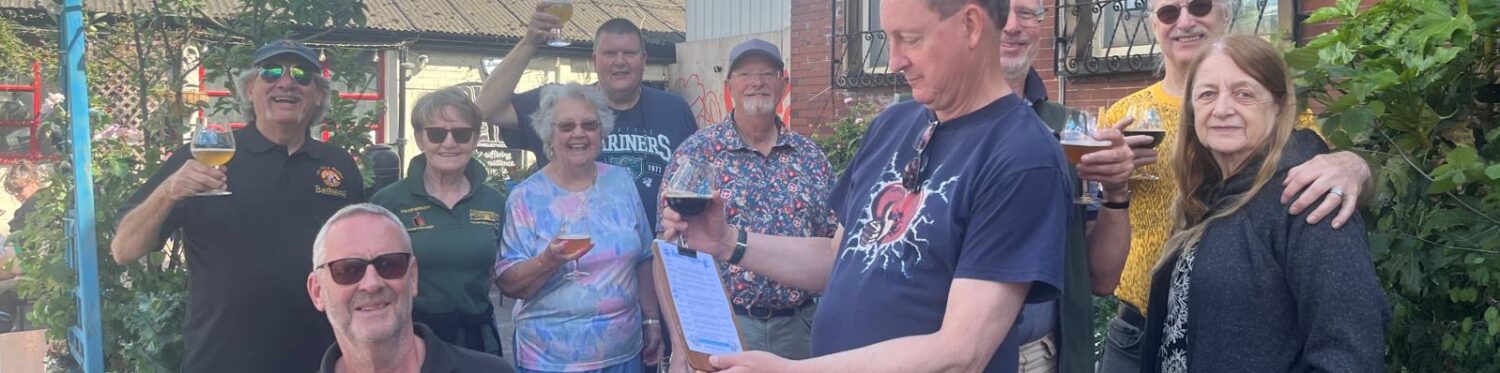


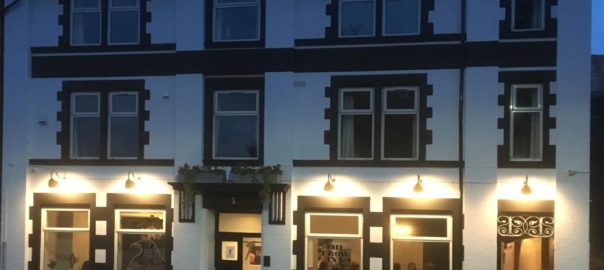

 Originally opened as a Rawsons pub in 1797, the C20th.saw a series of changes resulting in the closure of the pub in 2010, the building becoming The Sleep Hotel. Recently, under the same management as the Rutland Arms, it reopened with the new name.
The porch has internal leaded windows and an impressive ceramic floor which features an image of a crown. Apart from the opening-out of the room on the right, the basic layout of the interior is relatively unchanged since the mid C20th. The fittings are of varying ages, with some recent renovation. Unusually, the off sales was approached via the entrance to the rear yard: purchasers entering through a small door to access the servery.
Historically, as the Crown Inn, or the Old Crown, the pub is mentioned as a key player in the 1840’s Chartist protests, the Sheffield Outrages and the 1920’s Sheffield Gang Wars. The outrages saw the 1859 murder of James Lindley: ‘saw-grinder, was sitting at the Crown Inn, Scotland Street.’ On February 17th.1925, there was a fracas outside the Crown, involving about 30 youths. A knuckleduster, a life preserver, two razors and a hammer were picked up after the incident. Bricks, cellar grates and other missiles were alleged to have been thrown. The crowd were dispersed but returned for another fight after midnight when the two lads were arrested and subsequently charged.
Thomas Rawson’s and Co. Brewery (Pond Street) was destroyed by enemy action on 12th.December 1940. The site was subsequently developed as Sheffield Polytechnic (now Sheffield Hallam University). The pub then came into the hands of Gilmours, then Tetleys. It is now an innovative, enterprising free house with an excellent range of beer – during opening week, the Corbeau Noir was not to be missed.
Originally opened as a Rawsons pub in 1797, the C20th.saw a series of changes resulting in the closure of the pub in 2010, the building becoming The Sleep Hotel. Recently, under the same management as the Rutland Arms, it reopened with the new name.
The porch has internal leaded windows and an impressive ceramic floor which features an image of a crown. Apart from the opening-out of the room on the right, the basic layout of the interior is relatively unchanged since the mid C20th. The fittings are of varying ages, with some recent renovation. Unusually, the off sales was approached via the entrance to the rear yard: purchasers entering through a small door to access the servery.
Historically, as the Crown Inn, or the Old Crown, the pub is mentioned as a key player in the 1840’s Chartist protests, the Sheffield Outrages and the 1920’s Sheffield Gang Wars. The outrages saw the 1859 murder of James Lindley: ‘saw-grinder, was sitting at the Crown Inn, Scotland Street.’ On February 17th.1925, there was a fracas outside the Crown, involving about 30 youths. A knuckleduster, a life preserver, two razors and a hammer were picked up after the incident. Bricks, cellar grates and other missiles were alleged to have been thrown. The crowd were dispersed but returned for another fight after midnight when the two lads were arrested and subsequently charged.
Thomas Rawson’s and Co. Brewery (Pond Street) was destroyed by enemy action on 12th.December 1940. The site was subsequently developed as Sheffield Polytechnic (now Sheffield Hallam University). The pub then came into the hands of Gilmours, then Tetleys. It is now an innovative, enterprising free house with an excellent range of beer – during opening week, the Corbeau Noir was not to be missed.


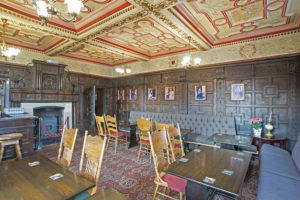
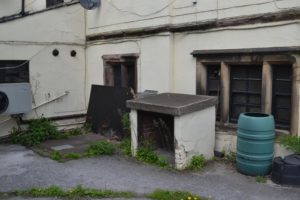
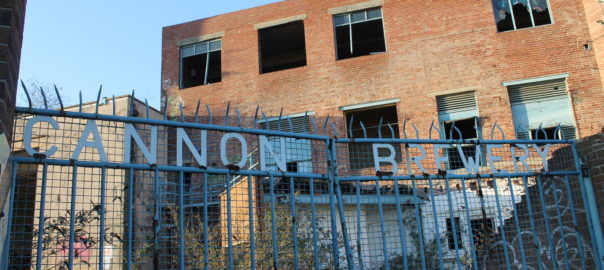
 So far, the owners claim to have spent £735k: roof work, removal of debris round the building, removal of layers of tarmac ….. most importantly, the preservation and partial restoration of the Grade II* listed interior. The ‘Old Oak Room’ is now ready for a careful repainting of the ceiling. In addition, the upstairs room with its C17/18th. fireplace will be brought into public use when the building reopens.


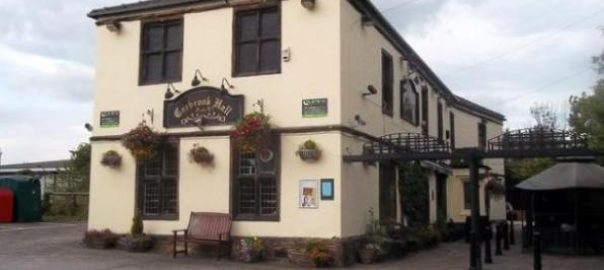
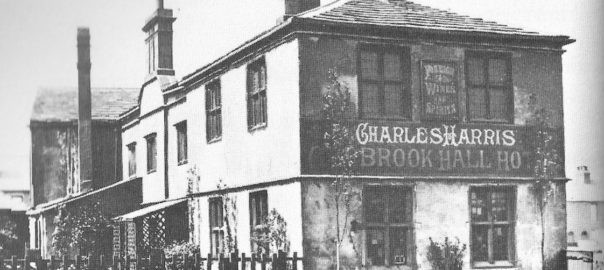



 As for the Rising Sun, documents held in the Sheffield Archives show how the cost of the lease from the Sheffield Town Trustees slowly rose throughout the 20th century – £175 pa in 1908 rises to £210 in 1929, £350 in 1950 and a final lease in 1964 for £800.
We would be interested in more information regarding the Trust – please contact:
As for the Rising Sun, documents held in the Sheffield Archives show how the cost of the lease from the Sheffield Town Trustees slowly rose throughout the 20th century – £175 pa in 1908 rises to £210 in 1929, £350 in 1950 and a final lease in 1964 for £800.
We would be interested in more information regarding the Trust – please contact: 

 A 1952 plan (Gerald Maynard & Co. D5328/21/3(i), Derbyshire Record Office, Matlock) shows the front entrance into a hall. On the left is a Tap Room (now the smoke room), while to the right are steps (up) and a Smoke Room. Ahead is a passage which runs the length of the two forward rooms with a bar counter ahead. The cellar is to the left of the bar, with a sitting room to the right. Further right are a Larder and Living Room.
The current layout and the 1952 plan suggest a mid-1950s refit which merged the two right rooms into a single lounge with the bar moving forward to its current central position and the snug taking the place of the bar counter and bar area.
We believe there have been no major changes since the mid-1950s. Apparently local craftsmen were used to do the work: stonemason for the fireplaces and carpenter for the bar front and wood panelling. Relatives of these craftsmen are still pub regulars.
A 1952 plan (Gerald Maynard & Co. D5328/21/3(i), Derbyshire Record Office, Matlock) shows the front entrance into a hall. On the left is a Tap Room (now the smoke room), while to the right are steps (up) and a Smoke Room. Ahead is a passage which runs the length of the two forward rooms with a bar counter ahead. The cellar is to the left of the bar, with a sitting room to the right. Further right are a Larder and Living Room.
The current layout and the 1952 plan suggest a mid-1950s refit which merged the two right rooms into a single lounge with the bar moving forward to its current central position and the snug taking the place of the bar counter and bar area.
We believe there have been no major changes since the mid-1950s. Apparently local craftsmen were used to do the work: stonemason for the fireplaces and carpenter for the bar front and wood panelling. Relatives of these craftsmen are still pub regulars.